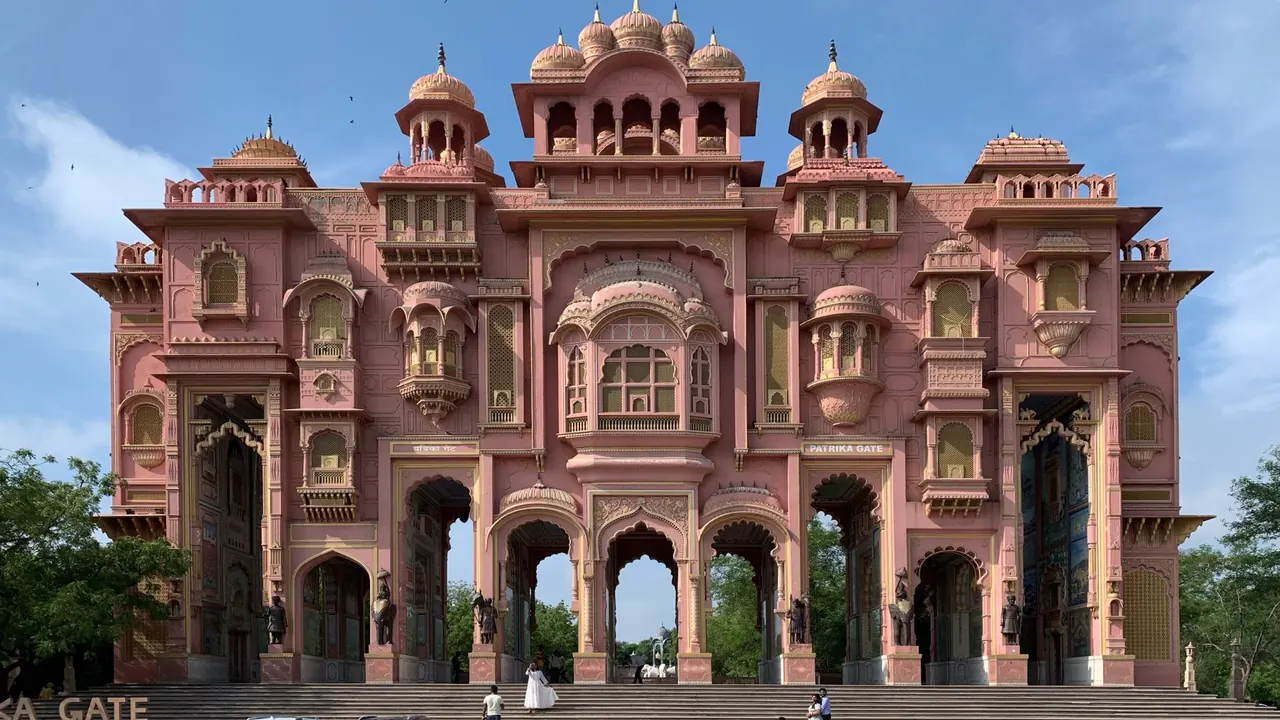
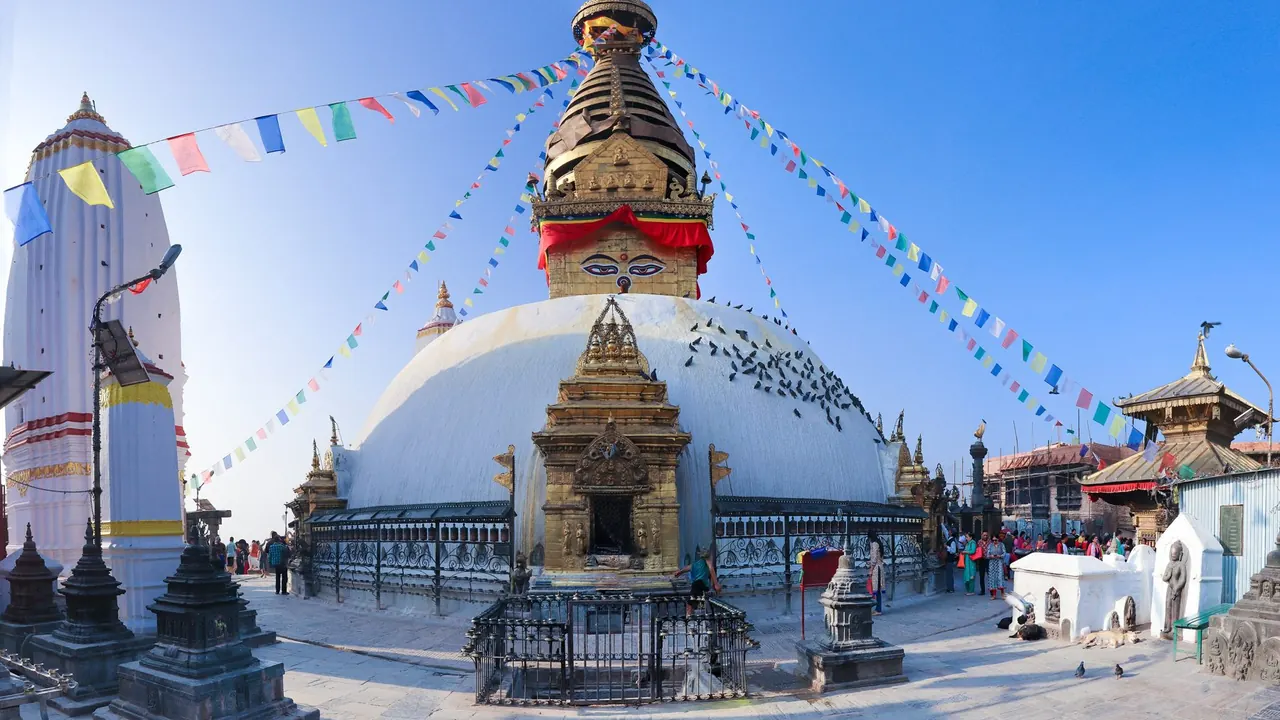
Photos: Jaipur by Chainwit., CC BY-SA 4.0, cropped; Kathmandu by Nabin K. Sapkota, CC BY-SA 4.0, cropped.
Jaipur or Kathmandu?
Our verdict in twelve categories, each scored against the same fixed benchmark cities, and the climate month by month, so you can choose for your trip.
Choose Jaipur for
- shopping
- food and drink
- live music and the arts
Jaipur suits a traveller who wants royal Rajasthan in concentrated form: palaces, forts and a planned bazaar city that fill three busy days, followed by serious shopping for block prints, jewellery and blue pottery and some of the best vegetarian eating in north India. It works best as a cool-season city trip with a driver, often joined to Agra and Pushkar.
Choose Kathmandu for
- nature and the outdoors
- wellness
- nightlife
Choose Kathmandu if the mountains are part of the reason for going. Its living temples and stupas match Jaipur for heritage, but the city adds forest trails, Himalayan sunrise viewpoints, mountain flights and the start of real treks, plus meditation courses in the hill monasteries. It is also the cheaper of two already inexpensive places, and the better choice for anyone who would rather end the day in a Thamel bar than go to bed early.
Scoreboard
Twelve categories on one fixed scale from 0 to 100. The shaded stretch is the gap between the two.
Your match
Pick a travel style or drag the sliders, and both match scores follow your weighting.
Too close to call, 2 points apart
Wins on shopping and food and drink with your weighting.
Wins on nature and the outdoors and wellness with your weighting.
What matters to you?
Category by category
What the scores mean for a trip.
Beaches & swimming
Both are far inland, Jaipur in the Rajasthan desert and Kathmandu in a Himalayan valley, so swimming means a hotel pool in either. The difference is how much it matters: in Jaipur's furnace months a pool can be the only bearable place in the afternoon, whereas Kathmandu's cold mountain rivers are for rafting, not bathing.
Food & drink
Jaipur has the deeper and more distinctive table. Laal maas, ker sangri and dal baati churma, kachori breakfasts on MI Road, syrupy ghevar and thali feasts in palace courtyards make eating one of the joys of a visit, even if the city leans vegetarian and alcohol is hard to find.
Kathmandu's best cooking is Newari, choila, bara and yomari in small places around the old bazaars and Patan, with momos and Tibetan thukpa near Boudhanath. Beyond that, much of what visitors eat is dal bhat and Thamel's uneven pizza-and-steak menus, and more care is needed with water.
Culture & sights
Two of the richest heritage cities in South Asia, and close in depth, but very different in feel. Jaipur is courtly and planned: the 18th-century grid of the Pink City, the City Palace, Hawa Mahal and Jantar Mantar, and Amber Fort on its ridge, a set of monuments built to impress.
Kathmandu's heritage is religious and still in daily use. Pilgrims circle Boudhanath at dusk, cremations take place at Pashupatinath and the Kumari lives on Durbar Square, while Patan has the valley's finest square and its best museum. Choose Jaipur for palaces and forts, Kathmandu for living temples.
Nightlife
Kathmandu has the livelier evenings, though only in one district. Thamel's rooftop bars, pool halls and a few dance clubs fill with trekkers until around midnight, a friendly, easy scene. Jaipur's nights usually end after a rooftop dinner facing the floodlit forts, with drinking confined to hotel bars and a few lounges in C-Scheme.
Nature & outdoors
Kathmandu is in another league here. Forested hills ring the valley, Shivapuri's trails and the Chandragiri cable car are on the city's edge, Nagarkot and Dhulikhel give sunrise over the snow peaks, and mountain flights, rafting and treks into Langtang all begin from the city.
Jaipur's landscape is low, rocky Aravalli scrub. Its outdoor high point is a jeep safari for leopards at Jhalana, with balloon flights and birdlife at Sambhar as extras, and from April onwards the heat confines it all to dawn and dusk.
Day trips
The two are evenly matched here, but the outings differ in kind. Jaipur offers more variety: a carved stepwell at Abhaneri, a frescoed palace in the hills at Samode, the abandoned ruins of Bhangarh and villages where cotton is still printed by hand. For anyone willing to give most of a day to the road, Pushkar, Ajmer and even the Taj Mahal are also within reach, so it suits travellers with a hired driver and the energy for early starts.
Kathmandu has one standout outing rather than a wide choice. Bhaktapur, a brick royal town of tiered temples and potters' squares about an hour away, fills a rewarding half day and stretches to a full one with the ancient carvings at Changu Narayan. Kirtipur, Bungamati and Panauti offer more Newari village life rather than anything new, and congested valley roads make even short hops tiring, so it suits visitors happy with one rich day out rather than a run of long drives.
Good for families
Neither city is easy with young children, and both suit older ones best. Jaipur has a little more to excite them, with ramparts and secret passages at the forts, puppet shows and a leopard safari, and hotel pools to retreat to.
Kathmandu offers monkeys at Swayambhunath and prayer wheels at Boudhanath, but dust, winter air and care with food weigh more heavily. It makes most sense for families heading on to a trek.
Getting around
Both rely on taxis, ride-hailing and hard bargaining rather than public transport. Jaipur has a short metro line that misses most sights, and a car with driver for the day is the standard way to cover the city and Amber, 11km north.
Kathmandu has no metro at all, but its old core and Thamel are compact enough to explore on foot, which Jaipur's traffic and summer heat make harder. Crossings to Patan or Boudhanath can be slow.
Shopping & style
Jaipur is one of India's great craft-shopping cities, and many visitors come largely for it: gems and silver on Johari Bazaar, lac bangles, quilts, hand block-printed cottons from Sanganer and Bagru, blue pottery and rugs, plus C-Scheme boutiques giving the crafts a modern cut. The catch is commission-driven touts and long-running gem scams.
Kathmandu's buying is narrower: pashmina, singing bowls and trekking gear in Thamel, often copies, Tibetan carpets and thangkas around Boudhanath, and Patan's own cast bronzes.
Affordability
Both are very cheap by Western standards, but Kathmandu goes further. Guesthouses, momos and taxis there cost very little, and the real outlays are trekking permits and mountain flights rather than city life. Jaipur is also inexpensive for food, rickshaws and a hired driver, though its palace hotels charge international rates and the monument fees for foreigners add up.
Live music & performing arts
Jaipur has a little more on stage. Kathak, Kalbeliya dance and string puppetry are easy to catch, if mostly as hotel shows, and Jawahar Kala Kendra and Ravindra Manch host theatre and classical dance. Kathmandu's best performances belong to the religious calendar, masked dances at Indra Jatra and evening temple singing, with cover bands in Thamel and an autumn jazz festival the rest of the time.
Wellness & relaxation
Kathmandu is the better place to slow down, chiefly for the mind. Kopan and the other monasteries around Boudhanath run meditation courses for foreigners, and yoga, Ayurveda, singing bowls and cheap massage are everywhere.
In Jaipur, rest depends on your hotel: shaded haveli courtyards and pools with Ayurvedic massage, in a city otherwise built for early starts and long, hot days.
When should you go?
Pick your month. The climate figures are measured averages, not a forecast.
Jaipur in July
Kathmandu in July
Daytime high, °C
Rainfall in the month, mm
Where the figures come from
Jaipur has no rain gauge within 25 km of the centre, so its rainfall comes from a gridded climate dataset read at the city rather than from a gauge further away.
Temperature and rainfall are climate normals, averaged over the years shown. Jaipur: 1993-2020 (rainfall 1991-2020) normals, Jaipur / Sanganer (11.1 km from centre). Kathmandu: 1991-2020 normals, Kathmandu Airport (4.7 km from centre).
Neither city has a beach, so the calendar is about walking weather and rain. Jaipur is at its best from November to February, when days are warm and dry, around 23°C in January. From April to June the heat becomes punishing, reaching 42°C in May, and the monsoon follows in July and August, when the streets are hot, humid and wet. October is dry again but still very warm.
Kathmandu sits higher and never gets that hot, with summer days in the high twenties, but its monsoon is far heavier, peaking at about 384mm in July, with cloud hiding the peaks for weeks at a time. October and November are the prime months, dry and sunny with the clearest mountain views. Winter stays mild and bright in the daytime, and spring is pleasant too, though haze softens the views. Both cities share the same sweet spot in late autumn, but in spring Kathmandu stays comfortable well after Jaipur has become too hot.
Which traveller are you?
On an outdoors trip, Kathmandu is the clear pick. Forest trails in Shivapuri, ridge hikes between Nagarkot and Dhulikhel, rafting rivers and treks into Langtang all start close by, while Jaipur offers little beyond a leopard safari and hill viewpoints.
For a shopping trip, Jaipur wins. Each old bazaar has its own trade, from gems and silver to lac bangles and quilts, and block prints, rugs and blue pottery are made in the surrounding villages. Kathmandu's craft stalls are narrower in range and heavy with copies.
On a relaxing and wellness trip, Kathmandu has more to offer. Monasteries around Boudhanath run meditation courses, and massage and yoga are everywhere. Jaipur's calm is limited to the courtyard and pool of a heritage hotel, with the old city loud and hot outside.
Before you go
| Measure | Jaipur | Kathmandu |
|---|---|---|
| Official language | Hindi, English | Nepali |
| Currency | Indian Rupee (INR) | Nepalese Rupee (NPR) |
| Sockets | CM230 V, 50 Hz | CM230 V, 50 Hz |
| Driving side | Left | Left |
| Time zone | UTC+5:30 | UTC+5:45 |
| Emergency number | 108 or 112 | Police 100, ambulance 102, fire 101 |
| Elevation | 431 m | 1,300 m |
| Main airport | Jaipur International Airport (JAI)10 km from centre27 non-stop destinations | Tribhuvan International Airport (KTM)4 km from centre38 non-stop destinations |
By the numbers
| Measure | Jaipur | Kathmandu |
|---|---|---|
| City population | 3,073,350 | 845,767 |
| People per km² | - | 17,121 |
| Museums within 10 km | 6 | 9 |
| UNESCO World Heritage sites within 50 km | 3 | 1 |
Where else could you go?
Every comparison below shares a destination with this one, so you can follow Jaipur or Kathmandu somewhere new.