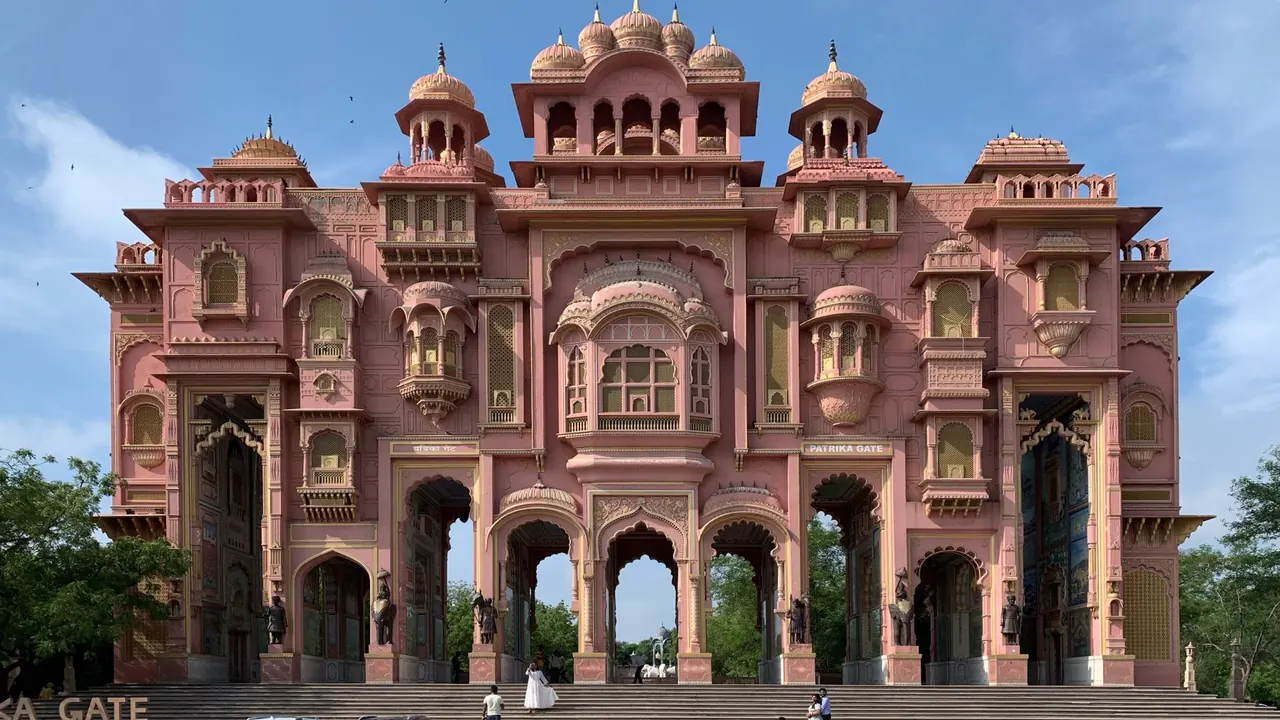
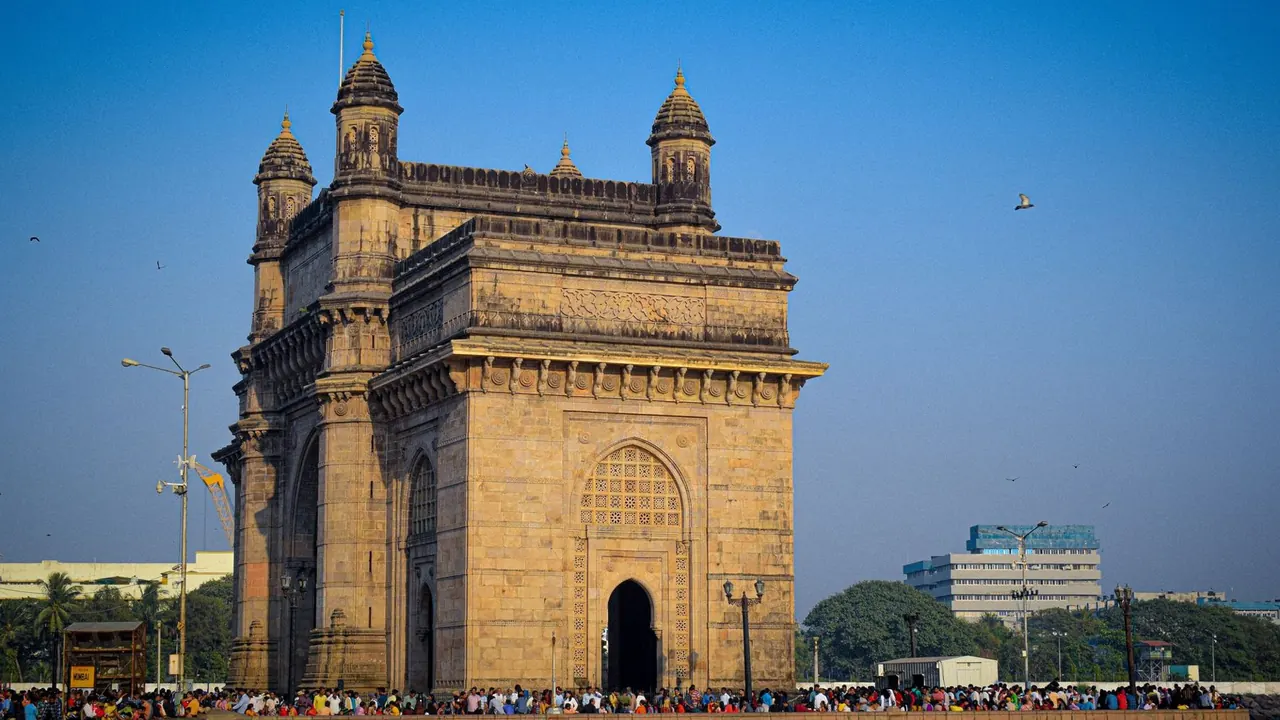
Photos: Jaipur by Chainwit., CC BY-SA 4.0, cropped; Mumbai by Shubam Bhasin, Pexels License.
Jaipur or Mumbai?
Our verdict in twelve categories, each scored against the same fixed benchmark cities, and the climate month by month, so you can choose for your trip.
Choose Jaipur for
- prices
- culture and sights
- shopping
Jaipur suits travellers who want a compact, coherent dose of royal India: the walled Pink City, the City Palace and Jantar Mantar, Amber Fort on its ridge, and bazaars where block prints, gems and blue pottery are made and sold. It is the cheaper of the two by some way, its sights cluster tightly enough for three full days, and Pushkar, Abhaneri or even Agra can be added on. Evenings are quiet, so it rewards early risers more than night owls.
Choose Mumbai for
- nightlife
- live music and the arts
- nature and the outdoors
Pick Mumbai for a city trip built around eating and going out. Station carts, Irani cafés and Malvani seafood kitchens give it the deeper table, Bandra and Lower Parel have the bars, and the National Centre for the Performing Arts and Prithvi Theatre give it a real stage. There is also more green than you might expect, with Sanjay Gandhi National Park in the suburbs and the Western Ghats within reach. Expect slow journeys across a long, spread-out city and higher hotel bills.
Scoreboard
Twelve categories on one fixed scale from 0 to 100. The shaded stretch is the gap between the two.
Your match
Pick a travel style or drag the sliders, and both match scores follow your weighting.
Wins on prices and culture and sights with your weighting.
Wins on nightlife and live music and the arts with your weighting.
What matters to you?
Category by category
What the scores mean for a trip.
Beaches & swimming
Neither city is a beach destination, but Mumbai at least has a shoreline. Juhu and Girgaum Chowpatty are broad sands for a sunset stroll, kite-flying and snacks, even if the water is too murky for swimming, and the cleaner Alibaug coast is a ferry ride across the harbour.
Jaipur sits far inland in Rajasthan with no lake for swimming, so the only water is a hotel pool. In both cities the pool is the realistic place to swim, but in Jaipur it is the only option.
Food & drink
Jaipur's kitchen is regional and focused: dal baati churma, laal maas and ker sangri, kachori breakfasts along MI Road and syrup-soaked ghevar from the sweet counters around Johari Bazaar. It is largely vegetarian, drink is mostly confined to hotels, and there is little beyond Rajasthani cooking.
Mumbai offers more range at every level. Street carts sell vada pav and pav bhaji, the Irani cafés of Fort and Colaba serve berry pulao, and Malvani and Konkani kitchens bring seafood in coconut and kokum that an inland city cannot match. Add Parsi and Gujarati cooking and a modern restaurant tier in Bandra and Lower Parel, and it is the better city to eat in.
Culture & sights
Jaipur's sights are denser and more singular. The 1727 grid of the Pink City, the City Palace, the Hawa Mahal and the stone instruments of Jantar Mantar sit a short distance apart, and Amber, Jaigarh and Nahargarh forts crown the ridges above. It is a coherent set of royal Rajput buildings that three days covers well.
Mumbai's strength is the British port city: the Gothic Revival railway terminus, the Victorian and Art Deco facades facing each other across the Oval Maidan, and strong sculpture and miniature collections in the museums near Kala Ghoda. It is impressive, but the sights are scattered along a long city and take more effort to string together.
Nightlife
Mumbai has a proper night out: cocktail bars and gastropubs in Bandra and Khar, clubs in the old mill compounds of Lower Parel, and the long-running bar strip in Colaba. Closing comes early for a city this size and the districts are far apart, but there is a choice.
Jaipur's evenings mostly end after a rooftop dinner facing the floodlit forts. Hotel bars and a few lounges in C-Scheme are the extent of it, so anyone wanting more than a drink with dinner will feel the difference.
Nature & outdoors
Mumbai has more green within reach. Sanjay Gandhi National Park brings forest, trails and the Kanheri caves into the northern suburbs, flamingos feed on the Sewri mudflats in winter, and the Western Ghats around Lonavala and Matheran turn lush for monsoon hiking.
Jaipur's landscape is drier and lower, Aravalli scrub hills with wide views from Nahargarh. Its standout is the leopard safari at Jhalana on the city edge, a real draw, but beyond that and balloon flights the options are thinner and mostly confined to the cool months.
Day trips
Jaipur has the better spread of outings. Chand Baori at Abhaneri, the painted palace at Samode, Bhangarh's ruins and the block-printing villages of Sanganer and Bagru are all manageable, and Pushkar, Ajmer and the Taj Mahal at Agra can be done as long days.
From Mumbai, Elephanta Island and its carved Shiva caves is a superb boat ride from the Gateway of India, and the Buddhist cave halls at Karla and Bhaja reward a longer outing. After that, slow roads out of the city and the distance to Ajanta and Ellora keep most visitors to one or two trips.
Good for families
Neither city is easy with children, but Mumbai gives a little more to do. The Nehru Science Centre is a proper indoor outing, and the harbour ferries, the Byculla zoo and ice cream on Chowpatty sands fill a day, with water parks further out.
Jaipur's appeal is narrower and suits older children: ramparts and secret passages at the forts, puppet shows and a leopard safari. In both, traffic and broken pavements wear families down, so a driver and a hotel pool help, and Jaipur is only comfortable in the cool season.
Getting around
Mumbai at least has a rail backbone: the suburban trains run fast up the long city, if crushingly full at rush hour, and the metro adds calmer lines. The Fort, Kala Ghoda and Colaba area is pleasant on foot, though road traffic can still turn short hops into an hour.
Jaipur relies almost entirely on rickshaws, ride-hailing and a car with driver, since its short metro line misses the sights. The Pink City's bazaars are walkable in principle, but cows, traffic and missing pavements slow every step, and Amber lies about 11km out.
Shopping & style
Jaipur is the place to buy things made locally. Each bazaar has its trade, silver and gems on Johari Bazaar, lac bangles in Maniharon ka Rasta, quilts in Bapu Bazaar, while block prints, blue pottery and rugs come from workshops around the city. Watch for commission-driven shop visits and gem scams.
Mumbai's shopping is broader but less distinctive. Crawford Market, the gold of Zaveri Bazaar and the antiques of Chor Bazaar make good browsing, Colaba Causeway and Linking Road suit cheap clothes, and air-conditioned malls hold the international luxury labels.
Affordability
Jaipur is cheaper almost across the board, including the simple guesthouses that make up most of a budget stay. Only the palace hotels, foreigners' monument fees and alcohol push costs up.
In Mumbai the street food, trains and taxis are just as easy on the wallet, but accommodation is the catch: good rooms in the south and the better suburbs cost far more than elsewhere in India. A hotel-based stay with cocktails can approach Western prices, which is rarely the case in Jaipur.
Live music & performing arts
Where Jaipur offers folk performance on a hotel terrace, Mumbai has a concert and theatre calendar worth booking ahead. Jaipur's own traditions are Kalbeliya dance, string puppetry, Rajasthani folk music and its school of Kathak, seen mostly as dinner shows in hotels and at the village-style venues on the city edge. Jawahar Kala Kendra and Ravindra Manch add the odd play or recital, mostly in Hindi or without words. It adds colour to an evening, but you would not plan a trip around it.
Mumbai's National Centre for the Performing Arts at Nariman Point is home to the Symphony Orchestra of India and runs a steady programme of Hindustani music, jazz and dance. Prithvi Theatre in Juhu is the heart of Hindi and English drama, and Marathi plays fill halls in Dadar. Much of it is aimed at residents, but a visitor can still have a proper night at the theatre or a concert.
Wellness & relaxation
In both cities, calm comes from your hotel rather than from the streets, but Jaipur makes it easier because the stay itself can be the retreat. Heritage havelis and palace hotels have shaded courtyards, gardens and pools, often with Ayurvedic massage and yoga, and they shut out the heat and noise of the old city.
In Mumbai, that means the large spa of a luxury hotel or a yoga studio in Bandra. The quiet moments outside are an early walk along Marine Drive or Bandra's Bandstand, or a seat beside the Banganga Tank. Otherwise the humidity and crowds are hard to escape, and people who want a real rest leave for Lonavala or the Konkan coast.
When should you go?
Pick your month. The climate figures are measured averages, not a forecast.
Jaipur in July
Mumbai in July
Daytime high, °C
Rainfall in the month, mm
Where the figures come from
Jaipur has no rain gauge within 25 km of the centre, so its rainfall comes from a gridded climate dataset read at the city rather than from a gauge further away.
Temperature and rainfall are climate normals, averaged over the years shown. Jaipur: 1993-2020 (rainfall 1991-2020) normals, Jaipur / Sanganer (11.1 km from centre). Mumbai: 1991-2020 normals, Bombay / Santacruz (5.4 km from centre).
Both cities are at their best from November to February, but for different reasons. Jaipur's winter is genuinely mild, with daytime highs around 23°C in January, ideal for forts and bazaars on foot. By April the heat builds fast, peaking near 42°C in May, and sightseeing shrinks to early mornings and evenings. The monsoon rains come in July and August, still hot, and October is dry again though warm.
Mumbai barely changes temperature, sitting in the low thirties all year, so the deciding factor is rain. From November to May it is dry and sunny, while June to September brings a heavy monsoon, with around 860mm in July alone and little sunshine. The sea stays warm, from about 25°C in January to 30°C in May, but it is a sea for watching from the promenade rather than swimming in.
Which traveller are you?
On a culture and arts trip, Jaipur is the stronger choice for sights. The planned Pink City, City Palace, Jantar Mantar and Amber Fort sit close together and fill three rich days, whereas Mumbai's colonial buildings and museums are spread out, though its theatre and concert life is livelier.
For a food and nightlife trip, Mumbai wins clearly. Vada pav at the stations, Irani cafés, coastal crab curries and cooking from every corner of India give far more range, and Bandra and Lower Parel offer cocktail bars where Jaipur offers a rooftop dinner and bed.
On a trip on a tight budget, Jaipur stretches money further. Guesthouses, thalis and a day's car and driver cost very little, while in Mumbai the street food is cheap but decent budget rooms are scarce and expensive, which quickly eats into a small budget.
Before you go
| Measure | Jaipur | Mumbai |
|---|---|---|
| Official language | Hindi, English | Hindi, English |
| Currency | Indian Rupee (INR) | Indian Rupee (INR) |
| Sockets | CM230 V, 50 Hz | CM230 V, 50 Hz |
| Driving side | Left | Left |
| Time zone | UTC+5:30 | UTC+5:30 |
| Emergency number | 108 or 112 | 108 or 112 |
| Elevation | 431 m | 14 m |
| Main airport | Jaipur International Airport (JAI)10 km from centre27 non-stop destinations | Chhatrapati Shivaji Maharaj International Airport (BOM)2 km from centre122 non-stop destinations |
By the numbers
| Measure | Jaipur | Mumbai |
|---|---|---|
| City population | 3,073,350 | 15,414,288 |
| People per km² | - | 25,563 |
| Museums within 10 km | 6 | 1 |
| UNESCO World Heritage sites within 50 km | 3 | 3 |
| Swim season, months above 21 °C | - | 12 months |
Where else could you go?
Every comparison below shares a destination with this one, so you can follow Jaipur or Mumbai somewhere new.