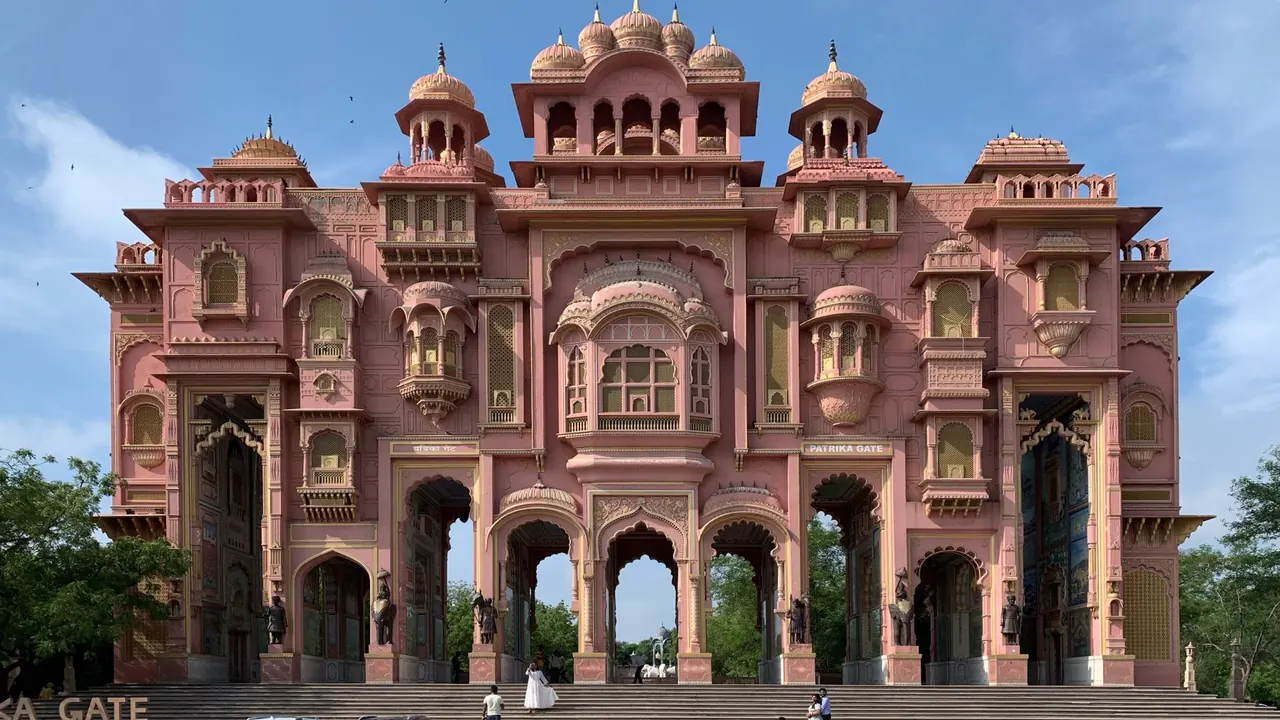
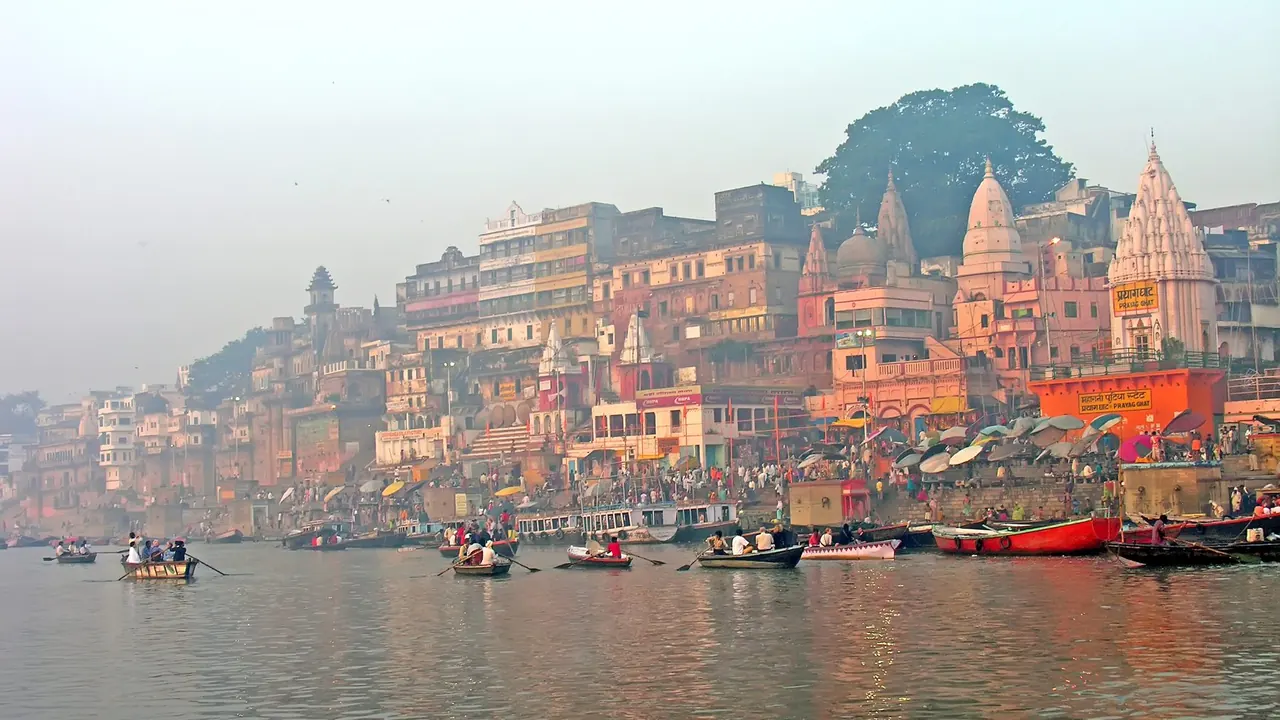
Photos: Jaipur by Chainwit., CC BY-SA 4.0, cropped; Varanasi by Dennis G. Jarvis, CC BY-SA 2.0, cropped.
Jaipur or Varanasi?
Our verdict in twelve categories, each scored against the same fixed benchmark cities, and the climate month by month, so you can choose for your trip.
Choose Jaipur for
- nature and the outdoors
- families
- shopping
Jaipur is the better choice for a rounded first trip to India's palace and fort country. It gives you grand monuments, a wide spread of shopping in specialist bazaars, richer Rajasthani cooking and easy outings into the countryside, and the heritage hotels with courtyards and pools make it workable for families and anyone who needs comfort at the end of the day.
Choose Varanasi for
- live music and the arts
- prices
- wellness
Go to Varanasi to watch religious life on a scale few places can match: dawn on the ghats, cremations by the river, the evening aarti and some of the finest Hindustani classical music in the country. It is cheap, intense and unforgettable for adults who come for that, but it offers far less to eat, shop for or do outdoors, and it is very hard going with children.
Scoreboard
Twelve categories on one fixed scale from 0 to 100. The shaded stretch is the gap between the two.
Your match
Pick a travel style or drag the sliders, and both match scores follow your weighting.
Wins on nature and the outdoors and families with your weighting.
Wins on live music and the arts and prices with your weighting.
What matters to you?
Category by category
What the scores mean for a trip.
Beaches & swimming
Neither city offers swimming beyond a hotel pool, and both lie far inland. In Jaipur, pools are common in heritage and mid-range hotels. In Varanasi, only a few of the larger hotels away from the old city have one, and the ritual dips in the polluted, fast-flowing Ganges are not for visitors.
Food & drink
Jaipur has more range. Rajasthani cooking brings dishes you will not find on a Varanasi street, such as fiery laal maas from the old royal kitchens, dal baati churma and desert ker sangri. You can eat well at long-established canteens around Johari Bazaar or at a thali feast in a palace courtyard.
Varanasi's eating is narrower but memorable. There is kachori and potato sabzi in the morning lanes, winter malaiyo sold only at dawn, and paan rolled to order around Godowlia. Both cities lean vegetarian, but alcohol is harder still to find near the ghats.
Culture & sights
Both are among India's great sightseeing cities, but they offer different things. Jaipur is a city of buildings: the planned Pink City of 1727, the City Palace, Hawa Mahal and the giant instruments of Jantar Mantar, and above it the Amber Fort with its mirrored halls. Three days of monuments are well spent there.
In Varanasi the sight is human activity rather than architecture. Pilgrims and priests fill the ghats along the Ganges, cremation fires burn at Manikarnika, and the lanes lead to Kashi Vishwanath. Museums are weak and some sanctums are closed to non-Hindus, but the daily ritual is unlike anything in Rajasthan.
Nightlife
Neither is a place for a big night out, but Jaipur at least offers a drink. After a rooftop dinner facing the lit forts, there are hotel bars, a few old-city rooftop lounges and some clubs in C-Scheme that fill up at weekends.
Varanasi is a holy city where alcohol is frowned upon around the ghats. Evenings end with the aarti and chai and music in the Assi Ghat cafés, and everyone goes to bed early because the city rises before dawn.
Nature & outdoors
Jaipur has much more to offer outdoors. The rocky Aravalli hills ring the city, Nahargarh gives wide views from above, and jeep safaris in Jhalana, on the city's edge, regularly find leopards. Balloon flights and birdlife at Sambhar salt lake add variety in the cool months.
In Varanasi, being outdoors mostly means the river: a rowing boat at sunrise or a walk on the sandbank opposite the ghats. Beyond lies flat farmland, and the nearest hills and waterfalls at Chandraprabha are about two hours away.
Day trips
Jaipur has more and more varied outings close at hand. The Chand Baori stepwell at Abhaneri, the painted palace at Samode, the ruins of Bhangarh and the block-printing villages of Sanganer and Bagru all make easy outings. Pushkar and Agra are possible too, as long days.
Varanasi has one outstanding trip in Sarnath, half an hour away, where the Buddha preached his first sermon. Chunar Fort and Jaunpur's mosques make good additions, but after those the choice thins out quickly.
Good for families
Jaipur is workable with children if you plan around two things: go between November and February, when the days are mild, and hire a car with driver for the day. That keeps young ones out of the traffic and off the broken pavements of the old city, and makes Amber and the sights on the city edge easy to reach. People are warm towards children, though the persistent sellers in the bazaars tire everyone out.
Varanasi asks far more of a family. Open drains and street food mean hygiene needs care all day. There are no parks, zoos or museums for children to break up the sightseeing, and in summer the heat is extreme. Families who do come usually stay only briefly, with a dawn boat ride, a trip out to Sarnath and a comfortable hotel well away from the ghats.
Getting around
Both are slow and tiring to get around, in different ways. Jaipur's sights are spread out, with Amber about 11km north, so most visitors hire a car and driver or use rickshaws, and the short metro line is little help. In Varanasi the river is the main route: you can walk the linked ghats for several kilometres or travel by boat, but the old city behind them is a maze of lanes, and beyond it there is no metro and only heavy traffic.
Shopping & style
Jaipur is one of the main shopping cities in India. Its bazaars each have a speciality, from gems and silver along Johari Bazaar to bangles and textiles. Block prints, blue pottery, rugs and miniatures are made locally, and C-Scheme boutiques give the same crafts a modern look. Be careful with gem sellers.
Varanasi is worth it for one thing above all: Banarasi brocade silk, ideally bought straight from the weavers' workshops. Apart from brass ritual ware and wooden toys, the lanes mostly sell devotional goods and souvenirs.
Affordability
Both are very cheap, with street food, rickshaws and simple guesthouses costing very little. Varanasi stretches a budget a little further because its main sights, the ghats and the aarti, are free. In Jaipur, foreigners pay higher entry at the monuments, and many visitors spend on a car and driver to reach Amber and the forts.
Live music & performing arts
Varanasi has the far stronger music tradition. It is one of the homes of Hindustani classical music, with its own schools of vocal, tabla and dance, and you can hear it at small recitals or at festivals such as the all-night Sankat Mochan concerts and the Dhrupad Mela on Tulsi Ghat. The nightly Ganga aarti and the month-long Ramlila at Ramnagar are performances in their own right.
Jaipur has its own Kathak tradition, but visitors mostly see folk music, Kalbeliya dance and puppetry as dinner shows. Jawahar Kala Kendra is the place for more serious programmes.
Wellness & relaxation
In Jaipur you find calm in your hotel. Heritage havelis and palace hotels have shaded courtyards, gardens and pools, and many offer Ayurvedic massage and yoga on site, a refuge after mornings in the hot, loud old city.
Varanasi's calm is out in the city and more spiritual: yoga classes and meditation teachers around Assi Ghat, and a slow boat or a quiet ghat at first light. Spas are few, though, and the intensity of the place means many visitors leave moved rather than rested.
When should you go?
Pick your month. The climate figures are measured averages, not a forecast.
Jaipur in July
Varanasi in July
Daytime high, °C
Rainfall in the month, mm
Where the figures come from
Jaipur has no rain gauge within 25 km of the centre, so its rainfall comes from a gridded climate dataset read at the city rather than from a gauge further away.
Varanasi has no weather station within reach, so its figures come from a gridded climate model rather than a measured record, and read a broad area rather than the city itself.
Temperature and rainfall are climate normals, averaged over the years shown. Jaipur: 1993-2020 (rainfall 1991-2020) normals, Jaipur / Sanganer (11.1 km from centre). Varanasi: 2001-2020 normals, NASA POWER reanalysis grid, no weather station within 90 km.
Neither city has a beach season, so the calendar is about heat and rain. Both are at their best from November to February, when days are warm and dry and right for long walks: Jaipur reaches about 23°C in January, and Varanasi is similar, though its winter air is often hazy. From March the heat builds fast in both, and by May afternoons pass 40°C, which limits sightseeing to early mornings and evenings.
The monsoon then arrives in both, but it runs longer and heavier in Varanasi. There the rains set in from June and continue into September, peaking around 249mm in July. Jaipur stays fairly dry until late June and gets most of its rain in July and August. In October Jaipur is dry again but still hot, while Varanasi is a little cooler, with a few late showers.
Which traveller are you?
On a shopping trip, Jaipur is the clear pick. Each old-city bazaar has its own trade, from silver jewellery to lac bangles and quilts, and block prints, blue pottery and rugs are made nearby. Varanasi's real draw is narrower: Banarasi silk.
On a family trip with children, Jaipur is much easier. Forts with ramparts and passages, puppet shows and leopard safaris at Jhalana give children something to enjoy, and hotel pools help. Varanasi's crowded lanes and open cremations make it very hard work with young ones.
For a culture and arts trip, Varanasi has the edge for travellers who value living tradition. Daily ritual on the ghats goes hand in hand with a great classical music heritage and temple-courtyard festivals. Jaipur's strength lies more in its monuments than in performance.
Before you go
| Measure | Jaipur | Varanasi |
|---|---|---|
| Official language | Hindi, English | Hindi, English |
| Currency | Indian Rupee (INR) | Indian Rupee (INR) |
| Sockets | CM230 V, 50 Hz | CM230 V, 50 Hz |
| Driving side | Left | Left |
| Time zone | UTC+5:30 | UTC+5:30 |
| Emergency number | 108 or 112 | 108 or 112 |
| Elevation | 431 m | 76 m |
| Main airport | Jaipur International Airport (JAI)10 km from centre27 non-stop destinations | Lal Bahadur Shastri International Airport (VNS)21 km from centre16 non-stop destinations |
By the numbers
| Measure | Jaipur | Varanasi |
|---|---|---|
| City population | 3,073,350 | 1,198,491 |
| People per km² | - | 14,598 |
| Museums within 10 km | 6 | 2 |
| UNESCO World Heritage sites within 50 km | 3 | 1 |
Where else could you go?
Every comparison below shares a destination with this one, so you can follow Jaipur or Varanasi somewhere new.