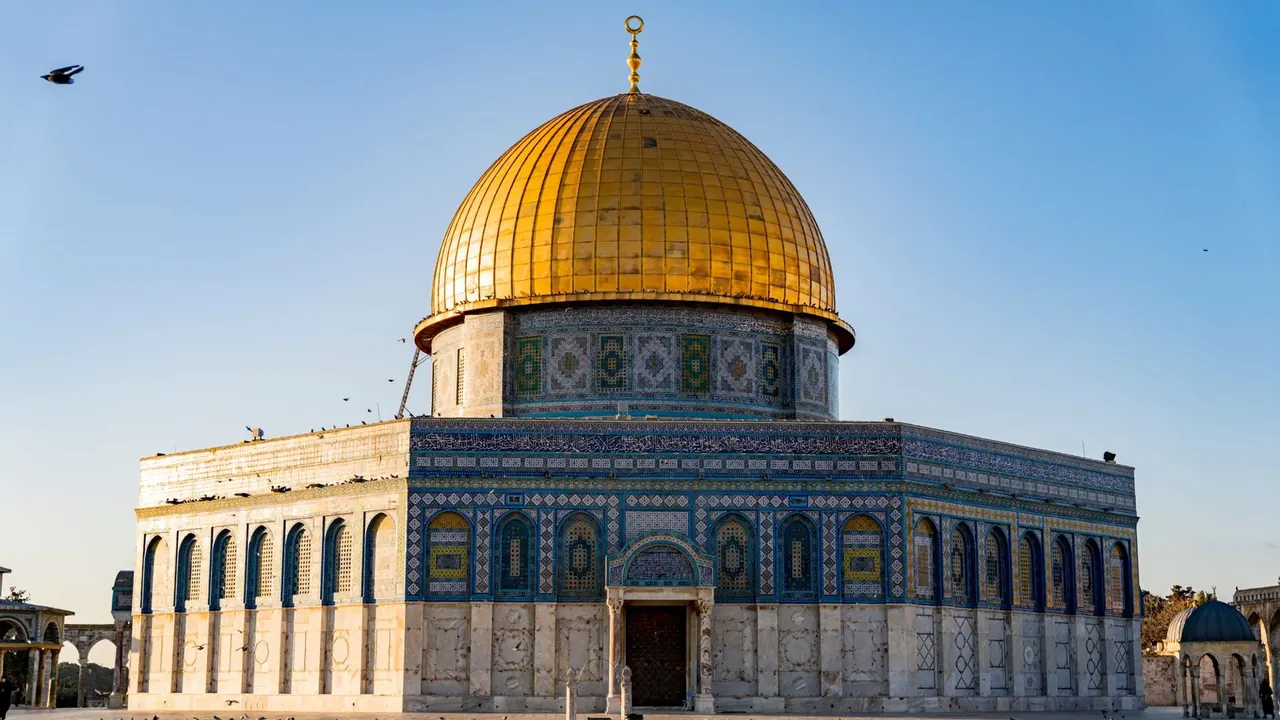
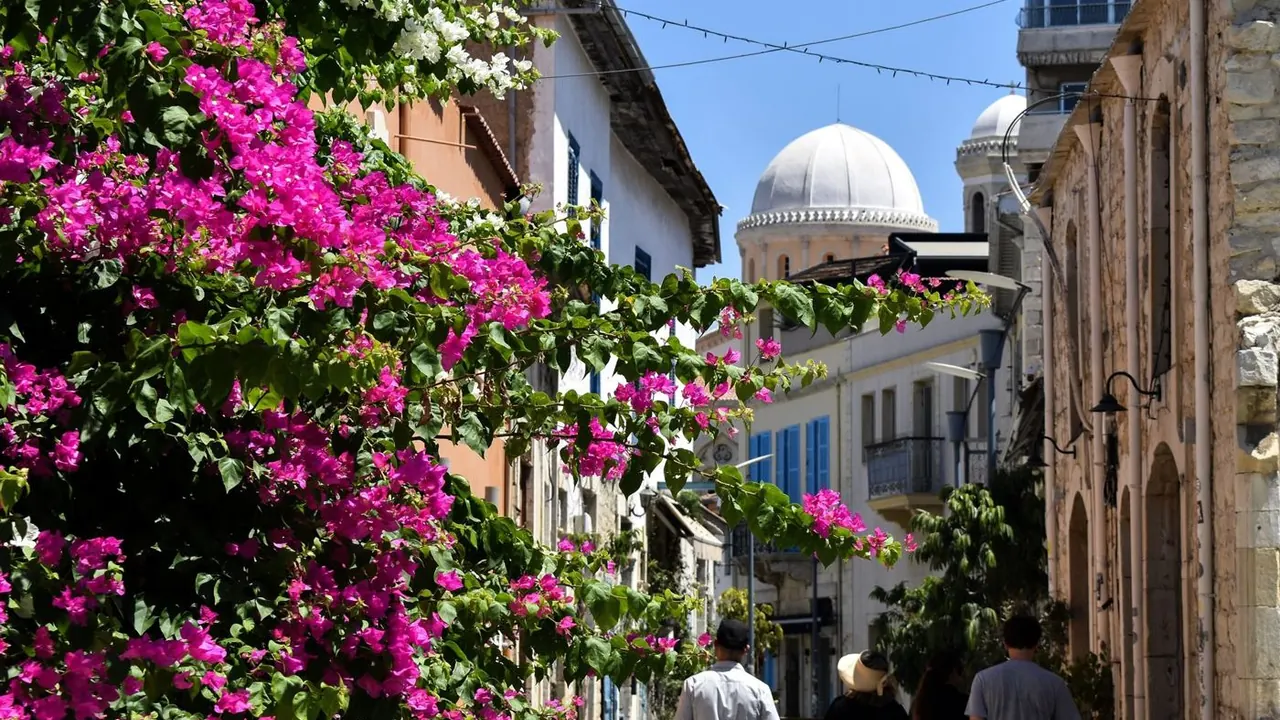
Photos: Jerusalem by Yasir Gürbüz, Pexels License; Limassol by Julian Lupyan, CC0.
Jerusalem or Limassol?
Our verdict in twelve categories, each scored against the same fixed benchmark cities, and the climate month by month, so you can choose for your trip.
Choose Jerusalem for
- culture and sights
- getting around
- food and drink
Jerusalem is for travellers who want the history to be the trip. The Old City, the Israel Museum and Yad Vashem fill several serious days, the food of Mahane Yehuda and the Arab quarters has more range than anything on Limassol's seafront, and Bethlehem, Masada and the Dead Sea are close by. Expect a costly and intense stay, with Shabbat shaping every week, and treat the beach as a day out to Tel Aviv.
Choose Limassol for
- beaches
- prices
- nightlife
Choose Limassol when the sea matters more than the sights. The beaches start at the edge of town, the water stays warm for half the year, families get calm shallows and hotel pools, and evenings mean meze and drinks in the old town. Kourion, Paphos and the Troodos villages supply the history, but the city itself is thin on it, and you will want a car.
Scoreboard
Twelve categories on one fixed scale from 0 to 100. The shaded stretch is the gap between the two.
Your match
Pick a travel style or drag the sliders, and both match scores follow your weighting.
Too close to call, 1 point apart
Wins on culture and sights and getting around with your weighting.
Wins on beaches and prices with your weighting.
What matters to you?
Category by category
What the scores mean for a trip.
Beaches & swimming
Limassol is a beach destination and Jerusalem is not. From Jerusalem, swimming means a full day out: about an hour to the long sand of Tel Aviv, or the same time down to the Dead Sea to float off a rocky, salt-crusted shore.
Limassol has city beaches along the seafront from Dasoudi to Amathus, with shallow, calm water, plus the quieter stretch of Lady's Mile and the cliffs and coves of Governor's Beach and Pissouri a short drive away. The grey sand and shingle near the centre are practical rather than pretty, but you can swim every day without planning around it.
Food & drink
Jerusalem has the richer table. Mahane Yehuda, the morning hummus counters of the Old City and the Kurdish, Iraqi and Yemenite cooking of its Jewish kitchens give it more range than Limassol. Kosher menus and the Shabbat closures in West Jerusalem shape what and when you eat.
Limassol's eating revolves around one long meal, the meze, which is best in family tavernas away from the seafront. Its strength is wine: Commandaria and the vineyard villages on the slopes of Troodos make for a fuller wine outing than the Judean Hills.
Culture & sights
This is the widest gap between the two. Jerusalem's Old City holds the Western Wall, the Holy Sepulchre and the Dome of the Rock within about a square kilometre, with excavations reaching the Bronze Age below and the Israel Museum and Yad Vashem beyond the walls. That is enough for several full days.
Limassol's own sights, the medieval castle, the old mixed Greek and Turkish quarter and the ruins of Amathus, fit into a single day. Its serious heritage lies outside the city, at Kourion and Paphos.
Nightlife
Limassol has the livelier evenings. Bars spill across the lanes around Saripolou Square until the early hours, the marina has cocktail and lounge bars, and summer adds beach bars and a few big clubs on the tourist strip.
Jerusalem's nights centre on Mahane Yehuda once the stalls turn into bars, and on the pubs off Jaffa Road and in the German Colony. Friday goes quiet for Shabbat, and anyone after clubs takes the train to Tel Aviv.
Nature & outdoors
The two are close here, and the difference is mountain against desert. From Limassol you are an hour from the pine forest and trails around Mount Olympos in Troodos, cool when the coast is hot, with flamingos on the Akrotiri salt lake and diving and wind sports along the shore.
Jerusalem looks east into the Judean Desert: the Wadi Qelt canyon, the oasis of Ein Gedi and a dawn climb up the Snake Path to Masada, with greener walks around Sataf to the west. Summer heat restricts walking around both cities, and Jerusalem offers no water sports.
Day trips
Both make strong bases. The outings from Jerusalem carry heavier history: Bethlehem, Masada with Qumran, Jericho and, about two hours away, Crusader Acre and the Baha'i gardens in Haifa. Some West Bank sites involve a checkpoint, so many people go with a guide.
Limassol's list has more variety of scenery, from Kourion's clifftop theatre and the Paphos mosaics to the painted churches of the Troodos valleys and the divided capital, Nicosia. Jerusalem has the fast train to Tel Aviv, while on Cyprus a hire car does most of the work.
Good for families
Limassol suits children better, mainly because of the sea. It has shallow, calm beaches, a promenade for scooters and pushchairs, resort pools and kids' clubs, and a waterpark a short drive west.
Jerusalem welcomes children warmly and has the Biblical Zoo, the aquarium and the Bloomfield Science Museum, and older children enjoy wading through Hezekiah's Tunnel. But a pushchair is useless in the Old City's stepped lanes, and the mood at the holy sites is serious.
Getting around
Jerusalem is easier without a car. The Old City, Jaffa Road and Mahane Yehuda are within walking distance of each other, the light rail runs out to Yad Vashem, and a fast train goes to Tel Aviv and the airport. All of it stops for Shabbat.
Limassol stretches along the coast, with buses on the coast road, no railway on the island and few buses inland. Reaching beaches outside town, Kourion or the mountains usually means a hire car, driven on the left.
Shopping & style
Neither is a shopping destination, but Jerusalem gives you a little more to browse. The Old City souq, the hand-painted Armenian ceramics and the silver and glass Judaica around Ben Yehuda Street give it a stronger craft character, and Mamilla has the international brands.
Limassol leans towards high-street chains, malls and a few marina boutiques. Its best buys are edible: halloumi, carob syrup and Commandaria, with Lefkara lace a short drive away.
Affordability
Both are expensive, but Jerusalem more so. Hotels, sit-down meals and alcohol there cost well above the Mediterranean norm, and only the free holy sites and market lunches ease the bill.
Limassol's seafront and marina charge resort rates in summer. Inland tavernas, cheap buses and cheaper rooms outside the peak months bring the cost of a stay down noticeably.
Live music & performing arts
Jerusalem has more to plan an evening around: the Jerusalem Symphony Orchestra, the Jerusalem Theatre, the Israel Festival and summer concerts in the Sultan's Pool below the walls. Most of its drama is in Hebrew.
Limassol has no resident orchestra, but it does have one memorable setting: ancient Greek plays staged in the theatre at Kourion above the sea at sunset. The Rialto and Pattihio theatres and the carnival parades complete a small programme.
Wellness & relaxation
Neither city is built for unwinding, and they offer rest in different ways. From Jerusalem, relaxation is an outing: you go down to the Dead Sea for mud, sulphur pools and the odd sensation of floating, then come back to a city whose packed lanes and holy sites rarely let you settle. Its one weekly pause comes on Shabbat, when the western city falls silent and the streets belong to people on foot.
In Limassol, rest is part of the ordinary day rather than a trip of its own. Resort spas with pools and steam rooms are on the doorstep, meals stretch out and the seafront suits a slow evening stroll. When the coast grows too warm, the mountain villages above the city give you the stillness Jerusalem only finds once a week.
When should you go?
Pick your month. The climate figures are measured averages, not a forecast.
Jerusalem in July
Limassol in July
Daytime high, °C
Rainfall in the month, mm
Where the figures come from
Jerusalem has no rain gauge within 25 km of the centre, so its rainfall comes from a gridded climate dataset read at the city rather than from a gauge further away.
Limassol has no rain gauge within 25 km of the centre, so its rainfall comes from a gridded climate dataset read at the city rather than from a gauge further away.
Limassol's sunshine is measured 59 km from the centre, at Larnaca Airport.
Temperature and rainfall are climate normals, averaged over the years shown. Jerusalem: 1991-2020 normals, Jerusalem (1.8 km from centre). Limassol: 1998-2020 (sunshine 1991-2020, rainfall 1991-2020) normals, Akrotiri (11.6 km from centre).
Jerusalem sits high and inland, so it has a real winter. January manages only about 12°C and brings the heaviest rain, which makes December to February cold, damp walking weather. The rain stops by May and stays away until October, but July and August reach around 31°C, and long afternoons in the Old City lanes become tiring. April, May and October are the best months for sightseeing, and the Mediterranean on the Tel Aviv coast is warm enough to swim from June to October.
Limassol is milder in winter, around 17°C in January with plenty of sun, though December and January are its wettest months. The sea is comfortable from late May and stays at 26°C or above through September, so the beach season runs well into autumn. Midsummer is hot in both, but on the coast you can cool off in the sea. For walking, both are best in spring and autumn.
Which traveller are you?
On a culture and arts trip, Jerusalem is the clear choice. The Old City's holy sites, the Dead Sea Scrolls at the Israel Museum and Yad Vashem need several days, and its concerts and festival give the evenings more to offer than Limassol's.
For a beach and sun trip, Limassol wins easily. The city beaches begin just east of the centre, coves such as Pissouri and Governor's Beach are a short drive away, and the sea stays warm from May into November. Jerusalem's nearest swimming is an hour away.
On a trip on a tight budget, Limassol is the gentler of two expensive places. Family tavernas away from the coast serve generous meze at fair cost, and quieter months bring rooms down. Jerusalem's hotels and restaurants stay dear even when lunch is hummus and falafel.
Before you go
| Measure | Jerusalem | Limassol |
|---|---|---|
| Official language | Hebrew | Turkish, Greek, Modern Greek |
| Currency | New Israeli Sheqel (ILS) | Euro (EUR) |
| Sockets | CHM230 V, 50 Hz | G240 V, 50 Hz |
| Driving side | Right | Left |
| Time zone | UTC+2, UTC+3 in summer | UTC+2, UTC+3 in summer |
| Emergency number | Police 100, fire 102 | 112 |
| Elevation | 754 m | 10 m |
| Main airport | Ben Gurion International Airport (TLV)42 km from centre111 non-stop destinations | Larnaca International Airport (LCA)58 km from centre112 non-stop destinations |
| Public holidays this year | - | 17 days |
By the numbers
| Measure | Jerusalem | Limassol |
|---|---|---|
| City population | 1,050,151 | 107,970 |
| People per km² | 8,374 | 2,405 |
| Museums within 10 km | 69 | 2 |
| UNESCO World Heritage sites within 50 km | 7 | 3 |
| Swim season, months above 21 °C | 7 months | 6 months |
Where else could you go?
Every comparison below shares a destination with this one, so you can follow Jerusalem or Limassol somewhere new.