Photos: Jodhpur by Jakub Hałun, CC BY-SA 4.0, cropped; Varanasi by Dennis G. Jarvis, CC BY-SA 2.0, cropped.
Jodhpur or Varanasi?
Our verdict in twelve categories, each scored against the same fixed benchmark cities, and the climate month by month, so you can choose for your trip.
Choose Jodhpur for
- families
- nature and the outdoors
- food and drink
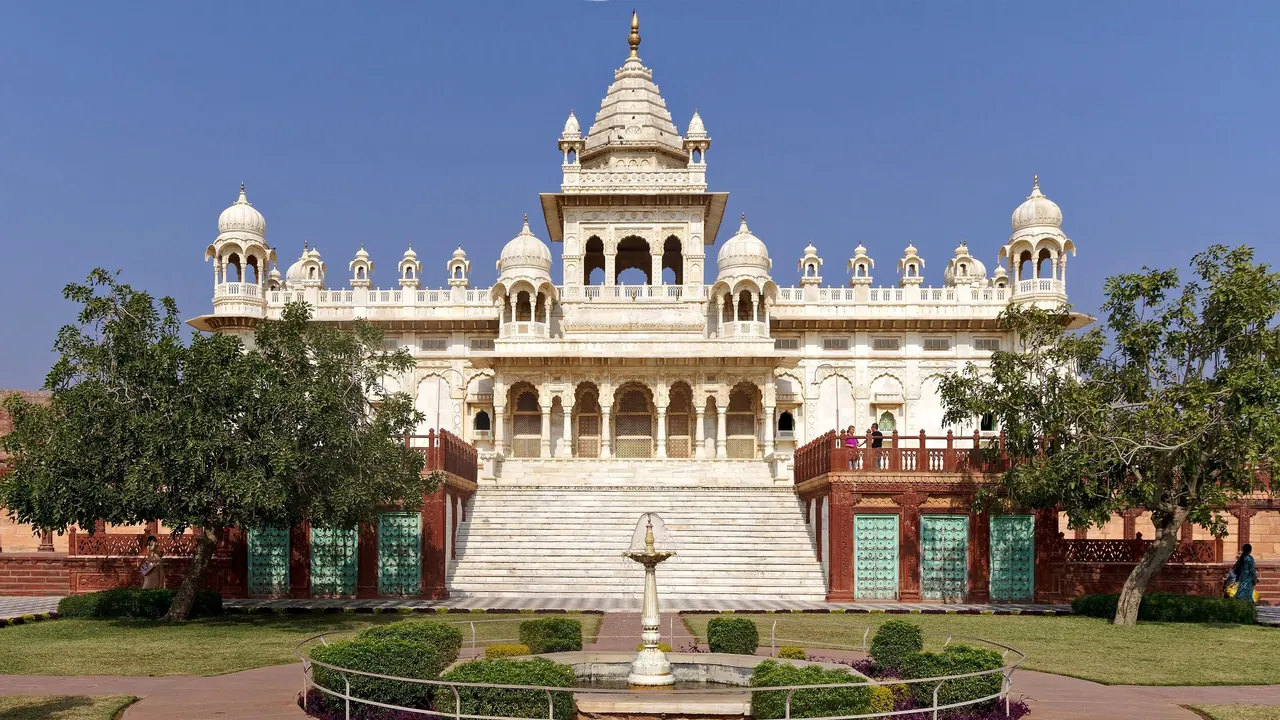
Jodhpur suits travellers who want India's fort-and-palace country in a compact, manageable form. Mehrangarh and its museum, the blue lanes below and the Clock Tower market fill two days. The rock park, ziplines, camel rides and blackbuck drives add an outdoor side that also makes it the far easier choice with children.
Choose Varanasi for
- live music and the arts
- culture and sights
- day trips
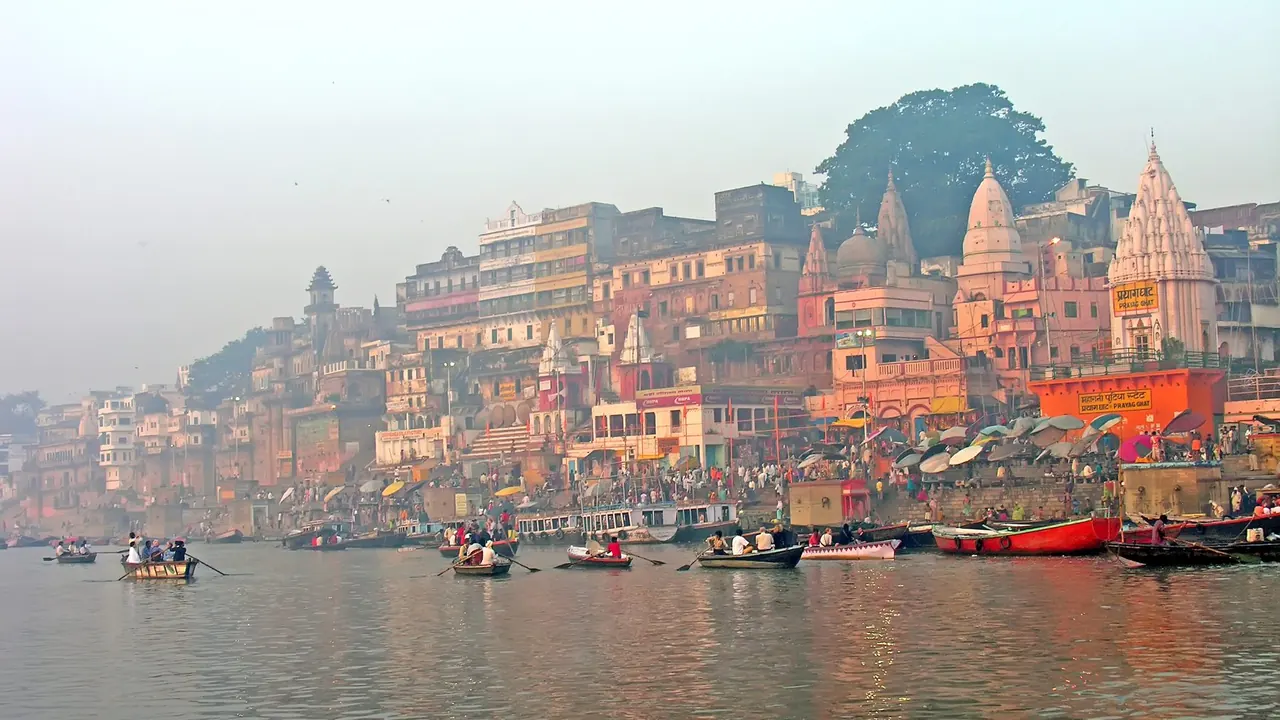
Varanasi is for adults who want to see a living religious city up close and are ready for its intensity. The ghats, the cremation grounds, the evening aarti and a deep tradition of classical music make it the more profound experience of the two. It is also more tiring and much harder going with young children.
Scoreboard
Twelve categories on one fixed scale from 0 to 100. The shaded stretch is the gap between the two.
Your match
Pick a travel style or drag the sliders, and both match scores follow your weighting.
Too close to call, level with your weighting
Wins on families and nature and the outdoors with your weighting.
Wins on live music and the arts and culture and sights with your weighting.
What matters to you?
Category by category
What the scores mean for a trip.
Beaches & swimming
Neither city is anywhere near a coast, so swimming means a hotel pool in both. Jodhpur makes this easier, since many of its heritage hotels have courtyard pools. In Varanasi only a few larger hotels away from the old city have one, and the Ganges is for ritual dips, not swimming.
Food & drink
The two eat about equally well, but they eat differently. Jodhpur's Marwari cooking runs from mirchi vada and saffron lassi to desert thalis with ker sangri. It also has laal maas, a fiery mutton curry from the royal kitchens, and the palace hotels serve formal dinners.
Varanasi is almost entirely vegetarian and lives on the street: kachori and jalebi at breakfast, lassi in clay cups, paan rolled to order, and malaiyo whisked overnight and sold only at dawn in winter. Meat-eaters have more to enjoy in Jodhpur.
Culture & sights
Jodhpur's sights are monuments. Mehrangarh rises out of the rock with one of Rajasthan's best museums inside, and around it are the marble Jaswant Thada, the Toorji ka Jhalra stepwell and the Art Deco Umaid Bhawan. It is a rich but compact set that takes about two days.
Varanasi gives more, though in a different way. Its museums are modest, but its riverfront of more than eighty ghats is a living spectacle: pilgrims bathing, cremations at Manikarnika, and lanes leading up to Kashi Vishwanath. Watching that daily ritual is what stays with people, and nothing in Jodhpur matches it.
Nightlife
Neither city has a night out to offer. Jodhpur's evening is a rooftop dinner facing the lit fort, perhaps with a drink in a heritage hotel bar. Around Varanasi's ghats alcohol is scarce and frowned upon, so evenings centre on the aarti and chai in the Assi Ghat cafés, and the city goes to bed early to be up before dawn.
Nature & outdoors
Jodhpur gets you closer to its landscape. The Rao Jodha Desert Rock Park has trails across volcanic rock right under the fort, and ziplines cross the ramparts. Further out there are jeep drives among blackbuck and chinkara in Bishnoi country, and camel rides into the edge of the Thar.
Varanasi's outdoors is mostly the river: a rowing boat at sunrise and walks on the sandbank opposite. The surrounding plain is flat and farmed, and real scenery starts at the Chandraprabha sanctuary, about two hours away.
Day trips
The two are about level, but Varanasi's best outing is much closer and more significant. Sarnath, where the Buddha gave his first sermon, is about half an hour away, with Chunar Fort and the mosques of Jaunpur within easy reach.
From Jodhpur the main trip is to the carved temples and dunes of Osian, an hour and a half north, along with craft villages such as Salawas. Ranakpur and Kumbhalgarh are better visited on the road to Udaipur.
Good for families
Jodhpur is the far easier place with children. Older children enjoy the fort's armour and elephant howdahs, the ziplines, camel rides and blackbuck safaris, and a hotel with a pool and garden makes the rest manageable, especially in winter.
Varanasi is hard going with children. The lanes are crowded and dirty, cremations burn in plain view, and there are no calm spaces made for children. Families who go usually keep it short: a dawn boat ride, Sarnath and a comfortable hotel away from the ghats.
Getting around
Jodhpur's sights sit in one tight knot below the fort, while Varanasi's run in a long line beside the river. In Jodhpur the Clock Tower market, the blue lanes and the stepwell are a short walk apart, with a steep climb or a quick ride up to Mehrangarh. For Umaid Bhawan, Mandore and the countryside you need an auto at an agreed fare or a car and driver.
In Varanasi the ghats are the route: a riverside walk of several kilometres from Assi to Raj Ghat, with rowing boats covering the same stretch from the water. Behind them the old city's lanes are too narrow for cars and easy to get lost in, so anything further means cycle rickshaws, e-rickshaws or autos, some of which you can book through an app. Neither city has a metro, and in both the heat makes walking hard work once the morning is over.
Shopping & style
Both are craft-and-market cities with touts to watch for, but Jodhpur offers more variety. It has tie-dyed bandhani and leheriya, mojari slippers, lacquerwork and big warehouses of antique furniture that will ship home.
Varanasi has one prize, Banarasi silk brocade, bought from the weavers' quarters or the silk houses around Godowlia. Beyond that it has mostly devotional goods.
Affordability
Both are very cheap. Varanasi stretches a budget a little further because its main sights, the ghats and the aarti, are free. In Jodhpur the big temptation is a night in a converted palace. In Varanasi it is a length of silk, and haggling over it is normal.
Live music & performing arts
Varanasi is one of the great homes of Hindustani classical music, with its own traditions of vocal music, tabla and dance. It has recitals in music schools, all-night concerts at the Sankat Mochan festival in spring, the Dhrupad Mela on Tulsi Ghat and the month-long Ramlila at Ramnagar. Even the nightly aarti is staged performance.
Jodhpur's music is Manganiyar and Langa desert folk, played on hotel terraces and in the fort, peaking at the autumn folk festival at Mehrangarh. It is a pleasure, but there is far less of it.
Wellness & relaxation
Both cities are tiring outside their quiet corners, so rest has to be planned into the day. Jodhpur's calm comes from shaded palace courtyards, gardens and hotel spas. Varanasi's comes from yoga and meditation teachers around Assi Ghat and dawn from a slow boat, which many find moving, though the city as a whole is emotionally draining.
When should you go?
Pick your month. The climate figures are measured averages, not a forecast.
Jodhpur in July
Varanasi in July
Daytime high, °C
Rainfall in the month, mm
Where the figures come from
Varanasi has no weather station within reach, so its figures come from a gridded climate model rather than a measured record, and read a broad area rather than the city itself.
Temperature and rainfall are climate normals, averaged over the years shown. Jodhpur: 1991-2020 normals, Jodhpur (1.3 km from centre). Varanasi: 2001-2020 normals, NASA POWER reanalysis grid, no weather station within 90 km.
Both cities are at their best from November to February, when days are warm, dry and good for walking. Jodhpur is slightly warmer in winter, around 25°C in January, while Varanasi is a little cooler at about 24°C and feels best in the early mornings. From April to June both bake, with Varanasi the harsher at around 43°C in May, and sightseeing shrinks to the hours after dawn.
The monsoon separates them. Jodhpur stays fairly dry even then, its wettest months bringing about 119mm, and it dries out quickly from October. Varanasi gets far more rain, around 249mm in July, and stays damp into October, so it is a less reliable choice in late summer and early autumn.
Which traveller are you?
On a family trip with children, Jodhpur is much the better pick. The fort's cannons and armour, the ziplines, camel rides and blackbuck drives keep older children busy, and heritage hotels with courtyard pools give everyone a break from the heat.
For a culture and arts trip, Varanasi goes deeper. The ritual life of the ghats, Kashi Vishwanath and nearby Sarnath come with a living tradition of Hindustani classical music, from small evening recitals to all-night festivals in temple courtyards.
On an outdoors trip, Jodhpur offers more. You can walk the rock park beneath the fort walls, zipline over the ramparts and ride out into the dunes and the Bishnoi fields. Varanasi's outdoor life barely goes beyond a boat on the river.
Before you go
| Measure | Jodhpur | Varanasi |
|---|---|---|
| Official language | Hindi, English | Hindi, English |
| Currency | Indian Rupee (INR) | Indian Rupee (INR) |
| Sockets | CM230 V, 50 Hz | CM230 V, 50 Hz |
| Driving side | Left | Left |
| Time zone | UTC+5:30 | UTC+5:30 |
| Emergency number | 108 or 112 | 108 or 112 |
| Elevation | 231 m | 76 m |
| Main airport | Jodhpur Airport (JDH)5 km from centre7 non-stop destinations | Lal Bahadur Shastri International Airport (VNS)21 km from centre16 non-stop destinations |
By the numbers
| Measure | Jodhpur | Varanasi |
|---|---|---|
| City population | 1,033,918 | 1,198,491 |
| People per km² | 4,437 | 14,598 |
| Museums within 10 km | 1 | 2 |
| UNESCO World Heritage sites within 50 km | 0 | 1 |
Where else could you go?
Every comparison below shares a destination with this one, so you can follow Jodhpur or Varanasi somewhere new.
- Udaipurvs Jodhpur
- Jaipurvs Jodhpur
- Pokharavs Varanasi
- Kathmanduvs Varanasi
- Delhivs Jodhpur
- Agravs Jodhpur