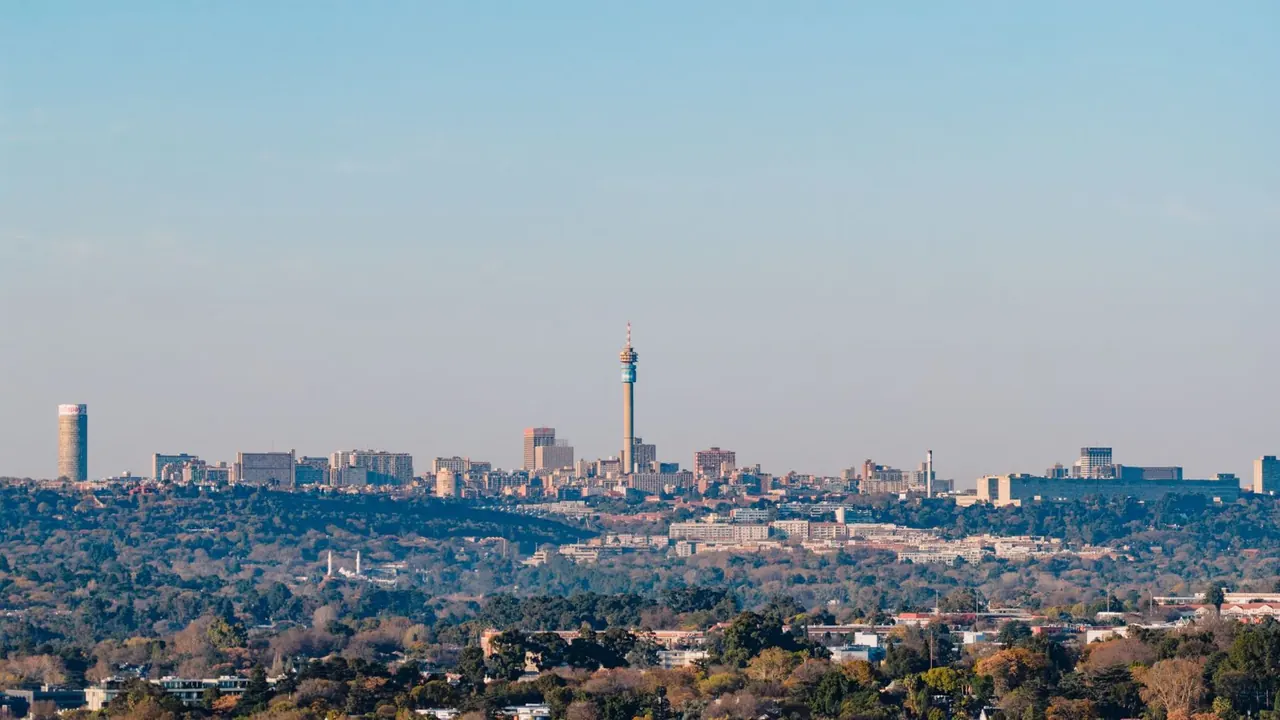
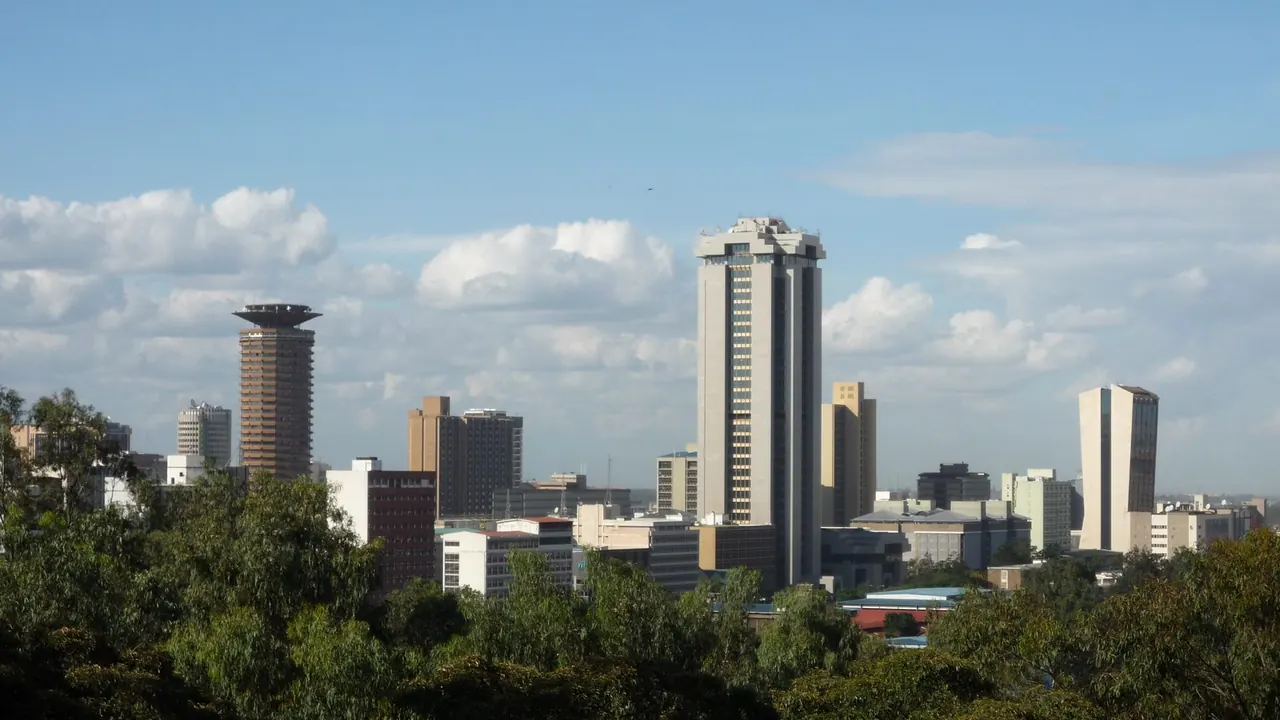
Photos: Johannesburg by K, Pexels License; Nairobi by Lmwangi, CC BY-SA 3.0, cropped.
Johannesburg or Nairobi?
Our verdict in twelve categories, each scored against the same fixed benchmark cities, and the climate month by month, so you can choose for your trip.
Choose Johannesburg for
- day trips
- culture and sights
- live music and the arts
Johannesburg is the better pick for a city trip. It has the deeper story to tell, from the Apartheid Museum and Constitution Hill to Mandela's old street in Soweto, a fuller theatre and jazz scene, and much wider eating, from township grills to Fordsburg's Indian kitchens. Pretoria and the Cradle of Humankind make easy days out, and money goes further here. Choose it if you want history, stages and good food with a game reserve as the side trip.
Choose Nairobi for
- nature and the outdoors
- families
- getting around
Nairobi turns that the other way round, with the city as the side trip and the wildlife as the main event. Lions and rhino graze in Nairobi National Park at the city's southern edge, and the Rift Valley's lakes, gorges and volcanoes are within a couple of hours. Children will remember feeding giraffes and watching orphaned elephants long after the museums are forgotten. Come for animals and open country rather than sights.
Scoreboard
Twelve categories on one fixed scale from 0 to 100. The shaded stretch is the gap between the two.
Your match
Pick a travel style or drag the sliders, and both match scores follow your weighting.
Wins on day trips and culture and sights with your weighting.
Wins on nature and the outdoors and families with your weighting.
What matters to you?
Category by category
What the scores mean for a trip.
Beaches & swimming
Neither city has a beach. Both sit high on inland plateaus, and swimming in either one means a hotel pool.
The difference lies in what you add on. From Johannesburg, locals go to the dams at Hartbeespoort for a day on the water, while the sea needs a separate flight. Nairobi's Kenyan coast is an hour's flight or a long train ride away, so a few beach days before or after the city are easy to arrange.
Food & drink
Both cities love meat cooked over fire, at the shisa nyama in Soweto and around the nyama choma grills of Nairobi, but Johannesburg's table is wider. Street food such as bunny chow and kotas, Fordsburg's Indian and Middle Eastern cooking, Mozambican peri-peri prawns and a polished restaurant scene in Parkhurst, Rosebank and Sandton, with Cape wines, give you much more to work through.
Nairobi's food is plainer: ugali, chapati, sukuma wiki and pilau, with good Indian and Ethiopian cooking as its real strengths. What it does better is coffee, grown just outside town and served in the cafés of Westlands, Kilimani and Karen.
Culture & sights
Both are young cities with no old town to wander, but Johannesburg's history carries far more weight. The Apartheid Museum, the prison turned Constitutional Court on Constitution Hill, and the Hector Pieterson Memorial and Vilakazi Street in Soweto add up to one of the most important stories of the twentieth century. The Origins Centre and the inner city's Art Deco towers add more.
Nairobi's highlights are the National Museum, with its early human fossils, and Karen Blixen's farmhouse, with the Railway Museum as a smaller extra. That fills a day or two, after which most visitors turn to the wildlife.
Nightlife
Both cities go out late and hard, and dance to amapiano among much else. Johannesburg's scene is more spread out and more rooted in house music: Sandton clubs, Braamfontein's student rooftops, Melville's 7th Street, and Soweto grill sessions that start in the afternoon and run into the night.
Nairobi is more concentrated in Westlands, where Afrobeats, gengetone and bongo flava play until dawn, with quieter cocktail bars in Kilimani and local pubs full of football crowds. In both cities, plan to travel door to door by car.
Nature & outdoors
Here Nairobi is far ahead. Its national park starts at the edge of the city, with lions, rhino and giraffes in sight of office towers, and Karura Forest and the Ngong Hills are close by. Within two hours you can reach Lake Naivasha's hippos, Hell's Gate gorge and the crater rim of Longonot.
Johannesburg's outdoors is gentler. The Walter Sisulu Botanical Garden and its black eagles make an easy walk, and the Magaliesberg hills an hour away offer hiking and ballooning. Smaller reserves near town give you a first look at wildlife, but for a full game drive you go to Pilanesberg's volcanic crater, two and a half hours away.
Day trips
Johannesburg has the better list. Pretoria, with the Union Buildings and its jacaranda streets, is an hour away by the Gautrain, and the Cradle of Humankind's fossil caves are a similar distance north-west. Cullinan's diamond mine and Sun City add more days out.
From Nairobi the choices are thinner: a half day among the Limuru tea estates or the stone hand axes at Olorgesailie. Kenya's great historic towns, Mombasa and Lamu, are too far away for a day trip.
Good for families
Nairobi gives children the experiences they will remember. They can feed Rothschild's giraffes at the Giraffe Centre, watch baby elephants being bottle-fed at the Sheldrick orphanage, and see a real safari in a single morning in the national park.
Johannesburg's offer is more conventional: Gold Reef City's rides, the zoo, Sci-Bono and lion parks on the outskirts, with large malls for rainy afternoons. Both cities are spread out and hard on pushchairs, so in either one stay in the suburbs near the sights you plan to visit.
Getting around
Both cities are built for cars, and in both you will rely on ride-hailing or a driver. Johannesburg has one real advantage, the Gautrain, which links the airport, Sandton, Rosebank and Pretoria cleanly and safely.
Nairobi has nothing like it. Its traffic is among Africa's worst, matatu routes are hard to make sense of, and only the central business district is walkable, though the expressway makes the airport run quick.
Shopping & style
Johannesburg is the stronger shopping city, with international luxury brands around Nelson Mandela Square in Sandton, a Sunday rooftop craft market in Rosebank, and local design studios in Parkhurst and the converted inner-city warehouses.
Nairobi is better for crafts than for brands. The Maasai Market, which moves around the city through the week, sells beadwork, soapstone and kiondo baskets that you bargain for, and in Karen you can watch glass and ceramic beads being made. Its malls are ordinary, and it has no luxury streets.
Affordability
Johannesburg is the better value. Restaurant meals, Cape wine and comfortable guesthouses all cost less than you might expect for the standard, and museum entry is modest, although rides and guided tours add up.
In Nairobi, everyday local things are cheap, but visitors rarely live that way. Secure hotels in Westlands or Karen are priced for international guests, and non-residents pay far more than Kenyans for park entry, on top of the cost of a vehicle for game drives.
Live music & performing arts
Johannesburg has the fuller stage. The Market Theatre in Newtown, known for its protest plays under apartheid, still puts on South African drama, and the Soweto Theatre, big musical houses and the Johannesburg Philharmonic broaden it further. Jazz, going back to Sophiatown, has the Joy of Jazz festival as its high point.
Nairobi's strength is live bands playing benga, rumba and Afro-fusion on weekend nights, and the traditional dance shows at Bomas of Kenya. Theatre is mainly at the National Theatre and the Kenya Cultural Centre, and there is a spoken-word and comedy scene.
Wellness & relaxation
Neither city is a place to unwind. Both are fast and loud, neither has a bathing tradition, and people in both go elsewhere to rest.
The difference is where you find calm. Johannesburg has reasonably priced hotel and day spas in the northern suburbs, with spa retreats in the Magaliesberg. In Nairobi, peace comes from the garden cottages of Karen and Langata, with cool mornings and breakfast on the veranda.
When should you go?
Pick your month. The climate figures are measured averages, not a forecast.
Johannesburg in July
Nairobi in July
Daytime high, °C
Rainfall in the month, mm
Temperature and rainfall are climate normals, averaged over the years shown. Johannesburg: 2005-2019 (sunshine 1991-2020, rainfall 1991-2020) normals, Johannesburg B / Roosevelt Park (7.3 km from centre). Nairobi: 1991-2020 normals, Nairobi ACC/FIC/RCC/MET/COM/ (13.3 km from centre).
Johannesburg has one clear dry season. From May to September the rain all but stops and the sun shines almost every day, but the days are cool, around 19°C in June and July. October to March is the wet summer, when afternoon thunderstorms bring about 135mm a month in December and January. Summer days are warm but never fierce, so the heat never gets in the way of sightseeing, and the only real drawback of winter is a chilly start to the day.
Nairobi stays mild all year, with highs between 24°C and 28°C, but it has two rainy seasons. The long rains come in April and May and the short rains in November, with April and November the wettest months at over 120mm each and May a little lighter. June to September is the driest stretch, but it is often grey and the coolest time of year. January and February are the sunniest and warmest months, with only light rain. If you want to see both cities on one trip, aim for September, when both are dry and pleasantly warm.
Which traveller are you?
On a culture and arts trip, Johannesburg is the clear choice. The Apartheid Museum, Constitution Hill and Soweto give a day each, and the Market Theatre and jazz clubs fill the evenings. Nairobi's sights take a day or two.
For an outdoors trip, Nairobi wins easily. You can be on a dawn game drive in the national park, then walk in Karura Forest, and within two hours cycle among zebras at Hell's Gate or climb Mount Longonot.
On a family trip with children, Nairobi has the stronger pull. The Giraffe Centre, the elephant orphanage and a short safari in the national park are all close together in Karen and Langata. Johannesburg leans more on theme parks and malls.
Before you go
| Measure | Johannesburg | Nairobi |
|---|---|---|
| Official language | English, Zulu, Xhosa, Afrikaans, Venda, Northern Sotho, Swazi, Tswana, Tsonga, Sesotho, Southern Ndebele, South African Sign Language | English, Swahili |
| Currency | Rand (ZAR) | Kenyan Shilling (KES) |
| Sockets | CMN230 V, 50 Hz | G240 V, 50 Hz |
| Driving side | Left | Left |
| Time zone | UTC+2 | UTC+3 |
| Emergency number | 112 | Police 112/999, ambulance 112/999, fire 112/999 |
| Elevation | 1,753 m | 1,661 m |
| Main airport | O.R. Tambo International Airport (JNB)22 km from centre84 non-stop destinations | Jomo Kenyatta International Airport (NBO)13 km from centre60 non-stop destinations |
| Public holidays this year | 13 days | 10 days |
By the numbers
| Measure | Johannesburg | Nairobi |
|---|---|---|
| City population | 4,803,262 | 5,545,000 |
| People per km² | 2,922 | 7,967 |
| Museums within 10 km | 14 | 4 |
| UNESCO World Heritage sites within 50 km | 2 | 0 |
Where else could you go?
Every comparison below shares a destination with this one, so you can follow Johannesburg or Nairobi somewhere new.