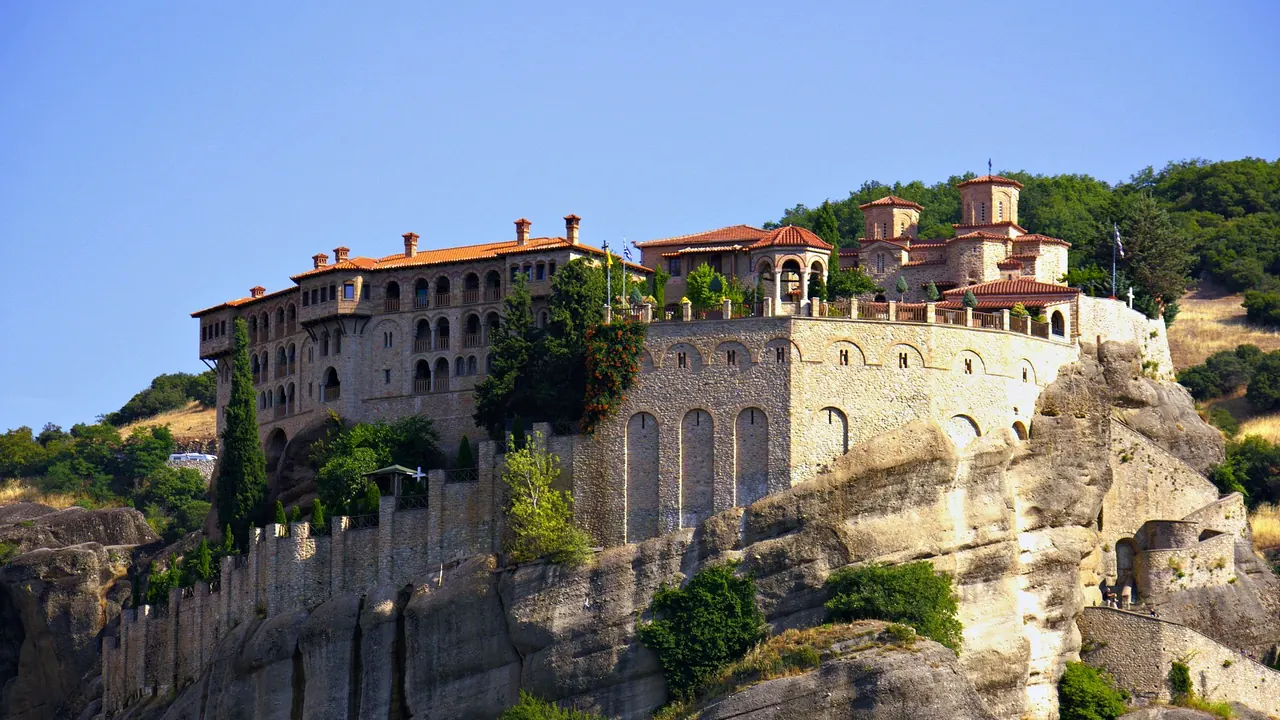
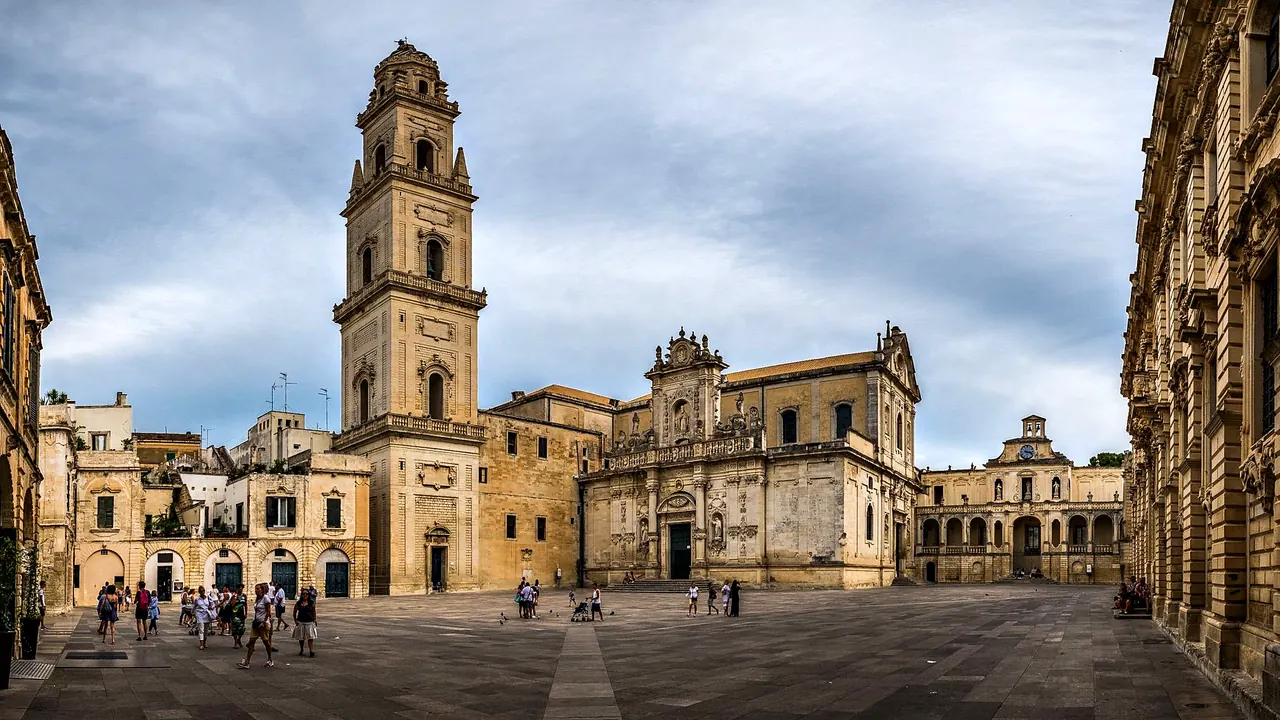
Photos: Kalambaka by José Barbosa, Pexels License; Lecce by Giuseppe Milo, CC BY 3.0, cropped.
Kalambaka or Lecce?
Our verdict in twelve categories, each scored against the same fixed benchmark cities, and the climate month by month, so you can choose for your trip.
Choose Kalambaka for
- nature and the outdoors
- prices
Kalambaka is for travellers who come for landscape and are happy to give it a couple of days. The monasteries of Meteora sit on rock pillars just behind the town, and the same rocks give you footpaths, climbing and the start of the Pindos mountains. It is also the cheaper of the two. Choose it as a stop on a wider Greek trip, for walking and the views, and not for the evenings.
Choose Lecce for
- beaches
- food and drink
- live music and the arts
Lecce gives you a fuller vacation. Its Baroque old town is pleasant to walk at any hour, the Salento coast has sandy beaches and clear water within a short drive, and the food, the evening aperitivo and the summer pizzica festivals give you something to do after dark. Couples, families and anyone staying a week will find more to fill their days here.
Scoreboard
Twelve categories on one fixed scale from 0 to 100. The shaded stretch is the gap between the two.
Your match
Pick a travel style or drag the sliders, and both match scores follow your weighting.
Wins on nature and the outdoors and prices with your weighting.
Wins on beaches and food and drink with your weighting.
What matters to you?
Category by category
What the scores mean for a trip.
Beaches & swimming
Kalambaka has no beach to speak of. It lies deep inland on the Thessalian plain, so swimming means a hotel pool or a cold river in the Pindos. Save your sea days for another part of the trip.
Lecce is also slightly inland, but the Salento coast is close. Within about half an hour you reach the pale coves and sea stacks of Torre dell'Orso. On the Ionian side, Porto Cesareo and Punta Prosciutto have long, shallow beaches of fine sand. In summer you can easily spend every morning by the sea.
Food & drink
Both towns serve their own regional cooking, but Lecce's is more distinctive and more varied. Kalambaka's tavernas in town and in Kastraki serve generous grilled lamb, bean soups, pies and tsipouro with meze. The menu changes little from one table to the next, and the view of the rocks at sunset is a large part of the meal.
In Lecce, food shapes the whole day. You start with pasticciotto and iced almond-milk coffee, have a rustico mid-morning, and finish with ciceri e tria or fava purée with chicory in an old-town osteria, with dark Primitivo to drink. Neither place offers much beyond local food.
Culture & sights
Kalambaka has one great subject. The frescoed monasteries of Meteora, such as the Great Meteoron, Varlaam and Roussanou, sit on top of rock pillars and are reached by rock-cut steps. They are unforgettable, but once you have seen them and the Byzantine church in town, two days are enough.
Lecce has more depth for a culture trip. Its whole old town is carved in honey-coloured Baroque limestone, from Santa Croce to the enclosed Piazza del Duomo, with a Roman amphitheatre half uncovered below Piazza Sant'Oronzo and Messapian layers underground. You enjoy it by walking the streets over several days rather than ticking off museums.
Nightlife
Kalambaka goes to bed early. An evening means dinner and perhaps a drink at a café-bar on the central square. For anything livelier you have to drive half an hour to Trikala.
Lecce has a real evening routine: the passeggiata, an aperitivo on the piazzas, then wine and cocktail bars in the old-town lanes, with students keeping weekends going late. In summer, dancing moves out to beach clubs near Gallipoli.
Nature & outdoors
Kalambaka is built around its landscape. Grey pillars rise around 400m above the plain right behind the town, and old monks' footpaths climb through oak woods to the clifftops. The rock is one of Europe's best-known climbing areas. Further west, the Pindos adds fir forests at Pertouli, rafting on the Aspropotamos and small ski slopes near Metsovo.
Lecce's outdoors is mostly the sea. Around the town is a flat plain of olive groves, good only for easy cycling. The interest is on the coast: clifftop paths and sea caves from Roca Vecchia to Leuca, snorkelling and diving, birdwatching at Le Cesine, and the pine woods above Porto Selvaggio.
Day trips
Lecce is the better base for day trips. Walled Otranto with its cathedral mosaic, Gallipoli's island old town, white Ostuni, the trulli of Alberobello and Taranto's museum of Greek antiquities are all within an easy drive, along with frescoed Galatina closer in.
Kalambaka has fewer but varied options. You can visit Trikala's Varousi quarter and castle, the stone village of Metsovo over the Pindos, or Ioannina's lakeside castle quarter, with the Zagori villages at the limit of a day out. In both regions you will want a car.
Good for families
Lecce is easier with children. The old town is largely free of traffic, families fill the piazzas in the evening with gelato in hand, and the shallow sand at Porto Cesareo suits toddlers. In midsummer, plan the day around the beach and a long midday rest.
Kalambaka can thrill older children who can manage the trails or a beginners' climb. Younger ones struggle with the long flights of steps, the dress rules and the hushed monastery interiors. One or two nights is usually enough here.
Getting around
The two are much alike: each has a small, flat centre you can walk, and each needs a car for the wider region. The difference is where the hard part lies. In Kalambaka it is the climb to the monasteries several kilometres up a winding road, where the bus is infrequent, so you either hike for an hour or take a taxi.
In Lecce the old town is easy, and the station at its edge has fast trains to Bari. The difficulty is reaching the beaches and Salento villages, where trains are slow and buses run only in summer. Driving inside the walls is restricted, so park outside.
Shopping & style
Lecce has more worth taking home. Its workshops make cartapesta saints and nativity figures, and you can also find limestone carvings, Grottaglie ceramics, olive oil and taralli. It is still browsing rather than a shopping trip.
Kalambaka offers one street of painted icons, honey, herbs and tsipouro, plus the religious items sold at the monasteries themselves.
Affordability
Kalambaka is the cheaper stay. Family guesthouses and taverna meals cost little, and monastery entry fees are small. Prices rise mainly over Orthodox Easter, on national long weekends and at hotels facing the rocks.
Lecce is good value for Italy, with cheap street pastries and fairly priced B&Bs in old palazzi. August is the exception, when rooms and beach loungers become expensive across the Salento. In both places, car hire adds to the bill.
Live music & performing arts
Lecce has a live culture and Kalambaka does not. The Politeama Greco and the historic Teatro Paisiello stage opera, concerts and theatre. In summer, pizzica tambourine music fills village festivals and peaks at the huge Notte della Taranta night in Melpignano.
In Kalambaka, live music is limited to the odd taverna musician or village festival. The Byzantine chant at a monastery service is worship, not a show.
Wellness & relaxation
Lecce has more to offer for rest and spa time. The sulphur grottoes and clifftop pools of Santa Cesarea Terme are under an hour away, several old masserie on the plain have become quiet spa retreats, and the long afternoon rest sets a slow pace.
Kalambaka's calm is simply quiet: an early-sleeping town and soft dawn light on the rocks. For treatments, you are limited to a few hotel saunas and massage rooms.
When should you go?
Pick your month. The climate figures are measured averages, not a forecast.
Kalambaka in July
Lecce in July
Daytime high, °C
Rainfall in the month, mm
Where the figures come from
Kalambaka's temperatures are measured 68 km from the centre, at Larissa Airport.
Kalambaka's station stands 164 m below the city centre, so the centre is likely a little cooler than the figures say.
Kalambaka has no rain gauge within 25 km of the centre, so its rainfall comes from a gridded climate dataset read at the city rather than from a gauge further away.
Lecce's temperatures are measured 38 km from the centre, at Brindisi.
Lecce has no rain gauge within 25 km of the centre, so its rainfall comes from a gridded climate dataset read at the city rather than from a gauge further away.
Temperature and rainfall are climate normals, averaged over the years shown. Kalambaka: 1991-2020 normals, Larissa Airport (68.1 km from centre). Lecce: 1991-2020 (sunshine 1981-2010) normals, Brindisi (38 km from centre).
Kalambaka has a hotter summer and a colder winter. July reaches about 34°C, which makes the exposed trails up to the monasteries hard going at midday, while winter days of around 10°C bring the wettest weather of the year. The best months for walking are late April, May, late September and October, when it is warm and sunny but not fierce. November and December are grey and rainy.
Lecce's year is gentler, and summer revolves around the sea. Daytime highs stay near 30°C in July and August, and the sea warms to about 25°C, so the beach season runs from June into October. Rain arrives in autumn and peaks in November at around 102mm. Winters are milder than in Kalambaka, so you can still walk the old town comfortably in the cool months, but spring and early autumn are the best balance of warmth and sightseeing.
Which traveller are you?
For a beach and sun trip, Lecce is the clear choice. The Salento coast puts Adriatic coves and shallow Ionian sands within an hour, and the sea stays warm into October. Kalambaka is more than two hours from any beach.
On an outdoors trip, Kalambaka wins. You can walk from town straight onto old monks' paths between the Meteora pillars, climb long bolted routes on the rock, and head west into the Pindos for fir forests, rafting and hiking.
For a food and nightlife trip, Lecce has much more to offer. Its days run from pasticciotto at breakfast to orecchiette and Negroamaro at dinner, then on to wine bars and late student weekends. Kalambaka's evenings end after a grilled supper on the square.
Before you go
| Measure | Kalambaka | Lecce |
|---|---|---|
| Official language | Greek | Italian |
| Currency | Euro (EUR) | Euro (EUR) |
| Sockets | CF230 V, 50 Hz | CFL230 V, 50 Hz |
| Driving side | Right | Right |
| Time zone | UTC+2, UTC+3 in summer | UTC+1, UTC+2 in summer |
| Emergency number | 112 | 112 |
| Elevation | 237 m | 49 m |
| Main airport | Thessaloniki Macedonia International Airport (SKG)146 km from centre90 non-stop destinations | Brindisi Airport (BDS)39 km from centre49 non-stop destinations |
| Public holidays this year | 15 days | 13 days |
By the numbers
| Measure | Kalambaka | Lecce |
|---|---|---|
| City population | 8,372 | 94,783 |
| People per km² | 4,925 | 393 |
| Museums within 10 km | 0 | 11 |
| UNESCO World Heritage sites within 50 km | 1 | 0 |
| Swim season, months above 21 °C | - | 4 months |
Where else could you go?
Every comparison below shares a destination with this one, so you can follow Kalambaka or Lecce somewhere new.