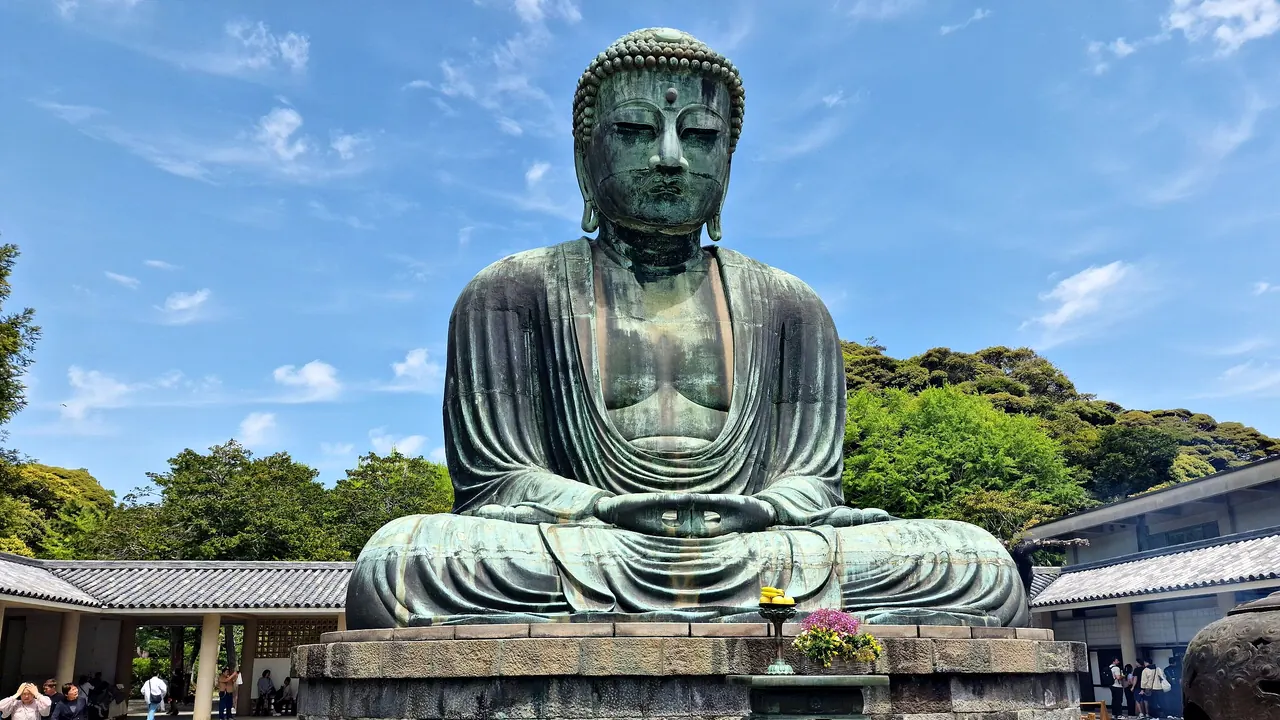
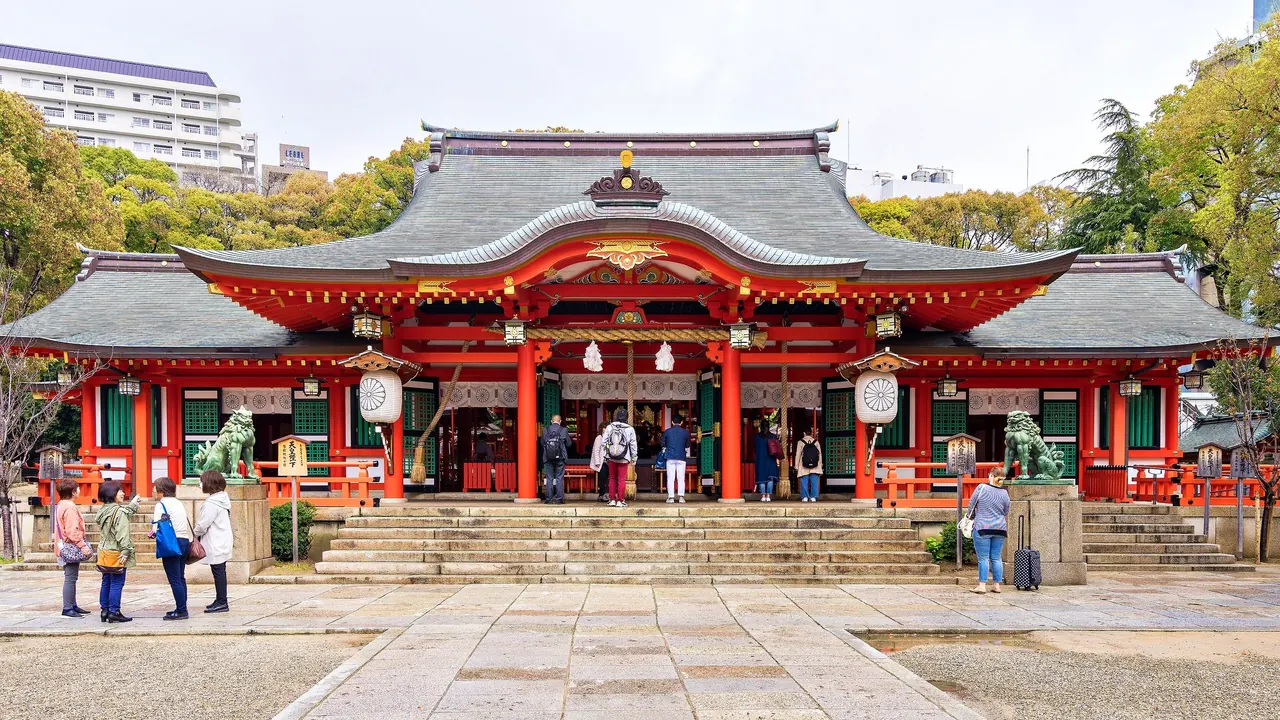
Photos: Kamakura by Anagoria, CC BY-SA 4.0, cropped; Kobe by Wei-Te Wong, CC BY-SA 2.0, cropped.
Kamakura or Kobe?
Our verdict in twelve categories, each scored against the same fixed benchmark cities, and the climate month by month, so you can choose for your trip.
Choose Kamakura for
- culture and sights
- beaches
Kamakura suits a traveller who comes for history and a slower pace: the Great Buddha, the Zen temples of Kita-Kamakura and forest trails linking them over the hills, with a grey-sand beach for summer afternoons. It is a town for full days and early nights, best for a stay of a few nights built around temples, ideally on weekdays when the crowds thin.
Choose Kobe for
- live music and the arts
- wellness
- food and drink
Food lovers, families and anyone who wants evenings as good as their days will do better in Kobe. It eats and drinks far better, has jazz and bars after dark, a hot-spring town within its own boundaries and mountains rising straight behind the streets. It is also the cheaper place to sleep and an easier base for day trips to Himeji, Kyoto and Osaka.
Scoreboard
Twelve categories on one fixed scale from 0 to 100. The shaded stretch is the gap between the two.
Your match
Pick a travel style or drag the sliders, and both match scores follow your weighting.
Wins on culture and sights and beaches with your weighting.
Wins on live music and the arts and wellness with your weighting.
What matters to you?
Category by category
What the scores mean for a trip.
Beaches & swimming
Kamakura is the better choice for beach time. Yuigahama and Zaimokuza begin about fifteen minutes' walk from the station, the Enoden runs along more shore towards Enoshima, and Zushi and Hayama offer calmer water to the east. The sand is dark and volcanic and the sea rarely clear, but the beach is part of the town itself.
Kobe's own waterfront is mostly port, so swimming means taking the train out to Suma, a sandy beach with lifeguards in July and August and jellyfish late in the season. Clearer water means a trip by car or bus to Awaji Island. In both places swimming is limited to high summer.
Food & drink
Kobe is much the better place to eat. Beyond teppanyaki Kobe beef, its port past left it with a real baking and coffee-house culture in Motomachi and Kitano, Nankinmachi's steamed buns, sobameshi, Akashi's octopus dumplings and the sake breweries of Nada. Izakaya and ramen around the stations mean dinner is easy any night.
Kamakura's cooking is narrower but has its own character: shirasu whitebait over rice near the beach, refined shojin ryori vegetarian cooking from the Zen temples, and snacks along Komachi-dori. It is better at lunch than at dinner, and many visitors head to Yokohama for an evening meal.
Culture & sights
Kamakura has much the deeper heritage. As the warrior capital from 1192, it has the bronze Great Buddha, the Minamoto shrine at Tsurugaoka Hachimangu and the major Zen temples of Engaku-ji and Kencho-ji, plus smaller pleasures such as Hase-dera's hydrangeas and Hokoku-ji's bamboo grove.
Kobe's sights belong to a later and different story, the treaty port. There are the merchants' houses of Kitano, the earthquake memorial at Meriken Park and its moving museum, and Tadao Ando's art museum on the bay. It is more modern and more museum-led, and a couple of days covers it.
Nightlife
Neither town has much of a club scene, but Kobe has a proper evening out and Kamakura barely does. Sannomiya's lanes towards Kitanozaka are packed with izakaya, whisky bars and tiny counters, and Harborland is lit up for a drink by the water. When people want a late night, Osaka is twenty minutes away.
In Kamakura a few bars near the station and the beach serve a drink after dinner, and nothing stays open late. A real night out means an hour on the train to Yokohama or Tokyo.
Nature & outdoors
Both have green hills right behind the town, but they are different landscapes. Kobe's are proper mountains: trails start near Shin-Kobe past the Nunobiki falls, ropeways climb Rokko and Maya for night views over the bay, and the full ridge traverse is a serious walk. That gives it the edge for hikers.
Kamakura's hills are lower and gentler. Its forest trails link the temples past cave tombs, and its strength is the coast, with surfing at Shichirigahama, paddleboarding at Zaimokuza and winter views of Fuji from Inamuragasaki.
Day trips
Both are excellent bases, but Kobe has the stronger list. Himeji Castle is under an hour west, Osaka twenty minutes east, and Kyoto and Nara are easy days. The shinkansen also puts Kurashiki and even Hiroshima within a day's reach.
Kamakura looks towards the capital instead. Tokyo is about an hour away, Yokohama under half an hour, Enoshima is a short ride on the Enoden, and Hakone's hot springs and lake take about an hour and a half.
Good for families
Kobe is the easier city with children. Oji Zoo, Suma's aquarium, the indoor animal park on Port Island and Harborland's Ferris wheel are all close by, the cable cars up Rokko end at a farm and play areas, and Universal Studios Japan is about an hour away.
Kamakura charms children in smaller ways. They can climb inside the Great Buddha, ride the Enoden by the sea, swim off gentle summer beaches and visit the aquarium at Katase. Temple staircases, crowded weekends and small hotel rooms make it more effort.
Getting around
Kamakura is a town you cover on foot with help from the Enoden and JR, while Kobe has a full city network, and Kobe's is the smoother to use. In Kamakura the shrine and Komachi-dori are minutes from the station, and short train rides reach the Great Buddha, Hase-dera and Kita-Kamakura. At weekends, though, traffic stalls the buses, the Enoden fills to standing and many temples sit at the top of steep steps. On the level ground down to the sea, cycling avoids the queues.
Kobe's long, narrow shape is easy to read, with parallel rail lines running its length. JR, Hankyu, Hanshin, the subway and the driverless Port Liner all take one IC card. Chinatown, the harbour and the arcades are within walking distance of Sannomiya, and Kitano's slope is the only real climb.
Shopping & style
Kobe is the better place to shop. Its covered arcades in Sannomiya and Motomachi, the Daimaru store in the old foreign settlement and the boutiques along Tor Road suit fashion shoppers. Its specialities, pearls, Western cakes, Nada sake and Nagata leather shoes, make distinctive things to bring home.
Kamakura is an afternoon of souvenir browsing on Komachi-dori and the quieter craft shops around Wakamiya-oji. Kamakura-bori lacquered woodwork is the piece worth hunting for.
Affordability
Kobe is the cheaper stay. Its business hotels around Sannomiya are clean, modestly priced and rarely full, and ramen, bakery breakfasts and izakaya plates are good value. The splurges are optional ones, such as a beef teppanyaki dinner or a night in an Arima ryokan.
Kamakura's day-to-day costs are fair, with small temple fees and cheap soba lunches, but beds are scarce and Tokyo weekenders keep them in demand. Many visitors sleep in Yokohama or Fujisawa and come in for the day.
Live music & performing arts
Kobe has a real live tradition in jazz. Small clubs with resident trios are spread across Sannomiya and Kitano, and an autumn jazz festival takes over Kitano. The Hyogo Performing Arts Center in Nishinomiya has its own orchestra, and the Takarazuka Revue performs about forty minutes away.
Kamakura has little on most evenings beyond occasional Noh at a small private theatre. Its best performances are festival ones, such as dance at Tsurugaoka Hachimangu in spring and horseback archery in autumn.
Wellness & relaxation
For rest, Kobe has the clear advantage. Arima Onsen, with its rust-red kinsen and clear ginsen waters, lies within the city across Mount Rokko, close enough for an afternoon soak or a night with a kaiseki dinner. Sento and harbour promenades add quieter moments in town.
Kamakura offers a different kind of calm: public zazen at Engaku-ji and Kencho-ji, and moss gardens and tea pavilions around Jomyo-ji and Zuisen-ji. It has no springs, though, and the stillness disappears on crowded weekends.
When should you go?
Pick your month. The climate figures are measured averages, not a forecast.
Kamakura in July
Kobe in July
Daytime high, °C
Rainfall in the month, mm
Where the figures come from
Kamakura's sunshine is measured 45 km from the centre, at Tokyo.
Kobe's sunshine is measured 29 km from the centre, at Osaka.
Temperature and rainfall are climate normals, averaged over the years shown. Kamakura: 1991-2020 normals, Yokosuka Fwf (11.6 km from centre). Kobe: 1971-2000 (sunshine 1991-2020, rainfall 1991-2020) normals, Kobe (1.3 km from centre).
Both towns share the same basic rhythm: cool winters, mild springs, hot and humid summers and a wet early autumn. Spring and late autumn are the best months for walking temples, trails and streets in either place. Swimming is a July and August affair in both, when the sea reaches about 26°C off Kamakura and a degree warmer off Kobe. Kobe runs hotter in high summer, around 32°C in August, which makes hiking in the Rokko mountains heavy going.
The wet seasons fall differently. Kobe's heaviest rain comes in June and July, peaking at about 226mm in July, while Kamakura's wettest stretch is September and October, with about 211mm in October. That makes October the better month for Kobe. Winter in Kamakura is a little milder and noticeably sunnier, with clear days that bring Mount Fuji into view across the bay, so it is the better choice of the two from December to February.
Which traveller are you?
For a culture and arts trip centred on history, Kamakura is the clear choice. The seat of Japan's first warrior government still has its great Zen temples, the open-air Great Buddha and Tsurugaoka Hachimangu, while Kobe's treaty-port sights fill only a pleasant couple of days.
On a food and nightlife trip, Kobe wins easily. Kobe beef teppanyaki, Nada sake breweries, Chinatown snacks and bakeries come first, and then the bars of Sannomiya go on after dinner. Kamakura offers whitebait and temple cuisine, but it goes quiet once the day-trippers leave.
For a relaxing and wellness trip, Kobe has Arima Onsen, one of Japan's oldest hot-spring towns, about half an hour from the centre, with ryokan and public baths. Kamakura has zazen sessions and moss gardens but no springs of its own.
Before you go
| Measure | Kamakura | Kobe |
|---|---|---|
| Official language | Japanese | Japanese |
| Currency | Yen (JPY) | Yen (JPY) |
| Sockets | AB100 V, 50 and 60 Hz depending on the region | AB100 V, 50 and 60 Hz depending on the region |
| Driving side | Left | Left |
| Time zone | UTC+9 | UTC+9 |
| Emergency number | Police 110, fire 119 | Police 110, fire 119 |
| Elevation | 17 m | 17 m |
| Main airport | Tokyo Haneda International Airport (HND)34 km from centre98 non-stop destinations | Kobe Airport (UKB)7 km from centre15 non-stop destinations |
| Public holidays this year | 16 days | 16 days |
By the numbers
| Measure | Kamakura | Kobe |
|---|---|---|
| City population | 172,929 | 1,521,707 |
| People per km² | 4,356 | 2,732 |
| Museums within 10 km | 18 | 46 |
| UNESCO World Heritage sites within 50 km | 1 | 3 |
| Swim season, months above 21 °C | 5 months | 5 months |
Where else could you go?
Every comparison below shares a destination with this one, so you can follow Kamakura or Kobe somewhere new.