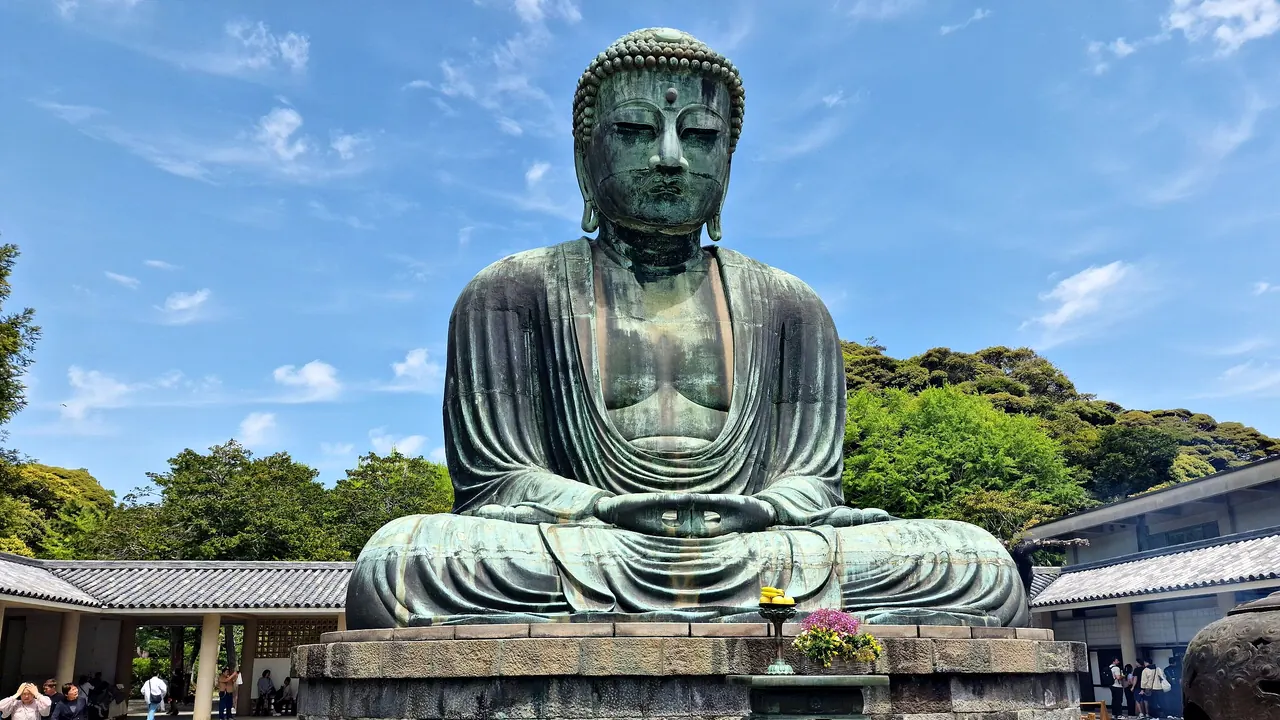
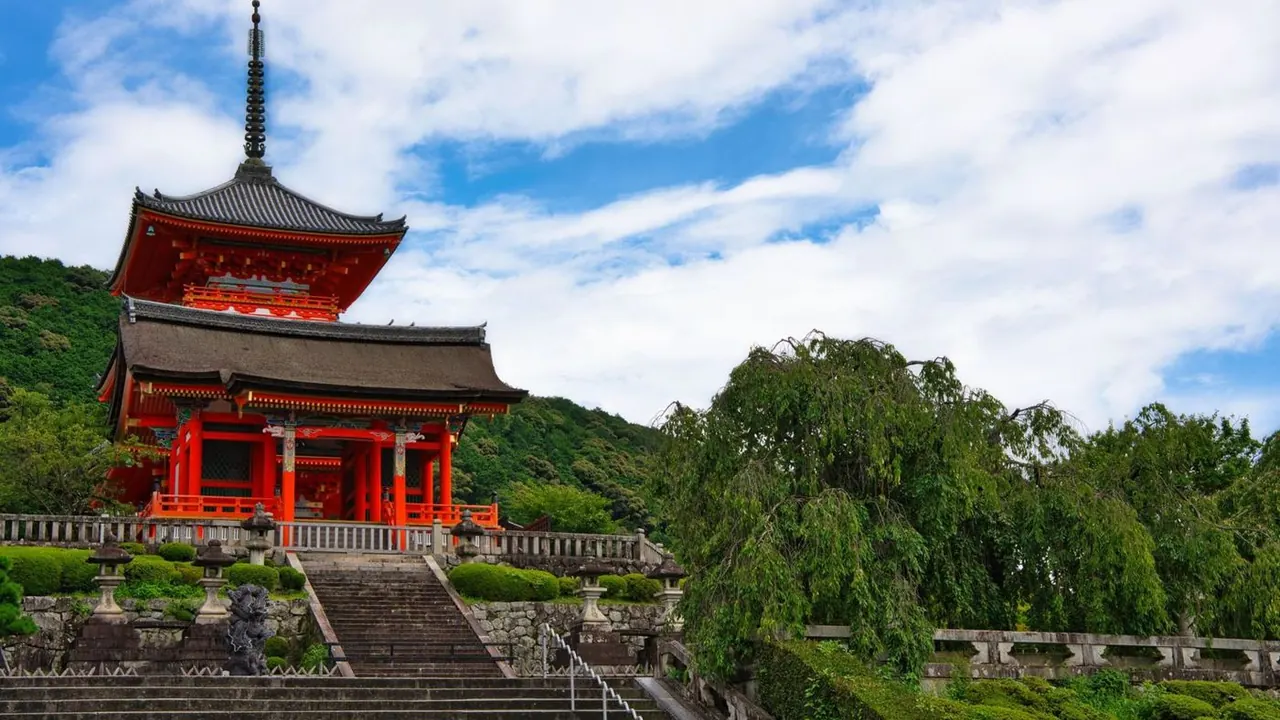
Photos: Kamakura by Anagoria, CC BY-SA 4.0, cropped; Kyoto by Bert Mulder, Pexels License.
Kamakura or Kyoto?
Our verdict in twelve categories, each scored against the same fixed benchmark cities, and the climate month by month, so you can choose for your trip.
Choose Kamakura for
- beaches
- getting around
Kamakura suits a traveller who wants temples and sea in the same few days. Its Zen temples, the Great Buddha and the hill trails between them sit beside a sandy bay, and summer evenings end on the beach rather than in a bar. It is a compact, slower stay of two or three days, easy to reach from Tokyo, for people who would rather walk the ridges and watch for Fuji across the water than work through a long list of sights.
Choose Kyoto for
- live music and the arts
- food and drink
- shopping
Kyoto is the choice for a longer trip built around Japanese heritage itself. The temples, gardens and wooden lanes go far deeper, and the city adds what Kamakura leaves to Tokyo: serious kaiseki dining, craft shops run by the same families for generations, kabuki and geisha dances, and old neighbourhood bathhouses. Choose it if you want to spend a week and still not run out of things to see, with Nara and Osaka as day trips.
Scoreboard
Twelve categories on one fixed scale from 0 to 100. The shaded stretch is the gap between the two.
Your match
Pick a travel style or drag the sliders, and both match scores follow your weighting.
Wins on beaches and getting around with your weighting.
Wins on live music and the arts and food and drink with your weighting.
What matters to you?
Category by category
What the scores mean for a trip.
Beaches & swimming
In Kamakura the sea is part of the stay. In high summer the bay becomes a real swimming shore, lined with wooden beach houses and full of families and Tokyo weekenders, so a hot day among the temples can end in the water. For the rest of the year the shore belongs to surfers and people out for a walk. The sand is grey and volcanic and the water is pleasant but seldom clear. It rounds off a temple trip well, but it won't carry a beach vacation on its own.
Kyoto has no sea at all. On sticky summer days people cool off along the Kamo River and in shaded gardens. The clear water and white sand of the Tango Peninsula on the Sea of Japan coast are more than two hours north, too far for an afternoon and really a trip with a night away.
Food & drink
Kyoto is in another league for eating. Kaiseki served in old wooden houses in Gion, temple cuisine in the precincts of Daitokuji and Tenryuji, the pickle and snack stalls of Nishiki Market and the sake breweries of Fushimi give it real depth, and there are ramen counters and izakaya for ordinary evenings too.
Kamakura shares the shojin ryori tradition around its Zen temples and has its own speciality in Sagami Bay whitebait over rice, plus snacking along Komachi-dori. It eats well at lunchtime but has little choice in the evening, and visitors often head to Yokohama or Tokyo for a proper night of sushi or izakaya.
Culture & sights
Kamakura's heritage belongs to one era, the warrior government that ruled from here from 1192. That gives you the open-air Great Buddha, Tsurugaoka Hachimangu at the head of its avenue to the sea, and the great Zen houses of Engaku-ji and Kencho-ji, along with smaller treasures such as the Hokoku-ji bamboo grove. It is a focused and rewarding visit, and you can cover it well in a short stay.
Kyoto has the whole sweep of Japanese history. Kinkaku-ji, Ryoan-ji, Kiyomizu-dera, Nijo Castle and the gates of Fushimi Inari are only the start, and the machiya lanes of Higashiyama, the imperial villas and the Kyoto National Museum add layers that Kamakura's modest museums cannot match.
Nightlife
Neither is a place for a big night out, but Kyoto at least has somewhere to go. Pontocho and the Kiyamachi canal street have sake bars, standing izakaya, a few clubs and riverside terraces in summer, and Osaka is under an hour away for anything louder.
Kamakura goes quiet once the day visitors leave. A handful of izakaya and small bars near the station and the beach are fine for a drink after dinner, but nothing stays open late, and a real evening out means an hour on the train to Yokohama or Tokyo.
Nature & outdoors
Both are set in bowls of low wooded hills with trails starting at the temple gates, so they are well matched. The difference is the sea. Kamakura's ridge walks such as the Daibutsu trail look over the bay, Fuji appears across the water on clear winter days, and surfing at Shichirigahama and paddling off Zaimokuza add a coastal side.
Kyoto has no coast, but its hills go further. The cedar path from Kurama to Kibune, the cable car up Mount Hiei, the Arashiyama slopes, boats through the Hozu gorge and cycling along the Kamo River give more variety inland.
Day trips
Both are excellent bases, and Kyoto's list is the stronger one. Nara's Todai-ji and deer park, Uji's Byodo-in, Osaka and Himeji Castle are all within an hour, so major heritage sites lie on almost every side of the city.
Kamakura's best outings are big cities and hot springs rather than more temples. Tokyo is about an hour away and Yokohama under half an hour, Enoshima is a few stops down the Enoden, and Hakone's onsen villages and Lake Ashi make a longer day out.
Good for families
Children do about equally well in both, though in different ways. Kamakura offers climbing inside the Great Buddha, the little Enoden train along the sea, Enoshima's caves, the aquarium at Katase and gentle summer swimming, all in a small area.
Kyoto has more attractions built for children, among them the Kyoto Railway Museum with its steam roundhouse, the aquarium, the zoo and ninja shows at Toei Studio Park. Its summer heat is harder on young children, and Kamakura's beaches offer a way to cool off that Kyoto lacks.
Getting around
Getting around is easy in both, with no need for a car, but they are built differently. Kamakura is small enough to cover on foot from the station, with one stop on the JR line to Kita-Kamakura and the Enoden for the Buddha and the coast. Its narrow roads clog at weekends, and many temples sit up steep valleys.
Kyoto's centre is a flat grid that is ideal for cycling, but its great temples are spread around the edge of the basin, beyond the reach of the two subway lines. That means combining private railways, the Randen tram and slow buses that fill up in peak seasons.
Shopping & style
Kyoto is far better for shopping. Family workshops sell Nishijin silk, Kiyomizu-ware, fans, incense, washi and hand-forged knives, the Teramachi and Shinkyogoku arcades run from antique prints to cheap clothes, and Shijo has full department stores. The monthly flea markets at To-ji and Kitano Tenmangu are worth planning around.
Kamakura offers an afternoon of browsing on Komachi-dori and Wakamiya-oji. Kamakura-bori, its carved and lacquered woodwork, is the one craft to look out for.
Affordability
Kyoto works out somewhat easier on the budget, mostly because it has far more places to stay. Business hotels around Kyoto Station keep a trip reasonable outside the blossom and autumn colour seasons, and noodle counters and department store food halls make cheap meals easy to find.
Kamakura has few hotels and competes with Tokyo weekenders for them through most of the year. Many visitors save by sleeping in Yokohama or Fujisawa. Once you are there, temple fees, train fares and set lunches of soba or whitebait are fair value.
Live music & performing arts
On an ordinary evening in Kamakura there is little to go and see. A small Noh theatre puts on occasional performances and the arts hall in Ofuna has touring concerts. The memorable events belong to the shrine calendar: traditional dance at Tsurugaoka Hachimangu during the spring festival and yabusame horseback archery in autumn.
Kyoto's stage tradition runs much deeper. The geiko and maiko of Gion and the other geisha districts dance each spring, the Minamiza by the Kamo River stages kabuki, several Noh stages hold regular performances, and the Kyoto Concert Hall and ROHM Theatre put on orchestral music, opera and dance. Much of the best of it is seasonal, though, and the contemporary scene is small. Plan around the calendar, because on a random night the choice can be thin.
Wellness & relaxation
Both offer zazen and quiet gardens, but Kyoto adds bathing. Century-old neighbourhood sento, hot spring baths at Kurama, Ohara and Arashiyama, ryokan with deep wooden tubs and overnight temple lodgings give it many more ways to unwind.
Kamakura's calm comes from its temples alone: meditation at Engaku-ji or Kencho-ji and mornings among the moss gardens of Kita-Kamakura and Zuisen-ji. For an onsen you need the train to Hakone.
When should you go?
Pick your month. The climate figures are measured averages, not a forecast.
Kamakura in July
Kyoto in July
Daytime high, °C
Rainfall in the month, mm
Where the figures come from
Kamakura's sunshine is measured 45 km from the centre, at Tokyo.
Kyoto's sunshine is measured 43 km from the centre, at Osaka.
Temperature and rainfall are climate normals, averaged over the years shown. Kamakura: 1991-2020 normals, Yokosuka Fwf (11.6 km from centre). Kyoto: 1971-2000 (sunshine 1991-2020, rainfall 1991-2020) normals, Kyoto (3.2 km from centre).
Spring and autumn are the best walking seasons in both towns, with April, May and November mild and comfortable for temple stairs and hill paths. In summer they part ways. Kamakura has the sea, which is warm enough to swim from July to September and reaches about 26°C in August, while inland Kyoto simply gets hot and sticky, with August highs near 32°C and July its wettest month at around 250mm. Kamakura's heavy rain comes later, in September and October, when it peaks at about 211mm, so its autumn visits are better left until November.
Winter favours Kamakura slightly. The coast stays a little milder than the Kyoto basin and gets noticeably more sunshine from December to February, with the clear days that bring Mount Fuji into view. Kyoto's winter is colder but often dry and bright, and it is the quietest time at the famous temples.
Which traveller are you?
On a beach and sun trip, Kamakura is the only real option of the two. Yuigahama and Zaimokuza are a short walk from the station and good for summer swimming, while Kyoto is inland and its nearest swimming is a lake or a city beach.
For a culture and arts trip, Kyoto wins clearly. It has a thousand years as imperial capital, seventeen UNESCO-listed sites, the oldest kabuki theatre in Japan and the spring geisha dances. Kamakura's temples are a fine chapter but cover only two or three days.
On a food and nightlife trip, Kyoto has far more to offer: kaiseki in Gion, Nishiki Market, Fushimi sake and the small bars of Pontocho along the river. Kamakura has whitebait lunches and temple cuisine, but its evenings are over early and nothing runs late.
Before you go
| Measure | Kamakura | Kyoto |
|---|---|---|
| Official language | Japanese | Japanese |
| Currency | Yen (JPY) | Yen (JPY) |
| Sockets | AB100 V, 50 and 60 Hz depending on the region | AB100 V, 50 and 60 Hz depending on the region |
| Driving side | Left | Left |
| Time zone | UTC+9 | UTC+9 |
| Emergency number | Police 110, fire 119 | Police 110, fire 119 |
| Elevation | 17 m | 51 m |
| Main airport | Tokyo Haneda International Airport (HND)34 km from centre98 non-stop destinations | Kansai International Airport (KIX)81 km from centre62 non-stop destinations |
| Public holidays this year | 16 days | 16 days |
By the numbers
| Measure | Kamakura | Kyoto |
|---|---|---|
| City population | 172,929 | 1,463,723 |
| People per km² | 4,356 | 1,768 |
| Museums within 10 km | 18 | 77 |
| UNESCO World Heritage sites within 50 km | 1 | 4 |
| Swim season, months above 21 °C | 5 months | 5 months |
Where else could you go?
Every comparison below shares a destination with this one, so you can follow Kamakura or Kyoto somewhere new.