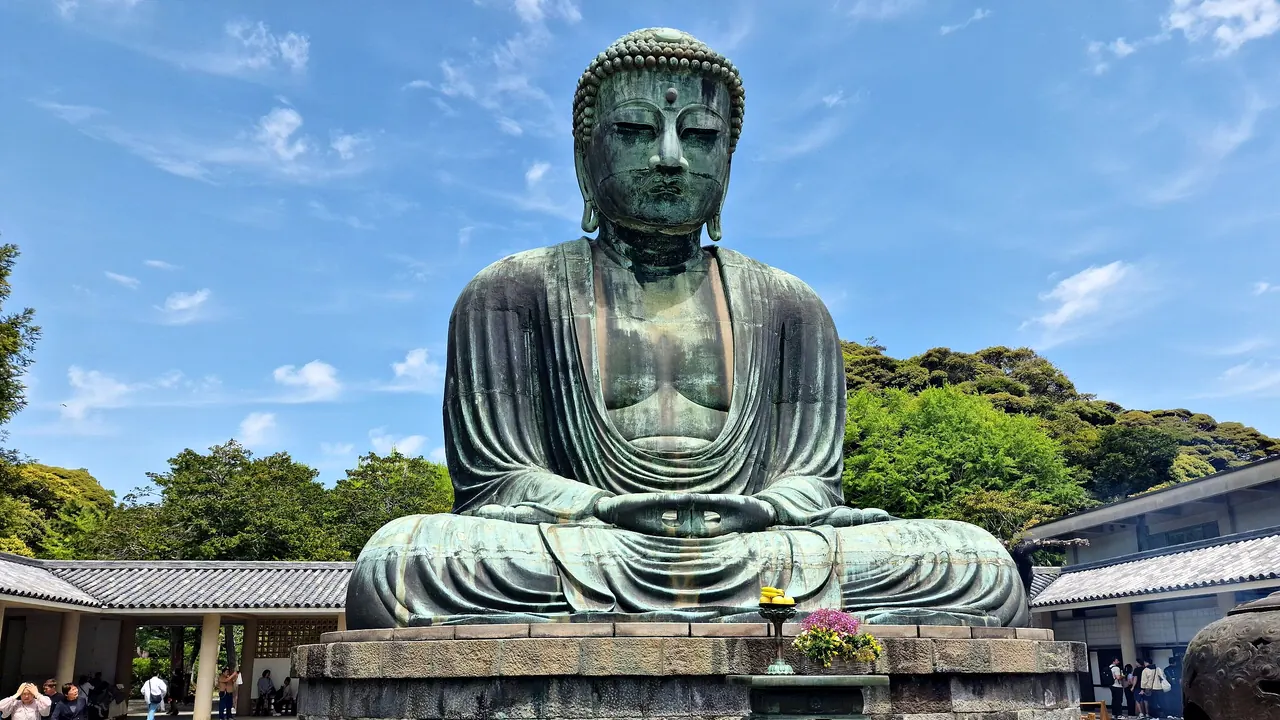
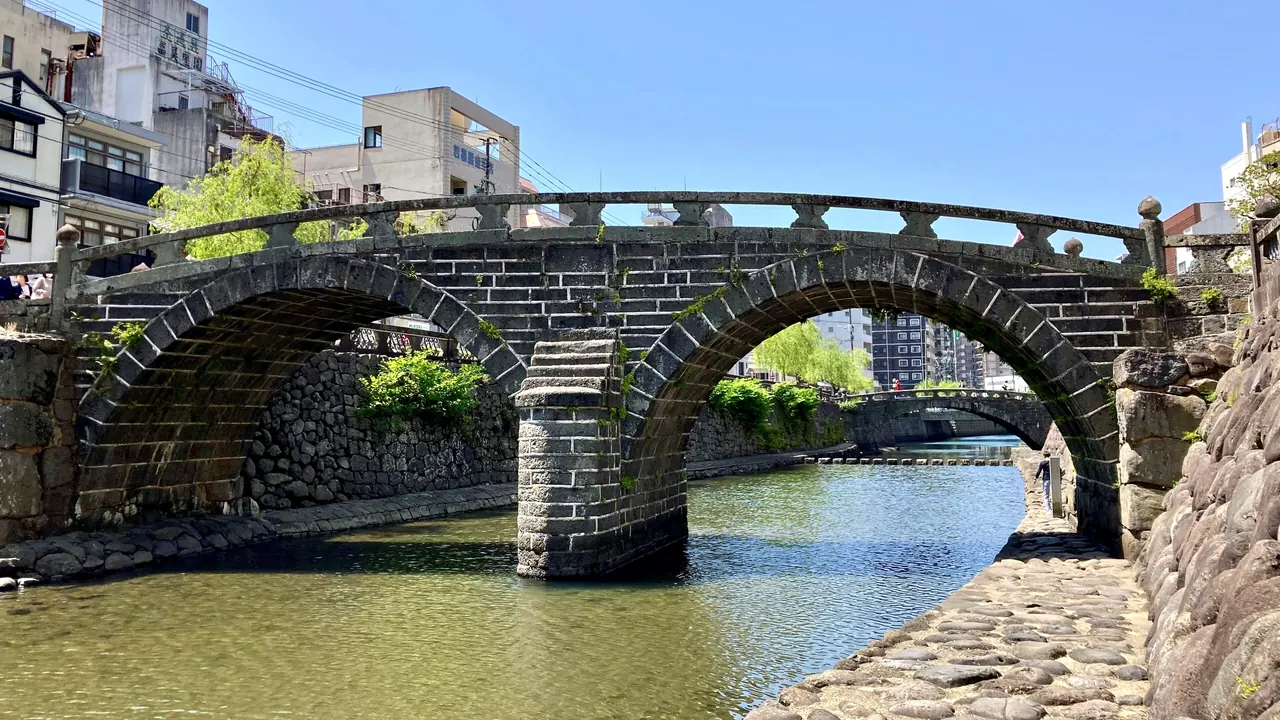
Photos: Kamakura by Anagoria, CC BY-SA 4.0, cropped; Nagasaki by Dudva, CC0.
Kamakura or Nagasaki?
Our verdict in twelve categories, each scored against the same fixed benchmark cities, and the climate month by month, so you can choose for your trip.
Choose Kamakura for
- day trips
- beaches
- families
Kamakura suits a traveller who wants temples, ridge walks and a swim from a single easy base, and who likes to range further afield. Tokyo, Yokohama, Enoshima and Hakone are all a train ride away, and the summer beaches are a short walk from the station. A stay here can mix Zen gardens, the seaside and the capital, as long as you accept quiet evenings and the higher cost of a room.
Choose Nagasaki for
- prices
- nightlife
- food and drink
Nagasaki is the better pick for anyone drawn to history with a harder edge: the atomic bomb sites, Dejima, and the Chinese and Christian heritage of a port that looked outward for centuries. You eat better here, and Shianbashi gives you a proper evening district, if a modest one. Your money also goes further, though the beaches are an hour out and the outings involve longer journeys.
Scoreboard
Twelve categories on one fixed scale from 0 to 100. The shaded stretch is the gap between the two.
Your match
Pick a travel style or drag the sliders, and both match scores follow your weighting.
Too close to call, level with your weighting
Wins on day trips and beaches with your weighting.
Wins on prices and nightlife with your weighting.
What matters to you?
Category by category
What the scores mean for a trip.
Beaches & swimming
Kamakura has the town beach that Nagasaki lacks. Yuigahama and Zaimokuza curve along the bay a short walk from the station, and the Enoden runs on to Koshigoe and Katase. Zushi and Hayama are calmer, though the sand is dark and volcanic and the season is short.
Nagasaki's harbour is for ships, not swimmers. The nearest proper beach, Takahama on the Nomo coast, is clean and sandy but about an hour away by bus. Iojima's small resort beach is a ferry ride out. A swim there is a day off from sightseeing rather than part of the daily routine.
Food & drink
Nagasaki has the more distinctive food. Its centuries of foreign trade produced dishes found nowhere else in Japan, from champon and sara udon to the shared shippoku banquet and castella sponge cake, which came with Portuguese traders. Local fish is simple and excellent in the izakaya of Hamanomachi.
Kamakura's strengths are narrower: whitebait over rice near the beach, refined shojin ryori near the Zen temples, and snacks along Komachi-dori. It is lovely at lunchtime but has little to offer after dark, and for serious eating most people take the train to Yokohama.
Culture & sights
Both need two or three days, but they tell very different stories. Kamakura shows its medieval samurai past through its temples: the open-air Great Buddha, Tsurugaoka Hachimangu and the great Zen temples of Kita-Kamakura. Hase-dera's hydrangeas and Hokoku-ji's bamboo fill the gaps.
Nagasaki's sights are about contact with the outside world, and about catastrophe. The Atomic Bomb Museum and Peace Park stand alongside Dejima's Dutch trading post, the merchant houses of Glover Garden, Oura Cathedral and a strong Chinese heritage. A visit here is more about learning history than quiet contemplation.
Nightlife
Neither is a place for clubbing, but Nagasaki at least has a proper district for going out. Shianbashi packs counter bars, karaoke and snack bars into a few streets, and a handful stay open late. The night view from Mount Inasa makes an evening in itself.
Kamakura offers little more than a drink after dinner near the station or a summer evening on the sand. For a real night out you take the train to Yokohama or Tokyo.
Nature & outdoors
Kamakura's landscape is right on the doorstep. Wooded ridges circle the town, so the Daibutsu and Tenen trails link temples through forest. The bay is good for surfing and paddling, and on clear winter days Mount Fuji appears across the water.
Nagasaki's steep green hills and the Inasa ropeway make a fine setting for the harbour. Its bigger landscapes, the volcanic peaks and steaming vents of Unzen and the islands of Kujukushima, are a long journey out.
Day trips
Few towns are as well placed as Kamakura. Yokohama is under half an hour away, Tokyo about an hour by direct train and Enoshima a short ride on the Enoden. Hakone's hot springs and Odawara's castle lie further west, and all of it is easy without a car.
Nagasaki's outings are memorable but more spread out. The boat to Gunkanjima is the highlight, if the weather allows a landing. Shimabara, Huis Ten Bosch and the porcelain towns of Arita and Imari each take a long day.
Good for families
Kamakura is the easier of the two with children. They can climb inside the Great Buddha, ride the little Enoden along the sea and swim from gentle summer beaches. The aquarium at Katase and Enoshima's caves are close by. Weekend crowds and temple steps are the main trials.
Nagasaki has its own favourites in the trams, the ropeway and the Penguin Aquarium, plus Huis Ten Bosch for a big day out. But its stairway streets are harder with a pushchair, and the Atomic Bomb Museum needs some thought with younger children.
Getting around
Both are easy without a car, in different ways. Kamakura is a walking town. The shrine and Komachi-dori are minutes from the station, and the Enoden and JR line handle longer hops, though weekend crowds clog both the roads and the trains.
Nagasaki runs on its simple flat-fare trams, which link nearly every major sight along the valley floor. Once you leave the valley floor, the hillside lanes and steps mean real climbing, with buses and the ropeway to fill the gaps.
Shopping & style
Neither is a shopping destination, and keen shoppers from both head to a bigger city. Kamakura is for browsing crafts and souvenirs on Komachi-dori and Wakamiya-oji, and its carved Kamakura-bori lacquerware is the one thing worth seeking out. Nagasaki is more practical, with the covered Hamanomachi arcade and its department store, and its gifts run to boxed castella, glassware and porcelain from Hasami, Mikawachi and Arita.
Affordability
In Kamakura the money goes on the bed rather than the sightseeing. Temple gates charge little and a soba or whitebait set lunch is fair, but a room by the sea or in an old wooden house costs a lot in the blossom, hydrangea and maple seasons. That one cost lifts the whole trip above most Japanese towns of its size.
Nagasaki works out cheaper overall, because a base in the city stays reasonable and most of the extra spending is on things you choose. The bigger outlays are the boat out to Gunkanjima, the ride up Mount Inasa and a long evening of sashimi in Shianbashi. A night at a ryokan in Unzen or Obama is the obvious splurge.
Live music & performing arts
Both are festival towns rather than places with an evening programme, and Nagasaki's festivals are the grander. The October Kunchi at Suwa Shrine brings three days of dragon dances and ship floats, and the Lantern Festival fills Chinatown around Chinese New Year. A municipal concert hall and a few live-music bars cover the rest of the year.
Kamakura offers occasional Noh at a small private theatre, festival dances at Tsurugaoka Hachimangu in spring and yabusame horseback archery in autumn. For anything more, go to Yokohama or Tokyo.
Wellness & relaxation
The two find calm in different places. Kamakura's calm comes from meditation: public zazen at Engaku-ji and Kencho-ji and the moss gardens of Kita-Kamakura, best on weekday mornings. It has no hot springs of its own, and the nearest onsen are in Hakone.
Nagasaki leans towards bathing, though mostly out of town. Obama's seaside footbath and Unzen's mountain ryokan are worth an overnight trip. The city itself has a few sento and a slow harbour pace.
When should you go?
Pick your month. The climate figures are measured averages, not a forecast.
Kamakura in July
Nagasaki in July
Daytime high, °C
Rainfall in the month, mm
Where the figures come from
Kamakura's sunshine is measured 45 km from the centre, at Tokyo.
Temperature and rainfall are climate normals, averaged over the years shown. Kamakura: 1991-2020 normals, Yokosuka Fwf (11.6 km from centre). Nagasaki: 1991-2020 normals, Nagasaki (2.2 km from centre).
Kamakura is at its most comfortable in spring and late autumn, and its winters are unusually sunny for walking between temples. Swimming is mainly for July and August, when Sagami Bay warms to about 26°C. The heaviest rain comes late in the year. September and October are the wettest months, with about 211mm in October, so autumn walks need some luck with the weather.
Nagasaki runs hotter and wetter. Its rainy season hits hard in June and July, with about 334mm in June. August highs reach 32°C, which makes the stairway streets heavy going. The sea gets a little warmer, around 28°C in August, so swimming holds up well into early September. Winters are mild but much greyer than in Kamakura, which leaves April, May and October as the best months for exploring the city on foot.
Which traveller are you?
On a beach and sun trip, Kamakura is the stronger choice. Yuigahama and Zaimokuza are a walk from the station, with Enoshima's beaches and calmer Zushi close by. Nagasaki's swimming beaches are an hour out by bus or across by ferry.
For a food and nightlife trip, Nagasaki is clearly ahead. Champon, sara udon and shippoku give it a cuisine of its own, and Shianbashi's izakaya and counter bars stay busy into the evening. Kamakura goes quiet once the day-trippers have left.
On a tight budget, Nagasaki makes your money go further. Business hotels near the station are fair value, local noodle lunches are cheap and the tram covers a day of sightseeing. Kamakura has few rooms, Tokyo weekenders want them, and many visitors sleep elsewhere.
Before you go
| Measure | Kamakura | Nagasaki |
|---|---|---|
| Official language | Japanese | Japanese |
| Currency | Yen (JPY) | Yen (JPY) |
| Sockets | AB100 V, 50 and 60 Hz depending on the region | AB100 V, 50 and 60 Hz depending on the region |
| Driving side | Left | Left |
| Time zone | UTC+9 | UTC+9 |
| Emergency number | Police 110, fire 119 | Police 110, fire 119 |
| Elevation | 17 m | 105 m |
| Main airport | Tokyo Haneda International Airport (HND)34 km from centre98 non-stop destinations | Nagasaki Airport (NGS)19 km from centre10 non-stop destinations |
| Public holidays this year | 16 days | 16 days |
By the numbers
| Measure | Kamakura | Nagasaki |
|---|---|---|
| City population | 172,929 | 404,656 |
| People per km² | 4,356 | 996 |
| Museums within 10 km | 18 | 26 |
| UNESCO World Heritage sites within 50 km | 1 | 2 |
| Swim season, months above 21 °C | 5 months | 6 months |
Where else could you go?
Every comparison below shares a destination with this one, so you can follow Kamakura or Nagasaki somewhere new.
- Yokohamavs Kamakura
- Hakonevs Kamakura
- Tokyovs Kamakura
- Fukuokavs Nagasaki
- Nikkovs Kamakura
- Takayamavs Kamakura