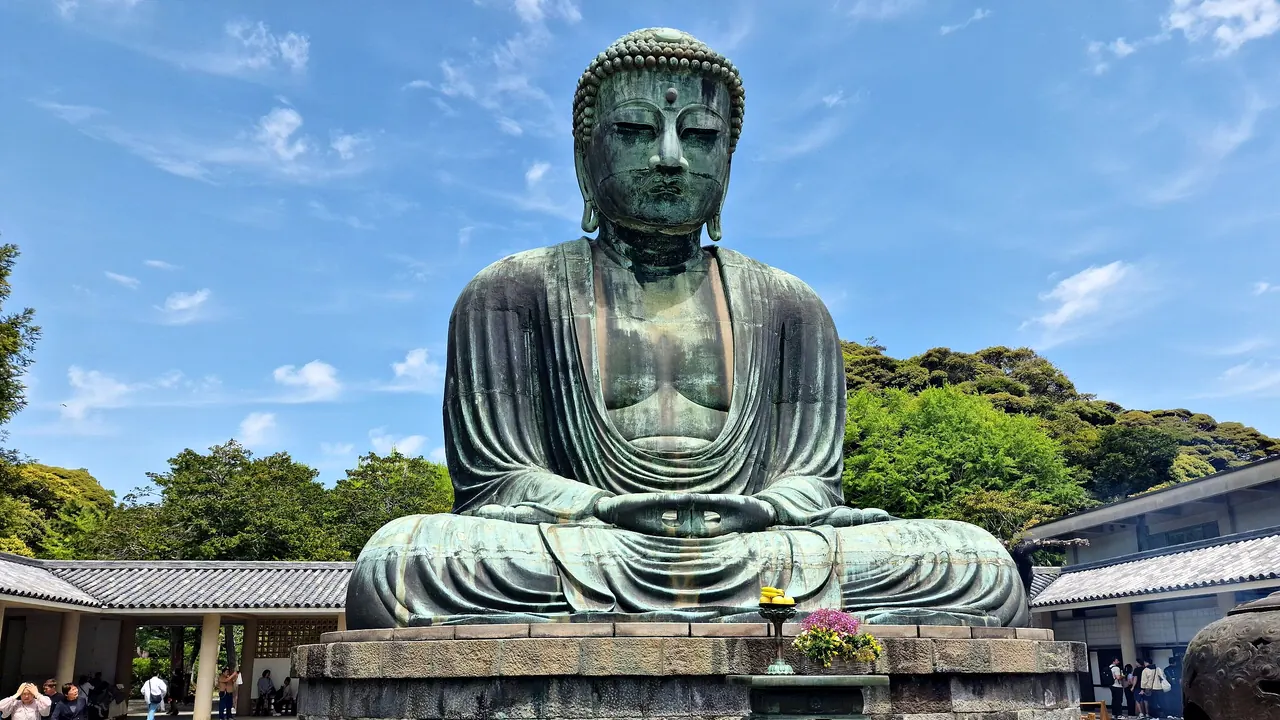
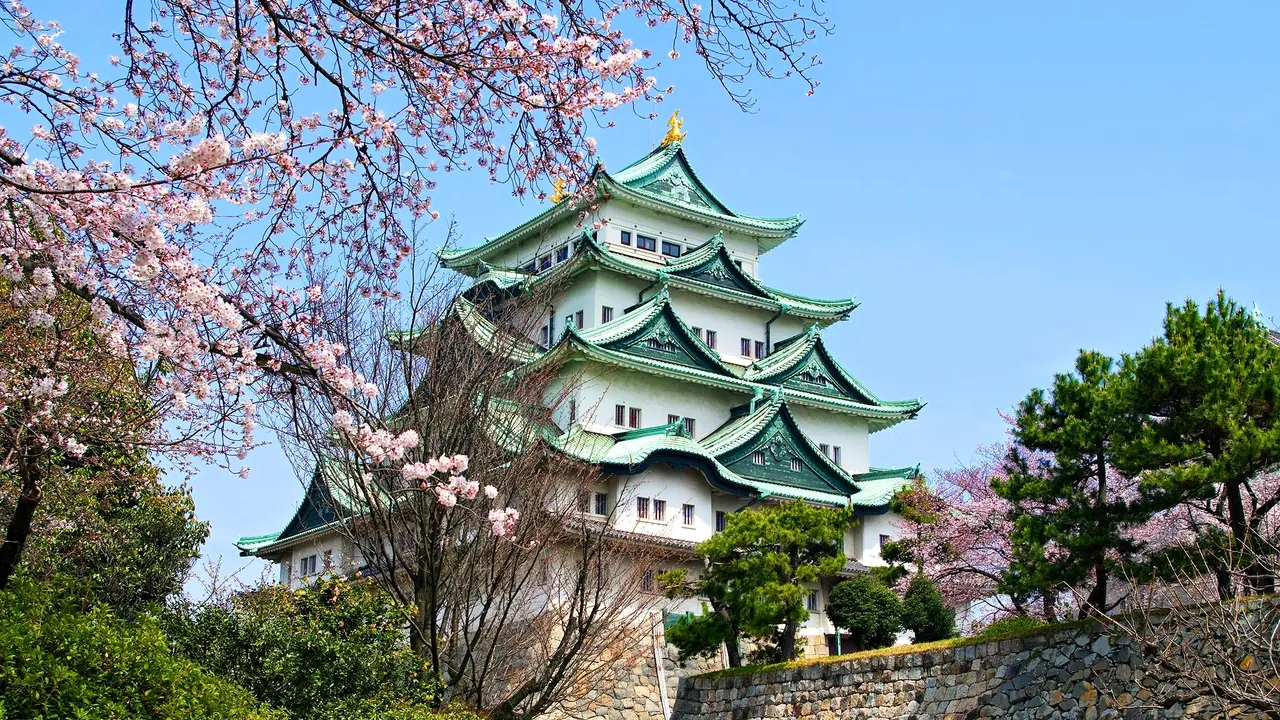
Photos: Kamakura by Anagoria, CC BY-SA 4.0, cropped; Nagoya by Hiroaki Kaneko, CC BY-SA 3.0, cropped.
Kamakura or Nagoya?
Our verdict in twelve categories, each scored against the same fixed benchmark cities, and the climate month by month, so you can choose for your trip.
Choose Kamakura for
- beaches
- culture and sights
- nature and the outdoors
Kamakura suits a slower trip built around temples, hill trails and the sea. Two or three days among the Zen gardens of Kita-Kamakura, the Great Buddha and the ridge paths, with a swim at Yuigahama in summer, is what it does best. It has the richer sights and the better scenery, all in a town you can walk. The evenings are very quiet, so it rewards travellers who are happy to turn in early or take the train to Tokyo for a night out.
Choose Nagoya for
- live music and the arts
- food and drink
- nightlife
Pick Nagoya if eating, evenings and children matter more to you than atmosphere. Its miso-rich local cooking, the bars of Sakae, the big aquarium, Legoland and Ghibli Park give it far more to do after dark and on a family day, and its rooms are cheaper. The shinkansen to Kyoto also makes it a good base for older Japan, which helps because so little of its own old city survived the war.
Scoreboard
Twelve categories on one fixed scale from 0 to 100. The shaded stretch is the gap between the two.
Your match
Pick a travel style or drag the sliders, and both match scores follow your weighting.
Wins on beaches and culture and sights with your weighting.
Wins on live music and the arts and food and drink with your weighting.
What matters to you?
Category by category
What the scores mean for a trip.
Beaches & swimming
Kamakura has the beach on its doorstep. Yuigahama and Zaimokuza are a walk from the station, the Enoshima beaches are a short Enoden ride west, and Zushi and Hayama to the east are calmer. The sand is dark and the water rarely clear, but a swim fits easily around a day of temples.
Nagoya's own shoreline is port and industry, so a swim means an hour on the train to the Chita Peninsula or a ferry out to Shinojima. The beaches there are wide and the bay is just as warm in midsummer, but going is a separate outing rather than part of the day.
Food & drink
Nagoya is the place to eat well. Its regional cooking is rich, sweet and built on red miso, and miso katsu, hitsumabushi eel, tebasaki wings and misonikomi udon each have their own specialist restaurants. The department-store food halls and the snacks in Osu fill the gaps, and the morning service custom adds a free breakfast to a cup of coffee.
Kamakura's cooking is narrower and gentler: shirasu whitebait on rice near the beach, Buddhist shojin ryori around the Zen temples, and snacks along Komachi-dori. It is lovely at lunchtime but thin in the evening, which is why visitors go to Yokohama for sushi or izakaya.
Culture & sights
Kamakura's heritage survives and sits close together. It has the open-air Great Buddha, Tsurugaoka Hachimangu at the head of its long avenue, and the great Zen temples of Engaku-ji and Kencho-ji, with Hase-dera and the bamboo grove of Hokoku-ji in between. As the seat of Japan's first warrior government, it still feels like a town shaped by its temples.
Nagoya lost most of its old city in 1945, so its sights stand apart in a modern grid: the rebuilt castle and Honmaru Palace, Atsuta Shrine and the Tokugawa Art Museum. Its own strength is industrial history, seen in the Toyota museum and the railway museum, and Kamakura has nothing like them.
Nightlife
Nagoya is not a famous night out even within Japan, but it does have one. Sakae and Nishiki fit izakaya, tiny bars, karaoke and a few dance clubs into narrow buildings, and at weekends some places stay open until morning.
Kamakura goes quiet once the day-trippers leave. A drink at an izakaya near the station or a summer evening on the sand is about all there is. Otherwise it is an hour on the train to Yokohama or Tokyo.
Nature & outdoors
Kamakura's landscape starts at the edge of town. Wooded hills ring it, and ridge trails such as the Daibutsu route link temples through forest. Surfers ride the waves at Shichirigahama, and on clear winter days Mount Fuji appears across the bay.
Nagoya lies on the flat Nobi Plain, so nature in the city means Higashiyama park and the Tokugawaen and Shirotori gardens. The Suzuka Mountains, Korankei's autumn maples and the Nakasendo through the Kiso Valley are all an hour or two away, each a day out rather than a morning walk.
Day trips
Both are excellent bases, but they point in different directions. Kamakura looks towards the capital region: Tokyo is about an hour away, Yokohama under half an hour, Enoshima a ride on the Enoden, and the hot springs of Hakone lie further west.
From Nagoya, the shinkansen reaches Kyoto in about 35 minutes and Osaka in under an hour. Ise Jingu, the original castle keep at Inuyama and the post towns of Tsumago and Magome are also within reach. The choice is between modern Tokyo and old Kyoto with the castle and pottery towns of central Japan.
Good for families
Nagoya has far more made for children. There is the port aquarium with its orcas and belugas, Legoland, Ghibli Park, the Higashiyama zoo and the science museum's planetarium, and Nagashima Spa Land's rides are under an hour away. The catch is the long train rides between them.
Kamakura works best for a few gentle days. Children can climb inside the Great Buddha, ride the little Enoden, paddle in summer and visit the aquarium at Katase. Steep temple stairs and weekend crowds make it harder work with small children.
Getting around
Neither needs a car, but they are easy in different ways. Kamakura is compact and walkable, with the JR line up to Kita-Kamakura and the Enoden out to the Great Buddha. At weekends, though, traffic slows the buses and the Enoden can be standing room only.
Nagoya is a grid of wide avenues, best covered by subway. One IC card works on the subway and the railways, and a sightseeing loop bus links the main sights. It is less pleasant on foot, but the network handles the distances well.
Shopping & style
Nagoya is a proper shopping city. It has department stores around Sakae and above the station, brand boutiques along the avenues between them, and the covered arcades of Osu with secondhand clothes, anime and electronics. For crafts there is Seto and Tokoname pottery and Arimatsu shibori dyeing.
Kamakura is good for an afternoon on Komachi-dori and Wakamiya-oji, buying sweets, tenugui cloths, ceramics, knives and the carved Kamakura-bori lacquerware. For anything more, take the train to Yokohama.
Affordability
Nagoya is the cheaper place to stay. Its many business hotels keep room prices moderate, and set lunches and the free extras of morning service make eating out easy on a budget. Eel and the theme parks are where costs climb.
Kamakura has few hotels, and Tokyo weekenders compete for them, so beds cost more there. Temple fees, train fares and soba lunches are still reasonable. Many visitors save by sleeping in Yokohama or Fujisawa.
Live music & performing arts
Nagoya has a real evening programme. There is opera and ballet at the Aichi Arts Center, the Nagoya Philharmonic's concert season, kabuki at the Misono-za, Noh near the castle and jazz in small live houses around Sakae. Most of it is in Japanese, so check what is on first.
Kamakura's performances follow the shrine calendar: traditional dance at the spring Kamakura Festival, yabusame horseback archery in autumn, and occasional Noh at a small theatre. On an ordinary night there is little to see.
Wellness & relaxation
For bathing, Nagoya is well ahead. Sento and large super sento with saunas and open-air pools are found all over the city, the Nagashima hot springs are under an hour away, and Gero Onsen is worth a night at a ryokan in the mountains.
Kamakura has no hot springs, and its calm is of a quieter kind: zazen meditation at Engaku-ji and Kencho-ji, and moss gardens in the valleys of Kita-Kamakura early on a weekday. For a proper onsen, visitors go to Hakone.
When should you go?
Pick your month. The climate figures are measured averages, not a forecast.
Kamakura in July
Nagoya in July
Daytime high, °C
Rainfall in the month, mm
Where the figures come from
Kamakura's sunshine is measured 45 km from the centre, at Tokyo.
Temperature and rainfall are climate normals, averaged over the years shown. Kamakura: 1991-2020 normals, Yokosuka Fwf (11.6 km from centre). Nagoya: 1991-2020 normals, Nagoya (5.7 km from centre).
Both cities are warm enough for the beach only in high summer. Kamakura peaks in August at 30°C, with Sagami Bay at about 26°C, and the water stays pleasant into September. Nagoya is noticeably hotter, reaching 33°C in August, so walking between its spread-out sights is hard work in July and August. Its Chita beaches warm up on the same timetable.
The rain comes at different times. Nagoya's wettest spells fall in June, July and September. Kamakura's heaviest rain comes later, peaking in October at 211mm. April and May are the best months for walking in both, and Nagoya gets more sunshine in spring. November also works well, and is the drier month in Nagoya. Winter is cold but bright in both cities. Kamakura is a degree or two milder, and its clear winter days are among the sunniest of its year.
Which traveller are you?
On a beach and sun trip, Kamakura is the clear pick. Yuigahama and Zaimokuza are a walk from the station, so a summer swim fits between temple visits. Nagoya's nearest sand is an hour away by train, on the Chita Peninsula.
For a food and nightlife trip, choose Nagoya. Miso katsu, hitsumabushi eel and tebasaki wings each have their own specialist restaurants, and the bars and karaoke of Sakae run late at weekends. In Kamakura most of the good eating is at lunchtime and evenings end early.
On a family trip with children, Nagoya has far more to fill the days: a huge aquarium with orcas, Legoland, Ghibli Park and full-size bullet trains at the railway museum. Kamakura's temple staircases and weekend crowds are easier with older children than with a stroller.
Before you go
| Measure | Kamakura | Nagoya |
|---|---|---|
| Official language | Japanese | Japanese |
| Currency | Yen (JPY) | Yen (JPY) |
| Sockets | AB100 V, 50 and 60 Hz depending on the region | AB100 V, 50 and 60 Hz depending on the region |
| Driving side | Left | Left |
| Time zone | UTC+9 | UTC+9 |
| Emergency number | Police 110, fire 119 | Police 110, fire 119 |
| Elevation | 17 m | 25 m |
| Main airport | Tokyo Haneda International Airport (HND)34 km from centre98 non-stop destinations | Chubu Centrair International Airport (NGO)37 km from centre43 non-stop destinations |
| Public holidays this year | 16 days | 16 days |
By the numbers
| Measure | Kamakura | Nagoya |
|---|---|---|
| City population | 172,929 | 2,326,844 |
| People per km² | 4,356 | 7,129 |
| Museums within 10 km | 18 | 63 |
| UNESCO World Heritage sites within 50 km | 1 | 0 |
| Swim season, months above 21 °C | 5 months | 5 months |
Where else could you go?
Every comparison below shares a destination with this one, so you can follow Kamakura or Nagoya somewhere new.