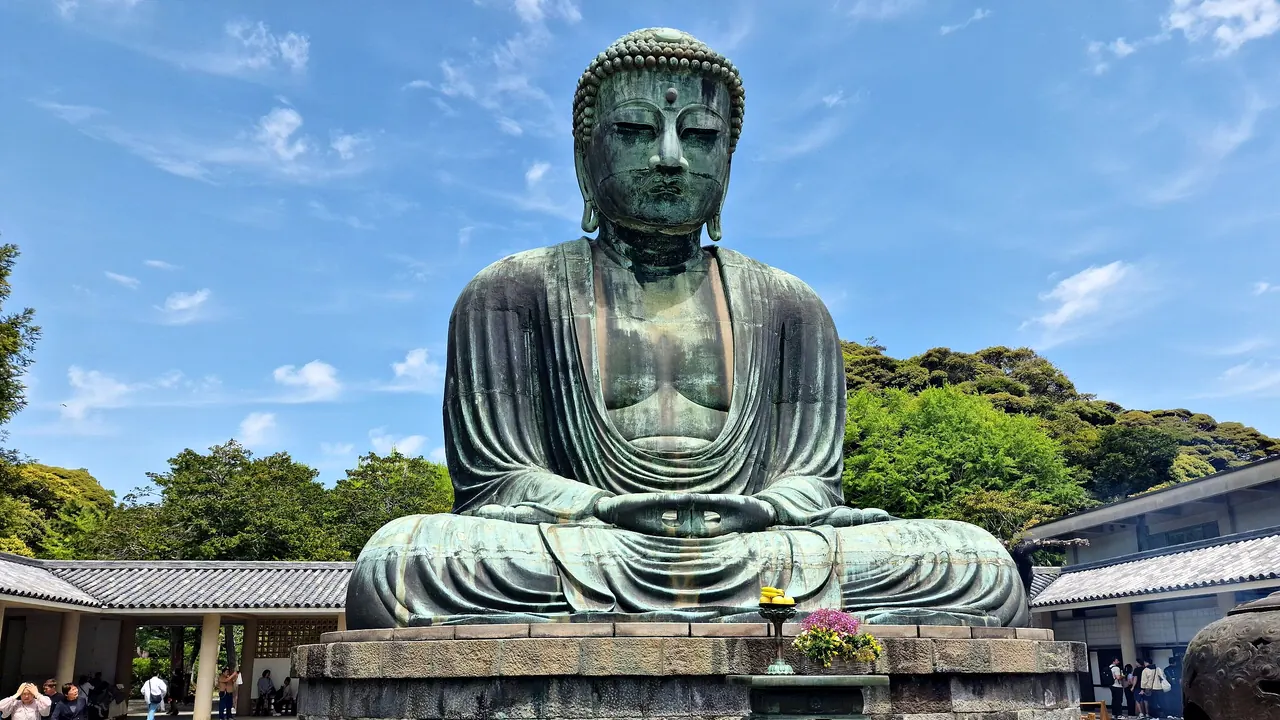
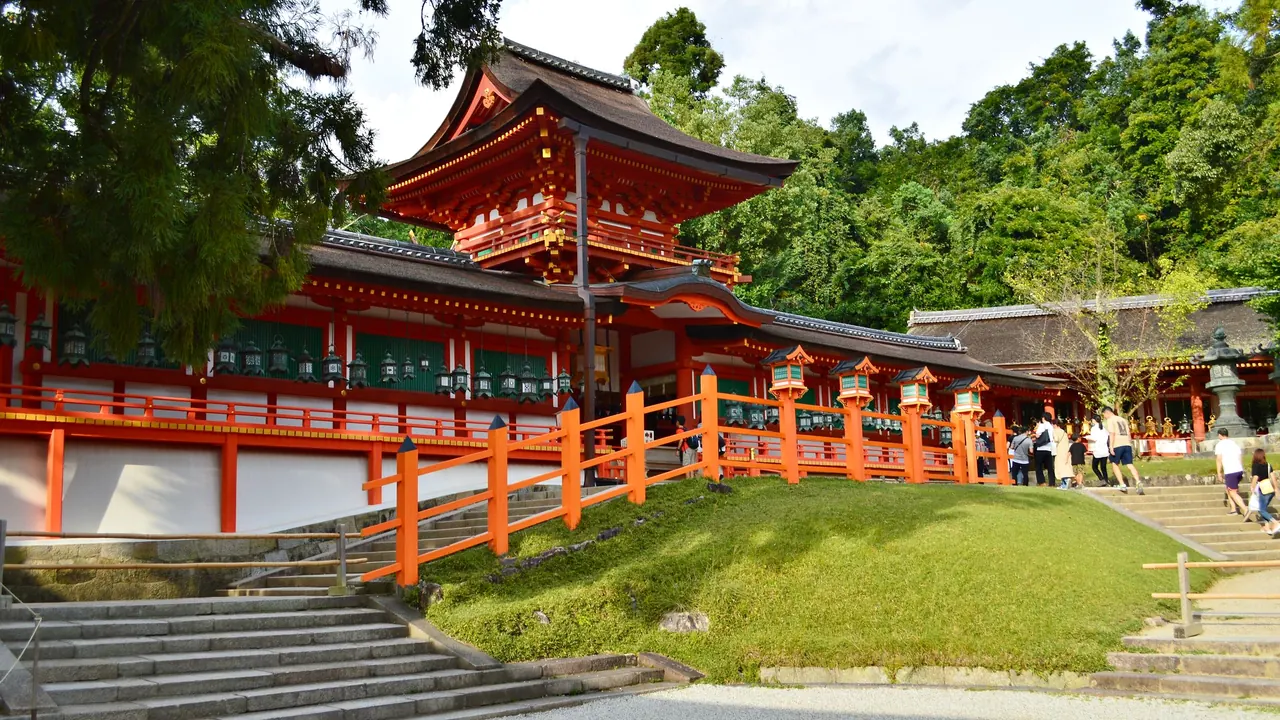
Photos: Kamakura by Anagoria, CC BY-SA 4.0, cropped; Nara by Saigen Jiro, CC0.
Kamakura or Nara?
Our verdict in twelve categories, each scored against the same fixed benchmark cities, and the climate month by month, so you can choose for your trip.
Choose Kamakura for
- beaches
- families
- wellness
Kamakura suits a traveller who wants temples and the sea in the same few days. You can spend a morning in the Zen valleys of Kita-Kamakura and an afternoon on the sand at Yuigahama, or follow a ridge trail to the Great Buddha and ride the little Enoden out to Enoshima. It is the easier choice with children and the better one for walkers and surfers, and Tokyo and Yokohama are close by train.
Choose Nara for
- prices
- culture and sights
- day trips
If your trip is built around Japan's early history, Nara is the stronger choice. Its eighth-century temples and the National Museum go further than anything in Kamakura. Kyoto, Osaka and Horyu-ji are all within easy reach for day trips, and a bed costs less. It is inland and hot in summer, though, so plan any beach days somewhere else.
Scoreboard
Twelve categories on one fixed scale from 0 to 100. The shaded stretch is the gap between the two.
Your match
Pick a travel style or drag the sliders, and both match scores follow your weighting.
Wins on beaches and families with your weighting.
Wins on prices and culture and sights with your weighting.
What matters to you?
Category by category
What the scores mean for a trip.
Beaches & swimming
Kamakura has a real summer shoreline. The dark volcanic sand of Yuigahama and Zaimokuza is a short walk from the station, the Enoden reaches the beaches at Katase, and Zushi and Hayama to the east are calmer. The swimming season is high summer only, and the beach works best alongside the temples rather than as the main reason to go.
Nara is inland, and the sea plays no part in a stay. The nearest shore is the industrial edge of Osaka Bay, and the clear water of the Kii Peninsula is most of a day away, so a summer swim means a pool.
Food & drink
Neither is a place to eat your way through, but Kamakura's table is a little richer. You can have whitebait from Sagami Bay over rice near the beach, temple vegetarian cooking at its most refined around the Zen monasteries, and vegetables from the Renbai farmers' market.
Nara's specialities are distinctive but few: kakinoha-zushi wrapped in persimmon leaves, pickles cured in sake lees, Miwa somen noodles, and sake poured at counters in Naramachi. Near the park the food leans towards quick lunches and kitchens close early, so for a serious dinner you go to Osaka or Kyoto.
Culture & sights
Both towns have a Great Buddha, and the pair shows the difference well. Kamakura's bronze figure sits in the open air, and around it are the Zen temples of Engaku-ji and Kencho-ji, the warrior-clan shrine of Tsurugaoka Hachimangu and smaller pleasures such as the Hokoku-ji bamboo grove. Its museums are modest.
Nara goes deeper and further back in time. The eighth-century capital has Todai-ji's vast wooden hall, Kofuku-ji's pagoda and the lanterns of Kasuga Taisha. It also has the Tang-era calm of Toshodai-ji and Yakushiji, and a national museum of Buddhist sculpture that has no equal in Kamakura.
Nightlife
Both go quiet once the day visitors leave, so neither is a reason to choose. Kamakura has a few izakaya and bars between the station and the beach, and the shore is a little livelier on summer evenings.
In Nara you get a sake counter or a small bar in the covered arcades, and Osaka's bar districts are under an hour away, as long as you watch the last train.
Nature & outdoors
Kamakura's setting, wooded hills curving down to the sea, gives it a slight edge. The Daibutsu and Tenen trails link temples along the ridges past cave tombs, Shichirigahama draws surfers, and on clear winter days Fuji appears across the bay.
Nara's green space is gentler and starts in the centre of town. Deer graze on the park lawns, the Kasugayama Primeval Forest has been protected for more than a thousand years, and the flat basin and the old Yamanobe-no-michi route suit easy walking and cycling. Yoshino's hills are further out.
Day trips
Kamakura is a strong base in its own right. Yokohama is under half an hour away, Tokyo about an hour, and Enoshima a short ride on the Enoden. Hakone's hot springs and the fishing port of Misaki make quieter outings, so the mix is modern and coastal.
Nara's list is longer and goes further back in history. Kyoto and Osaka are each well under an hour away by train, and Horyu-ji, with the oldest surviving wooden buildings in the world, is nearer still. Beyond them are Asuka's burial mounds, Uji's tea and the Byodo-in, and Himeji's white castle if you have a longer day.
Good for families
Kamakura gives children more variety. They can climb inside the Great Buddha, ride the Enoden along the sea, swim from gentle beaches in summer, explore the caves on Enoshima and visit the aquarium at Katase. The catch is the long temple staircases and the weekend crowds.
Nara has one great experience, bowing to the deer in the park and feeding them crackers, plus squeezing through the pillar at Todai-ji. It has no zoo or aquarium, the deer can nip, and summer heat wears children out, so most families give it a day or two.
Getting around
Kamakura's sights sit up wooded valleys and flights of temple steps, while Nara's are spread across the level ground of a basin. In Kamakura one small line, the Enoden, links the Great Buddha, Hase-dera and the coast. The narrow roads jam at weekends, though, and the train can be packed to standing.
In Nara most of the main sights are a gentle walk from Kintetsu Nara station, and a rented bicycle makes light work of the flat streets. The western temples need a short bus or train ride. Neither town needs a car.
Shopping & style
Kamakura's one craft of note is Kamakura-bori, carved and lacquered woodwork that goes back to the Zen temples. You find it with ceramics and good knives in the quieter streets off Komachi-dori, the lane of snacks and souvenirs.
Nara's craft tradition is older and wider. It has sumi ink and calligraphy brushes made here for centuries, hand-woven linen, Akahada pottery and carved Ittobori dolls, sold in Naramachi and the covered arcades. Neither town suits a shopping trip: for fashion you go to Tokyo or Yokohama from Kamakura, and to Osaka from Nara.
Affordability
Nara is the easier town on a budget, mainly because of where you sleep. Day-tripper traffic has filled the streets around its stations with fairly priced business hotels and guesthouses, and the park costs nothing to wander. Ryokan stays with dinner are the exception.
Kamakura has few hotels, and Tokyo weekenders compete for the seaside and old-house rooms, so many visitors sleep in Yokohama or Fujisawa instead. Once you are there, temple fees and soba lunches are fair value.
Live music & performing arts
On an ordinary evening there is little to see in either town, and both come alive on the shrine calendar. Kamakura has a small Noh theatre with occasional introductions to the art, traditional dance at the spring Kamakura Festival, and yabusame horseback archery in autumn.
Nara's traditions are older and more ceremonial. It is one of the birthplaces of Noh, and Kasuga Taisha performs gagaku court music and bugaku dance, above all at the winter On-matsuri. The Omizutori fire rites at Todai-ji in early spring are its most dramatic sight.
Wellness & relaxation
Kamakura is the better place to slow down on purpose. Engaku-ji and Kencho-ji hold zazen sessions open to the public, and the moss gardens and tea pavilions of Kita-Kamakura are almost silent on weekday mornings. For an onsen, though, you need to go to Hakone.
Nara has no meditation offer to match, but you can at least have a soak without leaving town, in old neighbourhood bathhouses, larger bathing complexes or a ryokan's own bath. Early mornings in the park are its calmest hours.
When should you go?
Pick your month. The climate figures are measured averages, not a forecast.
Kamakura in July
Nara in July
Daytime high, °C
Rainfall in the month, mm
Where the figures come from
Kamakura's sunshine is measured 45 km from the centre, at Tokyo.
Nara's sunshine is measured 26 km from the centre, at Osaka.
Temperature and rainfall are climate normals, averaged over the years shown. Kamakura: 1991-2020 normals, Yokosuka Fwf (11.6 km from centre). Nara: 1971-2000 (sunshine 1991-2020, rainfall 1991-2020) normals, Nara (2.6 km from centre).
Kamakura is milder at both ends of the year. The sea is warm enough for proper swimming only in July and August, when it reaches about 26°C, and September is still pleasant. Winters are cool but sunny, which is good for temple walks and for clear views of Fuji across the bay. The heaviest rain comes late, in September and October, and October is the wettest month at 211mm. April, May and November are the most comfortable months for walking.
Nara has bigger swings through the year. Summer is hotter, up to 32°C in August, and the rain comes earlier, peaking at around 200mm in July, so June to August is heavy going on long temple circuits. Winters are a little colder and greyer than on the coast. April and May are bright and comfortable, and October and November are the other good stretch. November is noticeably drier in Nara than in Kamakura.
Which traveller are you?
For a beach and sun trip, Kamakura is the only real option. Yuigahama and Zaimokuza are a short walk from the station, and the Enoden runs along the coast to the beaches facing Enoshima. Nara is inland, and the sea is well out of reach.
On a culture and arts trip, Nara has more to offer. The old capital gives you Todai-ji, the lantern-lined paths of Kasuga Taisha, Horyu-ji close by and the National Museum's Buddhist sculpture. All of it is older and grander than Kamakura's Zen temples.
On a tight budget, Nara goes further. You can spend a whole day among the deer and the lanterns of Kasuga Taisha without paying anything, eat lunch at a noodle counter, and pay only for the temple halls you choose. Kamakura's beaches and ridge trails are free too, but the overall bill runs higher.
Before you go
| Measure | Kamakura | Nara |
|---|---|---|
| Official language | Japanese | Japanese |
| Currency | Yen (JPY) | Yen (JPY) |
| Sockets | AB100 V, 50 and 60 Hz depending on the region | AB100 V, 50 and 60 Hz depending on the region |
| Driving side | Left | Left |
| Time zone | UTC+9 | UTC+9 |
| Emergency number | Police 110, fire 119 | Police 110, fire 119 |
| Elevation | 17 m | 70 m |
| Main airport | Tokyo Haneda International Airport (HND)34 km from centre98 non-stop destinations | Kansai International Airport (KIX)59 km from centre62 non-stop destinations |
| Public holidays this year | 16 days | 16 days |
By the numbers
| Measure | Kamakura | Nara |
|---|---|---|
| City population | 172,929 | 352,377 |
| People per km² | 4,356 | 1,273 |
| Museums within 10 km | 18 | 31 |
| UNESCO World Heritage sites within 50 km | 1 | 6 |
| Swim season, months above 21 °C | 5 months | 5 months |
Where else could you go?
Every comparison below shares a destination with this one, so you can follow Kamakura or Nara somewhere new.