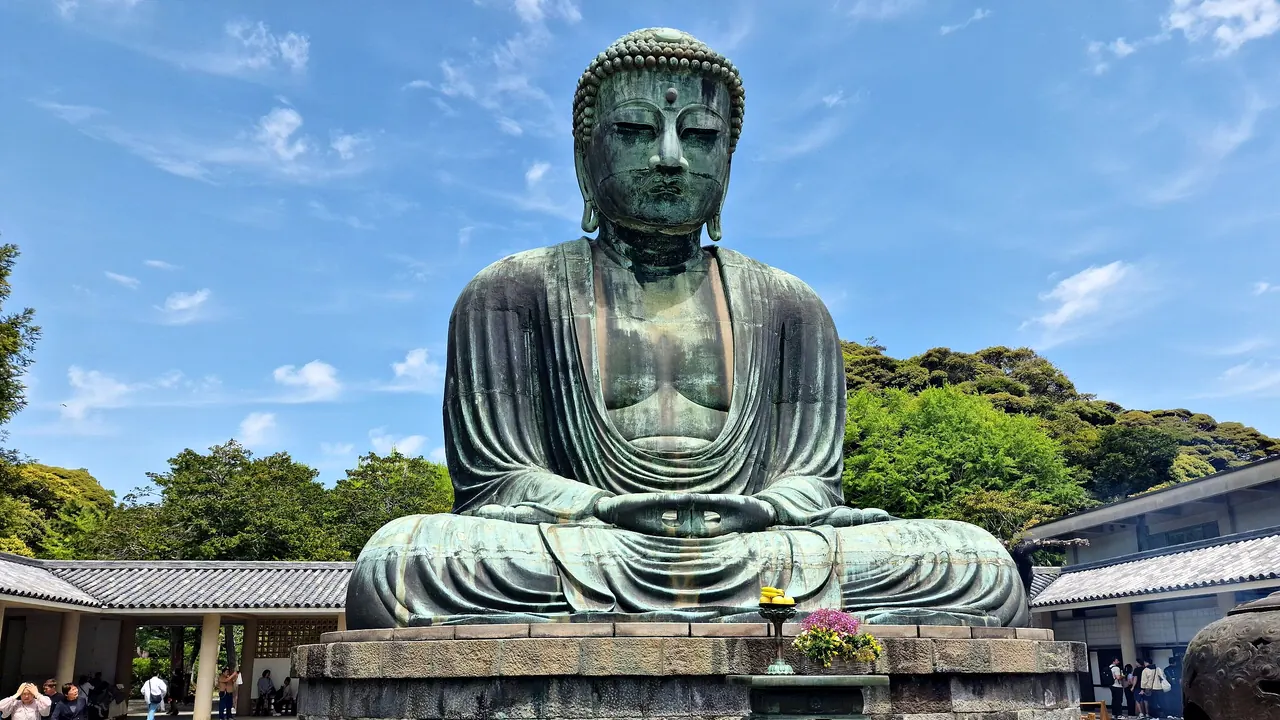
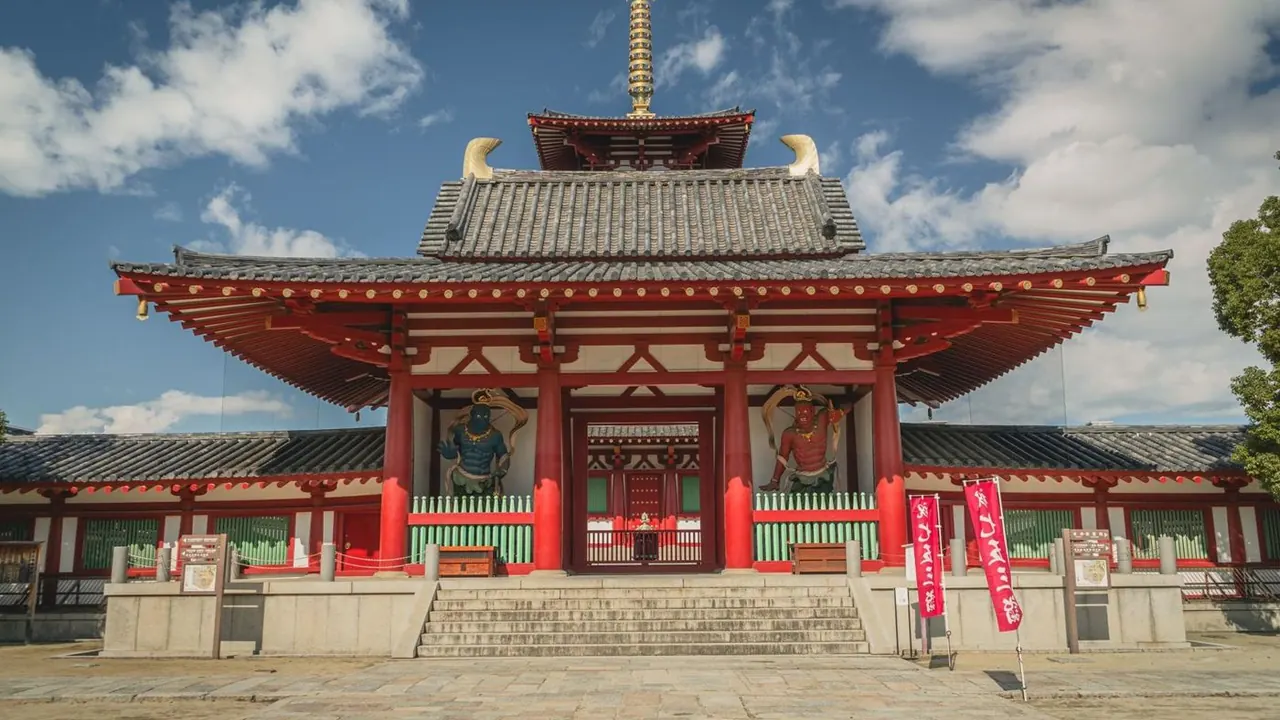
Photos: Kamakura by Anagoria, CC BY-SA 4.0, cropped; Osaka by Sarmat Batagov, Pexels License.
Kamakura or Osaka?
Our verdict in twelve categories, each scored against the same fixed benchmark cities, and the climate month by month, so you can choose for your trip.
Choose Kamakura for
- beaches
- nature and the outdoors
- culture and sights
Kamakura suits a slower trip built around temples, wooded hill trails and the sea. Choose it if you want Zen gardens, the Great Buddha and ridge walks between shrines in a town small enough to cover on foot, with a summer swim on the side, and you are happy to spend your evenings quietly.
Choose Osaka for
- nightlife
- live music and the arts
- food and drink
Anyone who wants to eat well, stay out late or keep children busy will get more from Osaka. Its counters, izakaya alleys and neon districts are in another league from Kamakura's few bars. It also has a theme park, a huge aquarium and the home stage of bunraku, and Kyoto, Nara and Himeji are all within easy reach by train.
Scoreboard
Twelve categories on one fixed scale from 0 to 100. The shaded stretch is the gap between the two.
Your match
Pick a travel style or drag the sliders, and both match scores follow your weighting.
Wins on beaches and nature and the outdoors with your weighting.
Wins on nightlife and live music and the arts with your weighting.
What matters to you?
Category by category
What the scores mean for a trip.
Beaches & swimming
Kamakura has its beach on the doorstep. The long, dark curve of Yuigahama and Zaimokuza is a walk from the station, and Katase, Koshigoe and the quieter shores of Zushi and Hayama are a short ride either way. In July and August it is a proper summer beach town, and surfers keep the shore busy for the rest of the year.
Osaka has to travel for a swim: about an hour by train to Suma or to the beaches towards Wakayama, in suburban settings on an enclosed bay. In August the sea is about as warm in both, but neither city has clear water or white sand, and only in Kamakura is the beach part of an ordinary day.
Food & drink
Here the gap is wide. Kamakura eats well within a narrow range. There is whitebait on rice near the beach, refined Buddhist vegetarian cooking around the Zen temples and snacks along Komachi-dori, but little to keep you at the table after dark.
In Osaka, eating is the reason to come. Its own dishes, such as takoyaki, okonomiyaki and kushikatsu, sit alongside the stalls of Kuromon Market, the basement food halls of Umeda and the top kaiseki and sushi counters of Kitashinchi, so you can eat for a week without repeating a meal.
Culture & sights
Kamakura's heritage fills the whole town. The Great Buddha sits in the open air, Tsurugaoka Hachimangu stands at the end of its long avenue from the sea, and the great Zen temples of Kita-Kamakura are a short walk away, with gardens, a bamboo grove and cave shrines in the valleys between. Its past as the seat of Japan's first warrior government links one sight to the next.
Osaka's sights come in separate pieces across a city rebuilt after the war: the reconstructed castle on its original walls, Shitennoji and Sumiyoshi Taisha. It has the better museums, among them the Museum of Oriental Ceramics and the galleries of Nakanoshima, and modern street scenes such as Dotonbori and Shinsekai, but for serious temple visits it sends you to neighbouring cities.
Nightlife
Kamakura closes early. There are a few izakaya near the station and some livelier summer evenings on the sand, and after that the only real option is the train to Yokohama or Tokyo.
Osaka is one of Japan's great cities for a night out. Minami has its neon and standing bars, Amerikamura its small clubs, and the lanes of Umeda are full of tiny bars. At the counter, strangers talk easily, and people often stay out until the first train in the morning.
Nature & outdoors
In Kamakura the landscape starts at the temple gates. Wooded ridges ring the town, and the Daibutsu and Tenen trails link the shrines through forest. The bay draws surfers and paddleboarders, and on clear winter days Mount Fuji appears across the water.
Osaka itself is flat concrete, with the castle park and the riverbanks as its green space, so nature means a train ride: the stream and waterfall at Minoo, the Rokko ridges behind Kobe or the gentle walks on Ikoma. Both cities suit day hikers rather than mountaineers, but in Kamakura the walking is part of the sightseeing rather than a separate outing.
Day trips
Kamakura's strength is variety. Tokyo is about an hour away and Yokohama under half an hour, Enoshima is a short ride on the little Enoden line, and the hot springs of Hakone lie further west. It makes an easy pairing of capital and coast.
Osaka's list is stronger still. Kyoto, Nara, Himeji Castle and Kobe are all within an hour, and the monastery stays of Koyasan and the tea houses of Uji are only a little further. That puts several of Japan's greatest sights within easy reach, which counts for a lot on a first trip to the country.
Good for families
Kamakura gives a family small adventures. Children can climb inside the Great Buddha, ride the Enoden beside the sea, explore the caves of Enoshima and visit the aquarium at Katase. The catch is the steep temple steps, the packed weekends and the small hotel rooms.
Osaka caters for children on a far bigger scale, with Universal Studios Japan, the whale sharks of Kaiyukan, Tennoji Zoo, Kids Plaza and Expo '70 Commemorative Park. Stations and department stores have lifts and baby rooms, and the main trial is the humid summer heat.
Getting around
Kamakura is a walking town with a few short train hops. Tsurugaoka Hachimangu and Komachi-dori are close to the station, and the Enoden takes you to the Great Buddha and along the coast. Weekend traffic jams slow the buses, and many temples involve a climb.
Osaka runs on a full subway and rail network. The Midosuji line links Umeda, Namba and Tennoji, and one IC card works on all of it, as well as on the trains to Kyoto, Nara and Kobe. The drawback is stations like Umeda, an underground maze where changing lines can take a long walk.
Shopping & style
Kamakura is good for an afternoon of browsing: sweets, tenugui cloths and temple souvenirs on Komachi-dori, and carved, lacquered Kamakura-bori in the quieter side streets. Good knives are worth looking for here, as they are along Sennichimae Doguyasuji in Osaka.
Beyond that, Osaka is a full shopping city. It has the long Shinsaibashi-suji arcade, the old department stores of Umeda and the flagship stores on Midosuji, as well as vintage clothes in Amerikamura and electronics and anime in Den Den Town.
Affordability
Day-to-day costs in Kamakura are modest, with small temple fees, cheap train fares and fair-priced lunches of soba or whitebait. The trouble is beds: there are few of them, and Tokyo weekenders want them, so many visitors stay in Yokohama or Fujisawa and come in by train.
Osaka is easier on the wallet. Cheap street food, reasonably priced izakaya and inexpensive transport keep daily spending low. Business hotels, especially just outside Namba or Umeda, offer a compact room at a fair cost, though big tickets such as Universal Studios add up.
Live music & performing arts
Kamakura rarely has anything to see in the evening. There is a small Noh theatre with occasional performances, and the shrine festivals bring traditional dance and yabusame horseback archery.
Osaka is the home of bunraku, staged in full seasons at the National Bunraku Theatre with English guides. On top of that it has orchestras at Festival Hall and Symphony Hall, manzai comedy in Namba, small live houses for rock and jazz, and the Takarazuka Revue about forty minutes away.
Wellness & relaxation
The two offer different kinds of calm. Kamakura's is the stillness of Zen: zazen sessions open to the public at Engaku-ji and Kencho-ji, and moss gardens and tea pavilions in the valleys of Kita-Kamakura. It is at its best on weekday mornings, and there are no hot springs.
Osaka is a noisy city, but bathing is part of daily life there. There are neighbourhood sento, large super sento with saunas and open-air pools, and Arima Onsen, one of Japan's oldest spa towns, about an hour away. For long soaks Osaka clearly has the edge.
When should you go?
Pick your month. The climate figures are measured averages, not a forecast.
Kamakura in July
Osaka in July
Daytime high, °C
Rainfall in the month, mm
Where the figures come from
Kamakura's sunshine is measured 45 km from the centre, at Tokyo.
Temperature and rainfall are climate normals, averaged over the years shown. Kamakura: 1991-2020 normals, Yokosuka Fwf (11.6 km from centre). Osaka: 1991-2020 normals, Osaka (1.8 km from centre).
The two cities follow the same basic pattern: cool, dry winters, a wet early summer and a hot August. Kamakura stays a little milder, with highs near 30°C at the peak of summer, and Sagami Bay is warm enough to swim in from July into September, reaching 26°C in August. Its heaviest rain comes late in the year, in September and especially October, at around 211mm, so autumn temple walks need an umbrella. Winter is a quiet strength. It is cold but bright, with more sunshine in January than in midsummer, and the clear days give the best views of Mount Fuji across the water.
Osaka runs hotter, reaching 34°C in August, which makes long days of sightseeing or hiking hard work, although August is also its sunniest month. Its wettest spell comes earlier, in June, at around 185mm. In both cities April, May and November are the most comfortable months for walking the streets. Kamakura is better for a summer of beach and temples, and Osaka is at its best in spring and late autumn.
Which traveller are you?
For a beach and sun trip, Kamakura is the clear choice. The long sands of Yuigahama and Zaimokuza are a walk from the station, and Enoshima and the calmer bays of Zushi and Hayama are close by. Osaka's beaches are about an hour out, in the suburbs.
For a food and nightlife trip, Osaka wins easily. Takoyaki stalls, Kuromon Market and the counters of Kitashinchi fill the day, then the bars of Ura-Namba, Amerikamura and Umeda keep going until the first train. Kamakura goes quiet soon after dinner.
On a family trip with children, Osaka has far more to fill the days: Universal Studios Japan, the whale sharks at Kaiyukan, Kids Plaza, and lifts throughout the stations. Kamakura makes a charming day or two, but its temple staircases and small rooms are harder going for parents.
Before you go
| Measure | Kamakura | Osaka |
|---|---|---|
| Official language | Japanese | Japanese |
| Currency | Yen (JPY) | Yen (JPY) |
| Sockets | AB100 V, 50 and 60 Hz depending on the region | AB100 V, 50 and 60 Hz depending on the region |
| Driving side | Left | Left |
| Time zone | UTC+9 | UTC+9 |
| Emergency number | Police 110, fire 119 | Police 110, fire 119 |
| Elevation | 17 m | 20 m |
| Main airport | Tokyo Haneda International Airport (HND)34 km from centre98 non-stop destinations | Kansai International Airport (KIX)38 km from centre62 non-stop destinations |
| Public holidays this year | 16 days | 16 days |
By the numbers
| Measure | Kamakura | Osaka |
|---|---|---|
| City population | 172,929 | 2,751,862 |
| People per km² | 4,356 | 12,340 |
| Museums within 10 km | 18 | 44 |
| UNESCO World Heritage sites within 50 km | 1 | 6 |
| Swim season, months above 21 °C | 5 months | 5 months |
Where else could you go?
Every comparison below shares a destination with this one, so you can follow Kamakura or Osaka somewhere new.