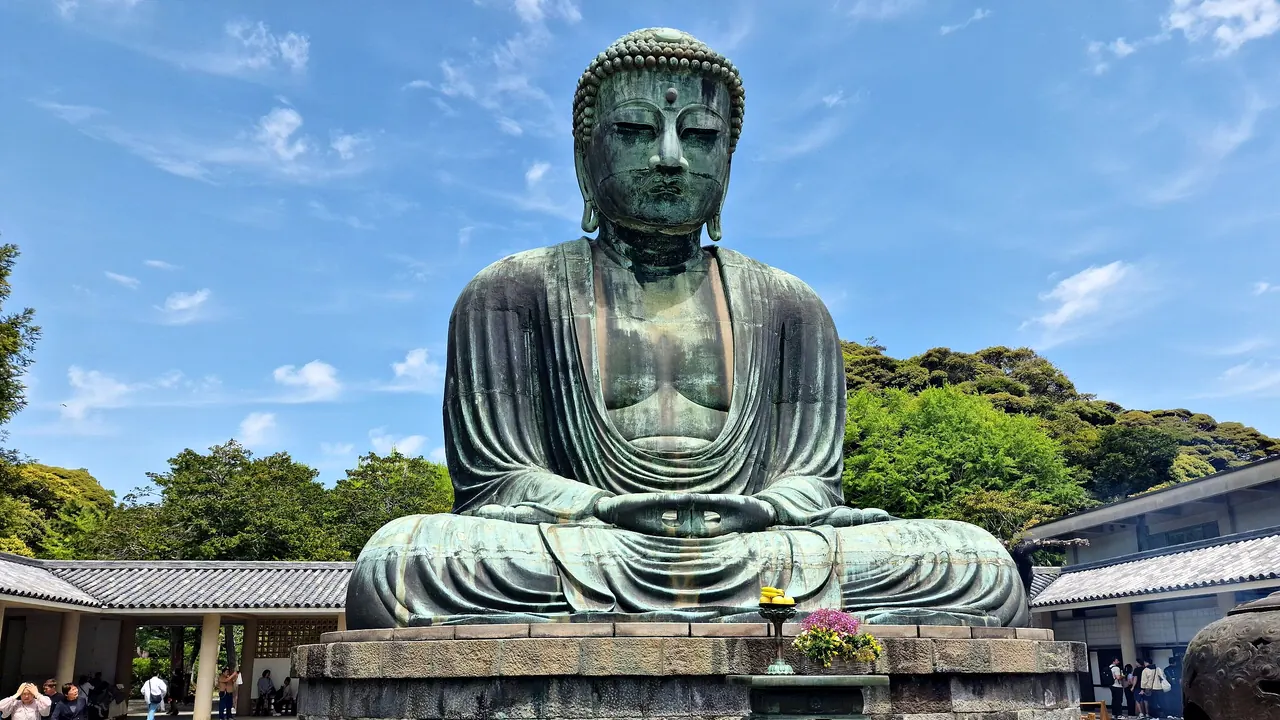
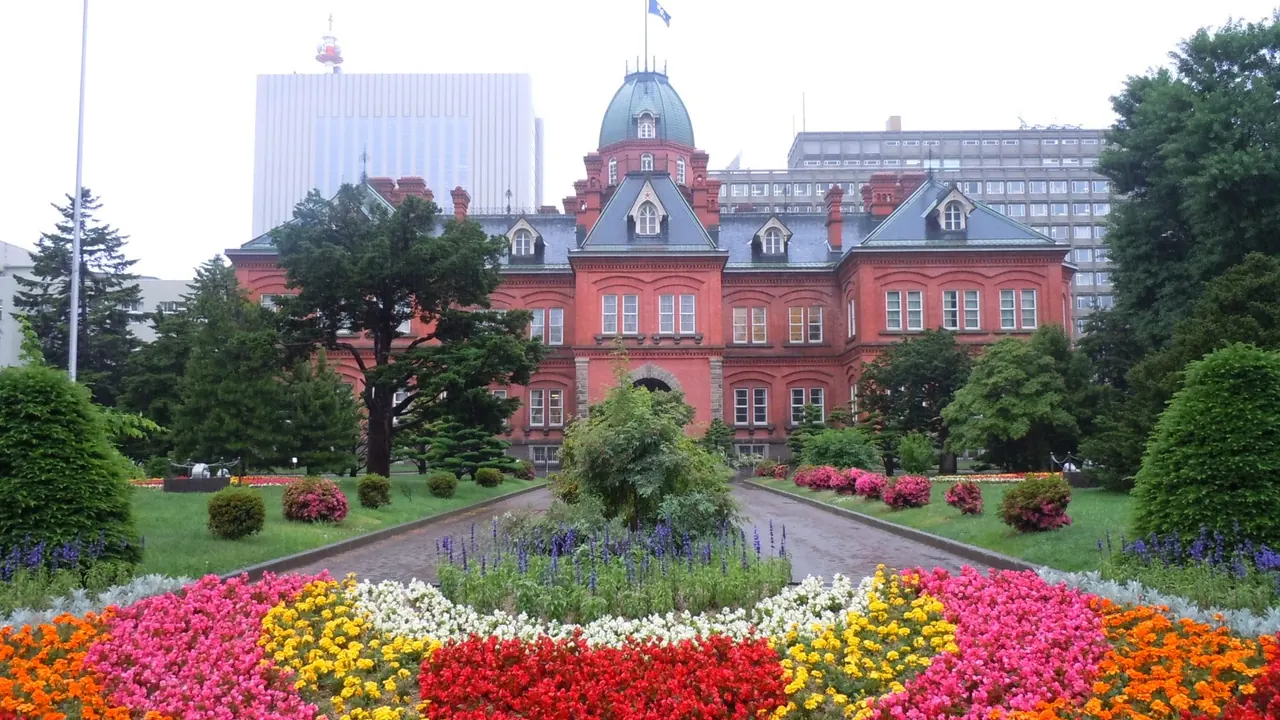
Photos: Kamakura by Anagoria, CC BY-SA 4.0, cropped; Sapporo by Feri88, CC BY 3.0, cropped.
Kamakura or Sapporo?
Our verdict in twelve categories, each scored against the same fixed benchmark cities, and the climate month by month, so you can choose for your trip.
Choose Kamakura for
- culture and sights
- beaches
- day trips
Kamakura suits a traveller who wants Japan's medieval past in a small seaside town. The Great Buddha, the Zen temples of Kita-Kamakura and the wooded ridge trails between them fill the days, and Tokyo, Yokohama and Enoshima are close enough by train for extra outings. Days are quiet and nights end early, so it works best for a few days of temples, walking and the sea.
Choose Sapporo for
- nightlife
- food and drink
- wellness
If eating, drinking and big landscapes matter more to you than old buildings, Sapporo is the better choice. You can have miso ramen, seafood bowls for breakfast at Nijo Market and a late round of Susukino's bars. In the daytime there are ski slopes inside the city, onsen at Jozankei and Noboribetsu, and the lakes and volcanoes to the south. It is also easier on the wallet.
Scoreboard
Twelve categories on one fixed scale from 0 to 100. The shaded stretch is the gap between the two.
Your match
Pick a travel style or drag the sliders, and both match scores follow your weighting.
Wins on culture and sights and beaches with your weighting.
Wins on nightlife and food and drink with your weighting.
What matters to you?
Category by category
What the scores mean for a trip.
Beaches & swimming
Kamakura has a beach, if a modest one. Yuigahama and Zaimokuza are a short walk from the station, the beaches facing Enoshima are along the Enoden line, and Sagami Bay gets warm enough in high summer for a proper swim. The sand is dark and the water is rarely clear, but the beach is close to where you stay.
Sapporo is inland. Its nearest swimming, at Ishikari or near Otaru on the Sea of Japan, is a trip out of town, and the water is cooler and warm enough for only a few weeks. Neither city makes a beach vacation. In Kamakura the sea is part of everyday life, while in Sapporo it is a summer afternoon out.
Food & drink
Sapporo is worth travelling to for the food. Hokkaido's seafood, dairy and lamb have given it dishes of its own: miso ramen, soup curry and jingisukan. Nijo Market serves bowls of sea urchin and roe in the morning, and whole crab is the meal to have in winter. The old brewery has its beer halls, and Susukino's ramen counters stay open late into the night.
Kamakura's food is simpler and lighter. It has shirasu whitebait on rice near the beach, refined shojin ryori by the Zen temples and snacks along Komachi-dori. It is good for lunch, but for a choice of places in the evening most visitors go to Yokohama or Tokyo.
Culture & sights
Kamakura still shows its history as a medieval capital. It has the open-air Great Buddha, Tsurugaoka Hachimangu, the shrine of the Minamoto clan, and the Zen temples of Engaku-ji and Kencho-ji. Smaller places such as Hase-dera and the bamboo grove at Hokoku-ji are enough for a second day.
Sapporo is a grid city laid out in the 19th century. Its landmarks are the Clock Tower, the red-brick former government building and the pioneer houses of the Historical Village. The highlights are the Ainu galleries of the Hokkaido Museum and Noguchi's Moerenuma Park, which are interesting but tell a much younger story.
Nightlife
Sapporo has a real night out and Kamakura does not. Susukino's neon towers hold thousands of tiny counter bars, izakaya and karaoke rooms that stay busy past midnight, even in winter. The evening is about moving from bar to bar rather than clubbing, and the side streets are easier places to start than the main corners where touts work.
Kamakura winds down once the day-trippers leave. A few izakaya near the station and the beach are all there is, and a late night means taking the train to Yokohama or Tokyo.
Nature & outdoors
Both cities sit against wooded hills, but Sapporo's outdoors are on a much bigger scale. Its reliable deep snow brings skiing at Teine and Kokusai within the city, and Niseko's powder is about two hours away. In summer, the caldera lake and volcanoes of Shikotsu-Toya are about an hour south.
Kamakura's outdoors are gentler. Ridge trails such as the Daibutsu and Tenen routes link the temples, there is surfing and paddling in Sagami Bay, and on clear winter days Fuji appears across the water. For real mountains you go to Hakone or the Tanzawa range.
Day trips
Kamakura is very well placed for day trips. Tokyo is about an hour away and Yokohama less than half an hour, Enoshima is a short ride on the Enoden, and Hakone's hot springs and Odawara's castle lie further west. In one stay you can see Japan's biggest city and a mountain resort as well as the temples.
Sapporo's day trips are good but fewer: Otaru's canal, the Yoichi whisky distillery, the Ainu museum at Shiraoi and the onsen at Noboribetsu. Beyond those, most outings lead to lakes and farmland rather than other towns.
Good for families
Both cities are safe and clean and easy with children, and Sapporo is a little easier. Its flat grid, the underground walkway, the polar bears at Maruyama Zoo and beginners' ski slopes inside the city make it simple to manage, as long as children are dressed for a hard winter.
Kamakura's attractions for children are smaller in scale: climbing inside the Great Buddha, riding the Enoden along the sea, Enoshima's caves and the aquarium at Katase. The drawbacks are long stone staircases, weekend crowds and small hotel rooms.
Getting around
Neither city needs a car, but they work differently. Kamakura is a small town you cover on foot, with the Enoden and one stop on the JR line reaching the outlying temples. At weekends, though, traffic slows the buses and many temples sit at the top of steps.
Sapporo is far larger but easier to find your way around. It has a numbered street grid, three subway lines, a streetcar loop and an underground walkway that keeps you off icy pavements in winter. Only places on the edge of the city, such as Jozankei, need a bus.
Shopping & style
Sapporo is the better place to shop. It has department stores above the station and around Odori, and the long covered arcade of Tanukikoji. The food halls are full of Hokkaido chocolate, cheese and dried seafood, and Ainu woodcarving is the craft to bring home.
Kamakura is good for an afternoon of browsing on Komachi-dori and Wakamiya-oji. The thing to look for is Kamakura-bori lacquered woodwork, along with ceramics and good knives. For fashion you go to Yokohama or Tokyo.
Affordability
Your money goes further in Sapporo. Business hotels are good value, ramen and soup curry cost little and many sights are free. Costs rise mainly for crab dinners, ski passes and hotel rooms during the Snow Festival.
Kamakura's day-to-day costs are fair, with small temple fees and reasonably priced soba lunches. The problem is that it has few hotels, and Tokyo weekenders compete for the rooms. Many visitors avoid this by staying in Yokohama or Fujisawa and coming in by train.
Live music & performing arts
Sapporo has a regular programme of performances. The Kitara concert hall is home to the Sapporo Symphony Orchestra and hosts the Pacific Music Festival every July. A large theatre takes touring opera and ballet, and there are jazz bars in Susukino.
Kamakura has occasional Noh in a small private theatre and its shrine festivals, with traditional dance in spring and yabusame horseback archery in autumn. These are memorable if your dates match, but on an ordinary evening there is little to see.
Wellness & relaxation
The two towns offer different kinds of rest. In Kamakura you find it on foot, and timing matters: an early walk up one of the Kita-Kamakura valleys, seated meditation in a Zen hall, or a tea pavilion before the trains bring in the day-trippers. The mild, bright winter months are a good time for this, because the blossom and hydrangea crowds are gone. There is no hot bath at the end of the day, though, and the nearest onsen are in Hakone.
In Sapporo rest is easier to come by. Soaking in hot water is how people there recover, and a bath fits round any day, whether after a morning on the ski slopes or a long walk over frozen pavements. Winter makes sightseeing hard work, but it is the best season for the outdoor baths in the Jozankei gorge, with snow on the rocks around the water and the baths about an hour by bus from the centre. Unlike Kamakura's temples, a good soak does not depend on catching a quiet weekday, and between baths the city itself is spacious and slow.
When should you go?
Pick your month. The climate figures are measured averages, not a forecast.
Kamakura in July
Sapporo in July
Daytime high, °C
Rainfall in the month, mm
Where the figures come from
Kamakura's sunshine is measured 45 km from the centre, at Tokyo.
Temperature and rainfall are climate normals, averaged over the years shown. Kamakura: 1991-2020 normals, Yokosuka Fwf (11.6 km from centre). Sapporo: 1991-2020 normals, Sapporo (2.2 km from centre).
Kamakura has mild, sunny winters, with daytime highs of about 11°C. That is good weather for temple walks and clear views of Fuji. July and August are hot and humid at about 30°C, and the sea is warmest in August at 26°C, which makes high summer the time for swimming. Early autumn is the wettest time, and October brings the heaviest rain. Late spring and November are the most comfortable months for walking the town.
Sapporo's year is very different. January and February stay around freezing, with steady snow and short, dull days. That is ideal for skiing but hard going for sightseeing on foot. Summer is milder than in Kamakura, peaking near 26°C in August, and the sea only just becomes warm enough to swim for a few weeks. May and June are the dry, sunny months, and September is the wettest.
Which traveller are you?
On a culture and arts trip, Kamakura is the clear choice. The town was the seat of Japan's first warrior government and still has the Great Buddha, Tsurugaoka Hachimangu and the great Zen temples of Kita-Kamakura. Sapporo's Meiji-era landmarks are seen in far less time.
For a food and nightlife trip, Sapporo is far ahead. You can work through miso ramen, soup curry, lamb grilled at the table and seafood breakfasts, then spend the evening in Susukino's stacked bars until well past midnight. Kamakura has shirasu and temple cuisine, then goes quiet after dinner.
On a relaxing and wellness trip, Sapporo has the hot springs that Kamakura lacks. There are open-air baths at Jozankei inside the city limits and at Noboribetsu not far away. Kamakura offers zazen and moss gardens instead, and its calm depends on avoiding weekend crowds.
Before you go
| Measure | Kamakura | Sapporo |
|---|---|---|
| Official language | Japanese | Japanese |
| Currency | Yen (JPY) | Yen (JPY) |
| Sockets | AB100 V, 50 and 60 Hz depending on the region | AB100 V, 50 and 60 Hz depending on the region |
| Driving side | Left | Left |
| Time zone | UTC+9 | UTC+9 |
| Emergency number | Police 110, fire 119 | Police 110, fire 119 |
| Elevation | 17 m | 5 m |
| Main airport | Tokyo Haneda International Airport (HND)34 km from centre98 non-stop destinations | New Chitose Airport (CTS)42 km from centre42 non-stop destinations |
| Public holidays this year | 16 days | 16 days |
By the numbers
| Measure | Kamakura | Sapporo |
|---|---|---|
| City population | 172,929 | 1,959,313 |
| People per km² | 4,356 | 1,747 |
| Museums within 10 km | 18 | 33 |
| UNESCO World Heritage sites within 50 km | 1 | 1 |
| Swim season, months above 21 °C | 5 months | 1 month |
Where else could you go?
Every comparison below shares a destination with this one, so you can follow Kamakura or Sapporo somewhere new.
- Yokohamavs Kamakura
- Hakonevs Kamakura
- Tokyovs Kamakura
- Nikkovs Kamakura
- Takayamavs Kamakura
- Kanazawavs Kamakura