Kenya
Mombasa
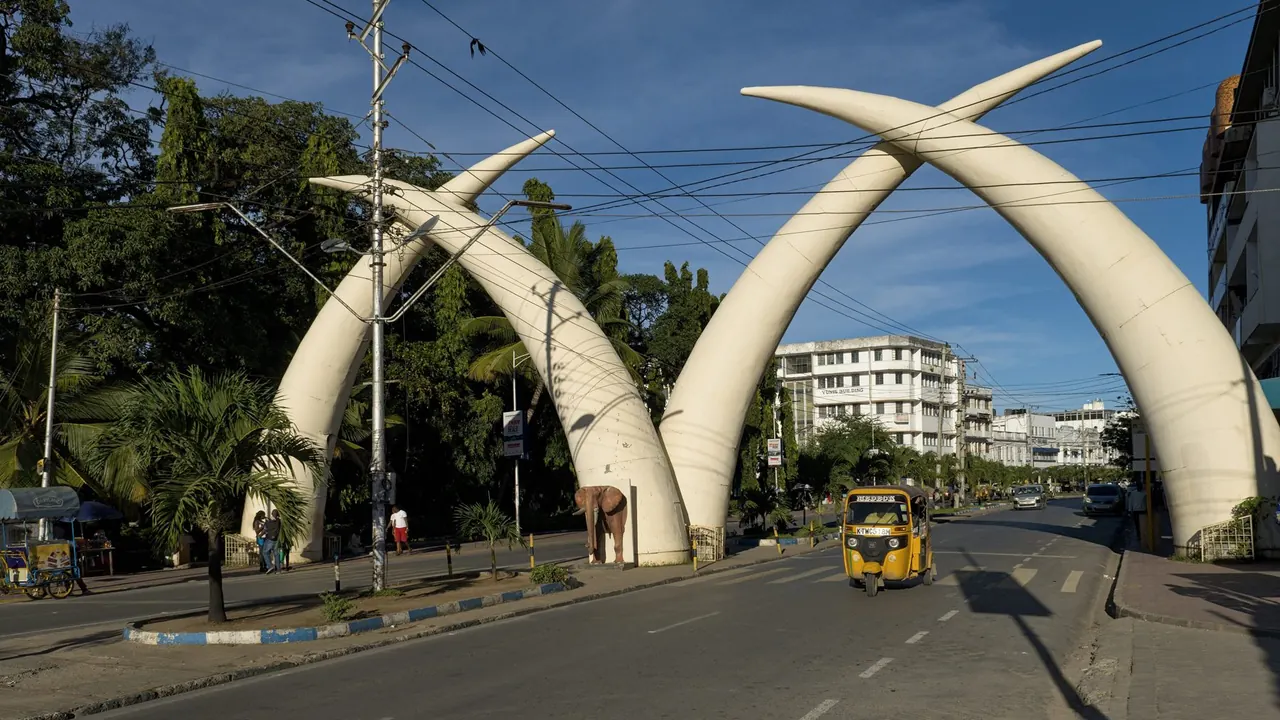
The tusks over Moi Avenue
- Beaches82
- Nature & outdoors74
- Affordable cities70
Match
50
Every category weighted equally
- Beach & sun56
- Culture & arts46
- Food & nightlife47
- Family trip54
- Outdoors56
- Relax & unwind54
- Shopping & style46
- On a budget53
Mombasa in twelve categories
Our verdict on each, scored 0 to 100 against the same fixed benchmark cities, so a score means the same thing on every page.
Beaches & swimming. Scores 82 out of 100.
Food & drink. Scores 60 out of 100.
Culture & sights. Scores 55 out of 100.
Nightlife. Scores 46 out of 100.
Nature & outdoors. Scores 74 out of 100.
Day trips. Scores 45 out of 100.
Good for families. Scores 45 out of 100.
Getting around. Scores 30 out of 100.
Shopping & style. Scores 35 out of 100.
Affordability. Scores 70 out of 100.
Live music & performing arts. Scores 22 out of 100.
Wellness & relaxation. Scores 40 out of 100.
Mombasa category by category
Beaches & swimming
82Mombasa is, for most visitors, a beach base first. North of the island, Nyali, Bamburi and Shanzu run as one long strip of white coral sand lined with resort hotels, their lagoons protected by an offshore reef. The Indian Ocean is warm all year, around 26-29°C, and the water inside the reef is calm. The tide shapes the day here. At low water the sea pulls back a long way, which leaves rock pools to explore but very little depth for a swim.
South of the city, past the Likoni ferry, Diani is the finest beach on the coast, wide, bright and backed by palms, about an hour away if the crossing goes smoothly. Seaweed washes up in the middle months of the year, and beach sellers work the public stretches. December to March brings the clearest water and the calmest sea.
Food & drink
60This is where Kenya's Swahili cooking lives. Centuries of Arab, Indian and African trade shaped it, and coconut, tamarind, cardamom and fresh fish run through all of it. In the Old Town and the streets around the markets, look for biryani and pilau, fish in coconut sauce, mahamri doughnuts with spiced tea, grilled mishkaki skewers and viazi karai, potatoes fried in a turmeric batter. After dark the roadside grills light up, with charcoal-roasted cassava and maize sold from carts.
The Indian community adds vegetarian thalis and sweet shops. In Nyali and the resort strip you will find seafood grills and hotel buffets. Fine dining is thin, and so are wine and coffee culture. Fresh madafu coconut water is the everyday drink.
Culture & sights
55The centrepiece is Fort Jesus, built by the Portuguese in the 1590s at the harbour mouth and fought over for centuries by Portuguese, Omanis and the British. Its museum tells the story of the coast. Beside it lies the Old Town, a tangle of narrow lanes with carved Swahili doors, balconied merchant houses and old mosques, among them the Mandhry Mosque. It is best explored on foot with a local guide.
Around the city you also find ornate Hindu and Jain temples, the colonial buildings along Treasury Square and the giant tusks arching over Moi Avenue. It is enough for a rewarding day or two. Much of the Old Town is weathered and lived-in rather than restored, and beyond these few sights the city is a working port.
Nightlife
46Going out in Mombasa centres on the north coast, not the island. In Nyali and Bamburi you find beach bars, hotel lounges and a few clubs playing Afrobeats, bongo flava and reggae. Further north, Mtwapa is the coast's late-night town, a loud strip of bars and clubs that keeps going until dawn at weekends.
It is lively and informal more than polished, and it is not always comfortable for a first-time visitor. Taxis or ride-hailing between venues are the sensible way to move at night. Most resort guests keep to sundowners at the beach and an early night.
Nature & outdoors
74Most of the nature here is under water. Mombasa Marine National Park lies off the north-coast beaches, and glass-bottom boats and snorkelling trips go out to its coral gardens. Further south, the Kisite-Mpunguti marine park near Wasini is known for dolphins, and divers come to the coast for reef walls and turtles. Kitesurfing is good on the windy months' south coast, and mangrove creeks can be explored by dhow or kayak.
On land, the forested Shimba Hills reserve, with sable antelope and elephants, is about an hour inland. Tsavo East, one of Kenya's largest parks, is close enough for a long safari day or an overnight trip. The heat and humidity limit walking, and there is little hiking country on the coast itself.
Day trips
45The coast north of Mombasa is scattered with remains of medieval Swahili towns. The ruins of Jumba la Mtwana lie under baobabs near the shore, close to the city. Kilifi, with its creek and the Mnarani ruins, is about an hour away. The forest-wrapped ruined town of Gede, near Watamu, takes about two hours, and Malindi, with its Vasco da Gama pillar, is a little beyond.
To the south, a dhow trip to Wasini island adds a small fishing village to a day at sea. Each of these makes a pleasant outing, but the list is short and the roads are slow. Lamu, the coast's great historic town, is too far for a day and needs a flight.
Good for families
45Families mostly stay in the large beach resorts in Nyali, Bamburi and Diani, where pools, kids' clubs and reef-sheltered lagoons make days simple. Rock-pooling at low tide, glass-bottom boat trips and Haller Park, a nature park on reclaimed quarry land with giraffes, hippos and tortoises, keep younger children busy. Kenyan coastal culture is warm towards children.
Outside the resorts it is harder going. The heat is strong, traffic in town is chaotic, and pavements are patchy. Malaria precautions are needed, and families have to stay careful with food and water. A safari day in Tsavo is a highlight for older children but a long drive for small ones.
Getting around
30Mombasa town sits on an island, joined to the mainland by bridges to the north and west and by the Likoni ferry to the south. The Old Town and Fort Jesus are compact enough to walk, but the beaches, resorts and sights are spread along the coast. There is no metro or tram. Locals ride matatu minibuses, which are cheap but crowded and hard for a newcomer to read.
Most visitors use tuk-tuks, ride-hailing apps or taxis arranged through their hotel. Boda-boda motorbike taxis are everywhere but are a risk. Traffic on the Nyali bridge and queues for the Likoni ferry can turn short trips into long ones, and safaris and day trips need a driver or a tour.
Shopping & style
35Shopping here means textiles, crafts and markets. On Biashara Street the cloth merchants sell brightly printed kangas and striped cotton kikois. The lanes of the Old Town sell carved Swahili chests, brass and antiques, and Akamba woodcarvers turn out everything from salad spoons to life-size giraffes. Marikiti market is the place for spices and produce.
Bargaining is expected, and curio sellers can be persistent. For everyday needs, Nyali has modern malls with supermarkets and international chains. There is no luxury or designer shopping to speak of.
Affordability
70Away from the resorts, Mombasa is cheap. Swahili street food, local cafés, tuk-tuks and matatus cost very little, and simple guesthouses in town are good value. Most visitors, though, stay in beach hotels, and their prices, along with safari tours, park entry fees for foreigners and imported drinks, are much closer to international levels.
How much a stay costs depends largely on how much of it is spent inside a resort. A visitor who eats in town and travels like a local spends a fraction of what a package guest does.
Live music & performing arts
22The coast's own music is taarab, sung Swahili poetry over oud, violin and drums, heard at weddings and occasional concerts rather than on any regular stage. Bars on the north coast host live bands playing benga, rumba and reggae at weekends, and resorts put on acrobat and traditional dance shows. There is no theatre or classical concert life to plan a trip around.
Wellness & relaxation
40Mombasa has no bathing tradition of its own. Relaxation here means the resorts, which have spas offering massages and treatments, often in open-air pavilions facing the sea, and yoga is easy to find on the Diani side. The coast moves at the unhurried pace Kenyans call pole pole, and a stay of long lunches and afternoon naps comes naturally. The town itself is hot, noisy and busy, so the calm is found on the beach strips rather than on the island.
When should you go?
Pick a month to see what it is like. The climate figures are measured averages, not a forecast.
Mombasa in July
Daytime high, °C
Rainfall in the month, mm
The whole year
Shaded against this city’s own year: the deepest cell is its best month for that figure and the palest its weakest.
Where the figures come from
Mombasa has no rain gauge within 25 km of the centre, so its rainfall comes from a gridded climate dataset read at the city rather than from a gauge further away.
Temperature and rainfall are climate normals, averaged over the years shown. Mombasa: 1991-2020 normals, Mombasa (5.8 km from centre).
Before you go
| Measure | Mombasa |
|---|---|
| Official language | English, Swahili |
| Currency | Kenyan Shilling (KES) |
| Sockets | G240 V, 50 Hz |
| Driving side | Left |
| Time zone | UTC+3 |
| Emergency number | Police 112/999, ambulance 112/999, fire 112/999 |
| Elevation | 50 m |
| Main airport | Moi International Airport (MBA)8 km from centre22 non-stop destinations |
| Public holidays this year | 10 days |
By the numbers
| Measure | Mombasa |
|---|---|
| City population | 1,208,333 |
| People per km² | 4,100 |
| Museums within 10 km | 0 |
| UNESCO World Heritage sites within 50 km | 2 |
| Swim season, months above 21 °C | 12 months |
Compare Mombasa with
Every comparison with a written verdict behind it.