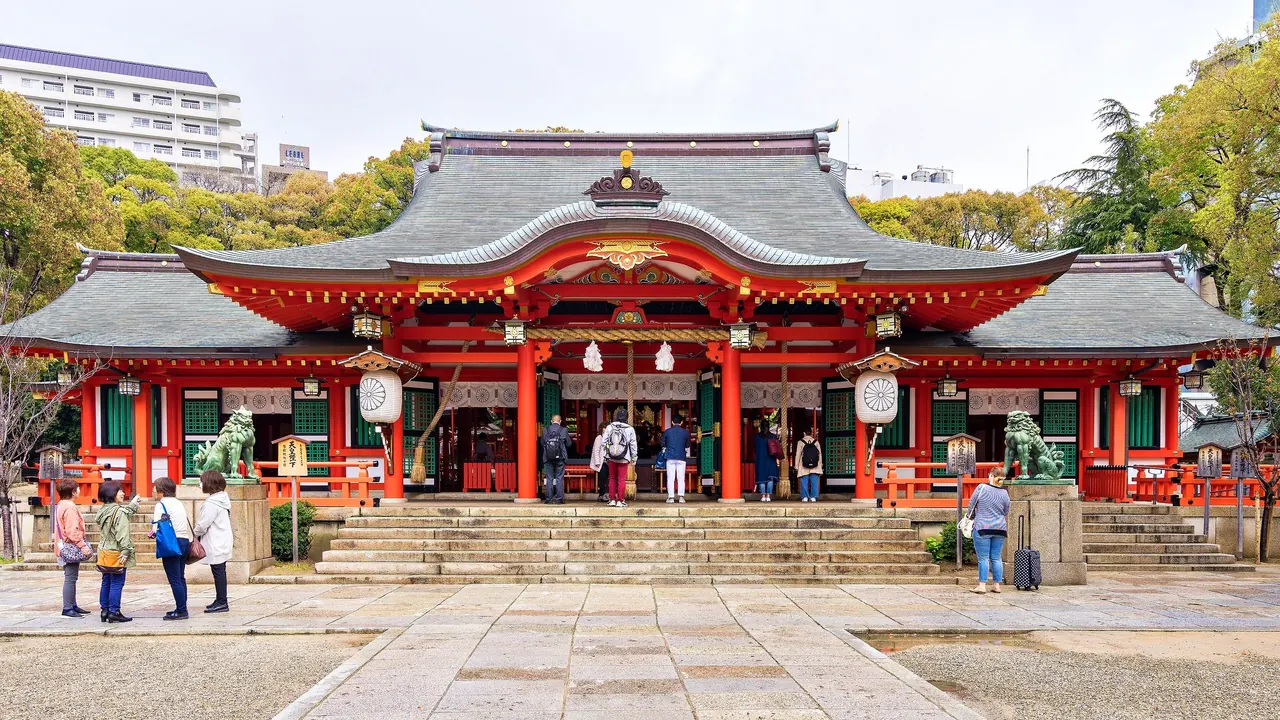
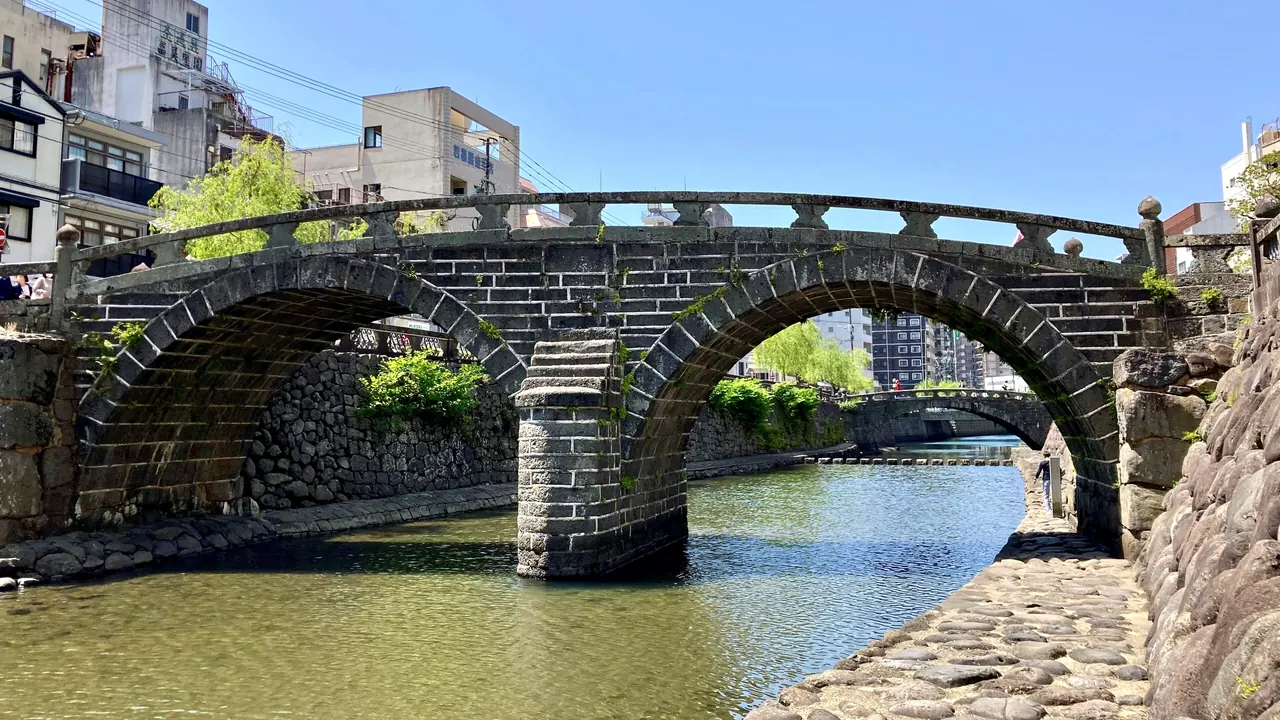
Photos: Kobe by Wei-Te Wong, CC BY-SA 2.0, cropped; Nagasaki by Dudva, CC0.
Kobe or Nagasaki?
Our verdict in twelve categories, each scored against the same fixed benchmark cities, and the climate month by month, so you can choose for your trip.
Choose Kobe for
- wellness
- day trips
- live music and the arts
Kobe suits the traveller who wants a comfortable base with a lot within reach. Himeji, Osaka, Kyoto and Nara are all easy days out along the rail line, the Rokko mountains rise straight behind the streets, and Arima Onsen lies inside the city limits. Families, walkers, people who plan their days around food, and anyone who likes to end a day in a hot spring will fill a week here more easily.
Choose Nagasaki for
- culture and sights
Nagasaki is the one to choose when the history is the reason for the trip. The atomic bomb sites, Dejima, Glover Garden and Oura Cathedral tell a story of war and of four centuries of contact with the outside world that no other Japanese city can match, and the harbour is small enough to take in over two or three unhurried days. The hills and stairways are hard on the legs and the evenings are quiet, but for a reflective, history-led trip it gives more.
Scoreboard
Twelve categories on one fixed scale from 0 to 100. The shaded stretch is the gap between the two.
Your match
Pick a travel style or drag the sliders, and both match scores follow your weighting.
Wins on wellness and day trips with your weighting.
Wins on culture and sights with your weighting.
What matters to you?
Category by category
What the scores mean for a trip.
Beaches & swimming
Neither city is a beach destination, and the swimming is much the same in both: a short summer season from July into early September, warm water, and jellyfish towards the end. What differs is how much effort it takes. Kobe's Suma is a long, busy sandy beach about fifteen minutes from the centre by train, so a swim fits easily into an afternoon.
Nagasaki's waterfront is all docks, so you have to go further. Takahama, a clean open-sea bay, is about an hour away by bus, and the small resort beach on Iojima is a short ferry ride from the harbour. Either one takes half a day.
Food & drink
Kobe has the wider range. You can have Kobe beef grilled at a teppanyaki counter, eat your way through a baking and pastry tradition that goes back to the foreign merchants, and taste sake in the Nada breweries. That covers everything from a bakery breakfast to a celebration dinner.
Nagasaki's food is more unusual but narrower. Champon, sara udon, castella and the shippoku banquet show its Chinese, Portuguese and Dutch past, and the local fish is excellent, but there is little fine dining. Both cities have a Chinatown for steamed buns.
Culture & sights
Both cities kept a hillside of Western merchant houses from the treaty-port years, but they mean different things in each. In Kobe the ijinkan of Kitano are the heart of the sightseeing. They are scattered along steep residential lanes, with the ancient Ikuta Shrine and the earthquake memorials down by the bay making up most of the rest. Its Chinatown, Nankinmachi, is somewhere to eat rather than somewhere to explore.
In Nagasaki, Glover Garden's houses are grouped on a single slope above the harbour, and they are only one late chapter. The Chinese community left a whole older quarter behind it: the Ming-style Sofukuji, the Confucian shrine, and the temples of Teramachi around the stone Meganebashi bridge. Kobe has nothing like that, and it is why Nagasaki gives a sightseer more days of real substance.
Nightlife
Both are places for a long evening of izakaya and small counter bars rather than dancing, and Kobe has the slight edge. The lanes north of Sannomiya are full of whisky and cocktail bars, and when you want a late, loud night, Osaka is twenty minutes away by train.
Nagasaki's Shianbashi is older and more inward-looking. Its snack bars are built around regulars, and the streets empty well before midnight on most weeknights. Many visitors spend the evening on Mount Inasa for the night view instead.
Nature & outdoors
Kobe has mountains right behind the streets. Trails leave from near Shin-Kobe station past the Nunobiki waterfalls into the Rokko range, serious walkers can follow the ridge traverse, the Suma Alps give a shorter, rugged climb, and ropeways go up to the views over the bay.
Nagasaki's green hills wrap around its harbour, and the view from Mount Inasa at night is among the best in Japan. Its bigger landscapes are further away, though: the steaming volcanic peaks of Unzen are about two hours off, and the wooded islands of Kujukushima are near Sasebo.
Day trips
Day trips are Kobe's greatest advantage. Himeji Castle, Osaka, Kyoto and Nara are all within about an hour by train, and the shinkansen brings Okayama, Kurashiki and even Hiroshima and Miyajima within reach. A week based here can cover much of western Japan.
Nagasaki's outings are fewer and longer: the boat to the concrete ruins of Hashima, Shimabara's castle and samurai street, Huis Ten Bosch, and the porcelain towns of Arita and Imari. They are distinctive, but most take the whole day, and whether the boat can land on Hashima depends on the weather.
Good for families
Kobe is the easier family city by a clear margin, mainly because there is more to do and it is all close together. Kobe Animal Kingdom on Port Island puts children among birds and animals indoors, which helps on a hot or wet day. The cable cars up Rokko end at a pasture farm and play areas, and Universal Studios Japan is about an hour away. Baby rooms and child menus are standard.
Nagasaki suits a shorter stay with children. The trams and the Inasa ropeway are fun to ride, the aquarium's penguins waddle out onto their own small beach, and Dejima's miniature town and Glover Garden's moving walkways keep children interested. Its big day out, the rides, canals and light shows of Huis Ten Bosch, means travelling north towards Sasebo. Beyond that, the list of things for children runs out sooner than in Kobe.
Getting around
Kobe is the easier city to move around in. It is a long, thin strip with JR, Hankyu, Hanshin, the subway and the driverless Port Liner running side by side, all on one IC card. Chinatown, the harbour and the arcades are within walking distance of Sannomiya, and only Kitano involves a steady climb.
Nagasaki's flat-fare tram is charming and simple, linking the station, the Peace Park, Dejima and Oura along the valley floor. Away from that valley floor, though, most journeys turn into long flights of steps that buses can't reach.
Shopping & style
Kobe is clearly the better of the two for shopping, because it has a real fashion side and Nagasaki does not. The old foreign settlement around the Daimaru gives it a polished, upmarket quarter, and its specialities are worth seeking out: pearls from a long-standing trade, leather shoes from Nagata, and boxed Western-style cakes. Still, it fills an afternoon or two rather than a whole trip, and keen shoppers go to Osaka for depth.
Nagasaki's shops mostly serve the people who live there, with the Hamanomachi arcade and a mall by the station, and fashion barely features. Where it does well is gifts. Castella from its old bakeries, local glassware and porcelain from Hasami, Mikawachi and nearby Arita make more distinctive souvenirs than its modest streets suggest.
Affordability
The two cost much the same. Both have clean, compact business hotels and everyday meals that are good value. Where they differ is in what pushes the bill up: in Kobe it is a Kobe beef dinner, shinkansen day trips and a night in an Arima ryokan.
In Nagasaki the extra spending goes on the Hashima boat, the ropeway and evenings of sake and sashimi. Its cheap tram and modest entry fees keep an ordinary day of sightseeing light on the wallet.
Live music & performing arts
Kobe has far more live performance on any given night. Small jazz clubs with resident trios are spread around Sannomiya and Kitano, the Kobe Jazz Street festival fills Kitano each autumn, and the Hyogo Performing Arts Center has its own orchestra. The Takarazuka Revue performs about forty minutes away.
Nagasaki's highlights are festivals: the Kunchi at Suwa Shrine every October and the Lantern Festival around Chinese New Year, both with dragon dances. They are well worth timing a trip around, but at other times there is little to plan for.
Wellness & relaxation
Kobe is clearly the better place to rest, because bathing is part of the city itself. At Arima you can try two very different waters, one reddish-brown with iron and one clear and fizzy, at the public bathhouses without booking anything, or settle into a ryokan with a private bath and a kaiseki dinner. Between soaks, the residential lanes of Kitano and the tea rooms and gardens along the foothills show a calmer side than the busy centre suggests.
Nagasaki has little in town beyond a few spring facilities and hotel baths. The onsen towns on the Shimabara peninsula, though, offer a choice of setting that Arima cannot: Obama's scalding springs and long footbath on the shore, or Unzen's mountain air among volcanic vents, which goes well with a hike up Mount Fugen. Back in the city, the harbour sets an easy pace.
When should you go?
Pick your month. The climate figures are measured averages, not a forecast.
Kobe in July
Nagasaki in July
Daytime high, °C
Rainfall in the month, mm
Where the figures come from
Kobe's sunshine is measured 29 km from the centre, at Osaka.
Temperature and rainfall are climate normals, averaged over the years shown. Kobe: 1971-2000 (sunshine 1991-2020, rainfall 1991-2020) normals, Kobe (1.3 km from centre). Nagasaki: 1991-2020 normals, Nagasaki (2.2 km from centre).
Both cities follow the seasons of southern Japan. In Kobe, April, May, October and November are mild and good for walking. The rainy season runs from June into July, and August is hot and humid, with highs around 32°C that make long days of sightseeing tiring. The sea off Suma is warm enough to swim from July to early September and reaches 27°C in August. Winters are cool but bright, with more sunshine than Nagasaki gets.
Nagasaki is just as hot in summer and slightly milder in winter, and its sea peaks a little warmer at 28°C. The big difference is the rain. June brings around 334mm, July is nearly as wet, and August is noticeably drier but still wet at about 216mm. Even Kobe's wettest month gets far less than Nagasaki's June. Spring and autumn suit both cities, and October is especially good in Nagasaki once the summer downpours have passed.
Which traveller are you?
On a culture and arts trip, Nagasaki is the better choice for its sights. The Peace Park, the Atomic Bomb Museum, Dejima and Oura Cathedral carry far more historical weight than Kobe's merchant houses. Kobe comes out ahead only if live jazz and concert halls matter more than history.
On a family trip with young children, Kobe is easier. Its compact, mostly flat centre works with a pushchair, and the zoo, Suma's aquarium and Harborland's Ferris wheel are all close by. In Nagasaki, the stairways and the hard subject of its main museum need more planning.
For a relaxing and wellness trip, Kobe has Arima Onsen, one of Japan's oldest hot spring towns, about half an hour from the centre and still inside the city. Nagasaki's best springs at Obama and Unzen mean a longer journey and usually a night away.
Before you go
| Measure | Kobe | Nagasaki |
|---|---|---|
| Official language | Japanese | Japanese |
| Currency | Yen (JPY) | Yen (JPY) |
| Sockets | AB100 V, 50 and 60 Hz depending on the region | AB100 V, 50 and 60 Hz depending on the region |
| Driving side | Left | Left |
| Time zone | UTC+9 | UTC+9 |
| Emergency number | Police 110, fire 119 | Police 110, fire 119 |
| Elevation | 17 m | 105 m |
| Main airport | Kobe Airport (UKB)7 km from centre15 non-stop destinations | Nagasaki Airport (NGS)19 km from centre10 non-stop destinations |
| Public holidays this year | 16 days | 16 days |
By the numbers
| Measure | Kobe | Nagasaki |
|---|---|---|
| City population | 1,521,707 | 404,656 |
| People per km² | 2,732 | 996 |
| Museums within 10 km | 46 | 26 |
| UNESCO World Heritage sites within 50 km | 3 | 2 |
| Swim season, months above 21 °C | 5 months | 6 months |
Where else could you go?
Every comparison below shares a destination with this one, so you can follow Kobe or Nagasaki somewhere new.