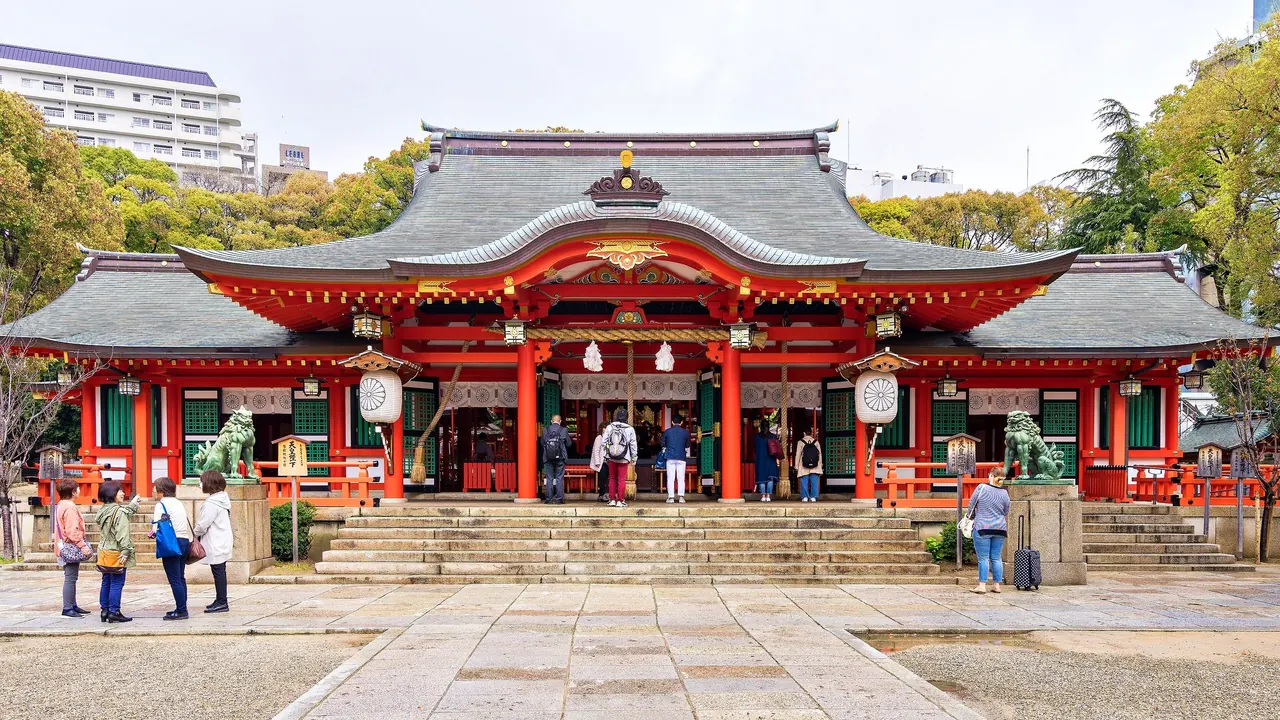
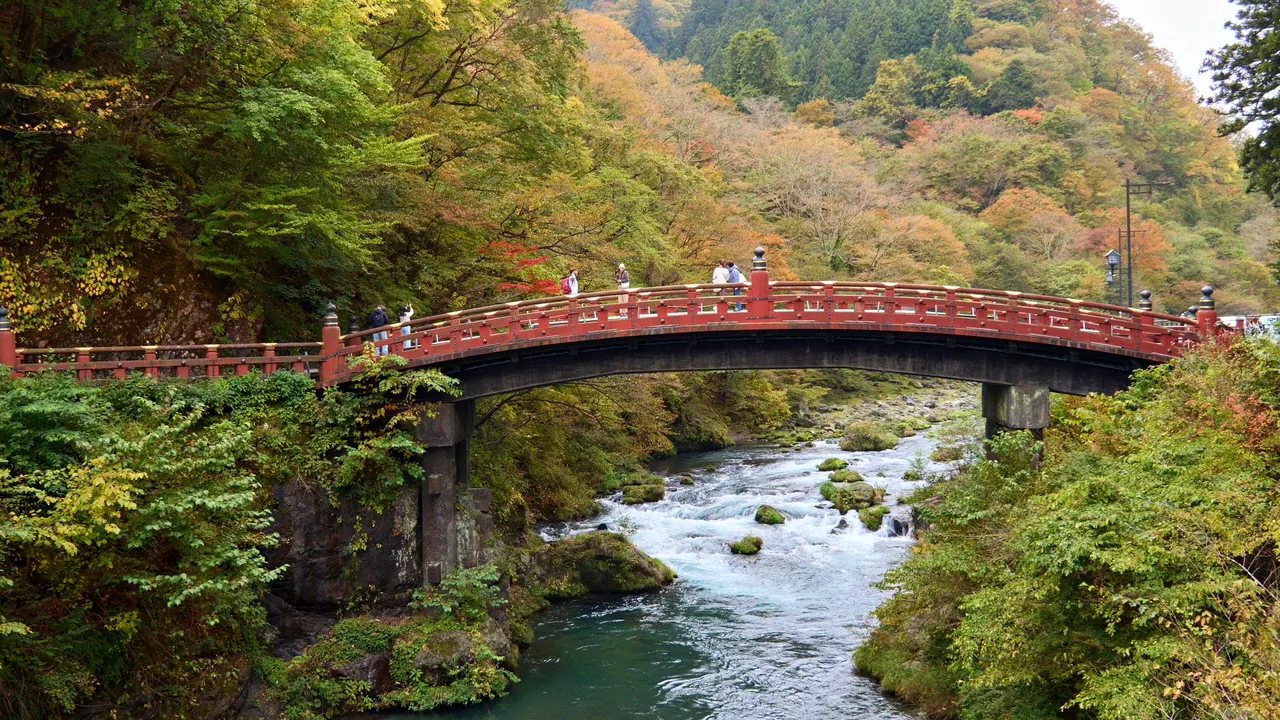
Photos: Kobe by Wei-Te Wong, CC BY-SA 2.0, cropped; Nikko by lumoplank, CC0.
Kobe or Nikko?
Our verdict in twelve categories, each scored against the same fixed benchmark cities, and the climate month by month, so you can choose for your trip.
Choose Kobe for
- food and drink
- live music and the arts
- shopping
Kobe suits travellers who want a comfortable base with good food at every level, from beef teppanyaki to old bakeries and Nada sake, and a rail line that makes Himeji, Kyoto, Nara and Osaka easy day trips. It works best for families, people who like to eat and drink in the evening and anyone spending a week or more in the region.
Choose Nikko for
- culture and sights
- nature and the outdoors
- wellness
Choose Nikko for the gilded shrines of Toshogu in their cedar forest and for the lakes, waterfalls and peaks of the national park above them. Plan two or three slow days there: walk by day, then finish with a hot spring and a ryokan dinner. Don't go expecting evenings out or shopping.
Scoreboard
Twelve categories on one fixed scale from 0 to 100. The shaded stretch is the gap between the two.
Your match
Pick a travel style or drag the sliders, and both match scores follow your weighting.
Wins on food and drink and live music and the arts with your weighting.
Wins on culture and sights and nature and the outdoors with your weighting.
What matters to you?
Category by category
What the scores mean for a trip.
Beaches & swimming
Kobe at least has a summer beach. Suma's long stretch of sand is a short train ride from the centre, with lifeguards and warm water in July and August, and Awaji Island across the strait has quieter shores. It is a pleasant extra, not a reason to come.
Nikko has no beach at all. Its highland lakes are for boating and fishing, so in summer the only water you will get into is a hot spring or a hotel pool.
Food & drink
Kobe is by far the better place to eat. Besides the teppanyaki counters serving its famous beef, it has the bakeries and cake shops of an old port town, street snacks in Nankinmachi, the sake breweries of Nada and cheap izakaya and ramen near every station.
Nikko's menu is short and local: yuba in many forms, mountain soba and grilled river fish, mostly served at lunch along the road to the shrines. After dark the choice comes down to your ryokan's dinner, which is often the best meal of the stay.
Culture & sights
For sights, Nikko is the more remarkable of the two. Its UNESCO-listed shrines and temples stand among giant cedars: Toshogu with its lacquer, gold leaf and carvings, Rinnoji's gilded Buddhas and the quieter Taiyuinbyo. Together they form one of Japan's great religious complexes, and the red Shinkyo bridge and the moss-covered Jizo statues of Kanmangafuchi add to it.
Kobe's sights are lighter but more varied: the Western merchants' houses of Kitano, Ikuta Shrine, the moving earthquake museum and Tadao Ando's art museum on the bay. Together they tell the story of a treaty port, but they are not heritage on Nikko's scale.
Nightlife
Neither is a party town, but only Kobe has evenings out at all. The lanes north of Sannomiya are packed with izakaya, whisky bars and tiny counters, and Osaka's late, loud nights are twenty minutes away by train.
In Nikko the day-trip crowds leave by late afternoon and the main street goes dark soon after. The evening is a long dinner and a soak.
Nature & outdoors
Both have mountains on the doorstep, but Nikko's are wilder and higher. The Irohazaka road climbs to Lake Chuzenji under the cone of Mount Nantai, where you'll find Kegon Falls, the level boardwalks of Senjogahara and steep climbs up Nantai and Nikko-Shirane. There is also rafting in the Kinugawa gorge and snow in winter.
Kobe's Rokko range belongs more to the city. Trails start near Shin-Kobe and pass the Nunobiki falls, ropeways climb Maya and Rokko for night views over the bay, and the rocky Suma Alps make a rugged outing. It is excellent for a half-day walk but never feels as remote as Nikko's park.
Day trips
Kobe is one of the best bases in Japan for day trips. Himeji Castle and Osaka are close, Kyoto and Nara are easy days out, and the shinkansen reaches Okayama, Kurashiki and even Hiroshima and Miyajima.
From Nikko, Tokyo is about two hours away. Closer options are Utsunomiya for gyoza, the pottery town of Mashiko and, at a stretch, the thatched post town of Ouchi-juku. Beyond those, most trips lead deeper into the mountains and lakes rather than to other towns.
Good for families
With children, the practical comforts tip the balance to Kobe. Baby rooms and child menus are standard, the centre is compact and clean, and Kobe Animal Kingdom on Port Island brings birds and animals close indoors, which helps on a hot or rainy day. The pasture farm and play areas at the top of Mount Rokko make an easy mountain day, and Universal Studios Japan in Osaka is about an hour away for a theme-park day.
Nikko's attractions for children are on the Kinugawa side: an Edo-period village with ninja and samurai shows, and a park of world landmarks in miniature. Older children will enjoy the boat rides on Lake Chuzenji and the Senjogahara boardwalks, but after two or three days the area runs out of things for them.
Getting around
Kobe is the easier of the two to get around, because trains do almost all the work. Several lines run side by side along the narrow strip of the city, services are frequent, and one IC card covers JR, the private railways, the subway and the driverless Port Liner out to Port Island and the airport. Most of what a visitor comes for, from Chinatown to the harbour and the arcades, is a short walk from Sannomiya or Motomachi, and only the uphill lanes of Kitano take any effort.
Nikko is small but slower. The town is one road of about 2km rising from the stations to the shrines, easy on foot or by a short bus ride, and the shrines themselves mean climbing stone stairs. Everything higher up, including Lake Chuzenji, Kegon Falls and Senjogahara, depends on a single bus route up the hairpins of the Irohazaka road, so a day there follows the bus timetable, and autumn weekend traffic can bring it almost to a standstill. Neither place needs a car, but in Kobe you hardly have to plan your transport, while in Nikko it shapes the whole day.
Shopping & style
Kobe is good for an afternoon of shopping. Covered arcades run through Sannomiya and Motomachi, the old foreign settlement has Daimaru and its boutiques, and local specialities include pearls, Nagata leather shoes and cakes.
Nikko has a single street of souvenir shops. The things worth buying there are Nikko-bori wood carving, straw-soled Nikko geta and packaged yuba.
Affordability
Costs are much the same in both. In each, everyday spending is modest and the signature experience is the splurge. In Kobe that means a proper beef dinner, shinkansen day trips or a night at Arima, against plain business hotels around Sannomiya.
In Nikko the big cost is a ryokan stay with dinner and breakfast, dearest by the lake and in autumn. Hostels, guesthouses, soba and local buses keep a budget trip easy.
Live music & performing arts
Kobe has real live music, and jazz is at its heart. Small clubs and bars with resident trios are dotted around Sannomiya and Kitano, Kitano holds a jazz festival each autumn, the Hyogo Performing Arts Center is nearby, and the Takarazuka Revue is forty minutes away.
Nikko has no theatre or concert life. Its Toshogu festival in spring and autumn, with a procession in samurai armour and horseback archery, is still worth timing a visit around.
Wellness & relaxation
Both are excellent for rest, and both centre on hot springs. Nikko has the edge in setting: riverside inns at Kinugawa, milky sulphur water at Yumoto on Lake Yunoko and open-air baths looking onto forest, all in mountains that grow deeply quiet on weekdays and in winter.
Kobe's Arima Onsen is about half an hour away within the city, and its iron-red and carbonated waters are famous across Japan. It makes an easy afternoon or overnight stay, but afterwards you are back in a busier city.
When should you go?
Pick your month. The climate figures are measured averages, not a forecast.
Kobe in July
Nikko in July
Daytime high, °C
Rainfall in the month, mm
Where the figures come from
Kobe's sunshine is measured 29 km from the centre, at Osaka.
Nikko has no weather station within reach, so its figures come from a gridded climate model rather than a measured record, and read a broad area rather than the city itself.
Temperature and rainfall are climate normals, averaged over the years shown. Kobe: 1971-2000 (sunshine 1991-2020, rainfall 1991-2020) normals, Kobe (1.3 km from centre). Nikko: 2001-2020 normals, NASA POWER reanalysis grid, no weather station within 90 km.
Kobe's beach season is short. From July to September the bay warms to about 27°C at its peak, but July is also the wettest month at around 226mm, and August highs near 32°C make walking the streets heavy going. Spring and October to November are the comfortable months for sightseeing and the Rokko trails. Winters are cool and fairly dry.
Nikko is several degrees cooler all year, so its summer is pleasant for walking while Kobe is sticky. The rain stays heavy from July right through October, though, at close to 200mm in several of those months. Autumn brings the maples if you can accept some wet days. Winter is properly cold, with January highs around 3°C, which is lovely for a hot spring but too cold for long walks.
Which traveller are you?
For a food and nightlife trip, Kobe is the clear choice. Beef teppanyaki, Nada sake, port bakeries and Chinatown snacks fill the day, and the bar lanes of Sannomiya fill the evening, with Osaka close for later nights. Nikko goes quiet at dusk.
On an outdoors trip, Nikko is the better pick. Lake Chuzenji, Kegon Falls, the Senjogahara boardwalks and the climbs of Mount Nantai give several days of walking in cooler summers and autumn colour. Kobe's Rokko trails suit shorter outings.
On a family trip with young children, Kobe is the easier choice. The zoo, the aquarium at Suma, Harborland and the Rokko cable cars are close together on simple trains. In Nikko, the shrine staircases and long bus rides soon tire small children.
Before you go
| Measure | Kobe | Nikko |
|---|---|---|
| Official language | Japanese | Japanese |
| Currency | Yen (JPY) | Yen (JPY) |
| Sockets | AB100 V, 50 and 60 Hz depending on the region | AB100 V, 50 and 60 Hz depending on the region |
| Driving side | Left | Left |
| Time zone | UTC+9 | UTC+9 |
| Emergency number | Police 110, fire 119 | Police 110, fire 119 |
| Elevation | 17 m | 660 m |
| Main airport | Kobe Airport (UKB)7 km from centre15 non-stop destinations | Tokyo Haneda International Airport (HND)134 km from centre98 non-stop destinations |
| Public holidays this year | 16 days | 16 days |
By the numbers
| Measure | Kobe | Nikko |
|---|---|---|
| City population | 1,521,707 | 77,027 |
| People per km² | 2,732 | 53 |
| Museums within 10 km | 46 | 5 |
| UNESCO World Heritage sites within 50 km | 3 | 1 |
| Swim season, months above 21 °C | 5 months | - |
Where else could you go?
Every comparison below shares a destination with this one, so you can follow Kobe or Nikko somewhere new.