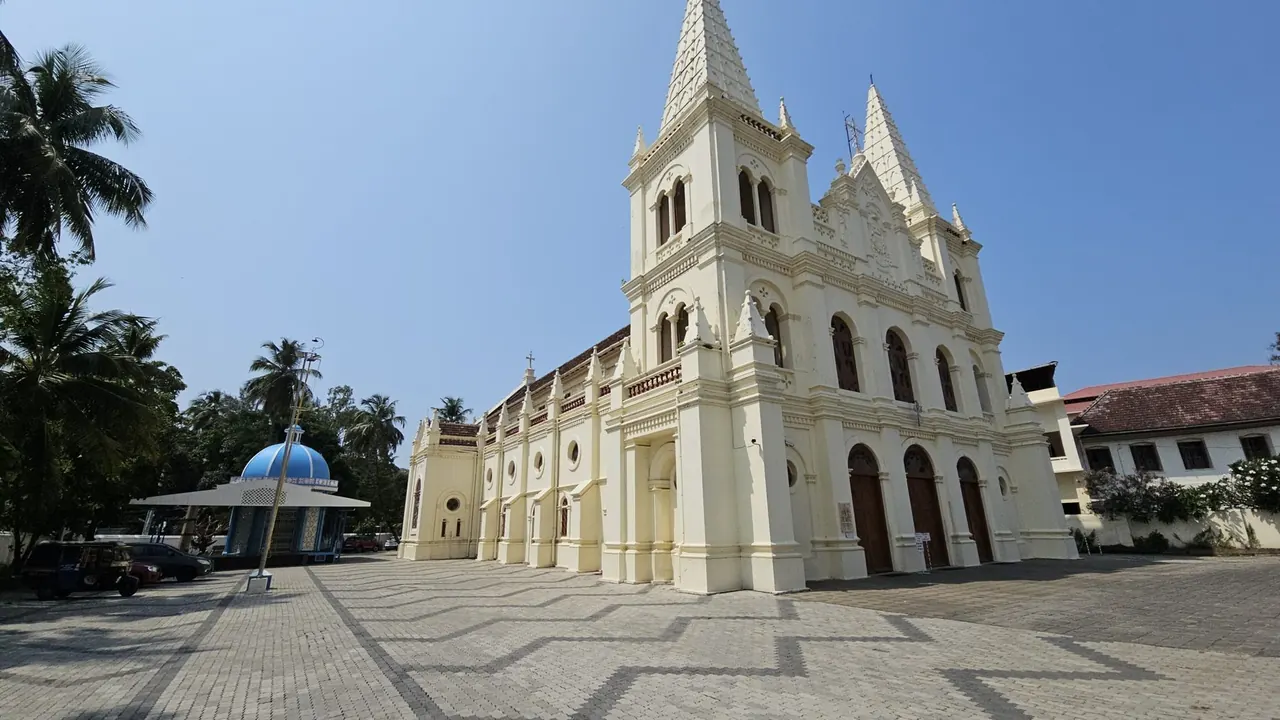
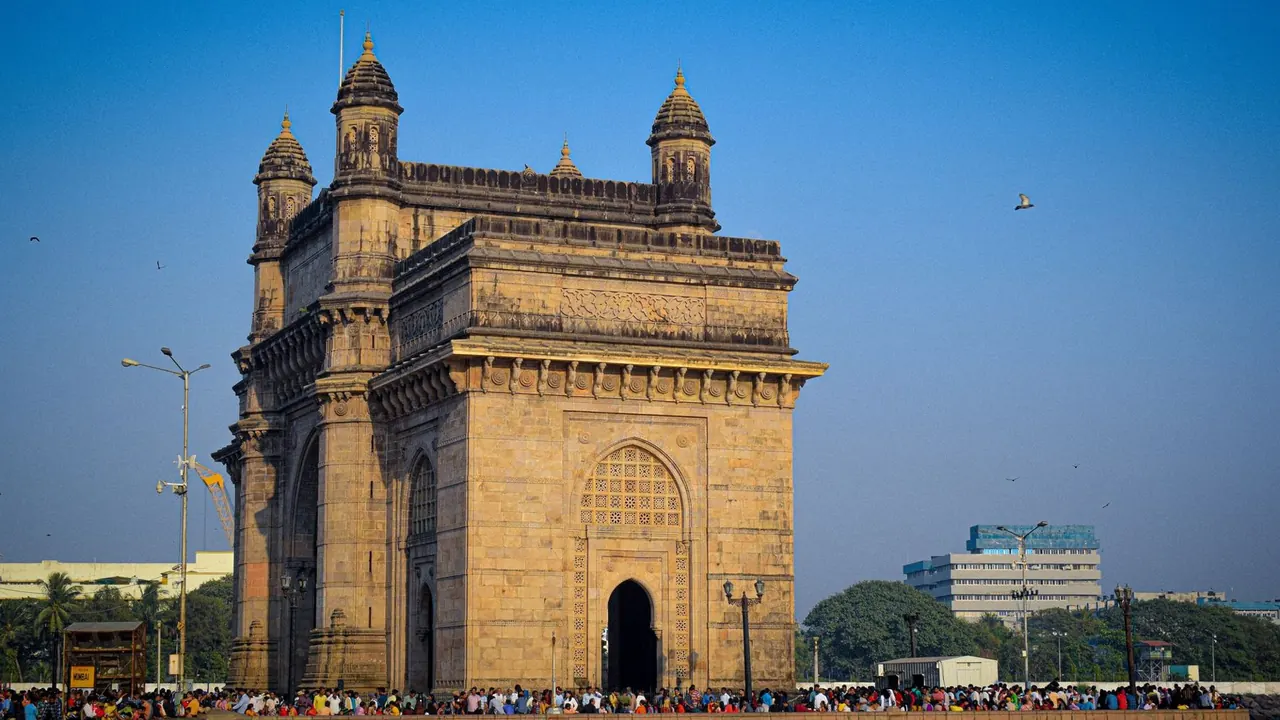
Photos: Kochi by Vis M, CC BY-SA 4.0, cropped; Mumbai by Shubam Bhasin, Pexels License.
Kochi or Mumbai?
Our verdict in twelve categories, each scored against the same fixed benchmark cities, and the climate month by month, so you can choose for your trip.
Choose Kochi for
- wellness
- beaches
- prices
Kochi suits a slower, cheaper trip built around water and old streets. The heritage quarter of Fort Kochi and Mattancherry can be seen on foot in a few unhurried days, the backwaters are close, and Kerala's Ayurvedic tradition makes it one of the better places in India to rest. If you want warm-oil treatments, canal boats and long seafood dinners rather than late nights, it is the clear choice.
Choose Mumbai for
- nightlife
- shopping
- food and drink
Mumbai is for travellers who want a big city at full stretch. It eats better and more widely, from station-side vada pav to Malvani crab curries and smart Bandra dining rooms, and it has proper bars, a serious arts centre, grand colonial architecture and bazaars that Kochi cannot match. The price is noise, distance and traffic, and rooms cost a good deal more.
Scoreboard
Twelve categories on one fixed scale from 0 to 100. The shaded stretch is the gap between the two.
Your match
Pick a travel style or drag the sliders, and both match scores follow your weighting.
Too close to call, 1 point apart
Wins on wellness and beaches with your weighting.
Wins on nightlife and shopping with your weighting.
What matters to you?
Category by category
What the scores mean for a trip.
Beaches & swimming
Neither city is a place for a beach vacation, but Kochi gets you closer to a swim. Cherai Beach on Vypeen island, about an hour north, is a long, palm-backed strip with a lagoon behind it and warm, swimmable water in the calm months. Fort Kochi's own shore is for watching the fishing nets at dusk.
Mumbai's Juhu and Girgaum Chowpatty are for kites, snacks and sunset walks, and the water is too murky for most people. A real swim means the ferry to the Alibaug coast and most of a day, so a hotel pool is the practical answer. On both coasts the monsoon makes the sea unsafe.
Food & drink
Kochi is a superb place to learn Kerala cooking: appam and stew for breakfast, banana-leaf rice meals, pearl spot fried in its wrap, and the beef fry and duck roast of the Syrian Christian kitchens. What it lacks is breadth, and with alcohol tightly controlled, drinking with dinner barely exists outside hotels.
Mumbai offers more on every front. Vada pav and bhel puri from the carts, bun maska in the old Irani cafés, Malvani crab and bombil, Parsi and Gujarati cooking, and a modern restaurant and cocktail tier in Bandra and Lower Parel. Kochi gives you one regional cuisine in depth, Mumbai gives you much of India.
Culture & sights
Mumbai has the grander set pieces. The Gothic Revival railway terminus, the Victorian buildings of the Oval Maidan facing the Art Deco blocks of Marine Drive, and the sculpture and miniatures of the former Prince of Wales Museum make a richer list than Kochi's, even if getting between them is slow.
Kochi's heritage is smaller but concentrated in one walkable corner: St Francis Church, the Paradesi Synagogue with its painted Chinese tiles, the murals of Mattancherry Palace and the fishing nets on the waterfront. It is a few days of layered colonial and trading history rather than a major museum city.
Nightlife
Mumbai has an actual night out, with cocktail bars and gastropubs in Bandra and Khar, clubs in the old mill compounds of Lower Parel and a looser bar strip in Colaba, even if closing comes early for a city its size. Kochi barely has one: drinking is confined to hotel bars and a few lounges in Ernakulam, and Fort Kochi goes quiet after dinner.
Nature & outdoors
The two are evenly matched, but the landscapes are different. Kochi's outdoors is water: kayaks and country boats through the Kumbalangi canals and around Vembanad Lake, the mangroves of Mangalavanam, and birdwatching at Thattekad in the Ghats foothills.
Mumbai's surprise is forest and hills. Sanjay Gandhi National Park has leopards, trails and the Kanheri caves inside the city limits, flamingos gather at Sewri in winter, and the monsoon-green ridges and forts around Lonavala and Matheran draw hikers. Choose Kochi for slow boats, Mumbai for walking.
Day trips
These are close, but they offer different things. Mumbai has the single great outing, the boat to Elephanta Island and its monumental rock-cut Shiva carvings, plus the older Buddhist caves at Karla and Bhaja. After those the options thin, and leaving the city by road is slow.
Kochi has more outings to choose from, though none so famous: a backwater day from Alappuzha, the Muziris sites where an ancient port once traded with Rome, and the temple town of Thrissur.
Good for families
Neither is easy with children, and the difference is mostly pace. Kochi's quiet old quarter, ferry crossings and backwater boat trips suit young children, with a large water park on the eastern edge. Mumbai has better indoor options, such as the Nehru Science Centre in Worli, but crowds and traffic make every outing harder work. In both, a pool hotel and outings planned around the heat help most.
Getting around
Kochi is the easier of the two, partly because so much of it is reached by water. Ferries and the water metro link Fort Kochi with Ernakulam, and the flat old quarter can be walked or cycled. Auto-rickshaws and taxis cover the rest.
Mumbai stretches a long way north from Colaba, and only the Fort and Kala Ghoda area is pleasant on foot. The suburban trains are fast but crushing at rush hour, the metro covers only part of the city, and road traffic can turn a short hop into an hour.
Shopping & style
Mumbai is India's commercial capital and shops like it: Crawford Market under its Victorian roof, the gold of Zaveri Bazaar, the antiques and film posters of Chor Bazaar, street stalls on Colaba Causeway and designer boutiques in Kala Ghoda and Bandra.
Kochi offers less but has a clear speciality. The Jew Town warehouses of Mattancherry sell carved doors and Dutch-era furniture, spice merchants sell pepper and cardamom by the sack, and kasavu handloom is the craft to take home.
Affordability
Kochi is the cheaper stay. Family-run homestays in Fort Kochi, banana-leaf meals and ferry rides cost very little, and the real costs come only if you choose a heritage hotel, a private houseboat or a long Ayurvedic course.
In Mumbai, street food, trains and taxis are cheap too, but rooms are where it hurts. Comfortable accommodation in the south and the better suburbs is expensive, budget options are scarce, and the smart bars price drinks closer to a Western city.
Live music & performing arts
Mumbai has a working arts calendar. The National Centre for the Performing Arts at Nariman Point hosts the Symphony Orchestra of India, Hindustani classical music, dance and jazz, the small Prithvi Theatre in Juhu anchors the city's stage, and Marathi theatre fills halls in Dadar.
Kochi has one thing done well: nightly Kathakali in small Fort Kochi theatres, where you can arrive early to watch the green-and-red make-up go on. It is a memorable evening, but one you do once.
Wellness & relaxation
This is where the two are furthest apart. Kochi is in the home of Ayurveda, with clinics everywhere, doctor-led programmes running one to three weeks and shirodhara as a real treatment rather than a spa extra, plus the backwater resorts nearby for complete stillness.
Mumbai is loud and humid from dawn, and relaxing there mostly means a luxury hotel spa or a yoga studio in Bandra. Its quiet moments, an early walk on Marine Drive or an hour by the Banganga Tank, are brief.
When should you go?
Pick your month. The climate figures are measured averages, not a forecast.
Kochi in July
Mumbai in July
Daytime high, °C
Rainfall in the month, mm
Where the figures come from
Kochi has no weather station within reach, so its figures come from a gridded climate model rather than a measured record, and read a broad area rather than the city itself.
Temperature and rainfall are climate normals, averaged over the years shown. Kochi: 2001-2020 normals, NASA POWER reanalysis grid, no weather station within 90 km. Mumbai: 1991-2020 normals, Bombay / Santacruz (5.4 km from centre).
Both cities are hot all year, so the real question is rain. Kochi is at its best from December to March, when the sky is mostly dry and the sea stays around 29°C for anyone heading to Cherai Beach. The rain builds from April, peaks in June at around 494mm and hangs on through October and into November, so Kochi's wet season runs longer than Mumbai's, though it is the monsoon that Ayurvedic tradition favours for treatment.
Mumbai has a sharper split. From November to May it is almost completely dry and sunny, which makes it the easier city to fit into a winter or spring trip. Then the monsoon arrives in June and July is very wet at about 860mm, with little sun until September. Mumbai also runs hotter, with highs of 34°C in May and again in October and November, so walking the streets is most comfortable from December to February, when the sea is at its coolest, around 25°C.
Which traveller are you?
On a relaxing and wellness trip, Kochi is far ahead. Ayurveda is a living medical tradition there, with courses of treatment lasting weeks, and Fort Kochi's shaded lanes and the backwater resorts offer a calm that loud, crowded Mumbai rarely does.
For a food and nightlife trip, choose Mumbai. Its street food, Irani cafés and coastal kitchens give more range, and Bandra and Lower Parel have cocktail bars and clubs, while Kochi's strict alcohol rules leave evenings to dinner and an early night.
On a shopping trip, Mumbai again. Crawford Market, Zaveri Bazaar, Chor Bazaar and the designer boutiques of Kala Ghoda give far more choice than Kochi's antique warehouses and spice merchants, though Kochi's kasavu handloom is worth seeking out.
Before you go
| Measure | Kochi | Mumbai |
|---|---|---|
| Official language | Hindi, English | Hindi, English |
| Currency | Indian Rupee (INR) | Indian Rupee (INR) |
| Sockets | CM230 V, 50 Hz | CM230 V, 50 Hz |
| Driving side | Left | Left |
| Time zone | UTC+5:30 | UTC+5:30 |
| Emergency number | 108 or 112 | 108 or 112 |
| Elevation | 0 m | 14 m |
| Main airport | Cochin International Airport (COK)24 km from centre36 non-stop destinations | Chhatrapati Shivaji Maharaj International Airport (BOM)2 km from centre122 non-stop destinations |
By the numbers
| Measure | Kochi | Mumbai |
|---|---|---|
| City population | 677,381 | 15,414,288 |
| People per km² | 7,138 | 25,563 |
| Museums within 10 km | 4 | 1 |
| UNESCO World Heritage sites within 50 km | 0 | 3 |
| Swim season, months above 21 °C | 12 months | 12 months |
Where else could you go?
Every comparison below shares a destination with this one, so you can follow Kochi or Mumbai somewhere new.