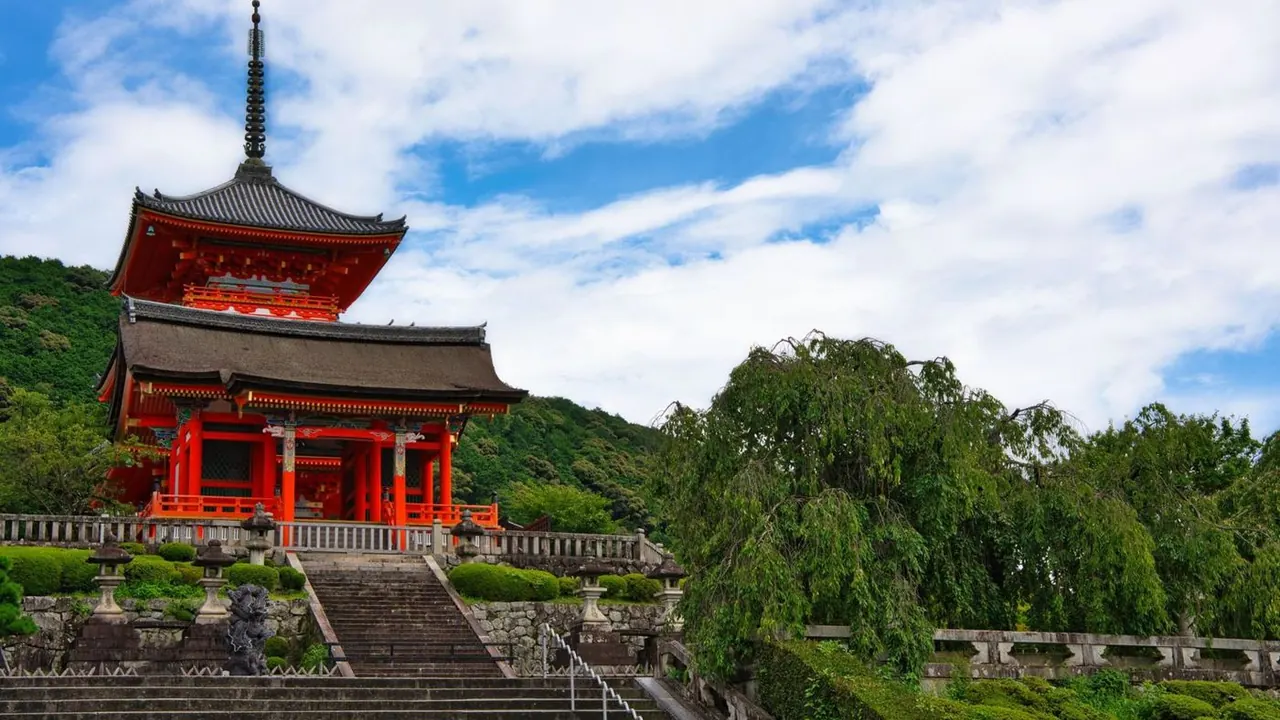
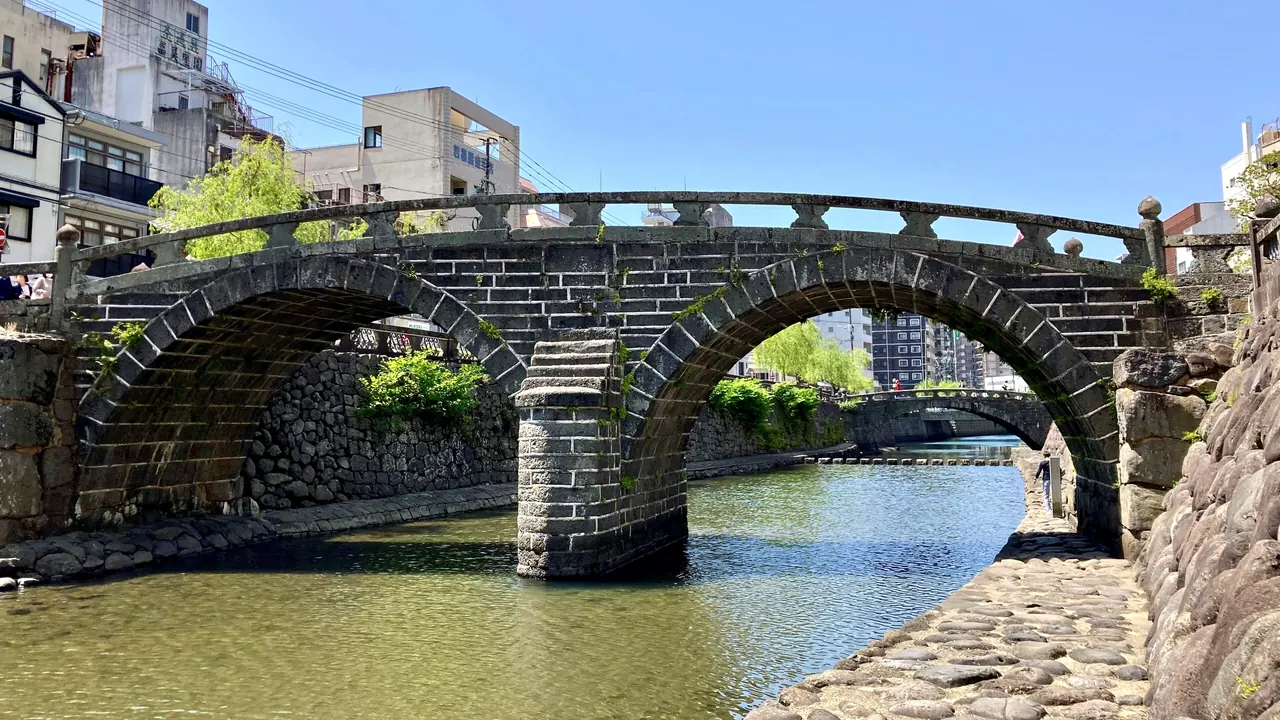
Photos: Kyoto by Bert Mulder, Pexels License; Nagasaki by Dudva, CC0.
Kyoto or Nagasaki?
Our verdict in twelve categories, each scored against the same fixed benchmark cities, and the climate month by month, so you can choose for your trip.
Choose Kyoto for
- shopping
- day trips
- live music and the arts
Kyoto is the choice for a traveller who wants classical Japan in depth. It has the great temples and gardens, the machiya lanes of Gion and Higashiyama, kaiseki and temple cooking, family craft shops and the old stage arts, with Nara, Osaka, Uji and Himeji all close by train. It rewards a longer stay and early starts that get you to the famous sights ahead of the crowds.
Choose Nagasaki for
- beaches
- prices
Nagasaki suits a shorter, more focused trip built around a history no other Japanese city shares. The atomic bomb sites, Dejima, Glover Garden and Chinatown all lie along one simple tram network. Rooms and meals ask a little less of the budget, a sandy beach is within reach on a summer afternoon, and the harbour moves at an easier pace than Kyoto's temple crowds.
Scoreboard
Twelve categories on one fixed scale from 0 to 100. The shaded stretch is the gap between the two.
Your match
Pick a travel style or drag the sliders, and both match scores follow your weighting.
Wins on shopping and day trips with your weighting.
Wins on beaches and prices with your weighting.
What matters to you?
Category by category
What the scores mean for a trip.
Beaches & swimming
Kyoto has no coast at all. The nearest swimming is in the freshwater of Lake Biwa, at strands such as Omi-Maiko, or at the plain city beach of Suma on Osaka Bay. The white sand of the Tango Peninsula is far enough away to need a night.
Nagasaki is no beach city either, but the open sea is much closer. Takahama on the Nomo coast is a clean sandy bay about an hour away by bus, and Iojima's small beach is a short ferry ride from the harbour, so a swim fits easily into a summer afternoon.
Food & drink
Kyoto is one of Japan's great places to eat. Kaiseki is served in wooden houses in Gion, temple cuisine can be eaten at Daitokuji and Tenryuji, and the city is known for its tofu, yuba and pickles. Nishiki Market and the sake breweries of Fushimi add plenty for everyday grazing.
Nagasaki's food is more distinctive than refined. Champon, sara udon, castella and the shared shippoku banquet carry Chinese, Portuguese and Dutch traces you will not taste in Kyoto. The fish in the Shianbashi izakaya is excellent, but there are few top-end tables and the range is narrow.
Culture & sights
Kyoto's heritage is on another scale. Seventeen UNESCO-listed sites, among them Kinkaku-ji, Kiyomizu-dera, Ryoan-ji and Nijo Castle, sit alongside Fushimi Inari, the imperial villas and whole districts of old townhouses, and a week barely scratches the surface.
Nagasaki tells a different, narrower story. It is the story of Japan's only window on the West and of the atomic bomb, told through the Peace Park, Dejima, Glover Garden and Oura Cathedral. It is deeply affecting and compact, and two or three days do it justice.
Nightlife
Evenings are low-key in both, and the difference is one of setting. Kyoto's nights centre on the lantern-lit alley of Pontocho and the Kiyamachi canal, with sake and whisky bars, riverside terraces in summer and a handful of student clubs. Osaka, under an hour away, is there for anyone who wants a big night.
Nagasaki's going out is concentrated in Shianbashi, among izakaya, karaoke and snack bars that cater mostly to regulars. Many visitors trade the bars for the night view from Mount Inasa.
Nature & outdoors
Kyoto puts gentle nature right on the doorstep. There are trails up Daimonji in the Higashiyama hills, bamboo and wooded slopes at Arashiyama, the cedar path between Kurama and Kibune, and the Kamo River banks for flat walks through the centre.
Nagasaki's own green space is mostly its steep harbour hills, and the ropeway up Mount Inasa is the highlight. Its wilder landscapes, the volcanic peaks of Unzen and the islands of Kujukushima, need a longer journey to reach.
Day trips
This is where Kyoto pulls furthest ahead. Nara's deer and great Buddha, Osaka's food streets, the tea town of Uji, Himeji Castle and Kobe are all under an hour away. Fast trains let you decide the night before.
Nagasaki's outings are fewer and farther apart. The boat to the ruined island of Gunkanjima is unforgettable but depends on the weather. Shimabara, Huis Ten Bosch, the porcelain towns of Arita and Imari and Hirado each take most of a day.
Good for families
Both cities are safe, clean and easy with children, but Kyoto has more made for them. It has the Railway Museum with its steam roundhouse, an aquarium and zoo near the centre, ninja shows at the Edo-period film set, the deer in Nara and Osaka's theme park close by.
Nagasaki's highlights are the trams, the Inasa ropeway, the penguins at the aquarium and a day at Huis Ten Bosch. Its stepped streets are hard work with a pushchair, and the Atomic Bomb Museum needs some thought with younger children.
Getting around
Both are easy without a car, but in different ways. Central Kyoto is a flat grid made for walking and cycling, but its major temples lie around the edges of the basin. Reaching them means mixing buses, private railways and the Randen tram, and the buses crawl in the blossom and maple seasons.
Nagasaki runs on one simple tram network along the valley floor, which links almost every sight. Once you leave the valley, though, you are climbing steps on foot.
Shopping & style
Kyoto is the place to buy beautiful things. Family workshops sell Nishijin silk, Kiyomizu-ware, lacquer, incense and hand-forged knives, and you can browse the covered arcades of Teramachi or time a visit for the flea markets at To-ji and Kitano Tenmangu.
Nagasaki's shopping is modest and local, centred on the Hamanomachi arcade. The best things to take home are boxed castella, local glassware and porcelain from nearby Hasami, Mikawachi and Arita.
Affordability
In Kyoto, the costs build up in hotels and ryokan, which become scarce and costly at cherry blossom time and in the maple season, and kaiseki dinners are a splurge. Everyday noodles and food halls stay cheap.
Nagasaki is the gentler of the two on the wallet. Business hotels near the station and Shianbashi have fair rates and a tram day covers the sights for little. The extra spending is mostly on the Hashima boat and the ropeway.
Live music & performing arts
Kyoto has a real stage calendar. The geisha districts hold their public dances in spring, the Minamiza is Japan's oldest kabuki house, Noh is staged regularly, and the concert hall and ROHM Theatre add orchestral music, opera and dance.
Nagasaki's great performances are festivals: the Kunchi at Suwa Shrine in October and the Lantern Festival around Chinese New Year. Between those dates there is little to plan an evening around.
Wellness & relaxation
Kyoto has calm in the city itself. You can visit century-old sento with tiled murals, join zazen or a tea ceremony, sit before the raked gardens or stay in a temple lodging. Hot springs are close at Kurama, Ohara and Arashiyama.
Nagasaki's best bathing is out on the Shimabara peninsula, at seaside Obama and mountain Unzen, both best with a night's stay. In the city, quiet hillside temples and evening walks along the harbour have to stand in.
When should you go?
Pick your month. The climate figures are measured averages, not a forecast.
Kyoto in July
Nagasaki in July
Daytime high, °C
Rainfall in the month, mm
Where the figures come from
Kyoto's sunshine is measured 43 km from the centre, at Osaka.
Temperature and rainfall are climate normals, averaged over the years shown. Kyoto: 1971-2000 (sunshine 1991-2020, rainfall 1991-2020) normals, Kyoto (3.2 km from centre). Nagasaki: 1991-2020 normals, Nagasaki (2.2 km from centre).
Both cities are at their best in spring and autumn. Kyoto in April and October has comfortable days of around 20°C, with cherry blossom and maple colour. From June to September it is hot and sticky, reaching 32°C in August, and the rain is heavy, peaking in July. Winter is cold enough for a coat, but it is clear and gets more sunshine than Nagasaki.
Nagasaki stays a few degrees milder through winter and is just as hot in summer. Its rainy season hits harder, though, and June is by far its wettest month at 334mm. Its sea is warm enough for swimming from July to early September and reaches 28°C in August. October is drier and still warm, which makes it the best month for climbing the harbour hills.
Which traveller are you?
On a culture and arts trip, Kyoto is the clear pick. It has a thousand years of imperial heritage, more than a thousand temples and shrines, kabuki at the Minamiza, Noh stages and the spring geisha dances. Nagasaki's history is moving, but it can be covered in two or three days.
For a beach and sun trip, Nagasaki is the better base. Takahama's sandy bay and the beach on Iojima are about an hour away or less, and the sea is warm into September. From Kyoto, swimming means Lake Biwa or a long trip north.
On a tight budget, Nagasaki stretches the money further. Its business hotels have fair rates, a bowl of champon costs little and a day of tram rides costs even less. Kyoto's everyday food is good value too, but its rooms get scarce and expensive in peak seasons.
Before you go
| Measure | Kyoto | Nagasaki |
|---|---|---|
| Official language | Japanese | Japanese |
| Currency | Yen (JPY) | Yen (JPY) |
| Sockets | AB100 V, 50 and 60 Hz depending on the region | AB100 V, 50 and 60 Hz depending on the region |
| Driving side | Left | Left |
| Time zone | UTC+9 | UTC+9 |
| Emergency number | Police 110, fire 119 | Police 110, fire 119 |
| Elevation | 51 m | 105 m |
| Main airport | Kansai International Airport (KIX)81 km from centre62 non-stop destinations | Nagasaki Airport (NGS)19 km from centre10 non-stop destinations |
| Public holidays this year | 16 days | 16 days |
By the numbers
| Measure | Kyoto | Nagasaki |
|---|---|---|
| City population | 1,463,723 | 404,656 |
| People per km² | 1,768 | 996 |
| Museums within 10 km | 77 | 26 |
| UNESCO World Heritage sites within 50 km | 4 | 2 |
| Swim season, months above 21 °C | 5 months | 6 months |
Where else could you go?
Every comparison below shares a destination with this one, so you can follow Kyoto or Nagasaki somewhere new.