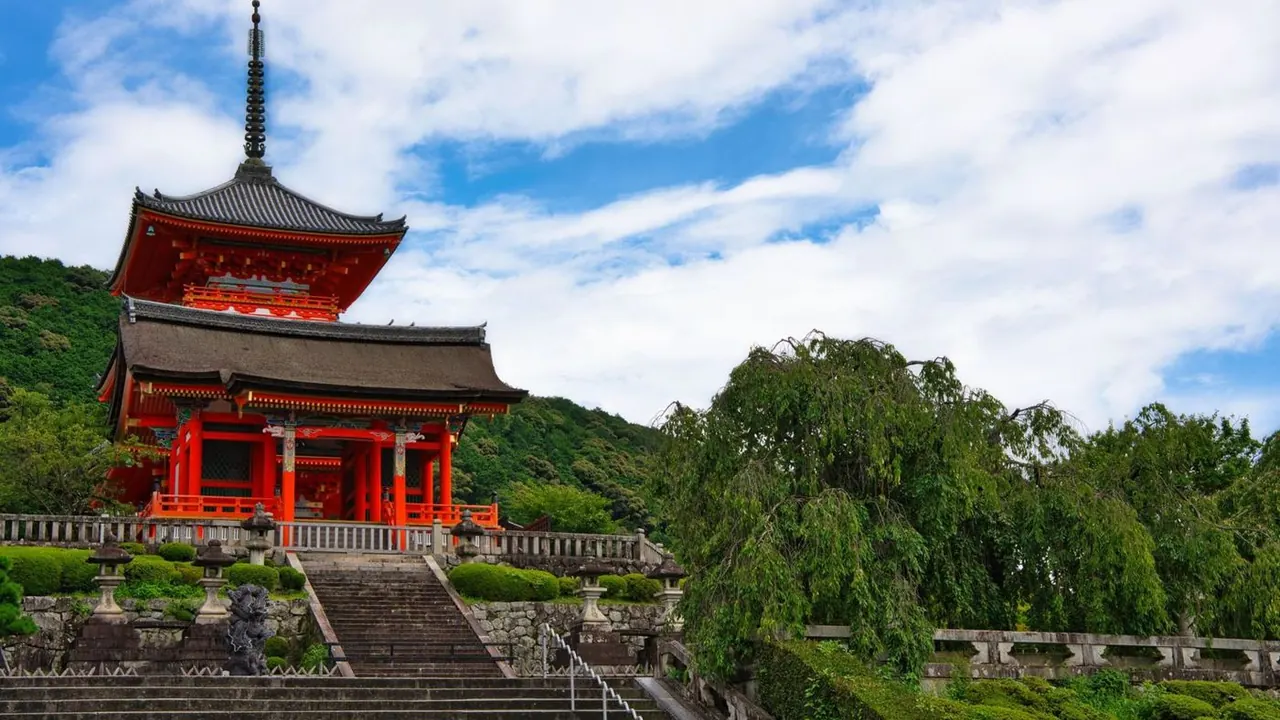
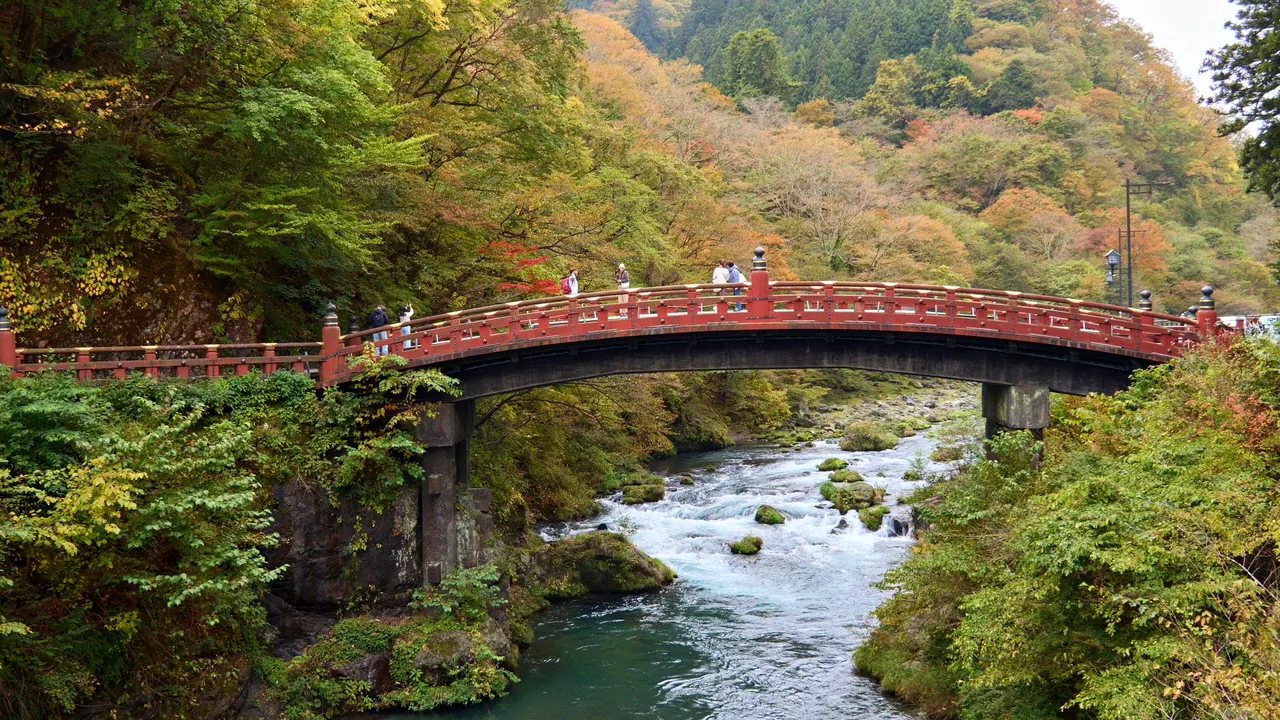
Photos: Kyoto by Bert Mulder, Pexels License; Nikko by lumoplank, CC0.
Kyoto or Nikko?
Our verdict in twelve categories, each scored against the same fixed benchmark cities, and the climate month by month, so you can choose for your trip.
Choose Kyoto for
- food and drink
- shopping
- live music and the arts
Kyoto suits travellers who want a whole week of things to do. A thousand years as the imperial capital left it with temples, gardens, palaces and machiya lanes to fill many days. Kaiseki and temple cooking, craft shops, kabuki and geisha dances, and fast trains to Nara, Osaka and Himeji give it a range that a mountain town can't offer. It is the better base for a first trip to Japan, and for anyone who wants evenings in town as well as sights by day.
Choose Nikko for
- wellness
- nature and the outdoors
- prices
Nikko is a shorter, slower stay among cedars, waterfalls and hot springs. Its lavish Tokugawa shrines are worth the trip, but the bigger draws are the national park above the town and an onsen inn at the end of the day. Walkers, people who want to unwind, and anyone happy to trade restaurants and nightlife for forest air and a long soak will find two or three days here well spent.
Scoreboard
Twelve categories on one fixed scale from 0 to 100. The shaded stretch is the gap between the two.
Your match
Pick a travel style or drag the sliders, and both match scores follow your weighting.
Wins on food and drink and shopping with your weighting.
Wins on wellness and nature and the outdoors with your weighting.
What matters to you?
Category by category
What the scores mean for a trip.
Beaches & swimming
Neither is a place for the beach, but Kyoto at least gives you somewhere to swim. Lake Biwa's sandy western shore is close enough for a summer afternoon in warm freshwater, and Osaka Bay can be reached by train.
Nikko has nothing comparable. Its highland lakes are for boating and fishing, so in summer the water you get into is a hot spring.
Food & drink
Kyoto's cooking is in a different league from Nikko's. It has kaiseki in Gion's wooden houses, shojin ryori inside temple precincts, Nishiki Market, ramen counters and izakaya around Shijo, and sake tasting in Fushimi, so every meal of a long stay can be different.
Nikko shares the taste for yuba and vegetarian temple food, and it is worth trying fresh there, but beyond soba and grilled river fish the list is short. Most places serve lunch to day visitors, so the best dinner is usually the multi-course meal at your ryokan.
Culture & sights
Nikko's shrines are among the most striking in Japan. Toshogu's gold leaf, lacquer and carvings are deliberately showier than anything in Kyoto, and the cedar forest around them sets them off well. Still, the whole ensemble takes a day or two.
Kyoto works on another scale. It has seventeen UNESCO sites, from Kinkaku-ji to the Ryoan-ji rock garden, over a thousand other temples and shrines, Nijo Castle, the imperial villas and the Kyoto National Museum, and whole districts of machiya around Higashiyama. A week there barely scratches the surface.
Nightlife
Kyoto's evenings are modest by Japanese standards, but there is still a night out to be had in the sake bars, standing izakaya and summer river terraces of Pontocho and Kiyamachi. Osaka is under an hour away for anything louder.
In Nikko the street goes dark once the day-trippers leave. Evenings there mean a ryokan dinner and a bath, not a bar.
Nature & outdoors
Nikko is the stronger choice for landscape. The Irohazaka road climbs to Lake Chuzenji beneath the volcanic cone of Mount Nantai, with Kegon Falls at the lake's outlet and the Senjogahara marsh beyond. Walks range from flat boardwalks to real mountain ascents, and there is rafting on the Kinugawa and snow in winter.
Kyoto's nature is gentler and right on the doorstep. Its attractions are the Arashiyama bamboo groves, the Daimonji trail, the cedar path between Kurama and Kibune and the Kamo River banks, all good for a morning between temples but without high mountains.
Day trips
Kyoto is about as good a base as Japan offers. Nara's deer and great Buddha, Osaka, the tea town of Uji, Himeji Castle and Kobe are all close by fast train, so you can decide the night before.
From Nikko, the big outing is Tokyo, which needs a long day. Closer to hand are Utsunomiya's gyoza and the Mashiko potteries, but otherwise most of what lies within reach is mountains and lakes rather than more towns to explore.
Good for families
Kyoto offers children more variety. The Railway Museum with its steam roundhouse, the aquarium and zoo near the centre, and the Edo film set with its samurai shows all mix well with chasing through the Fushimi Inari gates.
Nikko has its own ninja village and miniature world park at Kinugawa, and older children enjoy the lake boats and waterfalls. However, the shrine stairs and long bus rides wear on small children, and it works best as a two or three day stay rather than a family base for a week.
Getting around
Kyoto's flat central grid is made for walking and cycling, and trains, the Randen tram and city buses reach the temples on the edges of the basin. The buses crawl in the peak seasons, though, so a bicycle often wins.
Nikko is simpler but slower. It is one gentle uphill road from the station to the shrines, then a dependence on buses up to the lakes, which can stall for hours on autumn weekends.
Shopping & style
Kyoto is a serious shopping city for anyone who loves craft. You can buy Kiyomizu-ware ceramics, Nishijin silk, fans, incense and hand-forged knives from family firms, browse the Teramachi arcades and department store food halls, and time a visit around the To-ji or Kitano Tenmangu flea markets.
Nikko has one street of souvenirs. Still, Nikko-bori carved trays and straw-soled geta make honest local buys.
Affordability
The two cost broadly the same, with Nikko slightly gentler on the budget. Its plain guesthouses and hostels are easy to find, while in Kyoto rooms get scarce and costly at blossom and maple time.
In both places the real cost is the classic inn stay with dinner included. In Kyoto, the cheap noodle counters and food halls make it easier to eat well for little.
Live music & performing arts
Kyoto has a living stage tradition. The geiko's spring dances in the geisha districts, kabuki at the historic Minamiza, Noh stages, and a symphony orchestra at the Concert Hall give most visits something to see, even if the choice on a given night can be thin.
In Nikko it depends on the date. The Toshogu festival's procession of armoured samurai and horseback archery is a spectacle in spring and autumn, but otherwise there is little beyond theme park shows.
Wellness & relaxation
Kyoto's way of relaxing is urban and tied to its temples. You can soak in a century-old neighbourhood sento with tiled murals, sit through a zazen session or a tea ceremony, or spend a night in a temple lodging, and there are hot spring baths on the city's edges at Kurama, Ohara and Arashiyama. The catch is that the calm has to be found early in the morning or away from the main routes.
Nikko is the better place to switch off, because there the bathing is the point of the stay rather than a pause between sights. You can choose between the large inns along the Kinugawa gorge and the rustic sulphur springs of Yumoto on Lake Yunoko. On a winter weekday you get snow on the outdoor baths and the mountain resorts almost to yourself.
When should you go?
Pick your month. The climate figures are measured averages, not a forecast.
Kyoto in July
Nikko in July
Daytime high, °C
Rainfall in the month, mm
Where the figures come from
Kyoto's sunshine is measured 43 km from the centre, at Osaka.
Nikko has no weather station within reach, so its figures come from a gridded climate model rather than a measured record, and read a broad area rather than the city itself.
Temperature and rainfall are climate normals, averaged over the years shown. Kyoto: 1971-2000 (sunshine 1991-2020, rainfall 1991-2020) normals, Kyoto (3.2 km from centre). Nikko: 2001-2020 normals, NASA POWER reanalysis grid, no weather station within 90 km.
Kyoto is at its best in spring and autumn. April and May bring highs of 20°C to 24°C, and late October and November are mild and drier, which makes them ideal for long days walking between temples. Summer is hard work. August highs reach about 32°C in sticky humidity, and the rain builds through June to a peak of around 250mm in July, with September wet again. Winter is cold but fairly dry and clear, and quiet enough to enjoy the gardens.
Nikko is several degrees cooler than Kyoto all year, and the lakes and marshes above the town are cooler still. That makes summer far more comfortable for walking than in Kyoto's basin, though the two share the same wet season from June to October. Winter is properly cold, with January highs near 3°C and snow in the mountains, which suits onsen bathing more than sightseeing. Autumn is the best season in both places, for the maple colour.
Which traveller are you?
On a food and nightlife trip, Kyoto is the clear choice. Kaiseki, temple cooking, Nishiki Market and the Fushimi sake breweries keep you busy by day, and Pontocho's small bars come after. In Nikko the restaurants close early, and dinner usually means your inn.
For an outdoors trip, Nikko is the better choice. The national park starts just above town, with Kegon Falls, Lake Chuzenji, the Senjogahara boardwalks and climbs up Nantai. Kyoto's wooded hills and the Kurama path are pleasant, but they are gentler and closer to the city.
On a relaxing and wellness trip, Nikko wins. It has milky sulphur baths at Yumoto, riverside inns at Kinugawa and open-air pools under the cedars, and weekday evenings are deeply quiet. Kyoto's sento and zazen sessions are lovely, but you often have to work around the crowds to find calm.
Before you go
| Measure | Kyoto | Nikko |
|---|---|---|
| Official language | Japanese | Japanese |
| Currency | Yen (JPY) | Yen (JPY) |
| Sockets | AB100 V, 50 and 60 Hz depending on the region | AB100 V, 50 and 60 Hz depending on the region |
| Driving side | Left | Left |
| Time zone | UTC+9 | UTC+9 |
| Emergency number | Police 110, fire 119 | Police 110, fire 119 |
| Elevation | 51 m | 660 m |
| Main airport | Kansai International Airport (KIX)81 km from centre62 non-stop destinations | Tokyo Haneda International Airport (HND)134 km from centre98 non-stop destinations |
| Public holidays this year | 16 days | 16 days |
By the numbers
| Measure | Kyoto | Nikko |
|---|---|---|
| City population | 1,463,723 | 77,027 |
| People per km² | 1,768 | 53 |
| Museums within 10 km | 77 | 5 |
| UNESCO World Heritage sites within 50 km | 4 | 1 |
| Swim season, months above 21 °C | 5 months | - |
Where else could you go?
Every comparison below shares a destination with this one, so you can follow Kyoto or Nikko somewhere new.