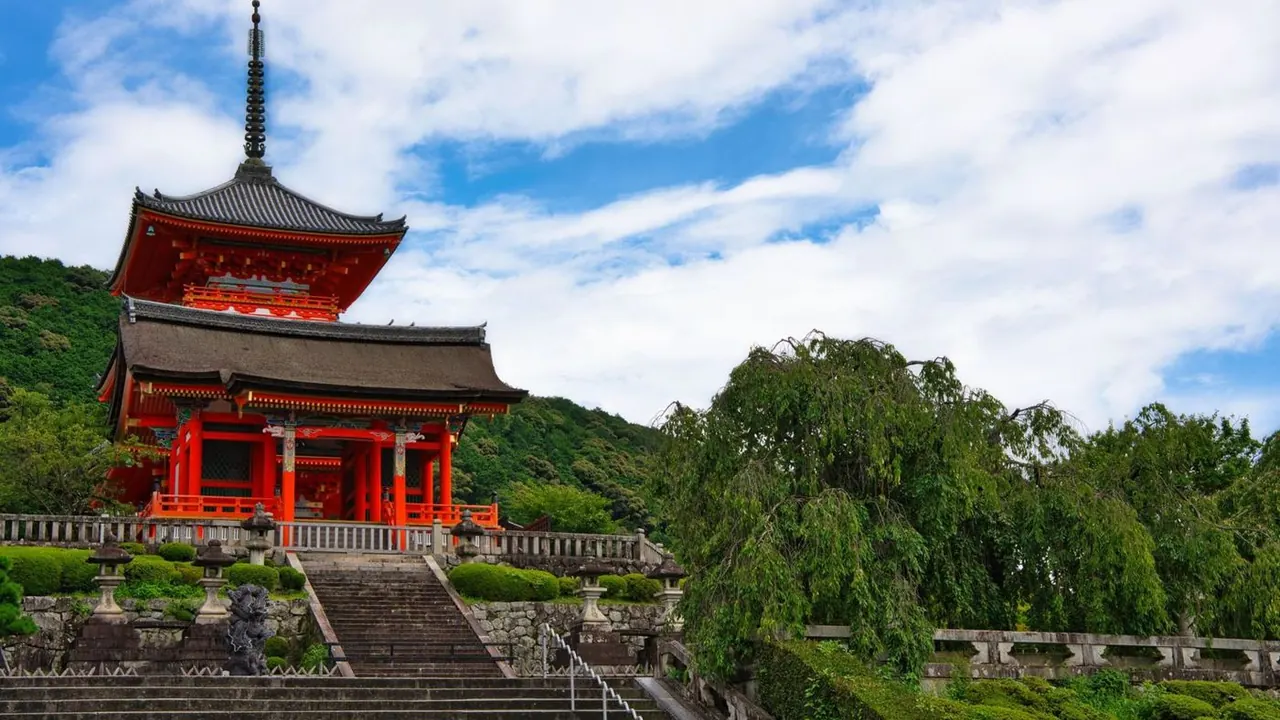
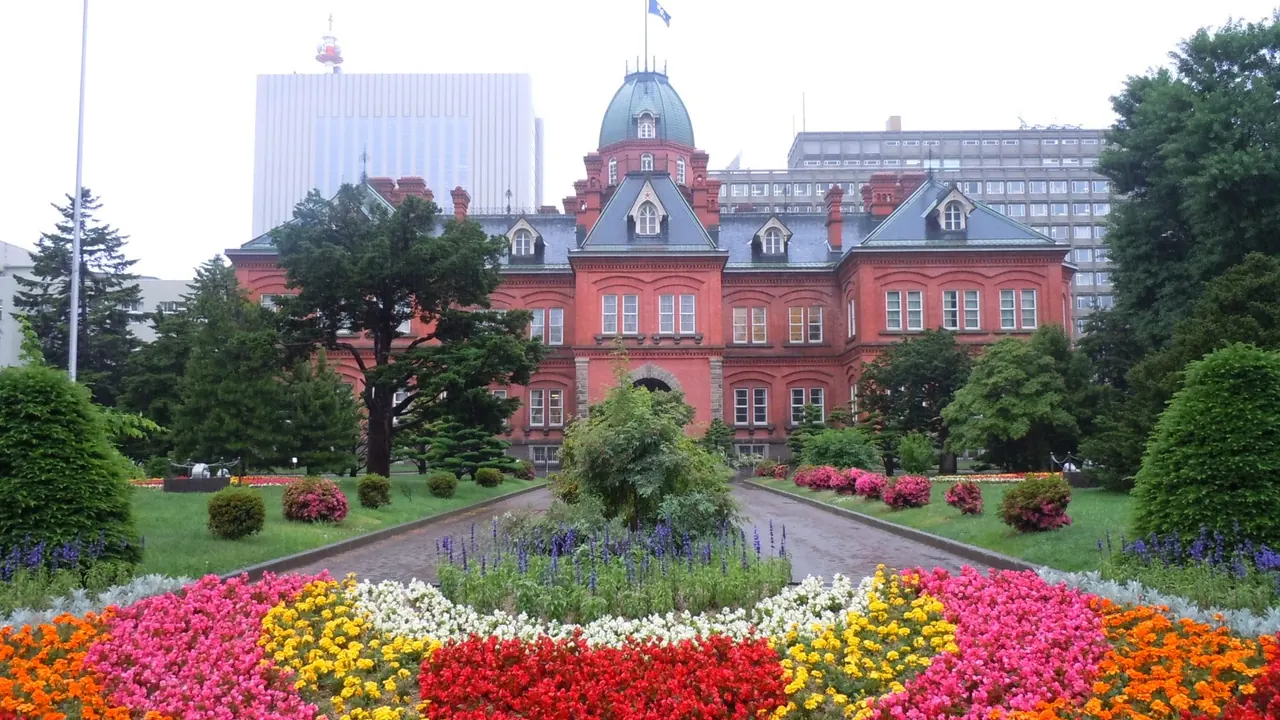
Photos: Kyoto by Bert Mulder, Pexels License; Sapporo by Feri88, CC BY 3.0, cropped.
Kyoto or Sapporo?
Our verdict in twelve categories, each scored against the same fixed benchmark cities, and the climate month by month, so you can choose for your trip.
Choose Kyoto for
- culture and sights
- day trips
- live music and the arts
Kyoto is the choice for travellers who come to Japan for its history and craft. A thousand years as the imperial capital left temples, gardens, wooden teahouse lanes, kabuki and geisha dances, and family workshops making ceramics and silk. It also makes an easy base for Nara, Osaka and Himeji, so a week here can cover much of old Japan without changing hotels.
Choose Sapporo for
- nightlife
- nature and the outdoors
- beaches
Pick Sapporo if snow, hot springs and good evenings out matter more than old monuments. Ski slopes and the onsen gorge of Jozankei lie within the city limits, Susukino keeps its tiny bars full long after Kyoto has gone quiet, and the food is all about Hokkaido seafood, lamb and ramen. Its heritage is thin by comparison, but it is cheaper and easier to get around.
Scoreboard
Twelve categories on one fixed scale from 0 to 100. The shaded stretch is the gap between the two.
Your match
Pick a travel style or drag the sliders, and both match scores follow your weighting.
Wins on culture and sights and day trips with your weighting.
Wins on nightlife and nature and the outdoors with your weighting.
What matters to you?
Category by category
What the scores mean for a trip.
Beaches & swimming
Neither city is a place for a beach trip, but Sapporo has a little more to offer. The Sea of Japan at Ishikari and around Otaru is within an hour, with wide sand where you can swim for a few weeks in late July and early August.
Kyoto's nearest bathing is freshwater, on Lake Biwa's sandy western shore, or the urban strand at Suma. The fine white sand of the Tango coast is far enough away to need an overnight stay.
Food & drink
Both are among Japan's best places to eat, but in different ways. Kyoto is precise and seasonal: kaiseki in old wooden houses, temple vegetarian meals at Daitokuji and Tenryuji, yuba, pickles and sweets made for tea, and sake tasting in Fushimi.
Sapporo eats more heartily from Hokkaido's sea and farms. That means miso ramen, soup curry, lamb grilled at the table, seafood rice bowls at breakfast in Nijo Market, and beer halls in the old red-brick brewery. Neither has much range beyond Japanese food.
Culture & sights
This is the biggest gap between the two. Kyoto escaped wartime bombing and has seventeen UNESCO-listed sites, from Kinkaku-ji and Ryoan-ji to Nijo Castle, plus more than a thousand temples and shrines, the gates of Fushimi Inari and whole quarters of wooden townhouses.
Sapporo was only laid out in the 1870s. Its sights are the pioneer Clock Tower, the red-brick government building, Ainu history at the Hokkaido Museum and Noguchi's sculpted Moerenuma Park, which are pleasant but quickly seen.
Nightlife
Sapporo is clearly the better city for a night out. Susukino is a neon district of towers packed with thousands of small counter bars, karaoke and late ramen, and it stays busy even in deep winter. It suits bar-hopping more than clubbing.
Kyoto's evenings centre on the lantern-lit alley of Pontocho and the Kiyamachi canal, with sake bars and summer river terraces. The city winds down early, so anyone wanting a long night takes the train to Osaka.
Nature & outdoors
Sapporo has bigger, wilder country on its doorstep. Reliable deep snow falls from December to March, ski hills sit within the city, Niseko is not far, and in summer the caldera lake and volcanoes of Shikotsu-Toya, the flower fields of Furano and Biei, and the Jozankei gorge are all within reach.
Kyoto's nature is gentler and closer. You can walk to Daimonji in the Higashiyama hills, take the cedar-forest path between Kurama and Kibune, wander the bamboo of Arashiyama or ride a boat down the Hozu gorge. Cherry blossom and maple colour are its great seasons.
Day trips
Kyoto has much the stronger list of day trips. Nara's deer and great Buddha, Osaka, Uji's Byodo-in, Himeji Castle and Kobe are all under an hour by train, so several can fit into one stay without much planning.
From Sapporo the classic outing is the canal port of Otaru, with the Yoichi whisky distillery, Upopoy's Ainu museum at Shiraoi and the volcanic springs of Noboribetsu as other good choices. Beyond those, trips lead mainly to lakes and mountains rather than towns.
Good for families
Both are safe, clean and easy with children, but each has its own season. Kyoto offers the Railway Museum's steam roundhouse, ninja shows at Toei Kyoto Studio Park and deer to feed in nearby Nara, but temple stairs, crowds and draining summer heat make it harder going.
Sapporo is best for children in winter, with the Snow Festival's ice slides and beginner ski lessons in town, and in summer with Moerenuma Park's fountains and polar bears at Maruyama Zoo. The catch is January cold, which needs proper winter gear.
Getting around
Kyoto's two subway lines miss most of the temples around the edges of the basin, so a day of sightseeing means stitching together JR, private railways such as the Keihan and Hankyu, the little Randen tram to Arashiyama and city buses that crawl and fill up in the blossom and maple seasons. The flat grid of the centre, and the paths along the Kamo River, are a pleasure on foot or by bicycle.
Sapporo's three subway lines, by contrast, reach most of what a visitor wants on a single card, and a streetcar loop runs out to the ropeway at the foot of Mount Moiwa. The numbered grid makes any address easy to place, and an underground walkway from the station to Susukino keeps winter journeys off the ice, so moving around here takes less effort. Only Moerenuma Park and Jozankei need a bus.
Shopping & style
Kyoto is the more rewarding place to shop, especially for crafts. Old family shops sell Kiyomizu-ware ceramics, Nishijin silk, fans, incense, washi and hand-forged knives, and the flea markets at To-ji and Kitano Tenmangu are worth planning around.
Sapporo's shopping is mostly in department stores, station malls and the long Tanukikoji arcade. The best things to take home are edible, such as chocolate, cheese and dried seafood, along with Ainu woodcarving.
Affordability
Sapporo is the cheaper of the two. Business hotels are good value, its parks and historic buildings cost nothing to visit, and ramen or soup curry makes for cheap meals. Prices go up for crab dinners, ski passes and rooms during the Snow Festival.
Everyday eating and transport are also cheap in Kyoto, but rooms and ryokan cost more, and they become scarce and pricey in the cherry blossom and autumn colour seasons.
Live music & performing arts
Kyoto has more to see on stage, and much of it you cannot see anywhere else. The geiko and maiko spring dances, kabuki at the Minamiza and regular Noh performances sit alongside a symphony orchestra and ROHM Theatre, although the traditional programme follows the seasons.
Sapporo's strength is classical music at Kitara, home of its symphony orchestra and of the Pacific Music Festival each July, with the Yosakoi Soran street dancing in June. On most other evenings the choice is that of a regional city.
Wellness & relaxation
Kyoto's way of slowing down is a soak in a century-old neighbourhood sento with tiled murals, a zazen session, a tea ceremony or a night in a temple lodging, with hot springs only at the edges of the city in Kurama, Ohara and Arashiyama. The crowds at the famous sights mean that calm is easiest to find early in the day or in the northern temples.
Sapporo goes further for a trip built around rest, because a true onsen town lies within its own boundaries. Jozankei's open-air pools sit in a forested river gorge where you can bathe as the snow falls, Noboribetsu's springs of several mineral types are close enough for a night, and the wide streets and snowbound hush of winter keep the pace unhurried.
When should you go?
Pick your month. The climate figures are measured averages, not a forecast.
Kyoto in July
Sapporo in July
Daytime high, °C
Rainfall in the month, mm
Where the figures come from
Kyoto's sunshine is measured 43 km from the centre, at Osaka.
Temperature and rainfall are climate normals, averaged over the years shown. Kyoto: 1971-2000 (sunshine 1991-2020) normals, Kyoto (3.2 km from centre). Sapporo: 1991-2020 normals, Sapporo (2.2 km from centre).
The two cities have almost opposite seasons. Kyoto is at its best in April and May and again from October into November, when the days are mild and the gardens look their finest. June and July are the wettest stretch, with up to 232mm a month, August reaches 32°C with heavy humidity that makes temple walking hard work, and September is still wet. Winter is cold but dry and fairly bright, good for quiet sightseeing.
Sapporo is at its best when Kyoto is hardest to bear. From June to September highs sit in the low to mid twenties, peaking around 26°C in August, when the nearby sea warms to about 22°C for a short swimming spell. Autumn turns cool quickly, and from December to February highs hover near 0°C with steady snow and short, grey days. That is miserable for strolling but exactly right for skiing and soaking in outdoor hot springs.
Which traveller are you?
On a culture and arts trip, Kyoto wins easily. Its UNESCO temples, moss and rock gardens, Gion's machiya lanes, Noh stages and the oldest kabuki house in Japan add up to weeks of material, while Sapporo's Meiji-era sights take about two days.
For a food and nightlife trip, Sapporo is the better choice. Miso ramen, soup curry, crab and sea urchin are every bit as good as Kyoto's refined cooking, and Susukino's floors of tiny bars stay busy past midnight, while Kyoto's evenings end early.
Skiers and snowboarders should choose Sapporo. Teine and Kokusai are inside the city limits, Niseko's powder is about two hours away, and an evening soak at Jozankei follows naturally. Kyoto has cold, clear winters but no slopes worth the trip.
Before you go
| Measure | Kyoto | Sapporo |
|---|---|---|
| Official language | Japanese | Japanese |
| Currency | Yen (JPY) | Yen (JPY) |
| Sockets | AB100 V, 50 and 60 Hz depending on the region | AB100 V, 50 and 60 Hz depending on the region |
| Driving side | Left | Left |
| Time zone | UTC+9 | UTC+9 |
| Emergency number | Police 110, fire 119 | Police 110, fire 119 |
| Elevation | 51 m | 5 m |
| Main airport | Kansai International Airport (KIX)81 km from centre62 non-stop destinations | New Chitose Airport (CTS)42 km from centre42 non-stop destinations |
| Public holidays this year | 16 days | 16 days |
By the numbers
| Measure | Kyoto | Sapporo |
|---|---|---|
| City population | 1,463,723 | 1,959,313 |
| People per km² | 1,768 | 1,747 |
| Museums within 10 km | 77 | 33 |
| UNESCO World Heritage sites within 50 km | 4 | 1 |
| Swim season, months above 21 °C | 5 months | 1 month |
Where else could you go?
Every comparison below shares a destination with this one, so you can follow Kyoto or Sapporo somewhere new.