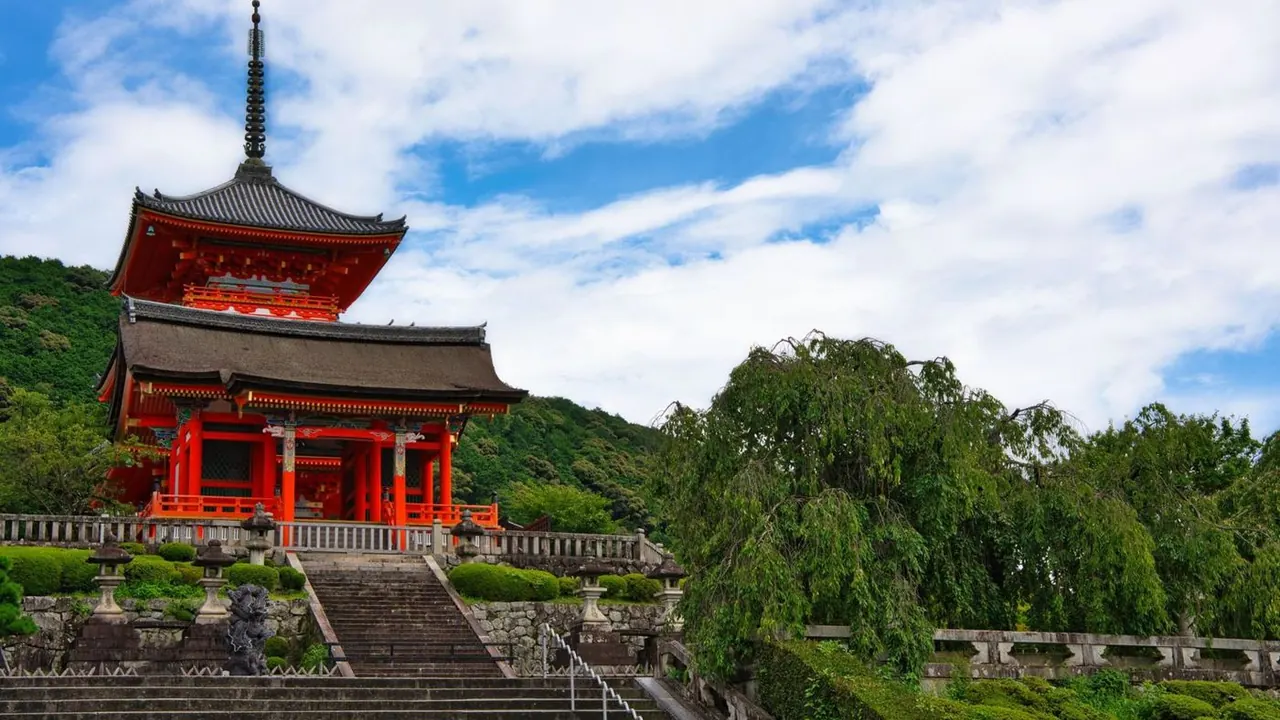
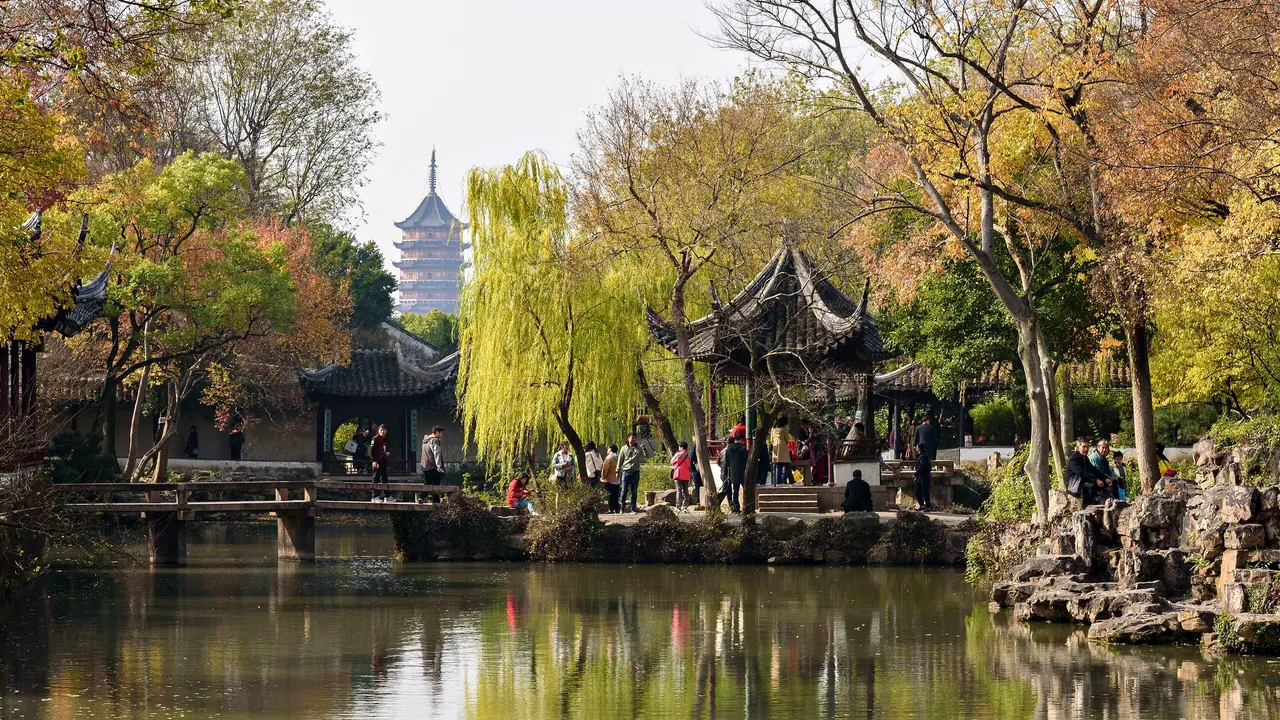
Photos: Kyoto by Bert Mulder, Pexels License; Suzhou by King of Hearts, CC BY-SA 4.0, cropped.
Kyoto or Suzhou?
Our verdict in twelve categories, each scored against the same fixed benchmark cities, and the climate month by month, so you can choose for your trip.
Choose Kyoto for
- nature and the outdoors
- shopping
- culture and sights
Kyoto suits travellers who want the deeper and more varied trip. Its temples, gardens and wooden lanes run on a scale Suzhou cannot match, and the food is more refined. The wooded hills are close enough for an afternoon walk, and sento, hot springs and ryokan make rest part of the stay. It also works better with children. The cost comes in rooms and fine dinners, especially in the blossom and maple seasons.
Choose Suzhou for
- prices
- nightlife
Suzhou is the better pick for a shorter, cheaper look at classical China. Its UNESCO gardens sit close together inside the old moat, and hotels and meals cost noticeably less. Fast trains reach Shanghai, Nanjing and Hangzhou easily, and the canal water towns are close by. Come for silk, Kunqu opera and teahouse afternoons, and expect flat lake country rather than hills.
Scoreboard
Twelve categories on one fixed scale from 0 to 100. The shaded stretch is the gap between the two.
Your match
Pick a travel style or drag the sliders, and both match scores follow your weighting.
Wins on nature and the outdoors and shopping with your weighting.
Wins on prices and nightlife with your weighting.
What matters to you?
Category by category
What the scores mean for a trip.
Beaches & swimming
Neither city is a place for a beach. Kyoto at least has Lake Biwa, where sandy strands such as Omi-Maiko make a warm freshwater swim possible in July and August, and the white sand of the Tango coast lies further north for those willing to stay overnight.
Suzhou has nothing comparable. Lake Tai is not used for bathing, and the nearby Yangtze shore is mud and silt, so a hotel pool is the only realistic way to swim.
Food & drink
Both kitchens are subtle and follow the seasons, but Kyoto goes deeper. Kaiseki served in Gion's old wooden houses, temple cuisine at Daitokuji and Tenryuji, yuba, pickles and tea sweets give it a level of refinement and a density of serious restaurants that Suzhou does not reach. Nishiki Market and the sake breweries of Fushimi cover everyday eating and drinking.
Suzhou's cooking is sweeter and built on lake fish and shrimp. The squirrel-shaped mandarin fish is its showpiece, a bowl of noodles in dark broth is the morning ritual, and in autumn the Yangcheng Lake hairy crab draws visitors from across China. It is a rewarding regional cuisine with a narrower range.
Culture & sights
Kyoto is in a different league. It has seventeen UNESCO sites and well over a thousand temples and shrines. Kinkaku-ji, Kiyomizu-dera, Ryoan-ji and Nijo Castle are joined by whole lanes of surviving machiya in Higashiyama and Gion, and the city escaped wartime bombing. A week barely covers it.
Suzhou's heritage is more concentrated. The Humble Administrator's Garden, the rock maze of the Lion Grove and the tiny Master of the Nets all lie inside the old moat, with I. M. Pei's museum and the canal houses of Pingjiang Road close by. The Lingering Garden is just outside the moat, and Tiger Hill's leaning pagoda is an outlying sight, best reached by taxi. Much of the old town has been rebuilt, but two or three days show its best.
Nightlife
Both cities are calm after dark, and in both the serious night out is a train ride away, to Osaka from Kyoto or Shanghai from Suzhou. In Kyoto, evenings mean the lantern-lit alley of Pontocho and the Kiyamachi canal, with small sake and whisky bars and summer river terraces.
Suzhou starts with a lit canal walk along Pingjiang Road and a few bars on Shiquan Street. It also has something Kyoto lacks: rooftop lounges and clubs around Jinji Lake that cater to local professionals.
Nature & outdoors
Kyoto is ringed by forested hills, so a real walk begins at the city's edge. There are trails to Daimonji, the bamboo and wooded slopes of Arashiyama, the cedar path between Kurama and Kibune, and boats through the Hozu gorge.
Suzhou lies on flat delta land of canals, lakes and farmland. Its best outdoor day is on the Lake Tai peninsulas, cycling past orchards and tea terraces, while Lingyan Hill gives only a short climb.
Day trips
Both are outstanding bases, and Kyoto has a slight edge in variety close at hand. Nara, Osaka, Uji, Kobe and Himeji Castle each give a quite different day, and most are within an hour.
Suzhou's strength is its access to big cities. Shanghai is half an hour away, and Nanjing and Hangzhou's West Lake are easy by fast train. The nearby water towns such as Tongli and Zhouzhuang are lovely, but they resemble each other, so one or two is enough.
Good for families
Kyoto has more for children. The Railway Museum with its steam locomotives and simulators, the aquarium and zoo near the centre, ninja shows at the Toei studio park and the deer in Nara give children their own highlights, and Osaka's theme park is close by.
In Suzhou the gardens that adults travel for are crowded and quiet, which young children find dull. Canal boat rides, the parks around Jinji Lake and the amusement parks west of the old town make up for some of this.
Getting around
The two are equally manageable, in different ways. Kyoto's flat central grid and the Kamo River paths are ideal for cycling, but its subway misses most temples, so visitors rely on a mix of private railways, the Randen tram and slow, crowded buses.
Suzhou's old town is compact enough to walk, and its metro is clean and signed in English. Outlying sights such as Tiger Hill and Lake Tai are easier by taxi, though, and Chinese payment apps make daily life much simpler.
Shopping & style
Kyoto has the wider range of craft. Family shops sell Kiyomizu-ware, Nishijin silk, fans, incense, lacquer and hand-forged knives, and tea merchants sell matcha by weight. The Teramachi arcades, the department store food halls and the monthly flea markets at To-ji and Kitano Tenmangu add to it.
Suzhou is a specialist market for silk. Its double-sided embroidery is the thing to buy, ideally watched being stitched in the Zhenhu workshops. Beyond silk, tea and fans, the malls are generic and most shoppers save themselves for Shanghai.
Affordability
Suzhou is the cheaper of the two. Comfortable hotels cost far less, and noodles, teahouse snacks, metro rides and taxis are all inexpensive. The costs that do add up are garden entry fees and crab dinners.
In Kyoto, simple meals and transport are reasonable, but ryokan and hotels are expensive, and kaiseki is a splurge. Both cities' prices rise in their peak seasons: Golden Week in Suzhou, and blossom and maple time in Kyoto.
Live music & performing arts
Each city has its own classical stage. Kyoto offers more to a visitor: the spring dances of the geiko and maiko, kabuki at the Minamiza, the oldest theatre of its kind in Japan, and regular Noh, with Gion Corner as a sampler.
Suzhou is the birthplace of Kunqu opera, and its short scenes sung in garden pavilions on summer evenings are memorable. Pingtan storytelling in Suzhou dialect is harder for outsiders to follow, so much of it comes across as atmosphere.
Wellness & relaxation
Kyoto has the real bathing culture. Old tiled sento, hot springs at Kurama and Ohara, Arima's onsen within reach and ryokan with deep wooden tubs are all part of it, along with zazen sessions and temple stays.
Suzhou offers a softer kind of rest. An afternoon in a canal-side teahouse, an inexpensive foot massage on almost any street or a spa hotel by Lake Tai can be restful. There is no thermal bathing, though, and the gardens fill up at weekends.
When should you go?
Pick your month. The climate figures are measured averages, not a forecast.
Kyoto in July
Suzhou in July
Daytime high, °C
Rainfall in the month, mm
Where the figures come from
Kyoto's sunshine is measured 43 km from the centre, at Osaka.
Suzhou's temperatures are measured 79 km from the centre, at Shanghai / Hongqiao.
Suzhou has no rain gauge within 25 km of the centre, so its rainfall comes from a gridded climate dataset read at the city rather than from a gauge further away.
Suzhou's sunshine is measured 81 km from the centre, at Shanghai.
Temperature and rainfall are climate normals, averaged over the years shown. Kyoto: 1971-2000 (sunshine 1991-2020, rainfall 1991-2020) normals, Kyoto (3.2 km from centre). Suzhou: 1991-2020 normals, Shanghai / Hongqiao (78.8 km from centre).
The two cities follow much the same calendar. Spring and autumn are the times for walking. In April and May the afternoons are mild in both, and October and November are pleasant too, with Kyoto's maples and Suzhou's driest month, October, at only 25mm of rain. Summers are hot and humid. Kyoto reaches 32°C in August and Suzhou 33°C in July and August, which makes long days on foot hard going.
The rain differs in its timing. Kyoto's wet season peaks in July at 250mm and returns in September. Suzhou's heaviest rain comes in June and August and is lighter overall. Kyoto's nearby sea warms to 27°C in August, but the beach plays little part in a stay there. Winters are cold in both, with daytime highs around 9°C in January. Kyoto's winter is clearer and sunnier, while Suzhou's January and February are the dullest months of its year.
Which traveller are you?
On a family trip with young children, Kyoto is easier. It is safe, clean and polite, and enough of the city is aimed at children that the days are not all temples. Suzhou welcomes children, but its districts lie far apart and festival weeks bring heavy crowds.
On a trip on a tight budget, Suzhou goes further. A room there costs much less, and eating well cheaply is easy. In Kyoto the bed is the big cost, so budget travellers should avoid the blossom and maple seasons and stay near the station.
For an outdoors trip, Kyoto is the clear choice. Forested hills close the basin on three sides, so a morning on a mountain path and an afternoon in a temple fit into one day without a car. Suzhou's flat delta offers gentle rides and short climbs, little more.
Before you go
| Measure | Kyoto | Suzhou |
|---|---|---|
| Official language | Japanese | Putonghua |
| Currency | Yen (JPY) | Yuan Renminbi (CNY) |
| Sockets | AB100 V, 50 and 60 Hz depending on the region | ACI220 V, 50 Hz |
| Driving side | Left | Right |
| Time zone | UTC+9 | UTC+8 |
| Emergency number | Police 110, fire 119 | Police 110, ambulance 120, fire 119 |
| Elevation | 51 m | 5 m |
| Main airport | Kansai International Airport (KIX)81 km from centre62 non-stop destinations | Shanghai Hongqiao International Airport (SHA)69 km from centre82 non-stop destinations |
| Public holidays this year | 16 days | 6 days |
By the numbers
| Measure | Kyoto | Suzhou |
|---|---|---|
| City population | 1,463,723 | 12,748,262 |
| People per km² | 1,768 | 1,473 |
| Museums within 10 km | 77 | 9 |
| UNESCO World Heritage sites within 50 km | 4 | 1 |
| Swim season, months above 21 °C | 5 months | - |
Where else could you go?
Every comparison below shares a destination with this one, so you can follow Kyoto or Suzhou somewhere new.