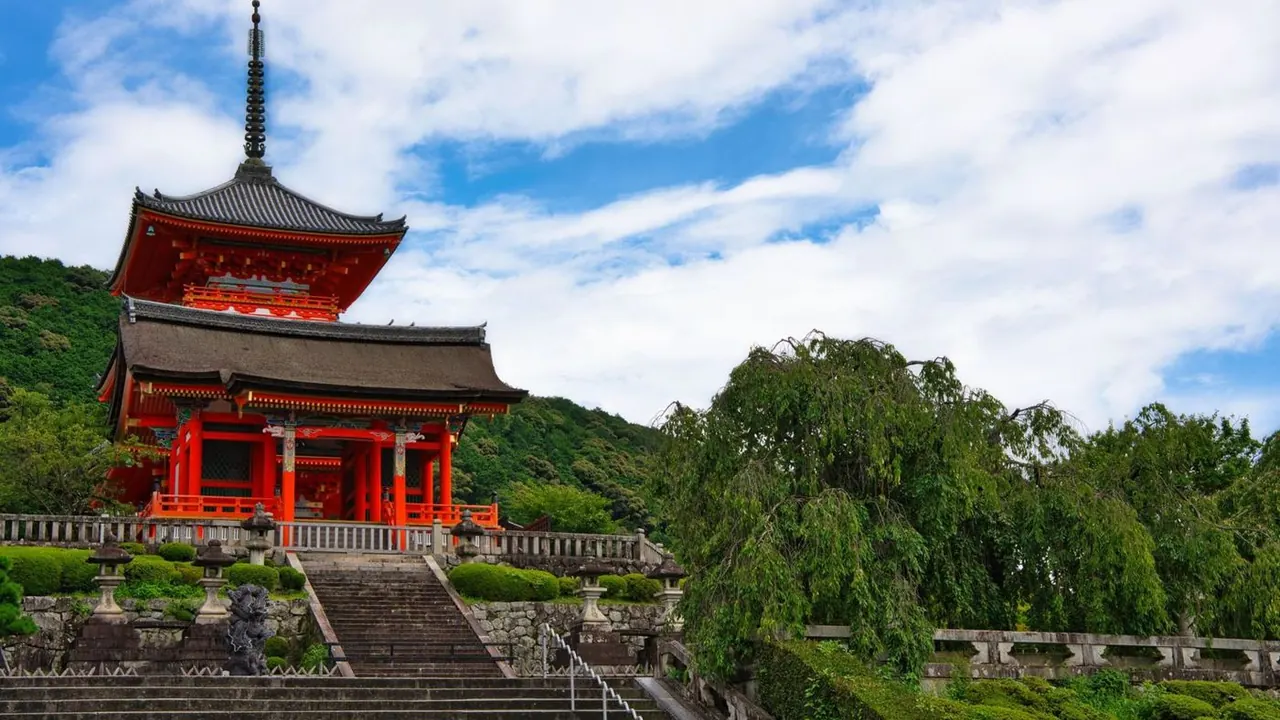
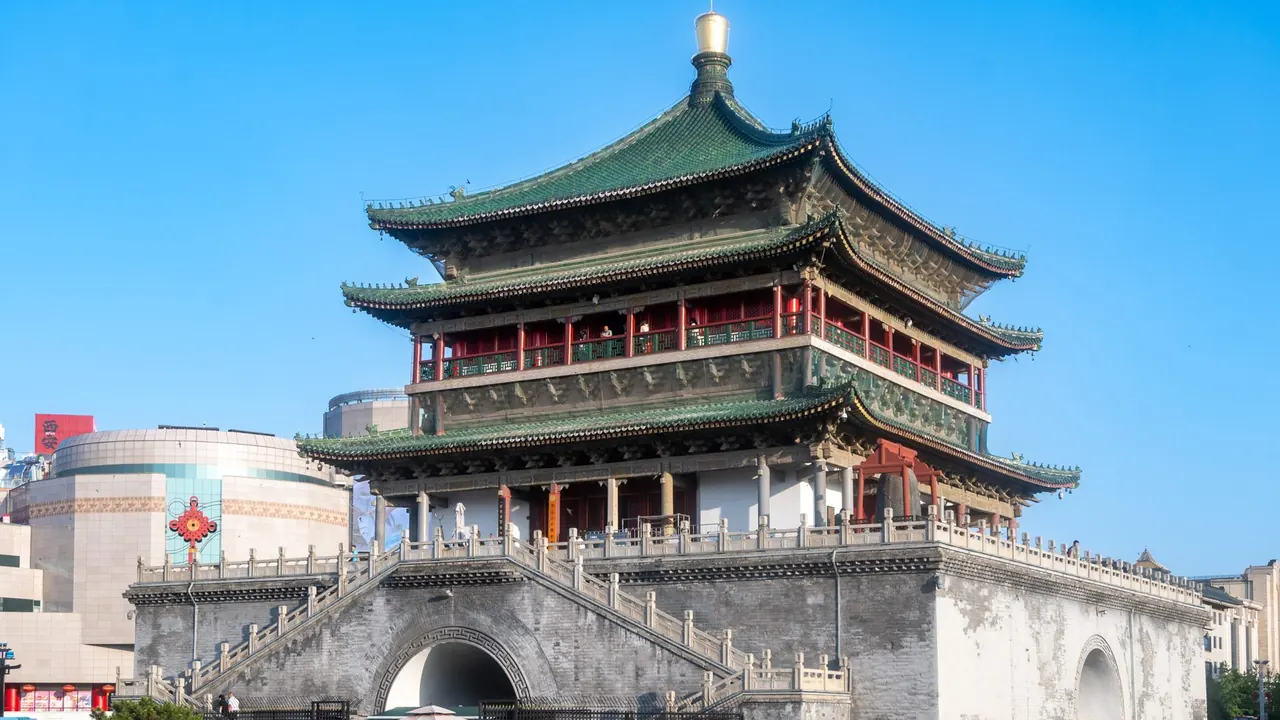
Photos: Kyoto by Bert Mulder, Pexels License; Xi'an by xiquinhosilva, CC BY 2.0, cropped.
Kyoto or Xi'an?
Our verdict in twelve categories, each scored against the same fixed benchmark cities, and the climate month by month, so you can choose for your trip.
Choose Kyoto for
- wellness
- shopping
- families
Kyoto suits the traveller who wants depth and refinement from a single base: temple gardens designed as works of art, kaiseki and temple cooking, craft shops kept by the same families for generations, and quiet bathhouses and ryokan to end the day. It also suits a longer stay, because Nara, Osaka, Uji and Himeji are all a short train ride away, and it is the easier of the two with children. Expect to pay more for a bed, and expect the evenings to be calm.
Choose Xi'an for
- prices
- nightlife
Xi'an is the better pick for a shorter, cheaper trip built around ancient China. You get the complete Ming wall, the Shaanxi History Museum and the Terracotta Army, and you eat hand-pulled noodles in the Muslim Quarter for very little. The evenings are livelier and more public than Kyoto's. Go for the history and the wheat-based cooking, not for rest, shopping or a wide spread of attractions for children.
Scoreboard
Twelve categories on one fixed scale from 0 to 100. The shaded stretch is the gap between the two.
Your match
Pick a travel style or drag the sliders, and both match scores follow your weighting.
Wins on wellness and shopping with your weighting.
Wins on prices and nightlife with your weighting.
What matters to you?
Category by category
What the scores mean for a trip.
Beaches & swimming
Neither city is a beach destination, but Kyoto at least has somewhere to swim within reach. In July and August the sandy strands on Lake Biwa's western shore are warm enough for a freshwater dip, and Suma on Osaka Bay is an hour away. The white sand of the Tango Peninsula needs an overnight trip.
Xi'an is far inland, so swimming means a hotel pool or one of the hot-spring resorts at Lintong. If you want the sea, you have to add a coastal city to the trip.
Food & drink
Both cities have a real food culture, but Kyoto's is deeper and more varied. You can eat kaiseki in old wooden houses in Gion, temple cooking at Daitokuji, and tofu, yuba and tea sweets, and on top of that come Nishiki Market, ramen counters and the sake breweries of Fushimi.
Xi'an is a wheat city with very different food: belt-wide biangbiang noodles, roujiamo and mutton paomo, and lamb skewers in the Muslim Quarter late into the evening. It is hearty, sour and spicy, but the range narrows quickly once you look beyond the local staples and the fine-dining tier is small.
Culture & sights
Both are former imperial capitals of the first rank, and Kyoto has more of its past still standing. Seventeen UNESCO-listed sites, from Kinkaku-ji to Ryoan-ji's rock garden, sit among more than a thousand temples and shrines. Because the city escaped wartime bombing, whole lanes of machiya townhouses survive in Higashiyama and Gion, so the historic feel carries on between the landmarks.
Xi'an's heritage is older but more scattered. It has the complete Ming wall, the Tang pagodas, the Shaanxi History Museum's bronzes and murals, and the Great Mosque built as a Chinese courtyard temple. Outside the wall the city is largely modern, and some of the rebuilt streets feel staged.
Nightlife
Xi'an has more going on after dark. Crowds walk and snack along the floodlit boulevard below the Big Wild Goose Pagoda and through the Muslim Quarter, and the bars of Defu Xiang and a few big, loud clubs carry on from there. It is a public, early-evening kind of fun rather than late nights.
Kyoto is quieter still. Most evenings happen in the small sake bars and standing izakaya of Pontocho and Kiyamachi, with riverside terraces in summer. Anyone wanting a long, loud night takes the train to Osaka.
Nature & outdoors
Kyoto's hills come right to the edge of the city. You can walk the trails up Daimonji, take the cedar path from Kurama to Kibune, see the Arashiyama bamboo or ride a boat down the Hozu gorge, and the Kamo River gives you green space through the centre. Cherry blossom and autumn maples shape when people visit.
Xi'an sits on a flat, often hazy plain with little green space in the city. Its draw is wilder country further out: the Zhongnan foothills about an hour south, and Mount Hua's sheer granite ridges and cliff paths, which make a hard and thrilling day.
Day trips
Both make fine bases, but Kyoto has more within easy reach. Nara's deer and bronze Buddha, Uji's tea and Byodo-in, Osaka, Kobe and Himeji Castle are each under an hour by train, so a week can mix many short trips with little planning.
Xi'an's excursions revolve around tombs and temples. The Terracotta Army and Huaqing Palace make a natural day together, Qianling and Famen Temple lie to the west, and Luoyang's Longmen Grottoes are reachable by high-speed train. The sights are superb, but the variety is narrower.
Good for families
Kyoto is the easier city with children. It is safe and orderly, and it has attractions made for them: the Railway Museum's roundhouse of steam engines, the aquarium and zoo near the centre, and ninja shows at Toei Studio Park. Osaka's theme park is close enough for a day trip. The hard parts are temple stairs, packed buses and the summer heat.
In Xi'an, cycling on the wall and the pandas at the Qinling wildlife park go down well, and the Terracotta Army holds most ages for an hour. After that the sights are aimed at adults. Traffic outside the wall and the national vacation crowds make it harder work with a buggy.
Getting around
Kyoto is a little easier to get around. Its flat central grid is very good for walking and cycling, and a mix of JR, Keihan, Hankyu and the Randen tram reaches the temples around the edges of the basin. The weak point is the buses, which are slow and crowded in blossom and autumn seasons.
Xi'an's large metro, with English signage, links the walled centre, the pagodas, the stations and the airport, and Line 9 gets you most of the way to the Terracotta Army. Taxis are cheap, but rush-hour traffic is heavy and signs beyond the metro are in Chinese only.
Shopping & style
Kyoto is the better city for buying things to keep. Family-run workshops sell Kiyomizu-ware ceramics, Nishijin silk, incense, lacquer and hand-forged knives, and the covered arcades of Teramachi and Shinkyogoku sell everything from antique prints to cheap clothes. The flea markets at To-ji and Kitano Tenmangu are worth planning a day around.
In Xi'an, Shuyuanmen lane is the place for brushes, ink stones and seals. Away from it the choice thins out into dried fruit, shadow puppets and endless replica warriors, and the malls carry the usual brands.
Affordability
Xi'an is much the cheaper of the two. Street food, dumplings, metro rides and taxis cost very little, and a comfortable room inside the wall is good value. The one cost that mounts up is admission to the Terracotta Army, the wall and the palace and tomb sites.
In Kyoto, everyday meals and transport are reasonable, and so are temple entry fees. Hotels and ryokan are expensive, though, especially in cherry blossom and autumn colour season, and a kaiseki dinner is a splurge.
Live music & performing arts
Kyoto has more to see on stage, and more of it is the real thing. The geiko and maiko spring dances, kabuki at the Minamiza, the oldest kabuki house in Japan, and regular Noh are living traditions, and the Kyoto Concert Hall and ROHM Theatre add symphony and opera. Much of the calendar is seasonal, though.
What most visitors see in Xi'an is staged for them: Tang dance dinner shows and the hillside spectacle at Huaqing Palace. For something more local, look for Qinqiang, the raw Shaanxi opera, in small theatres and parks.
Wellness & relaxation
Kyoto has a long bathing and contemplative tradition. Tiled neighbourhood sento, hot springs at Kurama, Ohara and Arashiyama, ryokan baths, zazen sessions and nights in temple lodgings all offer real rest, as long as you get to the gardens early.
Xi'an's calm comes in shorter spells. You can soak in the Tang emperors' springs at Lintong, have a cheap foot massage or spend an evening in a bathhouse rest hall, or walk the wall at dawn before the sightseeing starts again.
When should you go?
Pick your month. The climate figures are measured averages, not a forecast.
Kyoto in July
Xi'an in July
Daytime high, °C
Rainfall in the month, mm
Where the figures come from
Kyoto's sunshine is measured 43 km from the centre, at Osaka.
Temperature and rainfall are climate normals, averaged over the years shown. Kyoto: 1971-2000 (sunshine 1991-2020) normals, Kyoto (3.2 km from centre). Xi'an: 1991-2020 normals, Xi'An (4.4 km from centre).
Both cities are at their best in spring and autumn, and both are uncomfortable in high summer, but they are wet and dry in different ways. Kyoto gets heavy rain in June and July and again in September, more than 200mm in each of those months, while August is hot and humid, with highs around 32°C. April, May, October and November are the months for walking between temples. Winters are cold but often bright, with more sunshine than Xi'an gets in the same months.
Xi'an is much drier all year. Summer brings most of its rain, and June and July reach about 33°C, which makes the walk around the wall hard going in the afternoon. Winter is colder than Kyoto's, with highs near 5°C in January, and almost dry, but the days are often grey and hazy. May, September and early October give the best mix of warmth and clear air for the city and for the Qinling hills.
Which traveller are you?
On a trip on a tight budget, Kyoto means compromises: a business hotel by the station, good restaurants at lunch only, and avoiding blossom and maple season. Xi'an asks for very few. You can sleep centrally and eat freely, and almost all the spending goes on tickets for the big sites.
For a relaxing and wellness trip, Kyoto lets rest take up whole days: a garden before the crowds arrive, an afternoon soak, an evening in a ryokan or a temple lodging. In Xi'an rest is a break between long sightseeing days, perhaps a spa evening at Lintong.
On a family trip with young children, Kyoto lets you follow a temple morning with an afternoon planned around the children, and Osaka is an easy extra day. Xi'an gives one or two excellent days, then expects children to put up with tombs and museums.
Before you go
| Measure | Kyoto | Xi'an |
|---|---|---|
| Official language | Japanese | Putonghua |
| Currency | Yen (JPY) | Yuan Renminbi (CNY) |
| Sockets | AB100 V, 50 and 60 Hz depending on the region | ACI220 V, 50 Hz |
| Driving side | Left | Right |
| Time zone | UTC+9 | UTC+8 |
| Emergency number | Police 110, fire 119 | Police 110, ambulance 120, fire 119 |
| Elevation | 51 m | 405 m |
| Main airport | Kansai International Airport (KIX)81 km from centre62 non-stop destinations | Xi'an Xianyang International Airport (XIY)26 km from centre178 non-stop destinations |
| Public holidays this year | 16 days | 6 days |
By the numbers
| Measure | Kyoto | Xi'an |
|---|---|---|
| City population | 1,463,723 | 12,952,907 |
| People per km² | 1,768 | 1,283 |
| Museums within 10 km | 77 | 9 |
| UNESCO World Heritage sites within 50 km | 4 | 2 |
| Swim season, months above 21 °C | 5 months | - |
Where else could you go?
Every comparison below shares a destination with this one, so you can follow Kyoto or Xi'an somewhere new.