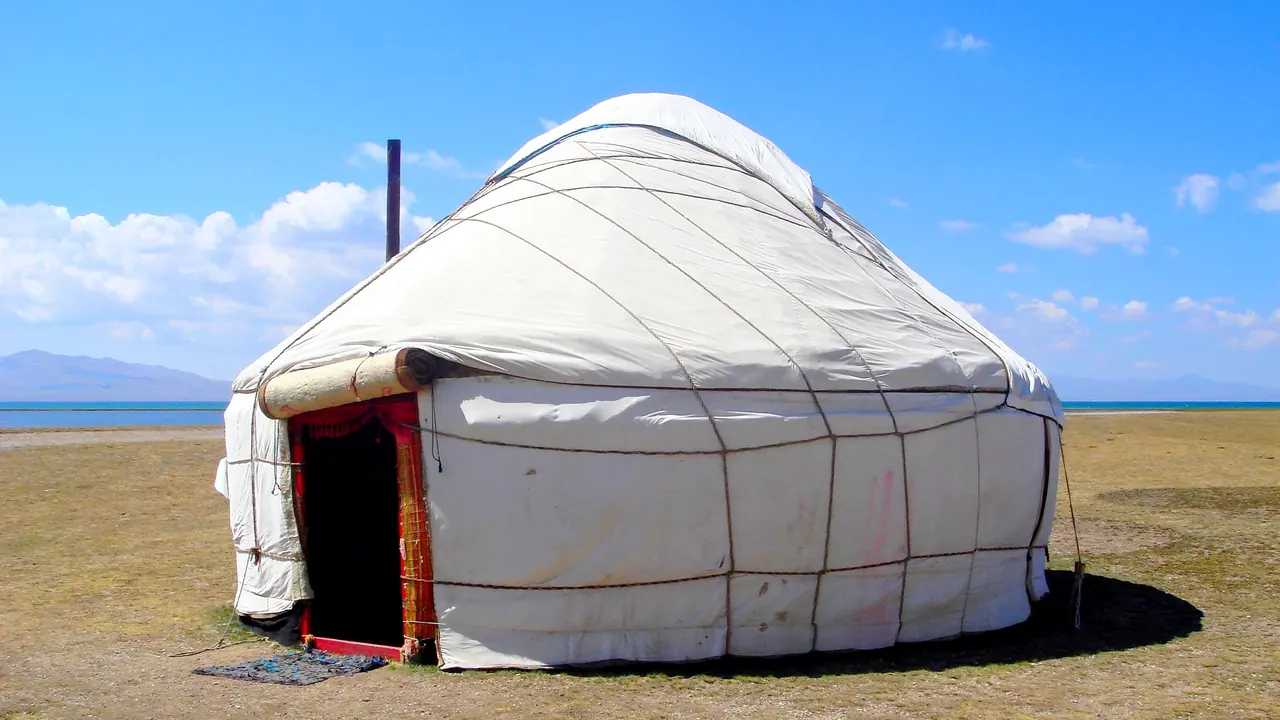
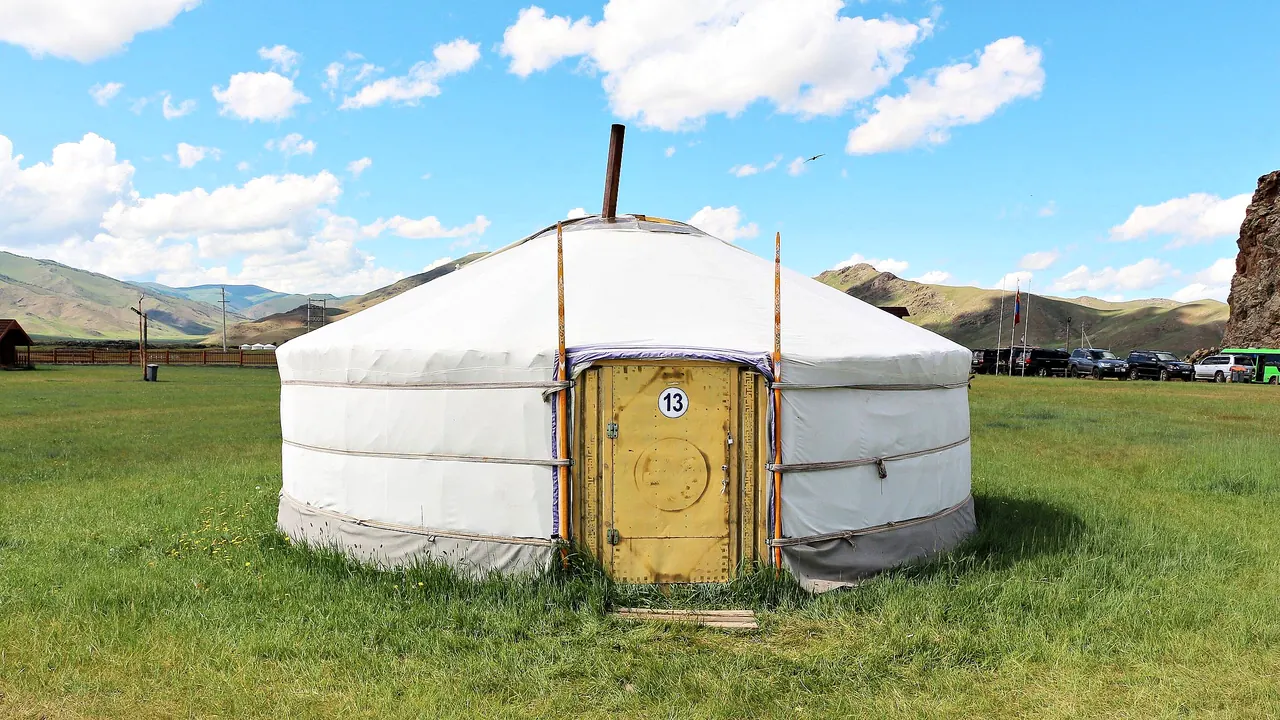
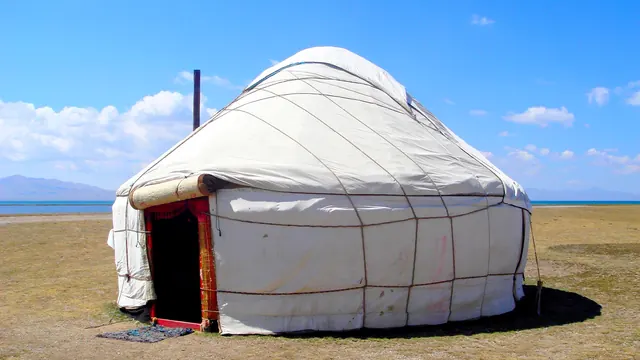
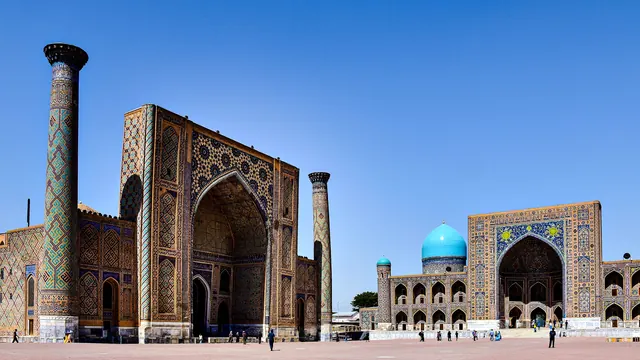
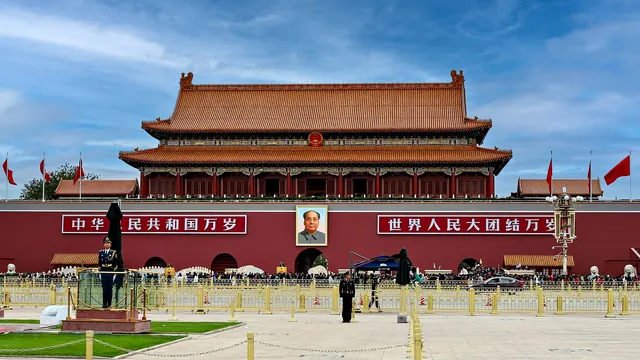
Photos: Kyrgyzstan by Ondřej Žváček, CC BY 2.5, cropped; Mongolia by Bernard Gagnon, CC0.
Kyrgyzstan or Mongolia?
Our verdict in twelve categories, each scored against the same fixed benchmark cities, and the climate month by month, so you can choose for your trip.
Choose Kyrgyzstan for
- beaches
- prices
- getting around
Kyrgyzstan suits travellers who want high mountains with somewhat lighter logistics. Minibuses and shared taxis link Bishkek, Karakol and both shores of Issyk-Kul, so you can settle in a town and hire a driver or a 4x4 only for the last stretch to the trailheads above Karakol, the pastures of Song-Kol or the valleys of Ala-Archa. Issyk-Kul adds summer swimming, and the springs at Altyn-Arashan give tired legs a soak. Homestays and local cafés make it one of the cheapest countries to travel in Central Asia, so a long, slow trip stays affordable.
Choose Mongolia for
- live music and the arts
- culture and sights
- shopping
For sheer open space and a sense of expedition, Mongolia is the stronger pull: the Gobi dunes, the forest around Lake Khövsgöl and the eagle-hunting country of the far west, crossed on long jeep circuits from one ger camp to the next. It asks more in travel time and money. In return it has a richer musical life, with throat singing in Ulaanbaatar and Naadam in July, and a Buddhist heritage you can see in the capital's monasteries.
Scoreboard
Twelve categories on one fixed scale from 0 to 100. The shaded stretch is the gap between the two.
Your match
Pick a travel style or drag the sliders, and both match scores follow your weighting.
Wins on beaches and prices with your weighting.
Wins on live music and the arts and culture and sights with your weighting.
What matters to you?
Category by category
What the scores mean for a trip.
Beaches & swimming
Kyrgyzstan has a real summer lake vacation on Issyk-Kul. The north shore around Cholpon-Ata and Bosteri has sandy beaches, piers and resort complexes, and the south shore near Tamga has quiet coves below red hills. From July to late August the clear water warms enough for a long swim.
Mongolia offers nothing like it. Khövsgöl and the western lakes have pebbly shores and lovely clear water, but even in midsummer a swim is a brief, bracing dip, not an afternoon on the sand.
Where in Kyrgyzstan: Cholpon-Ata, Bosteri, Tamga
Food & drink
Both cuisines rest on mutton, dough and dairy, and both serve fermented mare's milk in summer, but Kyrgyzstan eats better. Osh cooks plov in huge cauldrons in the Uzbek manner and has the Jayma bazaar for bread and fruit, Karakol adds Dungan noodle dishes such as ashlyam-fu, and Bishkek has Georgian, Turkish and Russian kitchens.
Mongolia's food is plainer, with buuz and khuushuur as the everyday staples. Good variety exists only in Ulaanbaatar, which also has strong Korean and Japanese cooking. Its highlight is hospitality in Arkhangai, where camps prepare khorkhog with hot stones. Elsewhere ger-camp meals soon repeat.
Where in Kyrgyzstan: Osh, Bishkek, Karakol
Where in Mongolia: Ulaanbaatar, Arkhangai
Culture & sights
Neither country has much built heritage, and what each has is spread thin, but the character differs. Kyrgyzstan's sights follow the Silk Road: the sacred mountain of Sulaiman-Too in Osh, the Burana tower and its balbal stones in the Chui valley, the lonely caravanserai of Tash Rabat above At-Bashy, and Karakol's wooden Dungan mosque.
Mongolia's heritage is Buddhist and imperial, and its capital holds more in one place: Gandan Monastery, the Bogd Khan Winter Palace and the Zanabazar Museum are all in Ulaanbaatar. Beyond it, Erdene Zuu in the Orkhon Valley and Amarbayasgalant each take a long overland journey to reach.
Where in Kyrgyzstan: Osh, Chui valley, At-Bashy, Karakol
Where in Mongolia: Ulaanbaatar, Orkhon Valley, Amarbayasgalant, Mongolian Altai
Nightlife
In both countries going out means the capital and little else. Bishkek has cocktail and craft beer bars and a few late weekend clubs around Chuy Avenue, and Ulaanbaatar has pubs, lounges and karaoke near Sükhbaatar Square, with a young crowd that can turn rowdy late at night.
Kyrgyzstan has one extra: in high summer Cholpon-Ata on Issyk-Kul turns into a few weeks of open-air discos and beach bars. In the Mongolian countryside, evenings end with a vodka toast and the stars.
Where in Kyrgyzstan: Bishkek, Cholpon-Ata
Where in Mongolia: Ulaanbaatar
Nature & outdoors
Both countries draw visitors mainly for wild country, and both deliver. Kyrgyzstan is mountains almost everywhere: the Tian Shan treks from Karakol through Altyn-Arashan and over the Ala-Kul pass, horse trekking among herders at Song-Kol, and glaciers in Ala-Archa less than an hour from Bishkek, with skiing near Karakol in winter.
Mongolia's strength is its range of landscapes rather than height: the singing dunes and Flaming Cliffs of the Gobi, larch forest around Lake Khövsgöl, green volcanic valleys in Arkhangai, and the glaciers and eagle hunters of Altai Tavan Bogd. Horse and camel treks are its signature, but reaching any of these means long hours on rough tracks.
Where in Kyrgyzstan: Karakol and the Terskey Ala-Too, Song-Kol, Ala-Archa National Park, Alay Valley
Where in Mongolia: Gobi Desert, Lake Khövsgöl, Arkhangai and the Orkhon Valley, Altai Tavan Bogd
Day trips
Kyrgyzstan gives more to do from a fixed base, though not a great deal. Bishkek has the Burana tower within an easy half day, Osh has the minaret and mausoleums of Uzgen, and from Karakol you can visit the Przhevalsky memorial and the petroglyphs at Cholpon-Ata.
Mongolia is travelled in loops that sleep in ger camps, so from Ulaanbaatar the choice comes down to the giant steel Chinggis Khaan statue at Tsonjin Boldog and the ruined Manzushir Monastery. Karakorum and the major monasteries are too far for a day.
Where in Kyrgyzstan: Burana Tower, Uzgen, Cholpon-Ata
Where in Mongolia: Tsonjin Boldog, Manzushir Monastery
Good for families
Both suit adventurous families with older children better than those with toddlers, and both offer riding and nights in yurts or gers. Kyrgyzstan has the easier base for younger children: the shallow, sandy north shore of Issyk-Kul with its summer amusements, plus Bishkek's parks and old fairground rides. Song-Kol needs care with the altitude.
In Mongolia, a ger camp in Gorkhi-Terelj near the capital is the gentle option, and a short Gobi loop by plane adds camels and dunes. Long days on tracks and thin medical care outside Ulaanbaatar make longer routes hard with small children.
Where in Kyrgyzstan: Issyk-Kul, Song-Kol, Bishkek
Where in Mongolia: Gorkhi-Terelj, Gobi Desert, Ulaanbaatar
Getting around
Kyrgyzstan is easier to travel independently. Minibuses and shared taxis link Bishkek with Karakol, Naryn and Osh, and the road around Issyk-Kul has regular services along both shores. You only need a hired driver or a 4x4 to reach trailheads and the high lakes, and a short flight saves the long day's drive between Bishkek and Osh.
In Mongolia the logistics are much heavier. Away from a few highways the roads are dirt tracks, so most visitors hire a driver and a vehicle for a week or more. The Trans-Mongolian railway and long-distance buses do not reach the sights, and domestic flights are the only shortcut to the Gobi and the far west.
Where in Kyrgyzstan: Issyk-Kul, Bishkek, Karakol, Osh
Where in Mongolia: Ulaanbaatar
Shopping & style
Neither is a shopping destination, but each has one thing worth buying. In Kyrgyzstan it is felt: bold shyrdak carpets and kalpak hats from women's cooperatives in Kochkor and around Issyk-Kul, plus Bishkek's Osh Bazaar for spices and dried fruit.
In Mongolia it is cashmere. Ulaanbaatar's factory shops and the long-standing State Department Store sell high-quality sweaters and blankets, and the Narantuul market has boots and deels, though you should watch for pickpockets there.
Where in Kyrgyzstan: Bishkek, Osh, Kochkor
Where in Mongolia: Ulaanbaatar
Affordability
Kyrgyzstan is clearly the cheaper trip. Homestays in Karakol and Kochkor, yurt camps at Song-Kol, local cafés and shared minibuses all cost very little, and Osh is cheaper still. The main extra cost is a driver or horse guide for the remote valleys, and small groups can split it.
Mongolia's daily costs are low too, but nearly every route needs a vehicle, driver, fuel and often a guide, and the Gobi and far west usually add a flight. Arkhangai and the Orkhon Valley, which you can reach overland in a day and where herding families take in guests, are the most affordable part of the country.
Where in Kyrgyzstan: Karakol, Kochkor, Song-Kol, Osh
Where in Mongolia: Ulaanbaatar, Arkhangai
Live music & performing arts
Mongolia has more to hear and watch. In summer, Ulaanbaatar's folk ensembles stage throat singing, long song, the horse-head fiddle and masked tsam dance, and in July Naadam brings music, wrestling and racing to the capital and every provincial town. The opera and ballet theatre on Sükhbaatar Square covers the winter season.
Kyrgyzstan's formal performances are limited to the opera, ballet and philharmonic in Bishkek. Its own tradition, the manaschi reciting the Manas epic and the three-stringed komuz, is something you catch at yurt camps, festivals or the horse games.
Where in Kyrgyzstan: Bishkek
Where in Mongolia: Ulaanbaatar
Wellness & relaxation
Kyrgyzstan is the better place for a soak and some rest. You can walk up to the wooden radon bathhouses at Altyn-Arashan above Karakol, and Issyk-Ata, Jeti-Oguz and the Issyk-Kul north shore have old sanatoriums with mineral and mud treatments. All of it is plain, but there is plenty of it.
Mongolia has a handful of springs, notably the ger camps around the outdoor pools at Tsenkher in Arkhangai and the older resort at Shargaljuut. The steppe is quiet, but long driving days leave most visitors more tired than rested.
Where in Kyrgyzstan: Altyn-Arashan, Issyk-Kul north shore, Karakol, Issyk-Ata
Where in Mongolia: Tsenkher Hot Springs, Arkhangai, Shargaljuut
When should you go?
Pick your month, and for a country the place in it. The climate figures are measured averages, not a forecast.
Where in Kyrgyzstan
Bishkek (Kyrgyzstan) in July
Ulaanbaatar (Mongolia) in July
Daytime high, °C
Rainfall in the month, mm
Temperature and rainfall are climate normals, averaged over the years shown. Bishkek (Kyrgyzstan): 1991-2020 normals, Bishkek (3.3 km from centre). Ulaanbaatar (Mongolia): 1991-2020 normals, Ulaan-Baator (2.9 km from centre).
Both countries are summer destinations, with trekking from June to September. In Kyrgyzstan the lowland capital gets hot: Bishkek reaches 33°C in July, under long, dry, sunny days. The mountains are kinder. Karakol peaks around 24°C in July and August, which is good walking weather, though summer is also when its showers come most often. Those same two months are the only weeks when Issyk-Kul is warm enough for a proper swim. March to May are Bishkek's wettest months, so September, dry, sunny and still warm, is the most comfortable time for the city. June is a close second, before the full heat arrives.
In Ulaanbaatar, summer is milder than in Bishkek, and the rain falls in the middle of the season. The capital tops out around 26°C in July, which is also its wettest month at 71mm, so tracks around the city can turn muddy in July and August. September is drier and still mild. These are the capital's figures only; the Gobi in the south has a climate of its own and gets hot in summer. Winter in Ulaanbaatar is far harsher than in Bishkek or Karakol, at around -16°C by day in January, though the skies stay bright. In the cold months, Kyrgyzstan at least offers skiing near Karakol.
Which traveller are you?
For a beach and sun trip, Kyrgyzstan is the only real option of the two. Issyk-Kul has sandy shores at Cholpon-Ata and Bosteri and water that is pleasant in high summer, while Mongolia's lakes stay cold enough for a quick plunge at most.
On a trip on a tight budget, Kyrgyzstan stretches money further. Homestays in Karakol and Kochkor, yurt camps at Song-Kol and shared minibuses keep costs very low. In Mongolia most routes need a hired jeep, a driver and fuel, and that is where the money goes.
On a culture and arts trip, Mongolia gives more to see and hear. Ulaanbaatar gathers Gandan Monastery, the Winter Palace and nightly folk shows with throat singing and the horse-head fiddle, and Naadam fills July. Kyrgyzstan's Silk Road sites lie far apart.
More comparisons
Each shares a side with Kyrgyzstan or Mongolia.
Where else could you go?
Set Kyrgyzstan or Mongolia against any other country.