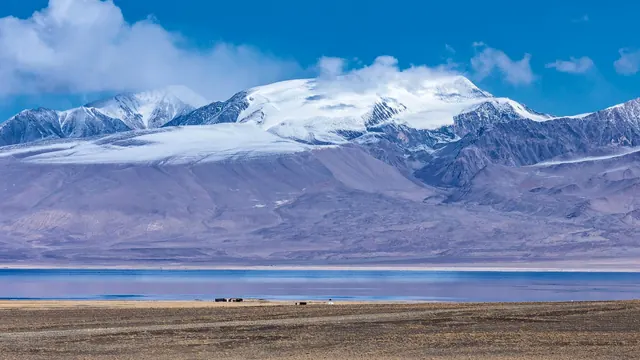
Photos: Kyrgyzstan by Ondřej Žváček, CC BY 2.5, cropped; Tajikistan by Miraliyon, CC BY-SA 4.0, cropped.
Kyrgyzstan or Tajikistan?
Our verdict in twelve categories, each scored against the same fixed benchmark cities, and the climate month by month, so you can choose for your trip.
Choose Kyrgyzstan for
- beaches
- nightlife
- getting around
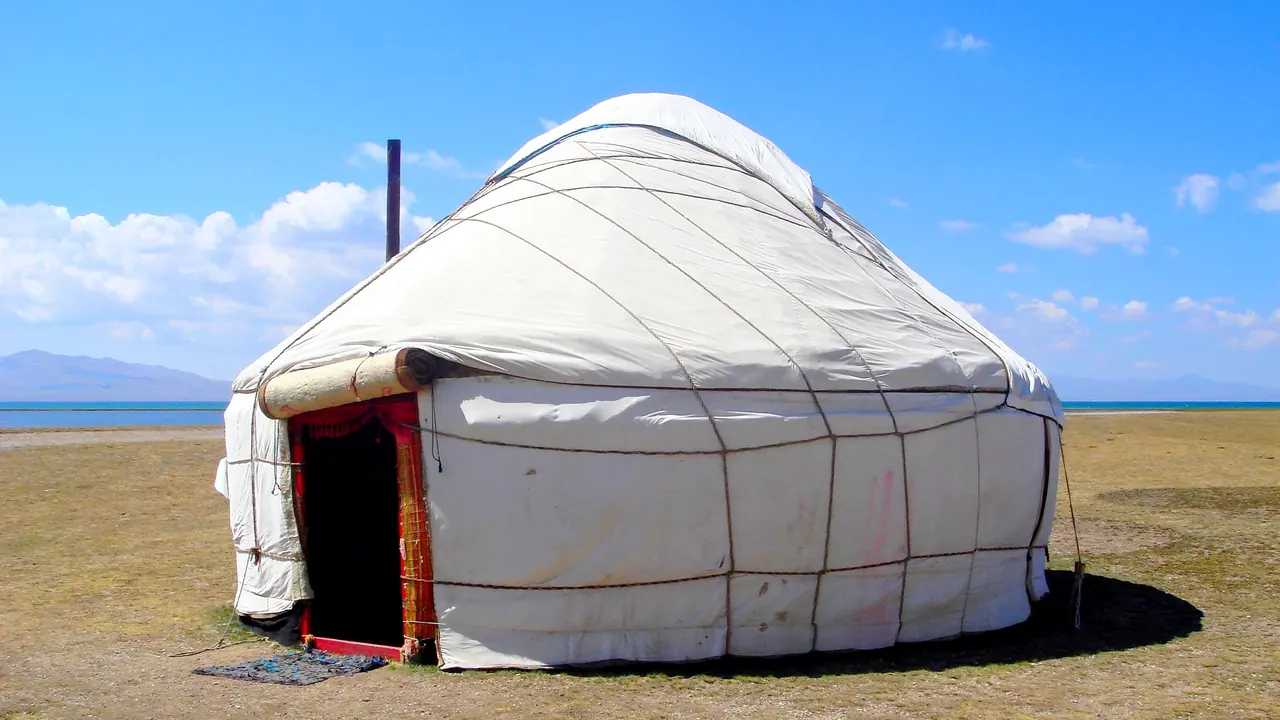
Kyrgyzstan is the easier and more varied mountain country. Its treks around Karakol, the horse trails and yurt camps of Song-Kol, and Ala-Archa close to Bishkek can all be strung together with a few days on the shores of Issyk-Kul. Roads are long but manageable and it costs very little to travel there. Bishkek also gives you a proper night out at the start or end of the trip. It suits first-timers in Central Asia, families with adventurous children and anyone travelling on a tight budget.
Choose Tajikistan for
- day trips
- culture and sights
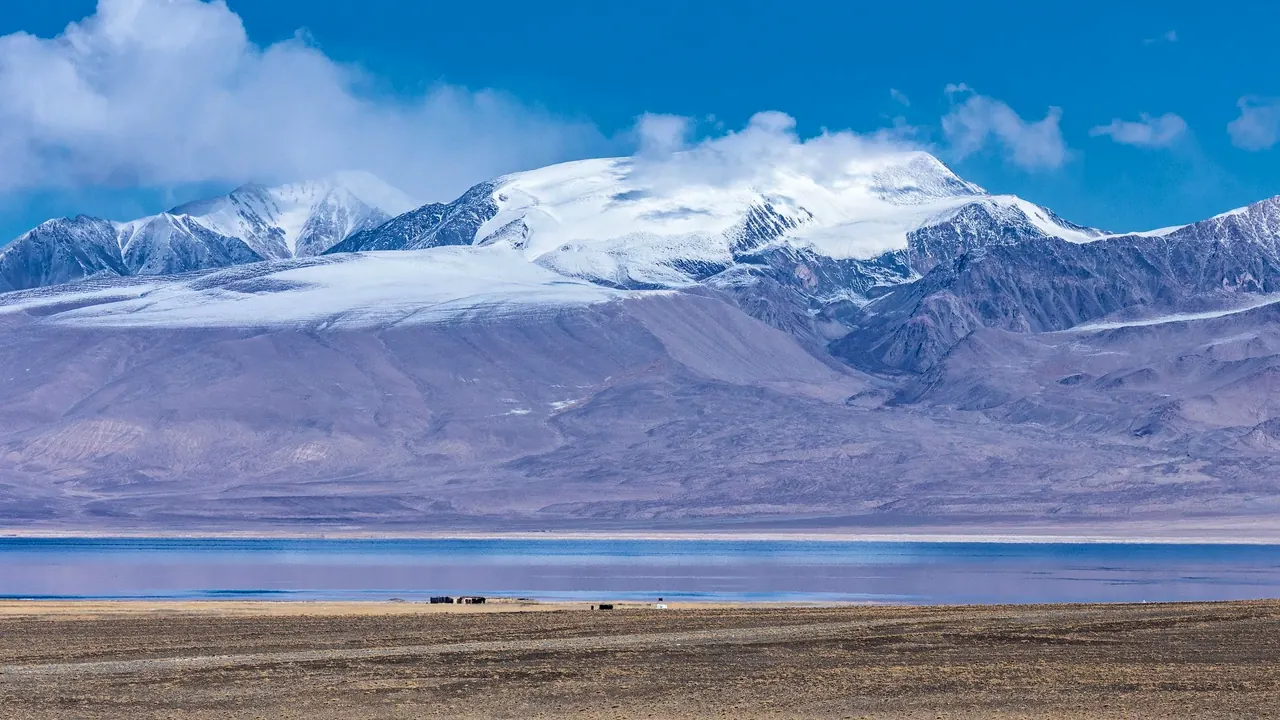
Tajikistan asks more of you and gives you a wilder journey in return. The Fann Mountains and the Seven Lakes are within reach of Dushanbe and Panjakent, while the Pamir Highway, the Wakhan and the Bartang valleys mean days of rough driving through some of the remotest high country in Asia. Its Sogdian ruins and the chance of a day in Samarkand also give it the edge for travellers who want Silk Road history along with their trekking. Choose it if you have time, a group to share a four-wheel drive with, and a taste for real remoteness.
Scoreboard
Twelve categories on one fixed scale from 0 to 100. The shaded stretch is the gap between the two.
Your match
Pick a travel style or drag the sliders, and both match scores follow your weighting.
Wins on beaches and nightlife with your weighting.
Wins on day trips and culture and sights with your weighting.
What matters to you?
Category by category
What the scores mean for a trip.
Beaches & swimming
Issyk-Kul gives Kyrgyzstan a real summer shoreline. The north side around Cholpon-Ata and Bosteri has sandy beaches, piers and resort complexes, and the south side near Tamga has quieter strips below red hills, with clear water warm enough to swim in July and August.
Tajikistan has nothing to match it. The Kayrakkum reservoir near Khujand is where local families cool off, and the glacier-fed lakes of the Fann Mountains are only good for a quick, cold dip. Neither country is a beach destination, but only Kyrgyzstan lets you add a few lazy days by the water to a mountain trip.
Where in Kyrgyzstan: Cholpon-Ata, Bosteri, Tamga
Where in Tajikistan: Kayrakkum Reservoir
Food & drink
The two kitchens are close relatives, built on mutton, bread, noodles and dairy, and in both, vegetarians will find little choice. Kyrgyzstan has a little more range. Osh cooks plov in huge cauldrons, Karakol adds Dungan noodle dishes such as ashlyam-fu, kymyz is sold at roadside yurts in summer, and Bishkek has Georgian, Turkish and Russian restaurants and a decent café scene.
In Tajikistan, the dish to seek out is qurutob, eaten by hand from a shared platter, and green tea flows all day in the chaikhonas. Its great pleasure is fruit: Khujand's domed Panjshanbe bazaar in late summer is piled with melons, grapes and apricots.
Where in Kyrgyzstan: Osh, Bishkek, Karakol
Where in Tajikistan: Dushanbe, Khujand
Culture & sights
Both countries have spread-out heritage rather than great cities of monuments, but the character differs. Kyrgyzstan's sights reflect its Silk Road and nomadic past: the sacred mountain of Sulaiman-Too in Osh, the Burana tower and balbal stones, the lonely caravanserai of Tash Rabat and Karakol's wooden Dungan mosque. Its living culture is easiest to meet in yurt camps and at festivals.
Tajikistan goes further back. Panjakent's excavated Sogdian city with fragments of its murals, Bronze Age Sarazm and the reclining Buddha in Dushanbe's antiquities museum give it more archaeology. The fortresses and stupa of the Wakhan Valley add a remote final layer for anyone already on a Pamir trip.
Where in Kyrgyzstan: Osh, Chui valley, At-Bashy, Karakol
Where in Tajikistan: Panjakent, Dushanbe, Khujand, Wakhan Valley
Nightlife
Kyrgyzstan has the livelier evenings, though only in a few places. Bishkek has cocktail and craft beer bars, karaoke rooms and a few clubs that run late at weekends around Chuy Avenue. Cholpon-Ata adds open-air discos on Issyk-Kul for a few summer weeks.
Tajikistan is more conservative and quieter. Dushanbe's evenings are mostly summer cafés along Rudaki Avenue and in the parks, plus a handful of bars and hotel lounges. Outside the capital, the night ends over tea in a homestay in both countries.
Where in Kyrgyzstan: Bishkek, Cholpon-Ata
Where in Tajikistan: Dushanbe
Nature & outdoors
This is the reason to visit either country, and both are superb, so the choice comes down to the kind of mountains you want. Kyrgyzstan's are greener and easier to reach. There are classic treks from Karakol over the Ala-Kul pass, horse trekking among herders' pastures at Song-Kol, Ala-Archa within an hour of Bishkek, and skiing near Karakol in winter.
Tajikistan's are higher, starker and more remote. The granite peaks and turquoise lakes of the Fann Mountains are the gentler introduction. Beyond them, the Pamir Highway crosses high desert near Murghab, the Wakhan looks across to the Hindu Kush of Afghanistan, and the Bartang Valley offers some of the wildest trekking in Asia.
Where in Kyrgyzstan: Karakol and the Terskey Ala-Too, Song-Kol, Ala-Archa National Park, Alay Valley
Where in Tajikistan: Fann Mountains, Pamir Mountains, Wakhan Valley, Bartang Valley
Day trips
Tajikistan has the better outings, mostly thanks to Panjakent. From there, Sarazm is just outside town and Samarkand lies about an hour beyond the Uzbek border, if the crossing is open. Khujand adds the old town of Istaravshan, and Dushanbe has the Hisor fortress for a half day.
In Kyrgyzstan, day trips mean single stops rather than towns: the Burana tower from Bishkek, Uzgen's minaret from Osh, and the Przhevalsky memorial or the Cholpon-Ata petroglyphs from Karakol. Its neighbouring cities across the borders are too far for a day.
Where in Kyrgyzstan: Burana Tower, Uzgen, Cholpon-Ata
Where in Tajikistan: Panjakent, Khujand, Dushanbe
Good for families
Kyrgyzstan is the kinder of the two for children. The north shore of Issyk-Kul has shallow water and summer resort amusements, Song-Kol gives older children horse rides and nights in herders' yurts, and Bishkek's parks with their old fairground rides fill a spare day.
Tajikistan welcomes families just as warmly but offers them less. Dushanbe's parks and modest amusement park are about the only things aimed at children. Iskanderkul and the Fann Mountains suit older children who like to hike, while the long jeep days and altitude of the Pamirs are a real risk for young ones.
Where in Kyrgyzstan: Issyk-Kul, Song-Kol, Bishkek
Where in Tajikistan: Dushanbe, Iskanderkul, Fann Mountains
Getting around
Both countries mean road travel with almost no useful railway, but Kyrgyzstan is easier. Shared taxis and minibuses link Bishkek with Karakol and Naryn, and minibuses run along both shores of Issyk-Kul, so the lake region can be covered without a car. Many travellers fly between Bishkek and Osh to save a long day on the road.
In Tajikistan, shared taxis cover the routes north to Khujand and Panjakent. The Pamirs, though, mean several days on broken tarmac and gravel in a hired four-wheel drive, with a special permit for Gorno-Badakhshan and a flight to Khorog that depends on the weather.
Where in Kyrgyzstan: Issyk-Kul, Bishkek, Karakol, Osh
Where in Tajikistan: Dushanbe, Khujand
Shopping & style
Shopping in both countries means bazaars and handicrafts, with no fashion to speak of, so the difference lies in what you bring home. Kyrgyzstan is the place for felt. Bold shyrdak carpets and kalpak hats are sold by women's cooperatives in Kochkor and around Issyk-Kul, and Bishkek has the sprawling Osh Bazaar and the vast Dordoi container market.
Tajikistan's craft is embroidery and textiles: suzani hangings, chakan work, striped silk-cotton cloth and toki skullcaps, plus knives from Istaravshan. Khujand's domed Panjshanbe bazaar is the finer single market of the two countries.
Where in Kyrgyzstan: Bishkek, Osh, Kochkor
Where in Tajikistan: Khujand, Istaravshan, Dushanbe
Affordability
Both are cheap, but Kyrgyzstan stretches a budget further. Homestays in Karakol and Kochkor, yurt camps at Song-Kol and shared minibuses cost very little, and Osh is cheaper still. The main extra cost is a driver or horse guide to reach remote valleys.
Tajikistan is just as cheap day to day in the Fann Mountains and around Khujand, where homestay rates include meals. Two things raise the total: Dushanbe's international hotels are expensive, and a Pamir trip usually means several days of a hired four-wheel drive, which is a heavy cost for a solo traveller.
Where in Kyrgyzstan: Karakol, Kochkor, Song-Kol, Osh
Where in Tajikistan: Fann Mountains, Khujand, Dushanbe
Live music & performing arts
Stage life in both countries is centred on the capital's Soviet-built opera and ballet house. Bishkek's runs a fuller classical season with a philharmonic hall alongside, while Dushanbe's Ayni Theatre has a more irregular programme.
The traditions are what set the two apart. In Kyrgyzstan, you may hear manaschi reciting the Manas epic or komuz players at yurt camps and the national horse games. In Tajikistan, the music is the classical Shashmaqom and Pamiri rubab, most often heard at a wedding or on an evening in a Wakhan homestay.
Where in Kyrgyzstan: Bishkek
Where in Tajikistan: Dushanbe, Wakhan Valley
Wellness & relaxation
Both have a rustic hot-spring tradition rather than modern spas, and Kyrgyzstan's is a little easier to enjoy. You can walk or take a 4x4 up to the wooden bathhouses of Altyn-Arashan above Karakol. Sanatoriums with mud and mineral treatments line the north shore of Issyk-Kul, and Issyk-Ata is close to Bishkek.
Tajikistan's best springs are part of a Pamir journey: the Bibi Fatima rock pool above Yamchun and the white mineral terraces of Garm Chashma, both with separate times or areas for men and women. Khoja Obi Garm in the Varzob valley is the simple option close to Dushanbe.
Where in Kyrgyzstan: Altyn-Arashan, Issyk-Kul north shore, Karakol, Issyk-Ata
Where in Tajikistan: Wakhan Valley, Garm Chashma, Khoja Obi Garm
When should you go?
Pick your month, and for a country the place in it. The climate figures are measured averages, not a forecast.
Where in Kyrgyzstan
Bishkek (Kyrgyzstan) in July
Dushanbe (Tajikistan) in July
Daytime high, °C
Rainfall in the month, mm
Temperature and rainfall are climate normals, averaged over the years shown. Bishkek (Kyrgyzstan): 1991-2020 normals, Bishkek (3.3 km from centre). Dushanbe (Tajikistan): 1991-2020 normals, Dushanbe (2.6 km from centre).
Both countries are at their best from June to September, when the high passes are open and the treks run. In Kyrgyzstan, Karakol and the eastern mountains stay mild in summer, around 24°C by day, though a steady amount of rain falls in every summer month. Lower down, Bishkek is hot and very sunny from June to August, with little rain. July and August are also the only weeks when Issyk-Kul is warm enough for a proper swim. May and September are pleasant for walking Bishkek's streets. From November to March the capital is cold, the passes fill with snow and the skiing starts near Karakol.
Tajikistan has its own pattern, judged from Dushanbe, its only measured point. The capital is hotter than Bishkek in summer, reaching about 37°C in July, and almost completely dry from July to September, so summer is for the mountains rather than for walking its avenues. It is a wetter place over the year, though. Heavy rain falls from February to April, peaking at about 154mm in April, so May and October are the most comfortable months in Dushanbe. Its winters are milder than Bishkek's, at around 10°C by day, but the Pamirs are snowbound then.
Which traveller are you?
On a family trip with children, Kyrgyzstan is the clear choice. The north shore of Issyk-Kul has sandy beaches and shallow water, Song-Kol offers gentle horse rides, and the roads are easier. Tajikistan's long jeep days and Pamir altitudes are hard on younger children.
For a trip on a tight budget, Kyrgyzstan goes further. Homestays in Karakol and Kochkor, yurt camps at Song-Kol and cheap minibuses cover most of the country. In Tajikistan, a Pamir journey usually means hiring a four-wheel drive for several days.
On a culture and arts trip, Tajikistan has a slight lead. The Sogdian ruins at Panjakent, Bronze Age Sarazm, the Wakhan fortresses and an easy day across the border in Samarkand give it more depth than Kyrgyzstan's scattered towers and caravanserai.
More comparisons
Each shares a side with Kyrgyzstan or Tajikistan.
Where else could you go?
Set Kyrgyzstan or Tajikistan against any other country.