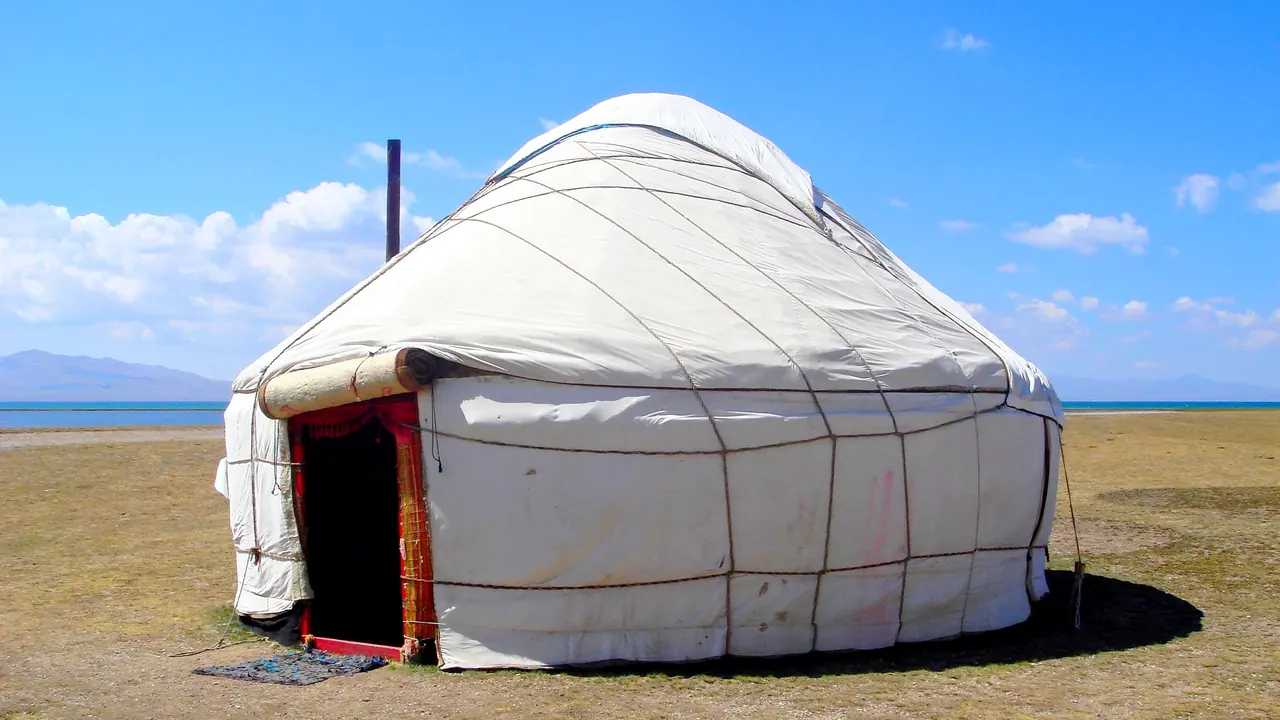
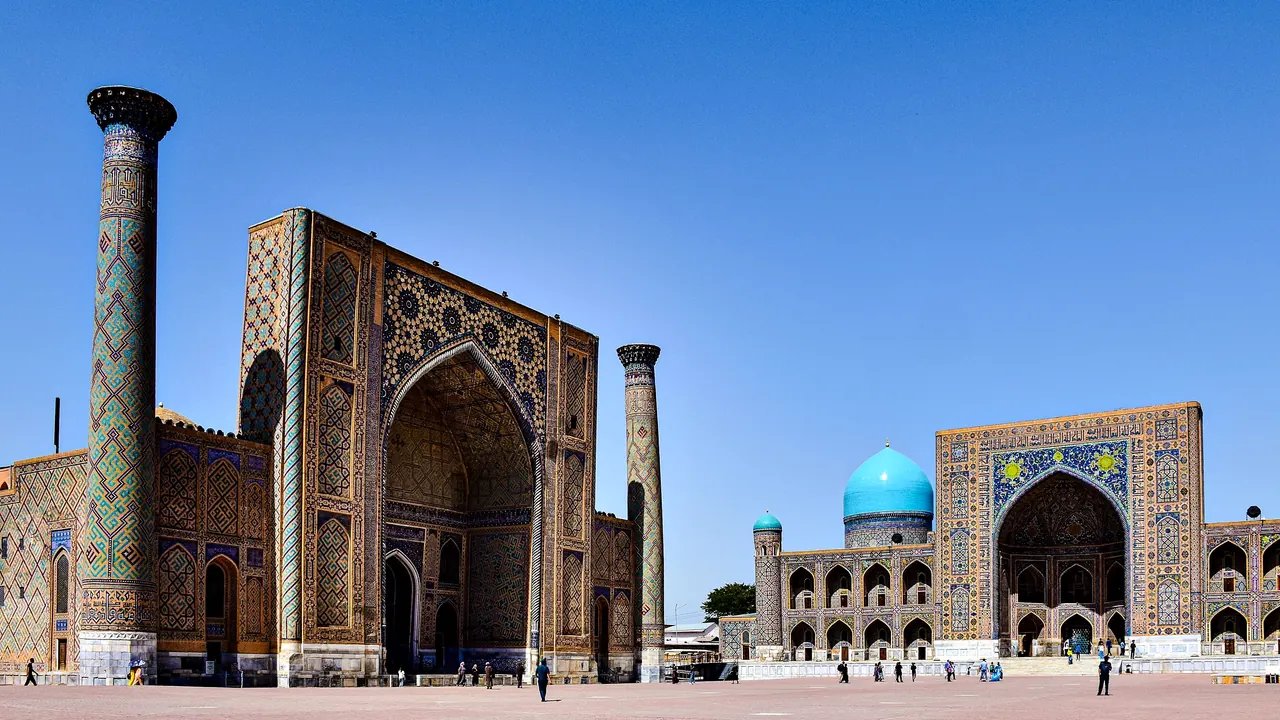
Photos: Kyrgyzstan by Ondřej Žváček, CC BY 2.5, cropped; Uzbekistan by AXP Photography, Pexels License.
Kyrgyzstan or Uzbekistan?
Our verdict in twelve categories, each scored against the same fixed benchmark cities, and the climate month by month, so you can choose for your trip.
Choose Kyrgyzstan for
- nature and the outdoors
- beaches
- prices
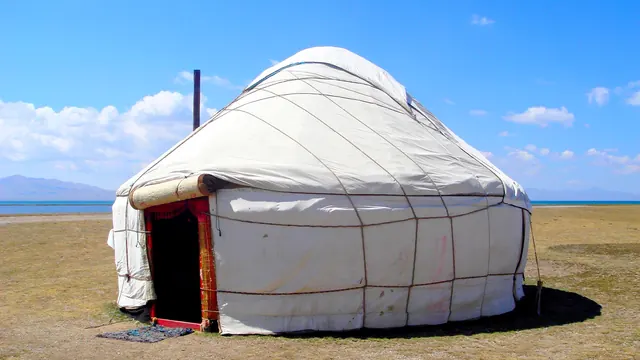
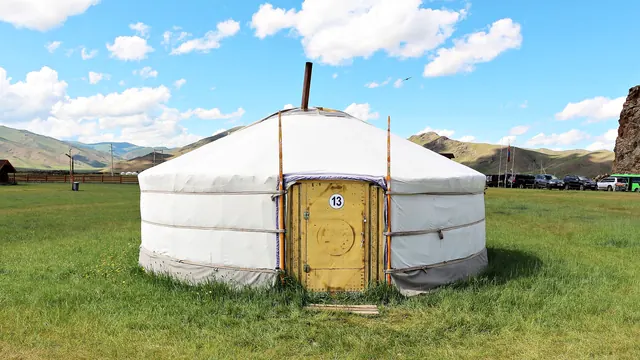
Kyrgyzstan is for travellers who come for the mountains themselves: treks over the passes above Karakol, horse rides and nights in herders' yurts at Song-Kol, then a few lazy days on the shore of Issyk-Kul. It is also the slightly cheaper of the two. In return you get slow roads, plain food and only a handful of historic sites, so it rewards people who would rather sleep under peaks than stand in front of monuments.
Choose Uzbekistan for
- culture and sights
- getting around
- day trips
If the Silk Road in tiled domes and brick minarets is what draws you, Uzbekistan is the clear pick. The Registan in Samarkand, the old trading town of Bukhara and the walled Itchan Kala in Khiva are linked by fast trains, and the bazaars, plov and crafts are richer along the way. The mountains near Tashkent make a pleasant side trip, but you wouldn't plan the whole vacation around them.
Scoreboard
Twelve categories on one fixed scale from 0 to 100. The shaded stretch is the gap between the two.
Your match
Pick a travel style or drag the sliders, and both match scores follow your weighting.
Wins on nature and the outdoors and beaches with your weighting.
Wins on culture and sights and getting around with your weighting.
What matters to you?
Category by category
What the scores mean for a trip.
Beaches & swimming
Neither country has a coast, but Kyrgyzstan has Issyk-Kul, a clear and slightly salty mountain lake. The north shore around Cholpon-Ata and Bosteri has sandy beaches and resorts, and the south shore near Tamga is wilder and quieter. The water warms enough for a pleasant swim only in July and August.
Uzbekistan has almost nothing to compare. Charvak reservoir, about two hours from Tashkent, is where locals swim in summer. In Bukhara or Khiva, swimming means a hotel pool after a hot day.
Where in Kyrgyzstan: Cholpon-Ata, Bosteri, Tamga
Where in Uzbekistan: Charvak Reservoir
Food & drink
The two kitchens share plov, samsa, lagman and manty, but Uzbekistan cooks them with more depth and more regional pride. Samarkand, Bukhara and Khorezm each claim the right plov, Tashkent serves it from big plov centres at lunchtime, and the Chorsu and Siab bazaars are heaped with melons, nuts and dried fruit.
In Kyrgyzstan the best cooking is in Osh, which is close to the Uzbek tradition, and in Karakol, where Dungan dishes like ashlyam-fu add some variety. Out in the mountains, meals are simple guesthouse and yurt-camp food. Vegetarians will struggle in both countries.
Where in Kyrgyzstan: Osh, Bishkek, Karakol
Where in Uzbekistan: Tashkent, Samarkand, Bukhara, Fergana Valley
Culture & sights
This is where the two countries differ most. Uzbekistan is the Silk Road in tile and brick: the Registan, Shah-i-Zinda and Gur-e-Amir in Samarkand, Bukhara's domed arcades and Kalyan minaret, and the complete walled town of Khiva. You could fill two weeks with sights and not run out.
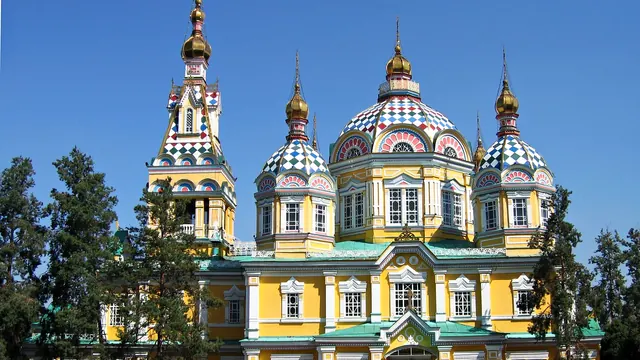
Kyrgyzstan's past was nomadic, and nomads left few buildings. Its sights are far apart: Sulaiman-Too in Osh, the Burana tower, the lonely caravanserai of Tash Rabat, and Karakol's wooden mosque and cathedral. Nomadic culture is better met in yurt camps and at festivals than at monuments.
Where in Kyrgyzstan: Osh, Chui valley, At-Bashy, Karakol
Nightlife
Nightlife is thin in both countries, and in both it is mostly in the capital: bars, karaoke rooms and a few weekend clubs in Bishkek and Tashkent. The difference is outside the capitals. In high summer, Kyrgyzstan's Cholpon-Ata has loud open-air discos and beach bars for a few weeks. In Uzbekistan, evenings in the old towns mean a stroll past the lit monuments and tea on a terrace, and the streets are quiet before midnight.
Where in Kyrgyzstan: Bishkek, Cholpon-Ata
Where in Uzbekistan: Tashkent
Nature & outdoors
Kyrgyzstan is one of the great mountain countries. You can trek from Karakol through Altyn-Arashan to the turquoise lake below the Ala-Kul pass, see the red cliffs of Jeti-Oguz, ride horses at Song-Kol, and walk among glaciers in Ala-Archa, under an hour from Bishkek. Trails are rarely marked, so guides and horses are part of the experience.
Uzbekistan's wild places are mostly at its edges. The Chimgan and Ugam-Chatkal ranges near Tashkent offer walnut forests and summer walks, and the Nuratau mountains and Kyzylkum desert add homestays, yurt camps and camel rides near Aydarkul lake. These are pleasant interludes on a city trip.
Where in Kyrgyzstan: Karakol and the Terskey Ala-Too, Song-Kol, Ala-Archa National Park, Alay Valley
Where in Uzbekistan: Ugam-Chatkal National Park, Chimgan Mountains, Nuratau Mountains, Kyzylkum Desert
Day trips
From Uzbekistan's cities there are good day trips to other historic places. You can cross the pass from Samarkand to Shakhrisabz, visit the emirs' summer palace and the Gijduvan potters from Bukhara, see the desert fortresses of Ayaz Kala and Toprak Kala from Khiva, or tour the silk and ceramic workshops of Margilan and Rishtan.
Kyrgyzstan has few of these. The main ones are the Burana tower from Bishkek, Uzgen from Osh, and the Przhevalsky memorial and Cholpon-Ata petroglyphs from Karakol. Almost every other outing there heads into the mountains.
Where in Kyrgyzstan: Burana Tower, Uzgen, Cholpon-Ata
Where in Uzbekistan: Shakhrisabz, Ayaz Kala and Toprak Kala, Gijduvan, Margilan
Good for families
Children are warmly welcomed in both countries, and Uzbekistan is the slightly easier of the two. Its old towns are safe and mostly free of traffic, Tashkent has amusement parks and a zoo, and children can climb Khiva's ramparts or watch paper being made by water mill at Konigil. Summer heat is the main thing to plan around.
Kyrgyzstan suits adventurous families with older children who like riding and sleeping in yurts. Younger children are easiest on the shallow beaches of Issyk-Kul's north shore. The long mountain drives, basic camps and the altitude at Song-Kol need care.
Where in Kyrgyzstan: Issyk-Kul, Song-Kol, Bishkek
Getting around
Uzbekistan's main route is easy to travel. Fast trains link Tashkent, Samarkand and Bukhara, the old centres are walkable, and Tashkent has a metro. Only Khiva, far to the west, and the desert and mountain sites take more effort.
Kyrgyzstan has almost no passenger trains. Travel is by minibus and shared taxi, which leave when full. Issyk-Kul is easy to get around along its shoreline road, but most valleys need a driver or a 4x4, and the trip from Bishkek to Osh takes most of a day by road, so many people fly.
Shopping & style
Uzbekistan is a real crafts destination. You'll find suzani embroidery and carpets in Bukhara's domed arcades, hand-woven ikat silk in Margilan, blue Rishtan ceramics, silk paper in Samarkand and carved wood in Khiva. Buying straight from the workshops brings the best quality.
Kyrgyzstan's one standout craft is felt: shyrdak carpets and kalpak hats from women's cooperatives in Kochkor and around Issyk-Kul. Beyond that, its shopping is bazaars, with Osh's Jayma bazaar the most interesting. Neither country is for fashion shopping.
Where in Kyrgyzstan: Bishkek, Osh, Kochkor
Where in Uzbekistan: Bukhara, Fergana Valley, Samarkand, Tashkent
Affordability
Both countries are cheap, and Kyrgyzstan is a little cheaper. Homestays in Karakol and Kochkor, yurt camps at Song-Kol and the plov and bread of Osh cost very little. The real expense is reaching remote valleys with a driver, a horse guide or an organised trek.
In Uzbekistan, the guesthouses in Bukhara and Khiva and the fast trains are good value. Costs build up through boutique hotels near the monuments in spring and autumn, and through entry fees at sight after sight, especially in Samarkand.
Where in Kyrgyzstan: Karakol, Kochkor, Song-Kol, Osh
Live music & performing arts
Both capitals have a Soviet-era opera and ballet house. Uzbekistan offers more: the Alisher Navoi Theatre and a long-standing independent theatre scene in Tashkent, plus maqom music and dance in madrasa courtyards in Bukhara and Samarkand.
Kyrgyzstan's distinctive tradition is oral. Manaschi recite the Manas epic from memory, and you are most likely to hear the three-stringed komuz at yurt camps, festivals or the horse games rather than in a concert hall.
Where in Kyrgyzstan: Bishkek
Wellness & relaxation
Kyrgyzstan has the better places to unwind, mostly thanks to water from the ground. You can walk or take a 4x4 up to the wooden radon bathhouses of Altyn-Arashan, and there are older thermal resorts at Jeti-Oguz and Issyk-Ata and mud-cure sanatoriums along Issyk-Kul. All are simple, and the silence of the high pastures does as much good as the springs.
Uzbekistan's version is the steam bath. Bukhara's centuries-old domed hammams still offer a vigorous scrub and massage, and the rest comes from slow afternoons on a tea bed under mulberry trees.
Where in Kyrgyzstan: Altyn-Arashan, Issyk-Kul north shore, Karakol, Issyk-Ata
When should you go?
Pick your month, and for a country the place in it. The climate figures are measured averages, not a forecast.
Where in Kyrgyzstan
Where in Uzbekistan
Bishkek (Kyrgyzstan) in July
Tashkent (Uzbekistan) in July
Daytime high, °C
Rainfall in the month, mm
Temperature and rainfall are climate normals, averaged over the years shown. Bishkek (Kyrgyzstan): 1991-2020 normals, Bishkek (3.3 km from centre). Tashkent (Uzbekistan): 1991-2020 normals, Tashkent (5.1 km from centre).
Kyrgyzstan's season is high summer. From June to September the trekking routes are open, and Karakol, at the foot of the Tian Shan, reaches only about 24°C in July. That's comfortable for walking, though the summer months there are also the wettest, so expect afternoon showers in the mountains. July and August are the only weeks when Issyk-Kul is warm enough for a proper swim. Bishkek is hot and dry in midsummer and very cold in winter, when the high passes can close and skiing near Karakol takes over.
Uzbekistan runs on the opposite calendar. The oasis cities are fiercely hot in summer, with Tashkent near 36°C in July and almost no rain, which makes long days of sightseeing hard work. Spring and autumn are the times to go: Samarkand is around 21°C in April and 22°C in October, and the spring months bring most of the year's rain. Khiva is colder than Samarkand in winter but stays very dry all year. Put simply, choose Kyrgyzstan for July and August and Uzbekistan for April, May, September and October.
Which traveller are you?
On an outdoors trip, choose Kyrgyzstan. Mountains cover almost the whole country, from the Ala-Kul pass above Karakol to the pastures of Song-Kol and the Alay valley. Uzbekistan's Chimgan and Ugam-Chatkal ranges are good for a few days, not for a whole trip.
For a beach and sun trip, Kyrgyzstan is the only real option of the two. Issyk-Kul has sandy beaches at Cholpon-Ata and quieter coves near Tamga in July and August. Landlocked Uzbekistan offers little more than Charvak reservoir and hotel pools.
More comparisons
Each shares a side with Kyrgyzstan or Uzbekistan.
Where else could you go?
Set Kyrgyzstan or Uzbekistan against any other country.