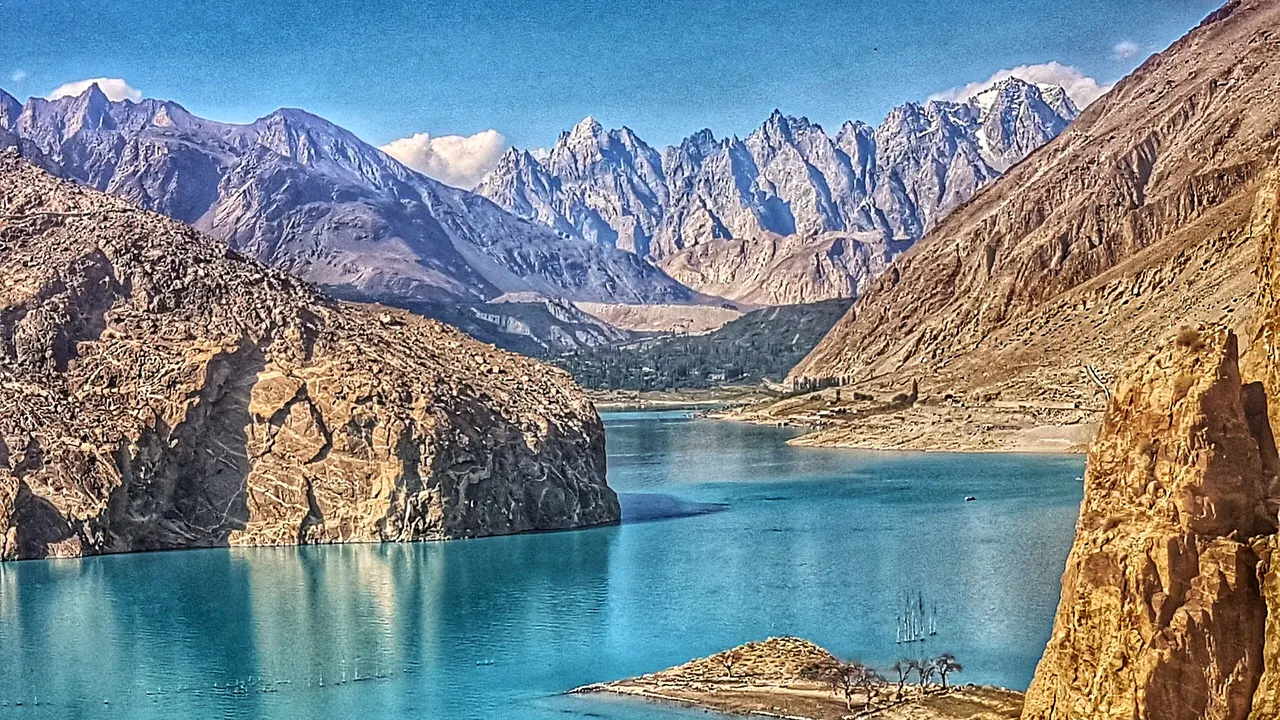
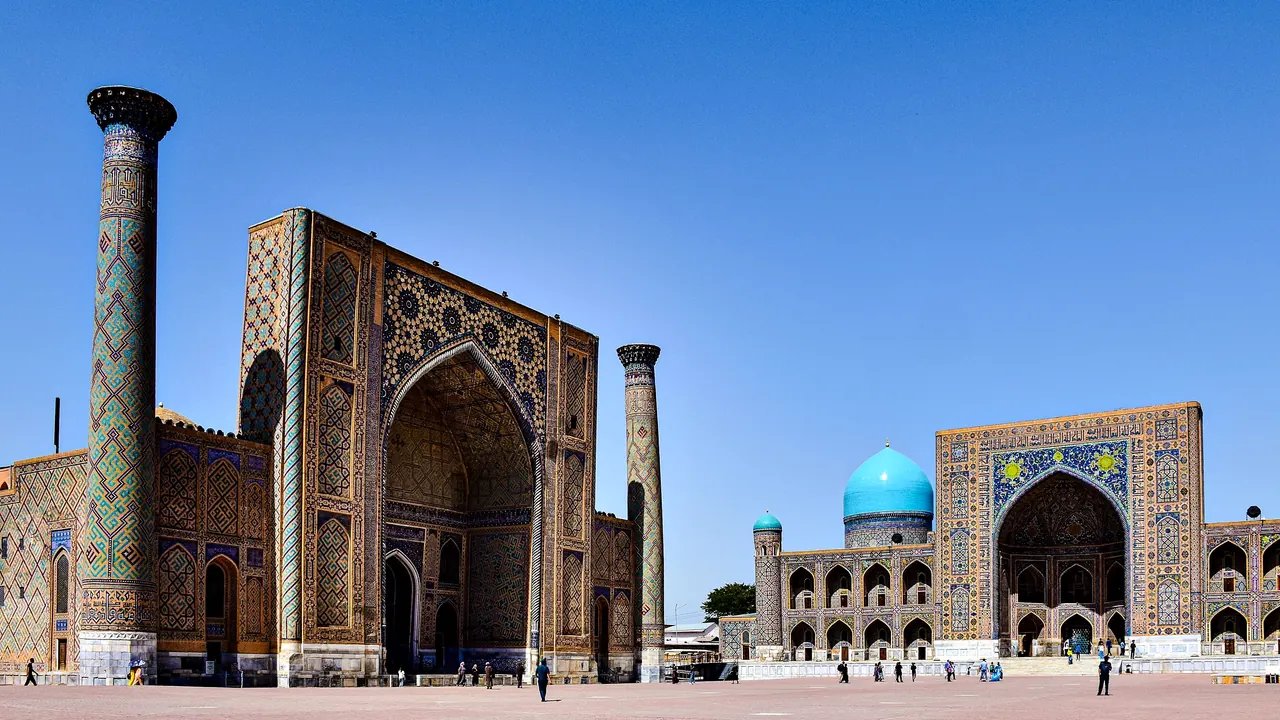
Photos: Pakistan by Ibad ali Momin, CC BY-SA 4.0, cropped; Uzbekistan by AXP Photography, Pexels License.
Pakistan or Uzbekistan?
Our verdict in twelve categories, each scored against the same fixed benchmark cities, and the climate month by month, so you can choose for your trip.
Choose Pakistan for
- nature and the outdoors
- food and drink
- beaches
Pakistan rewards the traveller who wants mountains on a heroic scale and is willing to work for them. The Karakoram around Hunza and Skardu is the strongest thing either country offers. The food of Lahore and Peshawar outshines plov, and money goes further too. The price is effort: long road days, flights that depend on the weather, a driver for most of the journey, and evenings that end over kebabs and chai rather than drinks.
Choose Uzbekistan for
- getting around
- wellness
- nightlife
For a first journey along the Silk Road, Uzbekistan is the easier and more polished choice. Samarkand, Bukhara and Khiva put tiled madrasas and walled old towns a short walk from the guesthouse door, fast trains link the main cities, and the traffic-free old centres work better with children. It suits a traveller who puts architecture first, wants a smooth itinerary and can do without high mountains.
Scoreboard
Twelve categories on one fixed scale from 0 to 100. The shaded stretch is the gap between the two.
Your match
Pick a travel style or drag the sliders, and both match scores follow your weighting.
Too close to call, level with your weighting
Wins on nature and the outdoors and food and drink with your weighting.
Wins on getting around and wellness with your weighting.
What matters to you?
Category by category
What the scores mean for a trip.
Beaches & swimming
Neither country is a beach destination, but Pakistan at least has a coast. The sandy beaches west of Karachi, such as Hawke's Bay and Sandspit, make a day out under a rented hut. The empty Makran shore around Kund Malir is an expedition in its own right. Swimming there is modest and fully clothed, and the monsoon swell closes the sea in summer.
Uzbekistan is landlocked, and the old Aral shore near Moynaq is now desert. Its one real place to swim is the Charvak reservoir in the mountains near Tashkent. Otherwise you are left with a hotel pool after a hot day in Bukhara.
Where in Pakistan: Makran coast, Karachi
Where in Uzbekistan: Charvak Reservoir
Food & drink
Pakistan eats better and more widely. Lahore alone, with nihari at breakfast and karahi late at night around Gawalmandi, would justify the trip. Karachi's Burns Road, Peshawar's Namak Mandi and Quetta's sajji each add their own regional style. The cooking is meat-heavy, there is almost no alcohol, and hygiene asks some care.
Uzbekistan's table is narrower, built around plov, samsa, lagman and bread. It is at its best in the Chorsu and Siab bazaars and among the Fergana Valley's late-summer fruit. It satisfies for a week rather than surprising you, and vegetarians will find it hard going.
Where in Pakistan: Lahore, Karachi, Peshawar, Quetta
Where in Uzbekistan: Tashkent, Samarkand, Bukhara, Fergana Valley
Culture & sights
Pakistan's heritage is older and spread wider, from Mohenjo-daro and the Gandhara ruins of Taxila to Lahore's Badshahi Mosque and the Sufi shrines of Multan. But the sites lie far apart and are unevenly kept, and that pulls the experience down.
Uzbekistan wins on concentration and upkeep. The Registan and Shah-i-Zinda in Samarkand, Bukhara's intact brick old town and Khiva's walled Itchan Kala form a chain of great ensembles linked by train, each best explored on foot. Choose Pakistan only if the Indus and Gandhara layers are what you are after.
Where in Pakistan: Lahore, Sindh, Taxila, Multan
Nightlife
Pakistan has effectively no bar or club scene, and a night out means late eating on Lahore's food streets or Karachi's Burns Road. Uzbekistan offers a little more because alcohol is easy to find. Tashkent has cocktail and beer bars, a few clubs and karaoke rooms. Samarkand, Bukhara and Khiva go quiet early, and the evening there is dinner and a stroll past the lit monuments.
Where in Pakistan: Lahore, Karachi
Where in Uzbekistan: Tashkent
Nature & outdoors
This is Pakistan's clearest advantage. Hunza beneath Rakaposhi, the Baltoro trek from Skardu towards K2, Fairy Meadows facing Nanga Parbat and the wildflowers of the Deosai plateau make up some of the grandest mountain country anywhere. The Swat valley adds gentler, greener hills further south.
Uzbekistan's outdoors are pleasant rather than grand. There are walnut forests and summer hiking in the Chimgan and Ugam-Chatkal ranges near Tashkent, village homestays in the Nuratau mountains, and yurt camps by Aydarkul lake in the Kyzylkum. They add variety to a city trip, whereas in Pakistan the mountains are the trip.
Where in Pakistan: Hunza Valley, Skardu and Baltistan, Fairy Meadows and Nanga Parbat, Swat Valley
Where in Uzbekistan: Ugam-Chatkal National Park, Chimgan Mountains, Nuratau Mountains, Kyzylkum Desert
Day trips
Both countries offer a fair choice of outings, but of different kinds. Pakistan's are mostly history from a city base. Islamabad is the best base, with Taxila under an hour away and Murree, Katas Raj and Rohtas a little further. From Karachi, the Makli necropolis and Thatta are under two hours away.
Uzbekistan's day trips lean towards crafts and desert ruins: Shakhrisabz over the pass from Samarkand, the ceramic workshops of Gijduvan near Bukhara, and the mud-brick fortresses of Ayaz Kala and Toprak Kala from Khiva. In both countries the great cities are separate stops rather than outings from one another.
Where in Pakistan: Islamabad, Lahore, Karachi
Where in Uzbekistan: Shakhrisabz, Ayaz Kala and Toprak Kala, Gijduvan, Margilan
Good for families
Children are warmly received in both countries, but Uzbekistan is easier to travel with. Its old towns are safe and largely free of traffic. Khiva's ramparts and craftsmen and the Konigil paper mill near Samarkand hold children's attention, and Tashkent has amusement parks and a zoo.
In Pakistan, the heat of the plains, chaotic traffic and the care needed over food and water weigh more heavily. The cool hill valleys of Swat and Hunza lie at the end of long, winding drives. It is better kept for older children with a taste for adventure.
Where in Pakistan: Hunza Valley, Lahore, Swat Valley
Getting around
Uzbekistan's classic route is simple. Fast trains link Tashkent, Samarkand and Bukhara, and the old centres are easy to walk. Only Khiva's distance and the mountain and desert trips call for a flight, a long train ride or a driver.
Pakistan asks far more. The motorways between Islamabad, Lahore and Peshawar are good, but most visitors end up with a car and driver, and city centres are not walkable in the heat and traffic. The north depends on weather-bound flights to Skardu and Gilgit or long days on the Karakoram Highway.
Shopping & style
Both are bazaar countries with little international luxury, but they sell different things. Pakistan is about cloth and tailoring. Lahore's Anarkali and Liberty Market sell fabric and lawn fashion, and a tailor can make it into a suit within days. Karachi has ajrak, Peshawar's Qissa Khwani has carpets and copperware, and Multan has its blue pottery.
Uzbekistan is about handmade crafts: suzani and carpets in Bukhara's domed arcades, ikat silk woven in Margilan, Rishtan ceramics and Khiva's carved wood. Buy from the workshops there, and expect to bargain in Pakistan.
Where in Pakistan: Lahore, Karachi, Peshawar, Multan
Where in Uzbekistan: Bukhara, Fergana Valley, Samarkand, Tashkent
Affordability
Both countries are cheap, and Pakistan is cheaper. Lahore's food streets, rickshaws and modest entry fees cost very little, and Peshawar costs less still. Hunza's family guesthouses keep even a mountain stay affordable, so the real expense is a car and driver.
Uzbekistan stays inexpensive for food, trains and the guesthouses of Bukhara and Khiva. Costs climb with boutique hotels near the monuments in the peak seasons and with the many sites that charge separately, above all in Samarkand.
Where in Pakistan: Lahore, Peshawar, Hunza Valley
Live music & performing arts
Neither country has a large stage life, and what each offers is very different. Pakistan's draw is devotional: qawwali on Thursday evenings at Lahore's Data Darbar and the shrines of Multan, and the drumming and whirling dhamaal at Sehwan Sharif. Programmes at the Alhamra arts centre and Karachi's Arts Council are irregular.
Uzbekistan offers formal theatre instead, with opera and ballet at Tashkent's Alisher Navoi Theatre. Elsewhere there are folklore evenings of dance and maqom music in the madrasa courtyards of Bukhara and Samarkand.
Wellness & relaxation
Uzbekistan has the edge, mainly thanks to Bukhara's centuries-old hammams, still in use with steam, a scrub and massage. Pakistan's Shahi Hammam in Lahore is a monument rather than a working bath, and its hot springs at Tatta Pani are roadside stops. In both countries rest comes more from the pace than from treatments: tea beds and quiet courtyards in Bukhara and Khiva, orchard guesthouses in Hunza and Skardu.
Where in Pakistan: Hunza Valley, Skardu and Baltistan
When should you go?
Pick your month, and for a country the place in it. The climate figures are measured averages, not a forecast.
Where in Pakistan
Where in Uzbekistan
Lahore (Pakistan) in July
Tashkent (Uzbekistan) in July
Daytime high, °C
Rainfall in the month, mm
Temperature and rainfall are climate normals, averaged over the years shown. Lahore (Pakistan): 1991-2020 (sunshine 1961-1990) normals, Lahore City (1 km from centre). Tashkent (Uzbekistan): 1991-2020 normals, Tashkent (5.1 km from centre).
Pakistan's seasons depend on altitude. Lahore is at its best from October to March, mild and mostly dry, and Islamabad is pleasant then too, though its late winter brings real rain, with 108mm in February. From April the plains heat up, reaching 39°C in Lahore in May and June, and the monsoon brings heavy rain in July and August. That is just when the north opens: Hunza is pleasant from May to October, and the high treks are best in midsummer.
Karachi's sea is warm all year, but the monsoon swell makes it rough from June to September, so October to December, with clear skies and warm water, suits the coast best.\n\nIn Uzbekistan the rain falls in winter and spring, and summer is almost rainless. March and April are mild but among Samarkand's wettest months, so the most reliable weather for walking the old towns comes in late May, September and October, with Samarkand near 29°C in September and hardly any rain. July is hot, close to 36°C in both Tashkent and Khiva, and winter is properly cold, with Khiva at 2°C in January. So Pakistan's lowlands are at their best in winter, while Uzbekistan is best in the months either side of summer.
Which traveller are you?
On an outdoors trip, Pakistan is the clear choice. You can walk among the glaciers at Passu, follow the Karakoram Highway towards the Khunjerab Pass or explore the lakes of the greener Kaghan valley. Uzbekistan's juniper slopes at Zaamin and its winter skiing at Chimgan are modest beside them.
For a culture and arts trip, Uzbekistan is the easier pick. Timur's Gur-e-Amir, the Kalyan minaret and the Ark fortress fit an unhurried rail route, with Tashkent's ornate metro stations and its opera along the way. Pakistan's Gandhara and Indus sites take far more travel to reach.
On a trip on a tight budget, Pakistan goes furthest. Cheap but slow trains, dhaba meals and endless cups of chai keep daily costs almost nominal, and only a hired driver adds much. Uzbekistan is also inexpensive, helped by lunchtime plov and modest fast-train fares.
More comparisons
Each shares a side with Pakistan or Uzbekistan.
Where else could you go?
Set Pakistan or Uzbekistan against any other country.