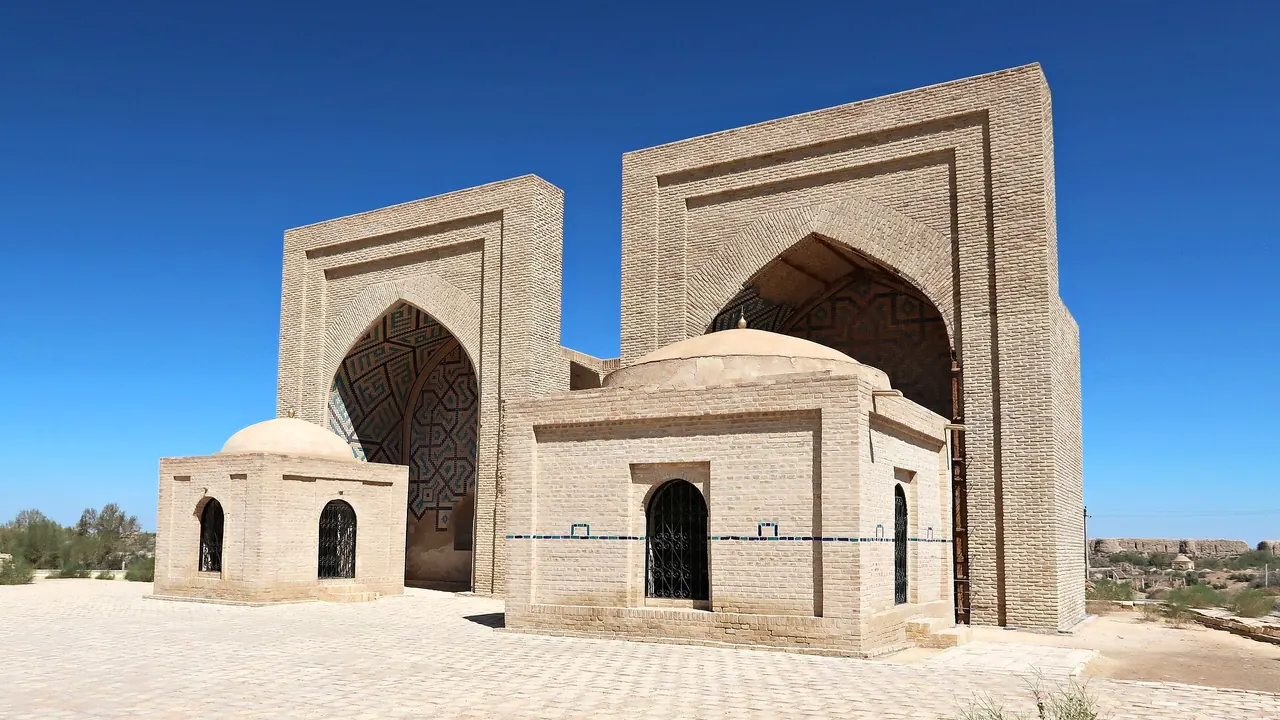
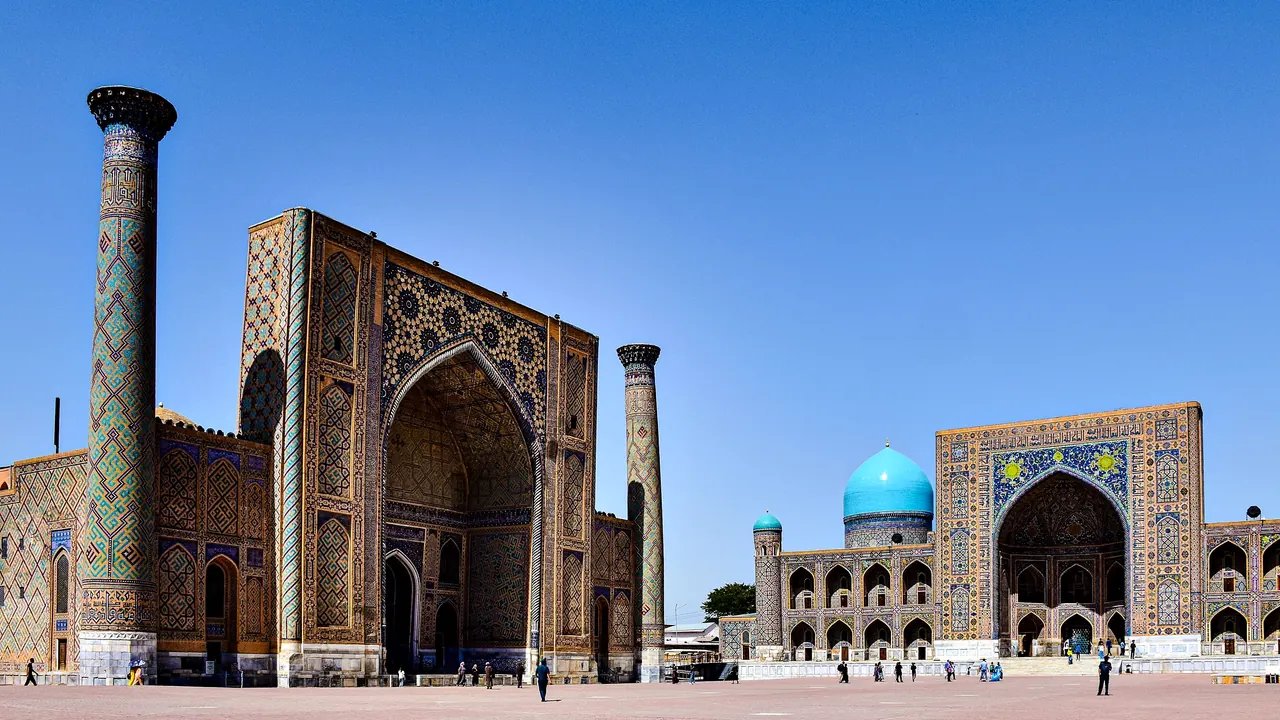
Photos: Turkmenistan by John Pavelka, CC BY 2.0, cropped; Uzbekistan by AXP Photography, Pexels License.
Turkmenistan or Uzbekistan?
Our verdict in twelve categories, each scored against the same fixed benchmark cities, and the climate month by month, so you can choose for your trip.
Choose Turkmenistan for
- beaches
Turkmenistan suits the traveller who wants the stranger, less visited side of Central Asia and doesn't mind a guided, pre-arranged trip to get it. You come for the burning crater at Darvaza, the vast mud-brick ruins of Merv and the marble and gold of Ashgabat, and you can end with a few days of warm water at Avaza on the Caspian. It is an expedition more than a vacation, best for readers of history and curious photographers.
Choose Uzbekistan for
- getting around
- prices
- culture and sights
Uzbekistan is the easier and richer choice for almost everyone else. The tiled Silk Road cities of Samarkand, Bukhara and Khiva are still standing, fast trains link them, and the old centres are made for walking. Food, crafts and evenings are all livelier, and the trip costs far less, so it works for first-timers, independent travellers and anyone who wants the great monuments without an agency running the plan.
Scoreboard
Twelve categories on one fixed scale from 0 to 100. The shaded stretch is the gap between the two.
Your match
Pick a travel style or drag the sliders, and both match scores follow your weighting.
Wins on beaches with your weighting.
Wins on getting around and prices with your weighting.
What matters to you?
Category by category
What the scores mean for a trip.
Beaches & swimming
Turkmenistan has the edge simply because it has a coast. Avaza, beside Turkmenbashi on the Caspian, is a purpose-built resort with long flat sand and warm, shallow water from late June into September. It has big hotels and a promenade rather than coves or villages, and since it means a domestic flight away from the ancient sites, it is a short add-on, not a reason to come.
Uzbekistan is landlocked, and the Aral Sea's old shore near Moynaq is now desert. Swimming means Charvak reservoir in the mountains about two hours from Tashkent, where locals rent lakeside guesthouses in summer, or a hotel pool after a hot day in Bukhara.
Where in Turkmenistan: Avaza, Turkmenbashi
Where in Uzbekistan: Charvak Reservoir
Food & drink
The two countries share a table of plov, shashlik, manty and tandoor bread, but Uzbekistan does far more with it. Tashkent's lunchtime plov centres and regional rivalries over the right recipe, the heaped Chorsu and Siab bazaars, the Fergana Valley's orchard fruit and Tashkent's Korean and Russian cooking give you real variety to eat your way through.
Turkmenistan's cooking is plainer and gets repetitive outside Ashgabat, though it has its own desert dishes worth seeking out: ichlekli, a meat pie baked in hot sand, and chal, sour camel milk. Mary's bazaar canteens are the most direct taste of it. Vegetarians will struggle in either.
Where in Turkmenistan: Ashgabat, Mary
Where in Uzbekistan: Tashkent, Samarkand, Bukhara, Fergana Valley
Culture & sights
Uzbekistan holds the Silk Road at its most complete. Samarkand's Registan, Shah-i-Zinda and Gur-e-Amir, the low brick city of domes and arcades in Bukhara and the turquoise minarets inside Khiva's walls are standing buildings you can walk through, and the Savitsky Museum in Nukus adds a rare avant-garde collection.
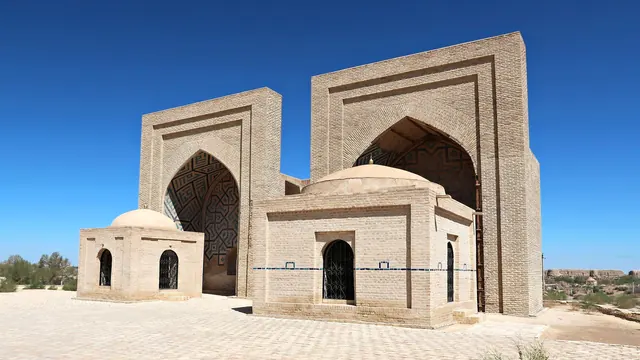
Turkmenistan's history is older in feel and harder to read. Merv's walled cities and Sultan Sanjar's mausoleum, the Parthian fortress at Nisa and the Kutlug Timur minaret at Kunya-Urgench reward people who arrive having done their reading. Ashgabat's white marble monuments and its Carpet Museum are its own strange draw.
Where in Turkmenistan: Merv, Ashgabat, Kunya-Urgench, Nisa
Nightlife
Neither country is somewhere you go out, but Uzbekistan at least has a little. Tashkent has cocktail and beer bars, a few clubs and karaoke rooms that fill up at weekends, and alcohol is easy to find. In Turkmenistan the evening stops at a hotel bar or a restaurant with music, and Ashgabat's boulevards are empty late at night. In both, the old towns and provincial cities end the day with dinner and a walk past the floodlit monuments.
Where in Uzbekistan: Tashkent
Nature & outdoors
There is little between them on the outdoors, but the landscapes are very different. Turkmenistan's are desert spectacles: the burning Darvaza crater, where you camp in the dunes at night, the coloured cliffs of Yangikala canyon, and remote Koytendag with its dinosaur footprints. Every one of them means a 4x4 and a guide, with no marked trails.
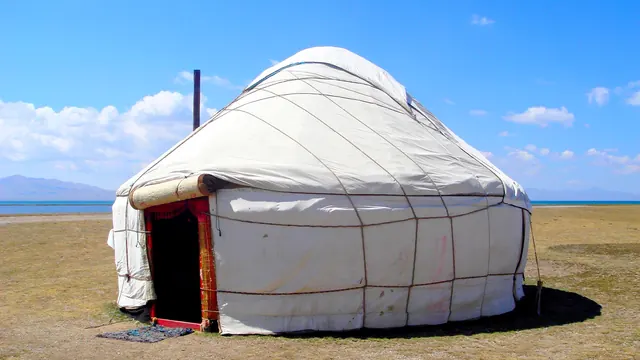
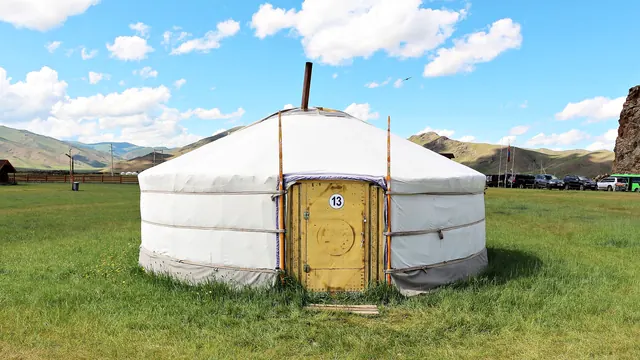
Uzbekistan's best scenery is in its mountains. The Chimgan and Ugam-Chatkal ranges near Tashkent have walnut forests, summer hiking and winter skiing, the Nuratau has village homestays among petroglyphs, and near Aydarkul lake you can stay in a yurt camp. In both countries, aim for spring or autumn.
Where in Turkmenistan: Darvaza, Yangikala Canyon, Kopet Dag, Koytendag
Where in Uzbekistan: Ugam-Chatkal National Park, Chimgan Mountains, Nuratau Mountains, Kyzylkum Desert
Day trips
Uzbekistan gives each base outings that are worth the day: Shakhrisabz over the Takhtakaracha pass from Samarkand, the emir's summer palace and Gijduvan's potteries from Bukhara, the Khorezm desert fortresses from Khiva, and the silk and ceramic workshops of Margilan and Rishtan in the Fergana Valley.
Turkmenistan's outings are narrower and always need a driver. From Ashgabat you can reach Nisa, Anau and the Kow Ata cave lake, from Mary the ruins of Merv, and from Dashoguz Kunya-Urgench. It works better as one long route than as a set of bases.
Where in Turkmenistan: Ashgabat, Mary, Dashoguz
Where in Uzbekistan: Shakhrisabz, Ayaz Kala and Toprak Kala, Gijduvan, Margilan
Good for families
Neither is an easy family trip, but Uzbekistan is the kinder of the two. Children can climb Khiva's ramparts and watch potters at work, the water-mill paper workshop at Konigil near Samarkand holds their attention, and Tashkent has amusement parks and a zoo. The old towns are largely free of traffic.
Turkmenistan has Ashgabat's fairy-tale amusement park and indoor ferris wheel, and calm shallow water at Avaza in summer. In between come long, hot drives to ruins on a fixed schedule. Both countries welcome children warmly.
Where in Turkmenistan: Ashgabat, Avaza
Getting around
This is where the two differ most in practice. In Uzbekistan the classic route runs by fast train from Tashkent to Samarkand and on to Bukhara, the old centres are compact enough to walk, and Tashkent has a metro and cheap ride-hailing taxis. Only Khiva, the mountains and the desert need a long train, a flight or a hired driver.
In Turkmenistan you can barely travel independently. Visits are normally arranged through an agency with a guide and driver, domestic flights cover the long distances, and Ashgabat's monumental layout is not made for walking.
Where in Turkmenistan: Ashgabat
Shopping & style
Uzbekistan spreads its crafts across the country: suzani embroidery and stork-shaped scissors in Bukhara's domed arcades, hand-woven ikat in Margilan, blue Rishtan ceramics, Samarkand silk paper and Khiva woodcarving. Buy from the workshops, where quality is more reliable.
Turkmenistan has one great reason to shop: carpets. The deep red gul-patterned weaving at Ashgabat's Altyn Asyr bazaar, busiest on Sundays, is among the finest in the region, but you need an export certificate, so use sellers who can arrange one. Beyond carpets and textiles there is little to buy.
Where in Turkmenistan: Ashgabat
Where in Uzbekistan: Bukhara, Fergana Valley, Samarkand, Tashkent
Affordability
Uzbekistan is much cheaper as a trip, mainly because you can travel it your own way. Family guesthouses in Bukhara and Khiva, cheap trains, the Tashkent metro and bazaar meals keep costs low. The bill only rises with boutique hotels in peak season, private drivers and the many ticketed sites in Samarkand.
In Turkmenistan the everyday prices are low too, but the required guide, driver and permits, along with Ashgabat's expensive state-built hotels, push the total well above them. Mary is the cheapest place to stay, and travelling as a group brings the cost per person down.
Where in Turkmenistan: Mary
Live music & performing arts
Both countries keep their serious stage life in the capital, but Tashkent's is easier to get to. The Alisher Navoi Theatre stages opera and ballet through the season and tickets are easy to buy. Outside the capital, maqom music and dance in the madrasa courtyards of Bukhara and Samarkand make a good evening, and the Sharq Taronalari festival sometimes fills the Registan.
Ashgabat's Magtymguly Theatre and its drama and puppet theatres perform mostly in Turkmen and Russian, but programmes are hard to find and a guided schedule leaves little time for them. The bakhshi singing with dutar is usually heard at a folk evening put on for groups.
Where in Turkmenistan: Ashgabat
Wellness & relaxation
Turkmenistan's bathing comes out of the ground. At Kow Ata you climb about 60 metres down into a cave near Ashgabat to swim in a warm, sulphurous mineral lake. Near Balkanabat, Mollagara has mud baths in the old sanatorium style, and the big hotels at Avaza add spas and pools.
Uzbekistan's bathing belongs to its towns. Bukhara's centuries-old domed hammams still offer steam and a hard scrub. The deeper rest comes from slow afternoons on raised tea beds under mulberry trees, and from quiet courtyard guesthouses once the day visitors leave Bukhara and Khiva. In both countries these are pleasant pauses, not a reason to travel.
Where in Turkmenistan: Kow Ata, Mollagara, Avaza
When should you go?
Pick your month, and for a country the place in it. The climate figures are measured averages, not a forecast.
Where in Uzbekistan
Ashgabat (Turkmenistan) in July
Tashkent (Uzbekistan) in July
Daytime high, °C
Rainfall in the month, mm
Temperature and rainfall are climate normals, averaged over the years shown. Ashgabat (Turkmenistan): 1991-2020 normals, Ashgabat Keshi (4.8 km from centre). Tashkent (Uzbekistan): 1991-2020 normals, Tashkent (5.1 km from centre).
April and October are the best months in both countries. Ashgabat is the one point measured for Turkmenistan, and there days reach about 24°C in those months, which is good weather for long hours at Nisa or among the capital's monuments. May is already turning hot. Summer in Ashgabat is fierce, with July close to 39°C and almost no rain from June to September. That makes summer the season for a beach stop at Avaza rather than for ruins. Winter is cool and short of sun, and most of Ashgabat's rain falls from late winter into spring, with March the wettest month.
Uzbekistan's cities are a little milder. Samarkand and Tashkent reach about 21°C to 22°C in April and October, and May and September are still fine for walking, if warm. These two cities get more rain than Ashgabat, spread from November to May. Khiva in the far west stays dry all year but has the hardest winter, with January days around 2°C.
Which traveller are you?
On a beach and sun trip, Turkmenistan is the only one of the two with a real sea. Avaza's long Caspian sand and shallow water make a warm finale in summer. Uzbekistan offers just a mountain reservoir at Charvak and hotel pools.
More comparisons
Each shares a side with Turkmenistan or Uzbekistan.
Where else could you go?
Set Turkmenistan or Uzbekistan against any other country.