Ashgabat
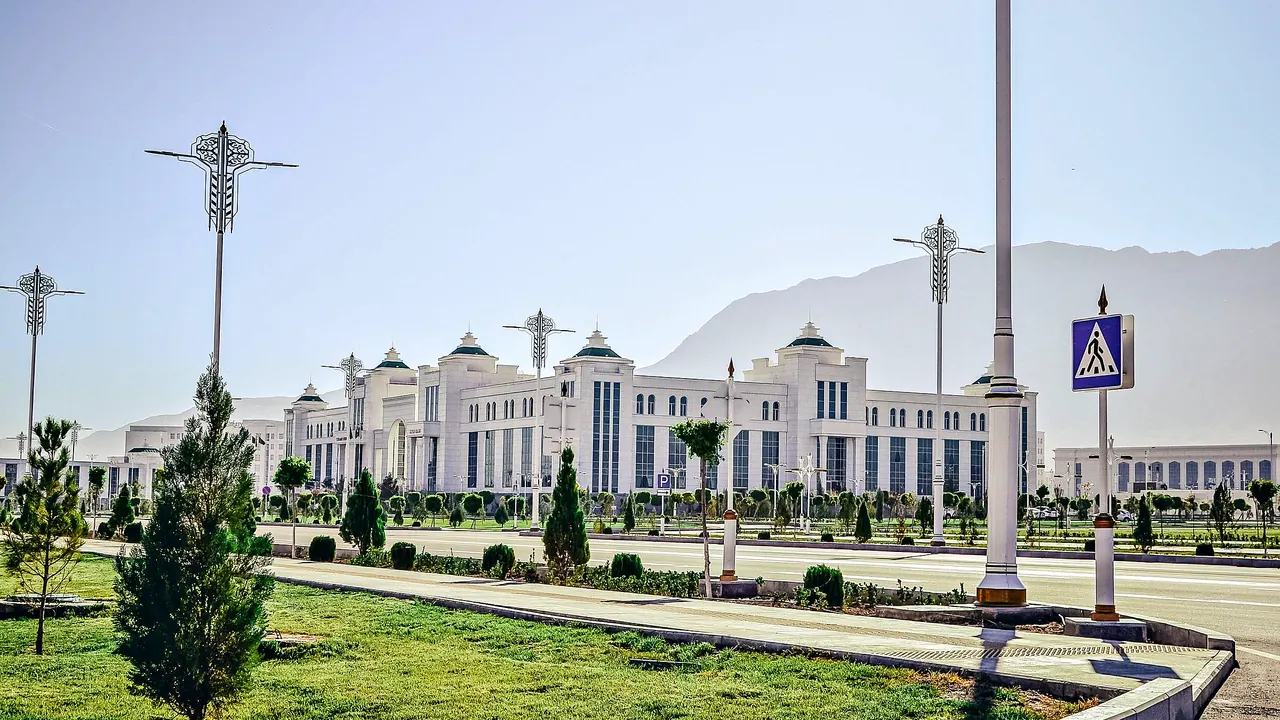
A white government building with ornate lamp posts in Ashgabat
- Culture & sights45
- Getting around40
- Nature & outdoors38
Photo: IGaragin, Pexels License
Match
30
Every category weighted equally
- Beach & sun27
- Culture & arts33
- Food & nightlife29
- Family trip32
- Outdoors32
- Relax & unwind29
- Shopping & style31
- On a budget31
Ashgabat in twelve categories
Our verdict on each, scored 0 to 100 against the same fixed benchmark cities, so a score means the same thing on every page.
Beaches & swimming. Scores 4 out of 100.
Food & drink. Scores 35 out of 100.
Culture & sights. Scores 45 out of 100.
Nightlife. Scores 10 out of 100.
Nature & outdoors. Scores 38 out of 100.
Day trips. Scores 33 out of 100.
Good for families. Scores 33 out of 100.
Getting around. Scores 40 out of 100.
Shopping & style. Scores 33 out of 100.
Affordability. Scores 38 out of 100.
Live music & performing arts. Scores 25 out of 100.
Wellness & relaxation. Scores 27 out of 100.
Ashgabat category by category
Beaches & swimming
4Ashgabat is a desert city far from any sea. The Caspian coast lies on the other side of the country, a flight or a very long drive away, so swimming during a stay here means a hotel pool. The warm underground lake at Kow Ata, about two hours away, is closer to a spa outing than a swim.
Food & drink
35Turkmen cooking is the food of a herding culture: plov heavy with mutton and carrots, shashlik grilled over coals, steamed manty dumplings, fried meat pastries called ishlekli and gutap, and the round chorek bread baked in clay ovens. Green tea goes with everything. The best place to meet it is a bazaar, where the Russian Bazaar in the centre sells melons, dried fruit, spices and smoked fish under one roof.
Beyond that the offer is short. Restaurants lean towards Turkish, Russian and generic international menus, many sit inside hotels, and there is no café or street-food culture to speak of. Eating is plain, filling and pleasant rather than a reason to come.
Culture & sights
45The city itself is the sight: a capital rebuilt almost entirely in white marble, with wide empty boulevards, gilded statues, fountains, the Independence Monument, the Neutrality Monument and ministries shaped like the things they govern. Seen at night under coloured floodlights, it is one of the most unusual urban landscapes anywhere, though it was flattened by the earthquake of 1948 and almost nothing older survives.
The substance is in the museums. The Carpet Museum holds some of the largest and finest hand-knotted carpets in Central Asia, and the National Museum has Parthian ivory rhytons from Nisa and Bronze Age finds from the Margiana sites. The huge Turkmenbashy Ruhy Mosque at Kipchak and the Ertugrul Gazi Mosque round out a visit of two or three days. Photography near official buildings is often discouraged.
Nightlife
10Ashgabat goes to bed early. The boulevards are lit up and nearly deserted after dark, and going out amounts to a drink in a hotel bar, a beer restaurant or one of a handful of discreet clubs, most of which wind down well before midnight. There are no bar districts and little street life in the evenings; dinner and a walk past the illuminated monuments is the typical night.
Nature & outdoors
38The bare, folded ridges of the Kopet Dag rise directly south of the city, and the foothills offer short walks, picnic valleys such as Gökdere and views back over the white towers to the Karakum desert. Further along the range, the mountain village of Nokhur has walnut groves and rocky gorges. Spring is the season, when the slopes turn briefly green and poppies cover the plain; summer is fiercely hot.
There is little organised outdoor activity: few marked trails, no gear rental culture, and parts of the range close to the Iranian border need permits. The Darvaza gas crater in the Karakum desert is the famous outing, but it is a long drive north and usually an overnight camping trip.
Day trips
33The best short outing is Old Nisa, the mud-brick fortress of the Parthian kings, a short drive west of the city on a hill below the mountains. East of town are the ruins of the Anau mosque, once decorated with dragon mosaics and toppled by the 1948 earthquake, and to the west the fortress of Geok Depe, scene of the 1881 battle against Russian forces, with a large mosque beside it.
The country's great heritage sites, ancient Merv and Kunya-Urgench, are many hours away by road or reached by domestic flight, so they belong to a longer itinerary rather than a day out from the capital.
Good for families
33Ashgabat is orderly, clean and calm, and its parks and fountain squares give children room to run. The main attraction built for them is a large amusement park themed on Turkmen fairy tales, and there is a circus and a few big malls with play areas. Beyond that there is little aimed at children: the sights are monuments and museums, distances between them are long, and summer temperatures that often pass 40°C make outdoor time hard. Spring and autumn are the only comfortable seasons with young children.
Getting around
40Ashgabat was laid out for cars and ceremony rather than walkers. The marble districts stretch for kilometres along broad avenues with long gaps between monuments, so walking works only within a single area, such as around the central parks. City buses are clean and reach most districts but are hard to use without Russian or Turkmen, and most visitors rely on taxis or a driver, which traffic rarely slows. Many visits are arranged with a guide and vehicle, which removes the problem but also much of the independence.
Shopping & style
33The one great shopping experience is the Altyn Asyr bazaar, known as Tolkuchka, a vast market on the desert edge of town where on weekends the carpet section fills with hand-knotted rugs, alongside camel-wool shawls, embroidered skullcaps, silver jewellery and the tall sheepskin telpek hats. Carpets are the serious buy, and exporting one involves official paperwork.
In the centre, the Russian Bazaar is good for food and small souvenirs, and there are several large marble malls, but international brands are scarce and there are no boutique streets or design shops to browse.
Affordability
38Ashgabat is a city of two price levels. Local life is cheap: bazaar food, taxis, buses and museum entry cost little. What a foreign visitor actually pays for is different, because hotels charge high rates for rooms of uneven quality and most trips are built around a guide, a driver and agency arrangements, which raise the cost of a stay well above what the streets suggest. Budget travel in the usual sense is hard to arrange here.
Live music & performing arts
25Ashgabat's performing arts sit within a small circle of state institutions. The Magtymguly National Music and Drama Theatre is the house where opera and ballet are staged, alongside Turkmen musical drama. The city also has a Russian-language drama theatre named after Pushkin, a philharmonic hall for classical and orchestral concerts, and a state circus. Programmes favour national drama, folk ensembles and the standard classical repertoire, but schedules are hard to find in advance and few visitors attend.
The most distinctive tradition is that of the bagshy, singers who perform epic poems to the two-stringed dutar. You are most likely to hear them at cultural events and folk performances, not in regular venues. There is no jazz or independent live-music circuit to speak of.
Wellness & relaxation
27Ashgabat has no bathing tradition of its own, and wellness in the city means a few hotel spas and saunas. The notable exception lies about two hours west: Kow Ata, a cave where a long stairway leads down to a sulphurous underground lake that stays around 33°C all year, a place locals visit to soak. The city itself is quiet and uncrowded, which makes it calm rather than restorative, but there is little built around slowing down.
When should you go?
Pick a month to see what it is like. The climate figures are measured averages, not a forecast.
Ashgabat in July
Daytime high, °C
Rainfall in the month, mm
The whole year
Shaded against this destination’s own year: the deepest cell is its best month for that figure and the palest its weakest.
Temperature and rainfall are climate normals, averaged over the years shown. Ashgabat: 1991-2020 normals, Ashgabat Keshi (4.8 km from centre).
Before you go
| Measure | Ashgabat |
|---|---|
| Official language | Turkmen |
| Currency | Turkmenistan New Manat (TMT) |
| Sockets | BCF220 V, 50 Hz |
| Driving side | Right |
| Time zone | UTC+5 |
| Emergency number | 112 |
| Elevation | 219 m |
| Main airport | Ashgabat International Airport (ASB)5 km from centre19 non-stop destinations |
By the numbers
| Measure | Ashgabat |
|---|---|
| Population | 1,030,063 |
| People per km² | 1,346 |
| Museums within 10 km | 3 |
| UNESCO World Heritage sites within 50 km | 1 |
Compare Ashgabat with
Every comparison with a written verdict behind it.