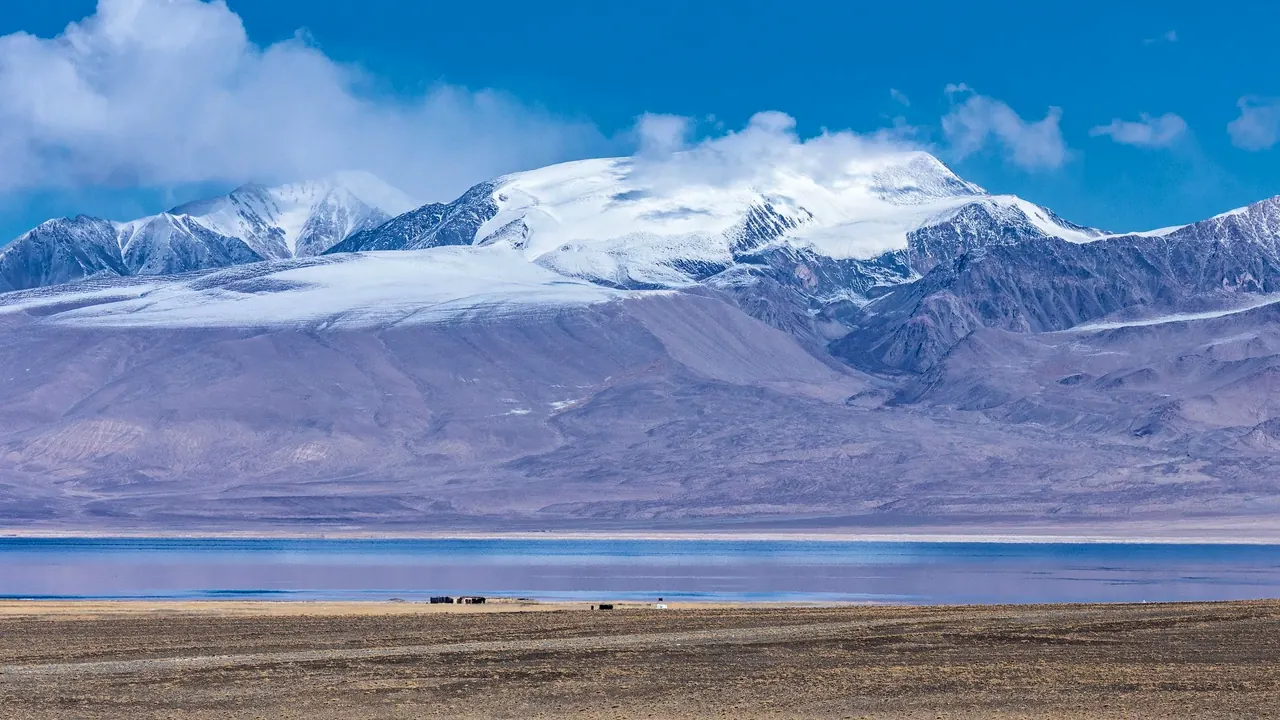
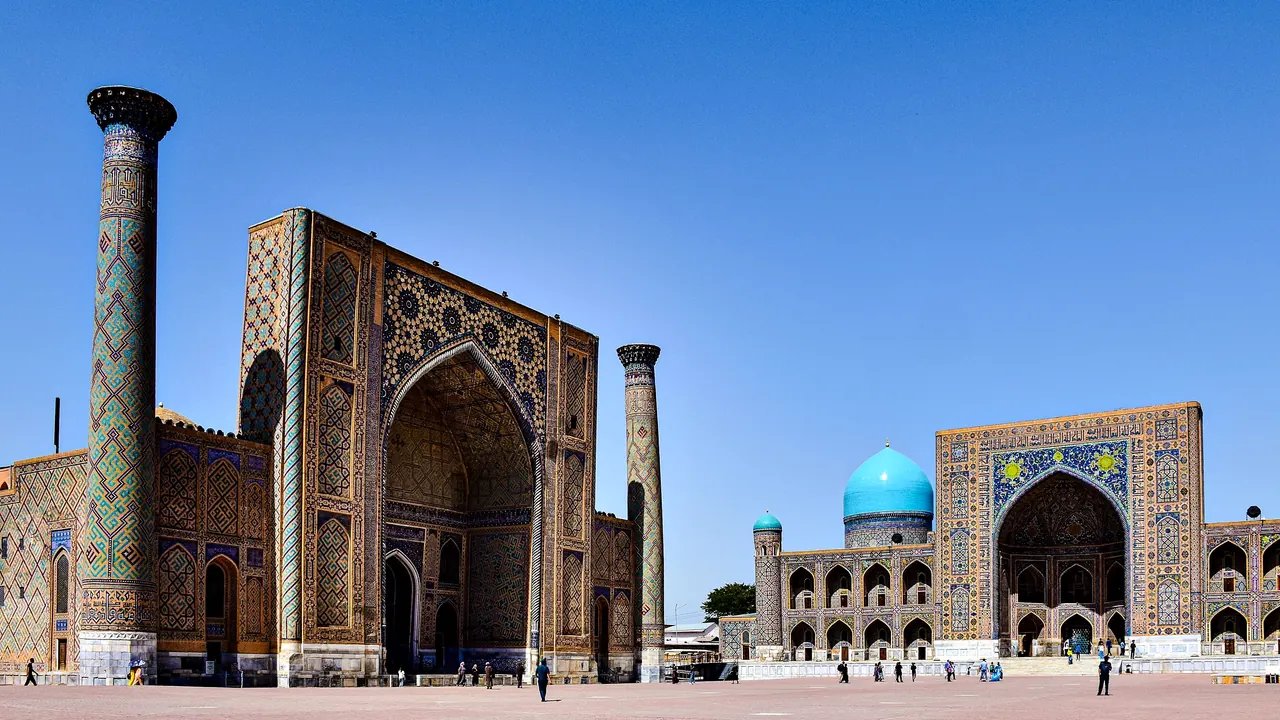
Photos: Tajikistan by Miraliyon, CC BY-SA 4.0, cropped; Uzbekistan by AXP Photography, Pexels License.
Tajikistan or Uzbekistan?
Our verdict in twelve categories, each scored against the same fixed benchmark cities, and the climate month by month, so you can choose for your trip.
Choose Tajikistan for
- nature and the outdoors
- wellness
Tajikistan is for travellers who come for mountains and will put up with effort to reach them. The Fann Mountains, with their turquoise lakes and treks between homestays, are a day's drive from Dushanbe. Beyond them, the Pamir Highway and the Wakhan and Bartang valleys make one of the great overland journeys in Asia. You give up comfort, easy transport and any real choice of food or evenings out, and travel by shared taxi and hired jeep, with a permit for the Pamirs.
Choose Uzbekistan for
- culture and sights
- getting around
- shopping
Uzbekistan suits a trip built around Silk Road architecture. Samarkand's Registan, the brick old town of Bukhara and the walled Itchan Kala of Khiva are linked by fast trains and small enough to explore on foot. The food is better, the craft shopping is a reason in itself, and travel is much easier. You'll find mountains here too, but they sit at the edges and play a supporting role.
Scoreboard
Twelve categories on one fixed scale from 0 to 100. The shaded stretch is the gap between the two.
Your match
Pick a travel style or drag the sliders, and both match scores follow your weighting.
Wins on nature and the outdoors and wellness with your weighting.
Wins on culture and sights and getting around with your weighting.
What matters to you?
Category by category
What the scores mean for a trip.
Beaches & swimming
Neither country has a coast, so this doesn't separate them. Each has one large body of water where local families swim in summer: Kayrakkum, a broad reservoir in the Fergana Valley near Khujand with old sanatorium-style resorts, and Charvak, a mountain reservoir about two hours from Tashkent with lakeside guesthouses.
Beyond those, Tajikistan's glacier-fed lakes such as Iskanderkul are only cold enough for a quick dip. In Uzbekistan, swimming usually means a hotel pool after a hot day in Bukhara or Khiva.
Where in Tajikistan: Kayrakkum Reservoir
Where in Uzbekistan: Charvak Reservoir
Food & drink
Both countries eat the same hearty Central Asian food of bread, mutton, rice and green tea in teahouses. Tajikistan's dish to try is qurutob, flatbread soaked in dried yoghurt sauce. Dushanbe is the only place with a real choice of restaurants, Khujand's domed Panjshanbe bazaar is the place for fruit, and in the mountains you eat simple homestay meals.
Uzbekistan eats better and more widely. Plov is cooked differently in Samarkand, Bukhara and Khorezm. The Chorsu and Siab bazaars are heaped with produce, Tashkent adds Korean and Russian cooking, and the Fergana Valley is known for its own rich plov. Vegetarians struggle in both countries.
Where in Tajikistan: Dushanbe, Khujand
Where in Uzbekistan: Tashkent, Samarkand, Bukhara, Fergana Valley
Culture & sights
This is where the two countries differ most. Uzbekistan holds the great monuments of the Silk Road: the Registan, Shah-i-Zinda and Gur-e-Amir in Samarkand, the intact brick old town of Bukhara with the Kalyan minaret, and the walled Itchan Kala in Khiva. Tashkent's ornate metro and the Savitsky Museum in Nukus add more.
Tajikistan's heritage is older but scattered, and much of it survives as ruins. You'll find excavated Sogdian Panjakent, Bronze Age Sarazm, the reclining Buddha in Dushanbe's museum, the mahallas of Khujand and Istaravshan, and the Wakhan fortresses and stupa at the end of a long mountain journey.
Where in Tajikistan: Panjakent, Dushanbe, Khujand, Wakhan Valley
Nightlife
Evenings out are a small part of both trips, but Tashkent offers more than Dushanbe. It has cocktail and beer bars, a few clubs and karaoke rooms that fill at weekends, and drinking is unremarkable in this secular country. Dushanbe has a handful of bars and hotel lounges and goes quiet early, with its best evenings spent at summer cafés along Rudaki Avenue.
Away from the capitals, both countries settle into dinner and tea. In Uzbekistan that means a walk past the lit monuments, and in Tajikistan it means an early night in a guesthouse.
Where in Tajikistan: Dushanbe
Where in Uzbekistan: Tashkent
Nature & outdoors
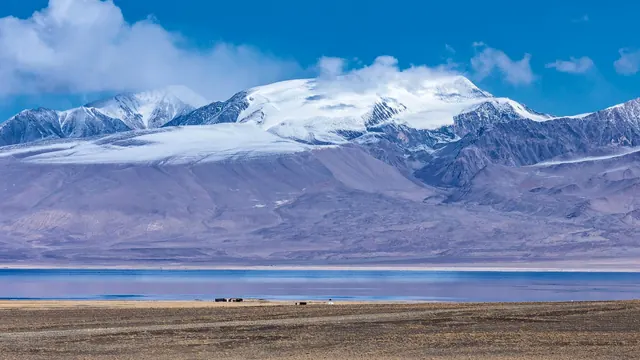
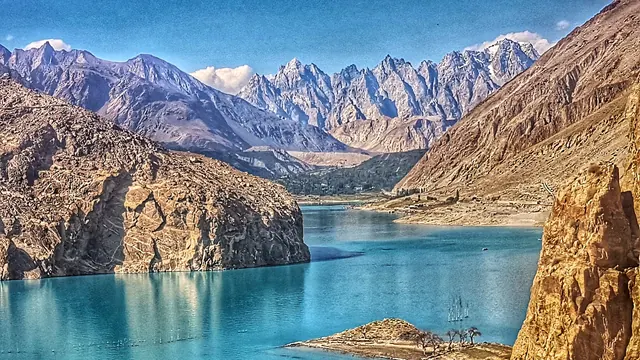
Landscape is Tajikistan's great strength, and here it clearly leads. Nearly the whole country is mountains. The Fanns offer multi-day treks past Iskanderkul and the Kulikalon and Alauddin lakes, and the Pamirs add the high desert around Karakul and Murghab, views across the Wakhan to the Hindu Kush, and the remote Bartang Valley.
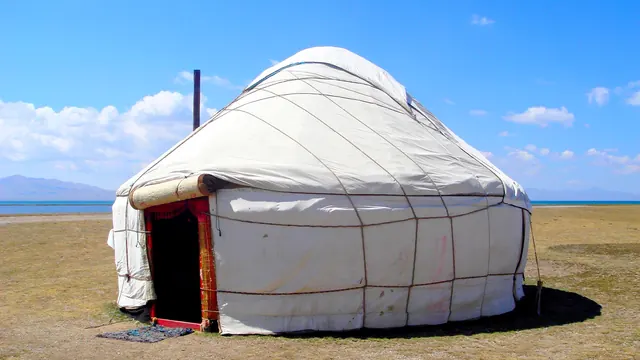
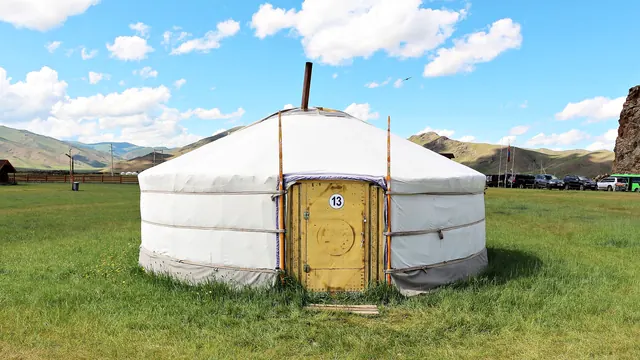
In Uzbekistan most of what you see is flat cotton country and desert. Its outdoors is gentler and sits at the edges: hiking and winter skiing in the Chimgan and Ugam-Chatkal ranges near Tashkent, village walks among petroglyphs in the Nuratau, and yurt camps by Aydarkul lake in the Kyzylkum.
Where in Tajikistan: Fann Mountains, Pamir Mountains, Wakhan Valley, Bartang Valley
Where in Uzbekistan: Ugam-Chatkal National Park, Chimgan Mountains, Nuratau Mountains, Kyzylkum Desert
Day trips
Uzbekistan gives each base a proper outing. From Samarkand you can cross the pass to Shakhrisabz, from Bukhara visit the emirs' summer palace and the potters of Gijduvan, from Khiva reach the desert fortresses of Ayaz Kala and Toprak Kala, and in the Fergana Valley tour the silk and ceramic workshops of Margilan and Rishtan.
In Tajikistan most excursions head into the mountains rather than to other towns. The short list includes the Hisor fortress near Dushanbe, Istaravshan from Khujand and Sarazm outside Panjakent. Tellingly, Tajikistan's finest day out is to Samarkand, across the border from Panjakent, if the crossing allows.
Where in Tajikistan: Panjakent, Khujand, Dushanbe
Where in Uzbekistan: Shakhrisabz, Ayaz Kala and Toprak Kala, Gijduvan, Margilan
Good for families
Children are warmly welcomed in both countries, but Uzbekistan is the easier place to take them. Tashkent has amusement parks, a zoo and big parks. In Samarkand the squares around the Registan are fine with a pushchair, and the water-mill paper workshop at Konigil holds children's attention. In Khiva they can climb the ramparts. Spring and autumn avoid the summer heat.
In Tajikistan, apart from Dushanbe's parks and modest amusement park, little is aimed at children. Long jeep days, basic mountain facilities and the risk of altitude sickness in the Pamirs make it hard going for young ones, though older children who like hiking can manage Iskanderkul and the Fanns.
Where in Tajikistan: Dushanbe, Iskanderkul, Fann Mountains
Getting around
Uzbekistan is far easier to travel. Fast trains link Tashkent, Samarkand and Bukhara, the old centres are walkable, and Tashkent has a metro and cheap ride-hailing taxis. The effort comes at the edges: the long trip west to Khiva, and the hired drivers needed for desert and mountain outings.
In Tajikistan, getting around is the effort. There is no useful rail for visitors, and shared taxis from fixed stands run north to Khujand and Panjakent. The Pamirs mean days in a hired four-wheel drive on broken roads, plus a Gorno-Badakhshan permit and a Khorog flight that depends on the weather.
Where in Tajikistan: Dushanbe, Khujand
Shopping & style
In both countries you shop for crafts rather than fashion, but Uzbekistan gives you more reasons to leave room in your bag. Bukhara's domed arcades sell suzani, carpets, miniatures and stork-shaped scissors. Margilan weaves ikat silk, Rishtan makes the blue and green glazed ceramics, and Samarkand and Khiva add silk paper and carved wood.
Tajikistan's choice is smaller but distinctive. It has Khujand's grand domed Panjshanbe bazaar, chakan embroidery and toki skullcaps, the knife makers of Istaravshan, and hand-knitted wool socks sold in Pamiri homestays.
Where in Tajikistan: Khujand, Istaravshan, Dushanbe
Where in Uzbekistan: Bukhara, Fergana Valley, Samarkand, Tashkent
Affordability
Both are cheap places to travel, and the difference lies in where the money goes. In Tajikistan, homestays in the Fanns include meals and shared taxis cost little. The big expense is a four-wheel drive with driver for the Pamirs, which is easy to manage when split within a group and heavy alone, and Dushanbe's international hotels are priced well above everything else.
In Uzbekistan, the guesthouses of Bukhara and Khiva, bazaar food and even the fast trains keep daily costs low. Spending creeps up through boutique hotels near the monuments in peak season, private drivers, and separate tickets for each of Samarkand's great sites.
Where in Tajikistan: Fann Mountains, Khujand, Dushanbe
Live music & performing arts
Uzbekistan has the steadier stage life. Tashkent's grand Alisher Navoi Theatre runs a full opera and ballet season with easy tickets, alongside a conservatory, a philharmonic and independent theatre. In Bukhara and Samarkand you can watch folklore shows with maqom music in madrasa courtyards.
Dushanbe's Ayni Opera and Ballet Theatre keeps a more irregular programme in Tajik or Russian. Tajikistan's real treasure is its traditional music, such as falak songs and Pamiri rubab playing, which you're likelier to hear at a wedding or an evening in a Wakhan homestay than at any concert.
Where in Tajikistan: Dushanbe, Wakhan Valley
Wellness & relaxation
Neither country is a place for a wellness vacation, and they relax you in different ways. Tajikistan's baths are in the mountains: the Bibi Fatima rock pool above Yamchun and the mineral terraces of Garm Chashma, both simple and timed or segregated by gender, plus the Soviet radon sanatorium at Khoja Obi Garm near Dushanbe.
Uzbekistan's bathing is urban. Bukhara has centuries-old domed hammams where you get a vigorous scrub, and the slow afternoons on tea beds under mulberry trees, once the day crowds leave Bukhara and Khiva, are what restore you most.
Where in Tajikistan: Wakhan Valley, Garm Chashma, Khoja Obi Garm
When should you go?
Pick your month, and for a country the place in it. The climate figures are measured averages, not a forecast.
Where in Uzbekistan
Dushanbe (Tajikistan) in July
Tashkent (Uzbekistan) in July
Daytime high, °C
Rainfall in the month, mm
Temperature and rainfall are climate normals, averaged over the years shown. Dushanbe (Tajikistan): 1991-2020 normals, Dushanbe (2.6 km from centre). Tashkent (Uzbekistan): 1991-2020 normals, Tashkent (5.1 km from centre).
Both countries follow the same pattern through the year: a mild, damp spring, a dry and fiercely hot summer, and a cool winter. Dushanbe has the much wetter spring, with about 154mm of rain in April, and by July the capital reaches 37°C, too hot for walking around town. Tajikistan's high season is in the mountains, which escape the lowland heat. Treks in the Fanns and the Pamirs run from June to September, and the high passes are snowbound in winter. For Dushanbe itself, October is warm and fairly dry.
Uzbekistan's cities are at their best in spring and autumn. Samarkand is mild in April, though that is the wetter end of spring. October is the better shoulder, just as warm, with plenty of sunshine and only 14mm of rain. Summer is hard going for sightseeing everywhere: long and sunny in Tashkent and Samarkand, hot and dry in Khiva. Khiva stays nearly dry all year but turns sharply cold in winter, around 2°C in January. So a mountain trip points to Tajikistan's summer, and a sightseeing trip to Uzbekistan's autumn or spring.
Which traveller are you?
On an outdoors trip, choose Tajikistan. Granite peaks over 5,000m in the Fann Mountains, the Seven Lakes, the Pamir Highway and the wild Bartang Valley go far beyond Uzbekistan's walnut forests and desert yurt camps.
More comparisons
Each shares a side with Tajikistan or Uzbekistan.
Where else could you go?
Set Tajikistan or Uzbekistan against any other country.