Karachi
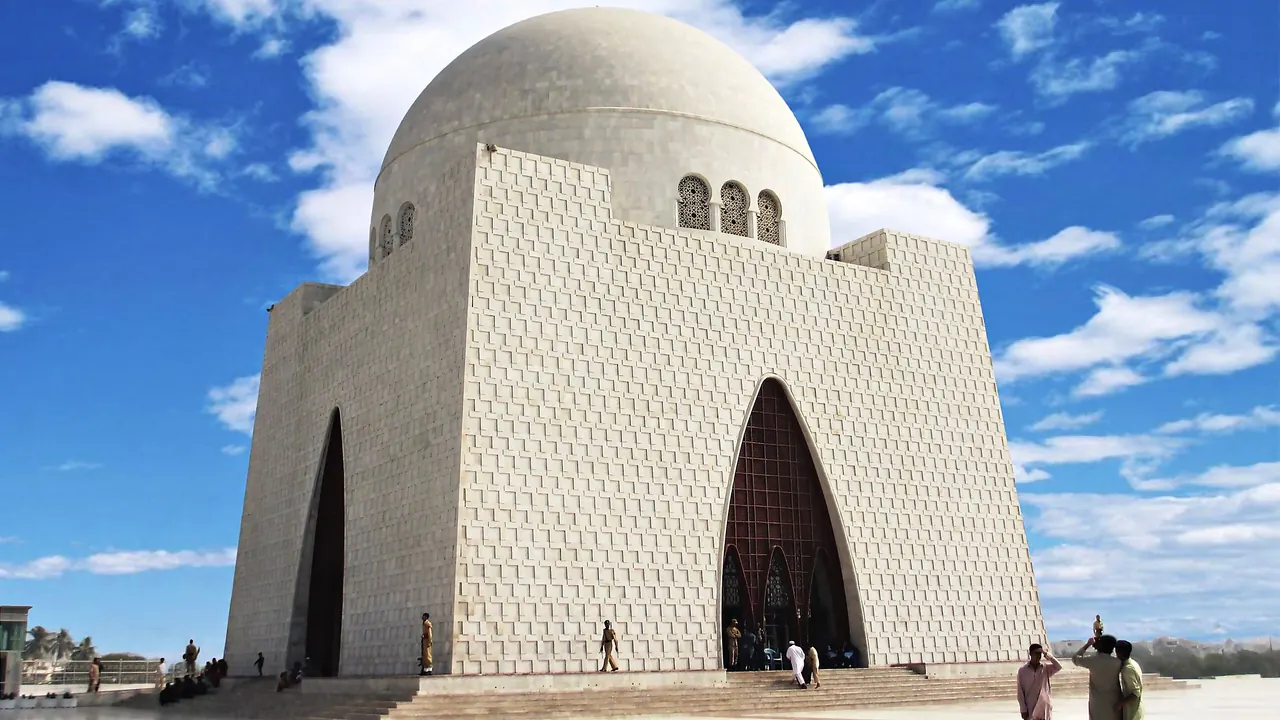
Mazar-e-Quaid, Jinnah's mausoleum, under white clouds
- Affordability90
- Food & drink77
- Shopping55
Photo: M.irfan44, CC BY-SA 4.0, cropped
Match
39
Every category weighted equally
- Beach & sun41
- Culture & arts40
- Food & nightlife42
- Family trip42
- Outdoors40
- Relax & unwind39
- Shopping & style42
- On a budget45
Karachi in twelve categories
Our verdict on each, scored 0 to 100 against the same fixed benchmark cities, so a score means the same thing on every page.
Beaches & swimming. Scores 36 out of 100.
Food & drink. Scores 77 out of 100.
Culture & sights. Scores 42 out of 100.
Nightlife. Scores 14 out of 100.
Nature & outdoors. Scores 30 out of 100.
Day trips. Scores 36 out of 100.
Good for families. Scores 26 out of 100.
Getting around. Scores 22 out of 100.
Shopping & style. Scores 55 out of 100.
Affordability. Scores 90 out of 100.
Live music & performing arts. Scores 27 out of 100.
Wellness & relaxation. Scores 15 out of 100.
Karachi category by category
Beaches & swimming
36Karachi has a long coastline, but the city beach is somewhere to walk rather than swim. Clifton and Sea View draw huge evening crowds for camel rides, snacks and the sea breeze, but the water off the city is murky and nobody comes to bathe in it.
The swimmable shore lies west, about an hour's drive out along the coast at Hawke's Bay, Sandspit, French Beach and Paradise Point. Here families rent beach huts for the day and the water is warm, often above 26°C. From about June to August the monsoon brings strong currents and swimming bans, and beach dress is modest. Most people bathe fully clothed, so a sunbathing vacation is not on offer.
Food & drink
77Food is the main reason to spend time in Karachi. It is a city of migrants from across South Asia, and its cooking reflects that. Old-city streets such as Burns Road serve nihari, haleem and rabri. Biryani here is spicy, with potatoes, and the city treats it as its own. Charcoal grills sell seekh kebabs, tikka and bun kebabs late into the night. Along the shore at Do Darya, seafood places serve fish and prawns cooked to order.
Eating out is a social event that starts late and runs past midnight, with chai and paratha at roadside stalls. Clifton and Defence have the cafés and upmarket restaurants. Alcohol is not part of public life, and visitors should watch street-food hygiene.
Culture & sights
42Karachi's sights tell the story of a colonial port that became Pakistan's first capital. The white marble Mazar-e-Quaid, the mausoleum of Muhammad Ali Jinnah, is the main landmark, and its changing of the guard is worth timing a visit for. In and around Saddar and the old city there is sandstone architecture from British rule: Frere Hall, Empress Market, Merewether Tower, the Sindh High Court, and Wazir Mansion, where Jinnah was born.
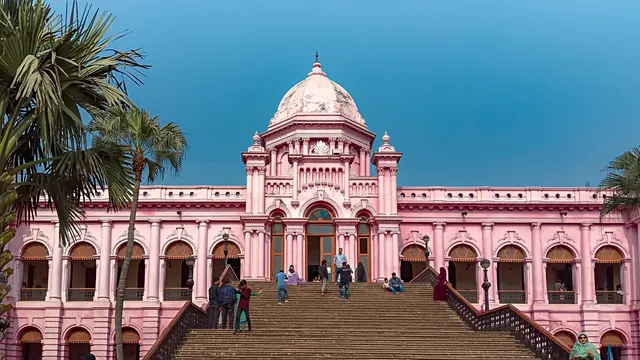
In Clifton, Mohatta Palace is a pink stone mansion that hosts exhibitions. The National Museum covers the Indus Valley and Gandhara. The shrine of Abdullah Shah Ghazi draws crowds of devotees. These sights are worth seeing, but they are spread across a huge city, and a few days covers them.
Nightlife
14Karachi stays up late, but not to drink or dance. Bars and clubs do not exist in public life, and alcohol is restricted. A night out means a late dinner, then tea at a roadside dhaba, a drive along the Clifton seafront, or a walk on the waterfront promenades, where families stay out well past midnight. Some private parties happen in the wealthier districts, but they are not open to visitors.
Nature & outdoors
30Karachi sits on a flat, dry coastal plain, and its outdoor life is around the sea. Boats leave the harbour to explore the mangrove creeks and go crabbing at night. Green turtles nest on the beaches at Hawke's Bay and Sandspit in the cooler months. Churna Island, off the western coast, has the clearest water for snorkelling and diving.
Inland, the bare ridges of Kirthar National Park and the bird-filled Haleji and Keenjhar lakes are reachable in one to two hours by car. Green space in the city is limited and the summer heat is fierce. Outdoor plans work best from November to February.
Day trips
36The one outstanding day trip runs east along the National Highway. Makli, about two hours away near Thatta, is one of the world's largest necropolises, a ridge covered with finely carved stone tombs from several centuries. Thatta's Shah Jahan Mosque, with its blue tiles and many domes, is close by. On the way you can stop at the Chaukhandi tombs, with their geometric carving, and at the excavated port of Banbhore.
Beyond that, little lies within easy reach. Hyderabad is further away and has less to see. Trips need a hired car and driver, and they are best made in the cooler months.
Good for families
26Pakistani families are central to public life, and children are made welcome everywhere. On weekends Clifton beach fills with families on camel and pony rides, and the large malls have indoor play areas and food courts. There is also a zoo, a safari park and amusement rides, but none of them is a strong reason to come.
Getting about is hard work with children. Distances are long, the traffic is heavy, pavements are rare and summers are hot and humid. Food and water need care. A family visiting relatives will be well looked after, but it is not a city to choose for a vacation with children.
Getting around
22Karachi is a huge city with few pavements, and its sights are far apart. Walking is practical only in small parts of Saddar and the old city. The bus rapid transit lines and the red city buses cover only some routes, so most visitors use ride-hailing apps, auto-rickshaws or a car with a driver. Traffic is heavy and unruly at most hours. Outer districts such as Clifton and Defence are built for cars.
Shopping & style
55The best shopping here is for South Asian clothes. Boutiques in Zamzama and Clifton sell embroidered lawn, wedding wear and designer clothing, and tailors can make outfits in a few days. Tariq Road and the big malls cover mid-range fashion.
The old bazaars around Saddar are crowded and good for haggling. Zainab Market sells leather and textiles, Bohri Bazaar sells fabric and household goods, and Empress Market has spices and dry goods. Sindhi crafts such as ajrak block prints, rilli quilts and mirror work are good things to take home. International luxury brands are mostly absent.
Affordability
90For a visitor, Karachi is very cheap in almost everything. A filling meal of nihari or biryani costs little, rickshaws and ride-hailing trips across town are inexpensive, and local guesthouses and mid-range hotels cost a small fraction of what you would pay in Western cities. The main expense is accommodation at the top end. International-standard hotels in secure compounds charge closer to global rates, and many first-time visitors choose them.
Live music & performing arts
27Karachi has a real arts community, but a visitor has little to attend on a regular basis. The Arts Council and the National Academy of Performing Arts stage Urdu theatre, classical music and dance, and music concerts take place in the cooler months. The most memorable live performance is qawwali, the devotional music sung at Sufi shrines on Thursday evenings. There is no opera, and there is no regular orchestral or jazz scene.
Wellness & relaxation
15Karachi is not a city for slowing down. It is loud, crowded and humid, and it has no hammams and no public bathing culture of the kind a visitor might plan around. The one place with a bathing tradition is Manghopir in the north of the city. Hot sulphur springs rise beside the shrine of Pir Mangho, and pilgrims have long bathed in them as a cure for skin complaints. It is a devotional, folk remedy in a rough, crowded setting, not a spa.
Otherwise pampering means the spas of the international hotels, the many beauty salons in Clifton and Defence, and the head and shoulder massage offered by traditional barbers across the city. Traffic noise and heat follow you through most of the day, and calm is hard to find.
When should you go?
Pick a month to see what it is like. The climate figures are measured averages, not a forecast.
Karachi in July
Daytime high, °C
Rainfall in the month, mm
The whole year
Shaded against this destination’s own year: the deepest cell is its best month for that figure and the palest its weakest.
Temperature and rainfall are climate normals, averaged over the years shown. Karachi: 1991-2020 (sunshine 1961-1990) normals, Karachi Airport (13.2 km from centre).
Before you go
| Measure | Karachi |
|---|---|
| Official language | Urdu, English |
| Currency | Pakistan Rupee (PKR) |
| Sockets | CGM230 V, 50 Hz |
| Driving side | Left |
| Time zone | UTC+5 |
| Emergency number | Police 15, ambulance 1122, fire 16 |
| Elevation | 8 m |
| Main airport | Jinnah International Airport (KHI)16 km from centre36 non-stop destinations |
By the numbers
| Measure | Karachi |
|---|---|
| Population | 14,910,352 |
| People per km² | 4,227 |
| Museums within 10 km | 9 |
| UNESCO World Heritage sites within 50 km | 0 |
| Swim season, months above 21 °C | 12 months |
Compare Karachi with
Every comparison with a written verdict behind it.