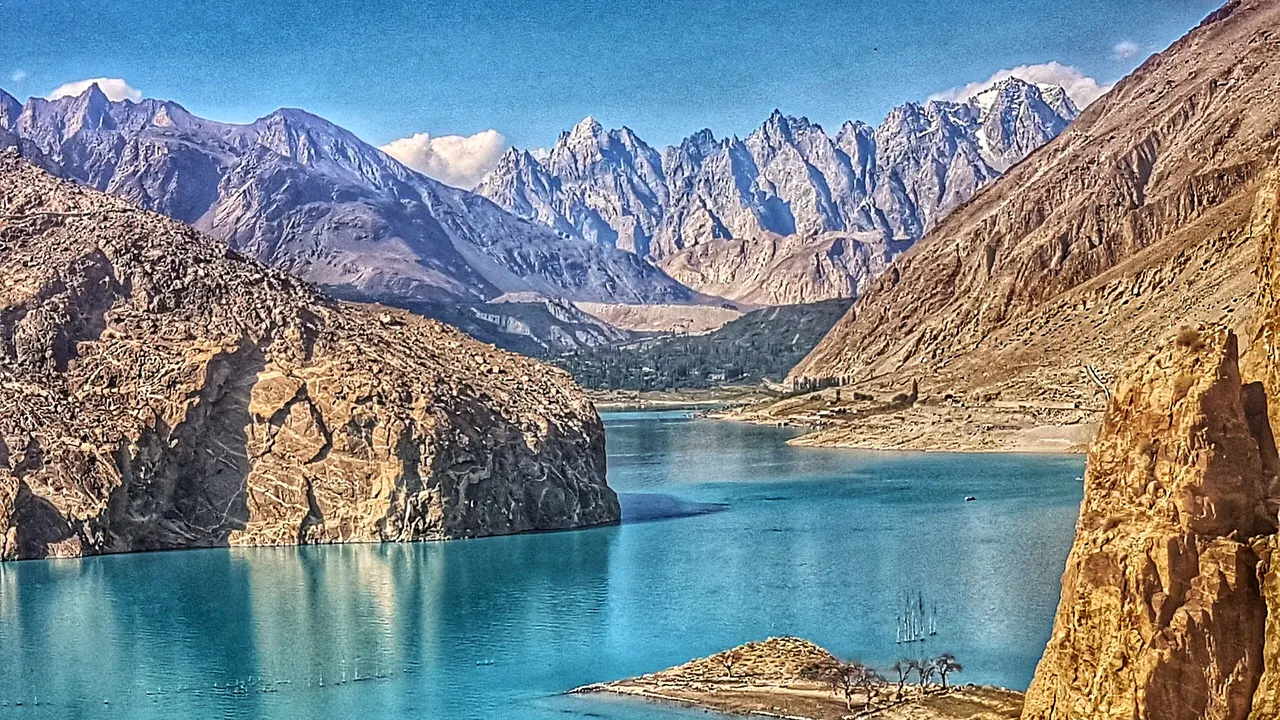
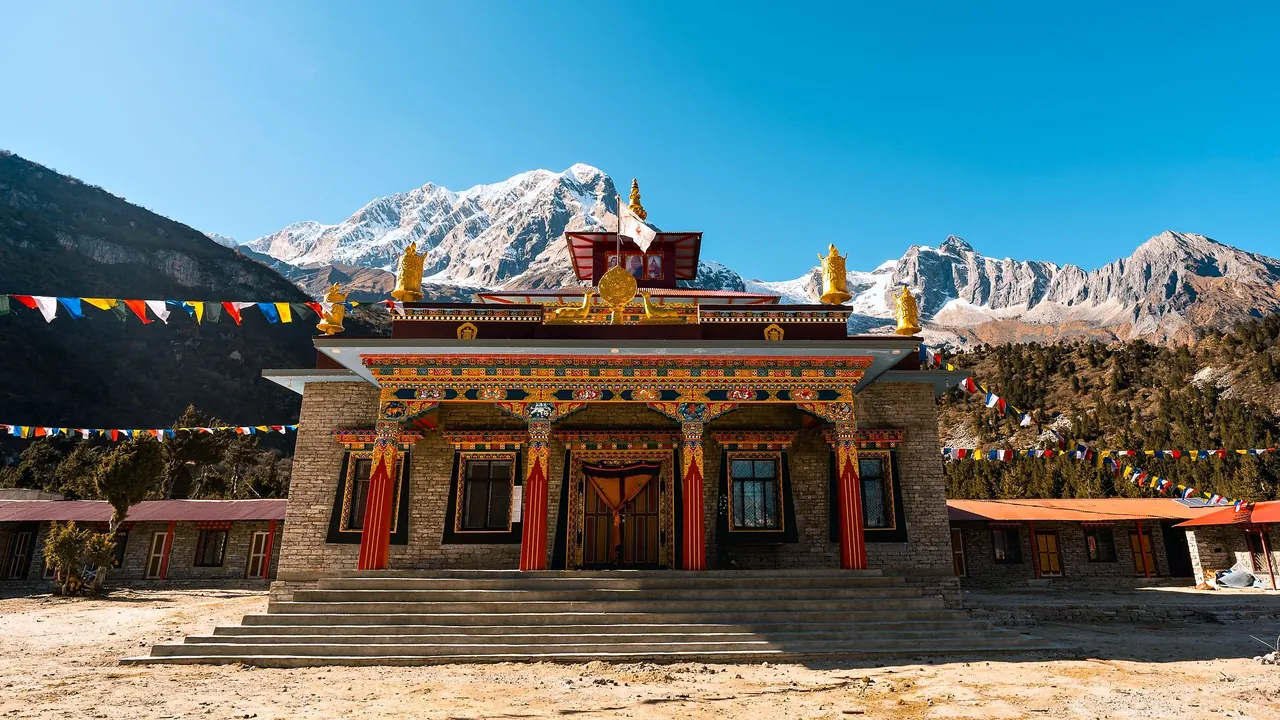
Photos: Pakistan by Ibad ali Momin, CC BY-SA 4.0, cropped; Nepal by Arjay Neyra, Pexels License.
Pakistan or Nepal?
Our verdict in twelve categories, each scored against the same fixed benchmark cities, and the climate month by month, so you can choose for your trip.
Choose Pakistan for
- food and drink
- live music and the arts
- beaches
Pakistan suits the traveller who wants the mountains and the plains in one trip. Lahore's Mughal monuments and late food streets, Sufi shrine music on Thursday evenings, the bazaars of Peshawar and Multan, and then the Karakoram around Hunza and Skardu in summer. It asks more of you in return: no bar life, long road days between far-flung sites, and a country that takes real planning to cross.
Choose Nepal for
- wellness
- nightlife
- families
Nepal is the easier choice for a first trek and for anyone who wants rest alongside the walking. Teahouse trails in the Annapurna and Everest regions, rhinos in Chitwan's lowland forest, and the temple squares of the Kathmandu Valley within a short ride of each other make a trip that fits together more simply. Pokhara's yoga and lakeside pace, plus a beer in Thamel at the end of a route, round it off. The cooking is plainer and the roads are slow, but the trip itself is more forgiving.
Scoreboard
Twelve categories on one fixed scale from 0 to 100. The shaded stretch is the gap between the two.
Your match
Pick a travel style or drag the sliders, and both match scores follow your weighting.
Too close to call, 2 points apart
Wins on food and drink and live music and the arts with your weighting.
Wins on wellness and nightlife with your weighting.
What matters to you?
Category by category
What the scores mean for a trip.
Beaches & swimming
Neither country is a beach destination, but Pakistan at least has the sea. West of Karachi, Hawke's Bay, Sandspit and French Beach are fine for a day under a rented hut. The empty sand of Kund Malir on the Makran coast is a separate expedition. Swimming is a modest, fully clothed affair, and the monsoon swell closes the water in summer.
Nepal is landlocked. Phewa Lake is for rowing with the mountains reflected in the water, and the cold glacial rivers are for rafting, not bathing.
Where in Pakistan: Makran coast, Karachi
Food & drink
Pakistan is the stronger country for food, and eating well is one of the reasons to go. Lahore is the centre, with nihari for breakfast and karahi late at night around Gawalmandi. Burns Road in Karachi is the street for kebabs, and Peshawar has chapli kebab while Quetta has whole roasted sajji. The cooking is heavily meat-based and there is almost no wine or beer.
Nepal eats more simply: dal bhat refilled until you stop asking, and momos on every street. The real interest is Newari cooking in Patan and Bhaktapur and the Thakali sets around Pokhara. Beyond Thamel and Lakeside's tourist menus there is little range, though millet spirits give you something local to drink.
Culture & sights
The two are about even here, but the heritage is laid out very differently. Pakistan's is spread over five thousand years and a vast area. There are the Indus ruins of Mohenjo-daro in Sindh, Gandhara monasteries at Taxila, the Mughal fort and Badshahi Mosque in Lahore and the tiled Sufi shrines of Multan. Seeing a good share of it means long journeys, and the sites are not all equally well kept.
Nepal packs its heritage into the Kathmandu Valley. The three Durbar Squares of Kathmandu, Patan and Bhaktapur can be seen in a few days, and Boudhanath and Pashupatinath are still busy with daily worship. Lumbini is the main reason to leave the Valley.
Where in Pakistan: Lahore, Sindh, Taxila, Multan
Where in Nepal: Kathmandu Valley, Patan, Bhaktapur, Lumbini
Nightlife
Nepal is the only one of the two where you can go out for a drink. Thamel has rooftop bars and pubs with cover bands full of trekkers celebrating, and Pokhara's Lakeside is a slower version by the water. Both close early.
In Pakistan, alcohol is not sold publicly to Muslims and there are no bars or clubs. The evening means dinner instead, on Burns Road or Lahore's food streets, which stay busy past midnight.
Nature & outdoors
Both countries have some of the greatest mountains on earth, and the difference lies in how you experience them. Pakistan's Karakoram is wilder and bigger in scale. You can base yourself in Hunza beneath Rakaposhi, trek the Baltoro Glacier towards K2 from Skardu or face Nanga Parbat from Fairy Meadows, and the road trip along the Karakoram Highway is part of the experience.
Nepal makes the high country easier to reach. Teahouses in the Annapurna and Everest regions let you walk for weeks without a tent. The lowlands add something Pakistan does not have, with rhinos and tigers in Chitwan's sal forest, plus rafting on the Trishuli and paragliding above Pokhara.
Where in Pakistan: Hunza Valley, Skardu and Baltistan, Fairy Meadows and Nanga Parbat, Swat Valley
Where in Nepal: Annapurna region, Everest region, Chitwan National Park, Langtang
Day trips
The day trips are just as good in both countries, but Pakistan's depend on which of its three cities you are based in. From Islamabad you can reach Taxila, Katas Raj and the Rohtas fort. From Lahore there is the Wagah border ceremony, and from Karachi the Makli necropolis and old Thatta.
Nepal's outings mostly stay inside the Kathmandu Valley. Kirtipur, Bungamati, Panauti and Changu Narayan are short hops to Newar towns and temples, and Bandipur is the main outing from Pokhara.
Where in Pakistan: Islamabad, Lahore, Karachi
Where in Nepal: Kathmandu Valley, Panauti and Dhulikhel, Bandipur
Good for families
Nepal works better with children, though neither country is built for them. Pokhara is an easy base with boats and gentle walks, Chitwan's rhinos and crocodiles are a clear highlight, and fit families can manage the ridge walk to Poon Hill.
Pakistan offers Lahore's zoo and safari park and Karachi's seaside promenades, but summer heat on the plains is fierce. The cool valleys of Swat and Hunza involve long, winding drives. Both countries suit older, adventurous children far better than toddlers.
Where in Pakistan: Hunza Valley, Lahore, Swat Valley
Where in Nepal: Pokhara, Chitwan National Park
Getting around
Pakistan is somewhat easier to get around. Fast motorways link Islamabad, Lahore and Peshawar, domestic flights connect the big cities, and Lahore has a metro line and rapid buses, although the far north still depends on the weather and the Karakoram Highway.
In Nepal, the road from Kathmandu to Pokhara takes most of a day, there is no railway that serves visitors, and cloud often grounds the flights to Lukla. Nepal does have the advantage on foot: the old cores of Kathmandu, Patan and Bhaktapur and Pokhara's Lakeside are pleasant to walk, while Pakistan's city centres are not.
Shopping & style
Pakistan offers more for shoppers, and most of it is cloth. Lahore's bazaars and designer boutiques sell bridal and lawn fashion, with tailors on hand, Karachi has ajrak and embroidery, and Peshawar's Qissa Khwani has carpets and copperware. Multan's blue pottery and truck art add crafts.
Nepal's shopping is almost all handicrafts: cast bronzes in Patan, pottery in Bhaktapur's potters' square and thangka paintings at Boudhanath. Bargaining is expected in both countries, and neither has international luxury brands.
Where in Pakistan: Lahore, Karachi, Peshawar, Multan
Where in Nepal: Patan, Bhaktapur, Thamel, Kathmandu, Boudhanath
Affordability
Both are among the cheapest places to travel, and what differs is where the money goes. In Pakistan, the big costs are a car and driver for long distances and international-standard hotels in Islamabad, Lahore and Karachi. Peshawar and Hunza's family guesthouses cost very little.
In Nepal, the big costs come from the activities themselves: trekking permits, guides and porters, mountain flights and Chitwan's safari lodges. Teahouse prices also rise the higher you climb.
Where in Pakistan: Lahore, Peshawar, Hunza Valley
Live music & performing arts
Pakistan has much more live performance, and it centres on the shrines. Qawwali is sung on Thursday evenings at Lahore's Data Darbar and at the shrines of Multan, and the drumming and whirling dhamaal at Sehwan Sharif is unforgettable. Alhamra in Lahore and Karachi's Arts Council also put on theatre, music and dance, though not on a regular schedule.
Nepal's offer is cultural dinner shows, Tharu stick dances near Chitwan and devotional singing at Swayambhunath. Masked festival dances such as Indra Jatra are only for those whose dates happen to match.
Where in Pakistan: Lahore, Sehwan Sharif, Multan, Karachi
Where in Nepal: Kathmandu Valley, Chitwan National Park
Wellness & relaxation
Nepal is the better place to slow down. There are no spas, but you can take Buddhist meditation courses in the hills around Boudhanath, join one of Pokhara's many yoga centres or get a cheap massage after a trek. The hot springs at Tatopani are a welcome soak on the Annapurna trail.
Pakistan's Shahi Hammam in Lahore survives only as a monument, and spas are limited to a few international hotels. Here, rest means the orchards and long views from a quiet guesthouse in Hunza or Skardu.
Where in Pakistan: Hunza Valley, Skardu and Baltistan
Where in Nepal: Pokhara, Boudhanath, Kathmandu Valley, Annapurna region
When should you go?
Pick your month, and for a country the place in it. The climate figures are measured averages, not a forecast.
Where in Pakistan
Where in Nepal
Lahore (Pakistan) in July
Kathmandu (Nepal) in July
Daytime high, °C
Rainfall in the month, mm
Temperature and rainfall are climate normals, averaged over the years shown. Lahore (Pakistan): 1991-2020 (sunshine 1961-1990) normals, Lahore City (1 km from centre). Kathmandu (Nepal): 1991-2020 normals, Kathmandu Airport (4.7 km from centre).
The two countries have opposite best seasons in summer. From June to September the monsoon soaks Nepal, with Kathmandu taking around 384mm in July and Pokhara far more, about 674mm, and cloud hides the peaks. Over the same months Pakistan's Hunza Valley stays dry and warm. That makes July and August the time for the high Karakoram treks, while Lahore swelters at up to 39°C before its own monsoon rains arrive. Karachi's sea is warm all year, but it is too rough to swim in during the monsoon, so the coast is better from October to May.
October and November are excellent in both. Nepal has its clearest mountain skies, and the Pakistani plains cool down enough for walking around Lahore and the Sindh ruins. Nepal's spring, from March to April, brings rhododendrons on the trails before the rain builds. In Pakistan the cooler months, roughly November to March, suit the cities and the south, while Hunza turns cold and quiet.
Which traveller are you?
On a culture and arts trip, Pakistan fills the evenings as well as the days. Lahore's tiled Wazir Khan Mosque, the Shalimar Gardens and the museum's Gandhara sculpture lead into a Thursday night of qawwali at a shrine. Nepal's temples are just as fine, but its evenings are quiet.
For a food and nightlife trip, Pakistan is the better choice if eating is your night out. Start with halwa puri for breakfast, have lamb at Peshawar's Namak Mandi, then kebabs and chai until after midnight. Choose Nepal if you want a beer with dinner, though the cooking is simpler.
On a relaxing and wellness trip, Nepal lets the journey slow down. You can spend a few days in Pokhara with nothing planned, or take a short monastery retreat before flying home. Pakistan's calm comes from mountain views in Hunza, but getting there takes long road days.
More comparisons
Each shares a side with Pakistan or Nepal.
Where else could you go?
Set Pakistan or Nepal against any other country.