Nepal
Kathmandu
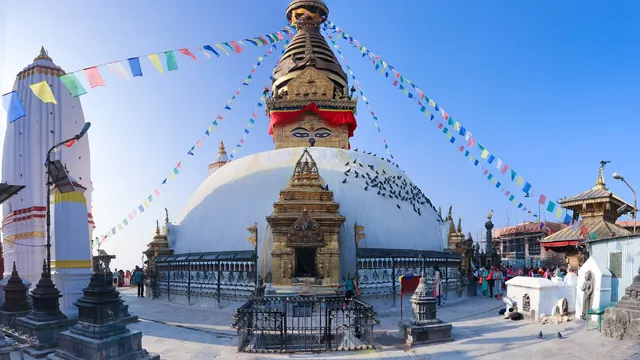
Photo: Nabin K. Sapkota, CC BY-SA 4.0, cropped
Match
48
- Beach & sun45
- Culture & arts51
- Food & nightlife47
- Family trip47
- Outdoors52
- Relax & unwind47
- Shopping & style48
- On a budget53
Kathmandu in twelve categories
Our verdict on each, scored 0 to 100 against the same fixed benchmark cities, so a score means the same thing on every page.
Beaches & swimming. Scores 4 out of 100.
4Food & drink. Scores 55 out of 100.
55Culture & sights. Scores 82 out of 100.
82Nightlife. Scores 36 out of 100.
36Nature & outdoors. Scores 70 out of 100.
70Day trips. Scores 56 out of 100.
56Good for families. Scores 20 out of 100.
20Getting around. Scores 25 out of 100.
25Shopping & style. Scores 55 out of 100.
55Affordability. Scores 97 out of 100.
97Live music & performing arts. Scores 28 out of 100.
28Wellness & relaxation. Scores 45 out of 100.
45Kathmandu category by category
Beaches & swimming4
Kathmandu sits in a high valley in a landlocked country, so there is no beach or bathing lake within reach. The rivers that drain the hills are fast, cold and used for rafting rather than swimming, and the valley's own rivers are not fit for bathing. A swim here means a hotel pool.
Food & drink55
The everyday staple is dal bhat, rice with lentils, vegetable curry and pickles, refilled until you stop. The more interesting cooking is Newari: buffalo choila, beaten rice, bara lentil pancakes, yomari dumplings and rice beer, found in small eateries around the old bazaars and in Patan and Kirtipur. Momos, steamed or fried, are sold everywhere, and the Tibetan quarter around Boudhanath adds thukpa noodle soup and butter tea.
Thamel's tourist restaurants serve a long menu of pizza, steak and apple pie of uneven quality, and fine dining is limited to a few hotels and garden restaurants. Locally grown coffee and milky masala tea are part of the day. Stick to busy places and bottled or filtered water.
Culture & sights82
Kathmandu's heritage is unusually alive. Durbar Square is a crowd of pagoda temples, palace courtyards and the house of the Kumari, the living goddess, set among working markets. On a hill to the west, the stupa of Swayambhunath looks over the valley, with monkeys on its stairs. Boudhanath, one of the largest stupas anywhere, is circled at dusk by Tibetan pilgrims, and at Pashupatinath, Nepal's holiest Hindu temple, cremations take place openly on the riverbank.
Patan, across the river, has the finest of the valley's Durbar Squares and the Patan Museum, the best place to understand Newari bronze and woodwork. Between the landmarks, the old lanes of Asan and Indra Chowk hide courtyard shrines and carved windows. Museums beyond Patan are modest.
Nightlife36
Going out in Kathmandu means Thamel, the backpacker quarter, where rooftop bars, pool halls and a handful of dance clubs fill with trekkers celebrating the end of a route. It is friendly and easy but narrow in character, and most places wind down around midnight. Outside Thamel, evenings are quiet, with the odd lounge bar in Jhamsikhel near Patan, and locals mostly socialise over food and tea rather than late nights.
Nature & outdoors70
The valley is ringed by forested hills, and the Himalaya stand just beyond them. Shivapuri Nagarjun National Park on the northern edge has trails through oak and rhododendron forest with monkeys and birdlife, and a cable car climbs Chandragiri on the southern rim for long views. Nagarkot and Dhulikhel, each about an hour and a half away, are the classic places to watch sunrise over the snow peaks, linked by a good day's hike along the ridge.
Mountain flights reach Everest and back in about an hour, and white-water rivers for rafting and kayaking start around three hours out. Kathmandu is also the gateway for Langtang and longer treks. The clearest views come in October and November; the monsoon brings cloud and haze often softens the winter skyline.
Day trips56
The Kathmandu Valley once held three rival kingdoms, and Bhaktapur, the most complete of the other two royal towns, is the one day out that really matters. About an hour by road, it is a town of brick squares, five-tiered temples and potters drying their work in the street, with a slower pace than the capital. Changu Narayan, the valley's oldest temple, with some of its finest stone and wood carving, stands on a ridge above it and fits easily into the same day.
After that the list is short and modest. Kirtipur sits on a hill on the city's southern edge, Bungamati and neighbouring Khokana are small woodcarving and oil-pressing villages, and Pharping to the south has cave shrines and Tibetan monasteries. Panauti, with its riverside temples, and the Buddhist pilgrimage site of Namobuddha take most of a day. They are pleasant for anyone curious about Newari life, but they are variations on the same theme, there is no second city or major monument site within easy reach, and traffic makes every outing slower than the distance suggests.
Good for families20
Kathmandu is welcoming to children, and the monkeys at Swayambhunath, the spinning prayer wheels at Boudhanath and the festival processions catch their attention. Beyond that there is little made for them: a small zoo in Patan and the walled Garden of Dreams for a quiet hour. Traffic, narrow lanes without pavements, dust, poor air in winter and the care needed with food and water make it tiring with young children. Families tend to suit it best with older children heading on to a trek or to the national parks.
Getting around25
The old city and Thamel are compact enough to walk, and walking is the best way to see them, though lanes are shared with motorbikes and pavements come and go. There is no metro or tram, and the minibuses and microbuses are crowded and hard to read for a visitor. Most people use taxis or ride-hailing apps on motorbikes and cars, agreeing a fare first in a taxi. Traffic is heavy, roads are dusty, and crossing to Patan, Boudhanath or the airport can take far longer than the distance suggests.
Shopping & style55
Shopping here is about craft. Thamel is packed with stalls selling pashmina, felt goods, prayer flags, singing bowls and trekking gear, much of it copies, while the shops around Boudhanath carry Tibetan carpets, thangka paintings and ritual objects, and Patan is the place for cast bronze and copper statues made in its own workshops. The old bazaars of Asan and Indra Chowk sell spices, beads and household goods to locals, a better sight than shop. Bargaining is expected. There is no luxury or fashion shopping to speak of.
Affordability97
Kathmandu is one of the cheapest places in the world to travel. Comfortable guesthouses in Thamel and around Boudhanath cost a fraction of European rates, a plate of dal bhat or momos costs very little, and taxis are cheap even after bargaining. The main outlays are the entry fees foreigners pay at the Durbar Squares, Pashupatinath and Bhaktapur, imported alcohol and the few international hotels. Trekking permits and mountain flights are where a budget goes, not daily life in the city.
Live music & performing arts28
There is little formal stage life for a visitor. Live music means the bars of Thamel, where bands play rock covers and Nepali folk most nights, and cultural dinner shows that stage regional dances. The richer performances belong to the religious calendar: masked dances during Indra Jatra, devotional singing at temples in the evening, and drumming and processions through the old quarters. A long-running jazz festival brings an autumn programme, but outside it the scene is thin.
Wellness & relaxation45
Kathmandu has no bathing culture, but it is a serious place for the mind. The monasteries on the hills around Boudhanath, Kopan above all, run meditation and Buddhist philosophy courses for foreigners, and yoga, Ayurvedic treatments and singing-bowl sessions are easy to find. Massage is offered on every Thamel lane at low cost, mostly simple and some genuinely skilled. The city itself is loud and dusty, so calm means retreating to a monastery, a garden courtyard, the stupa at dusk or a hill retreat on the valley rim.
When should you go?
Pick a month to see what it is like. The climate figures are measured averages, not a forecast.
| July | Kathmandu |
|---|---|
| Daytime high | 29 °C |
| Night-time low | 20 °C |
| Rainfall in the month | 384 mm |
| Sunshine | 4 hours a day |
| Daylight | 14 hours a day |
The whole year
Shaded against this city’s own year: the deepest cell is its best month for that figure and the palest its weakest.
Temperature and rainfall are climate normals, averaged over the years shown. Kathmandu: 1991-2020 normals, Kathmandu Airport (4.7 km from centre).
Getting there
| Flying from | Kathmandu |
|---|---|
| NepalganjKEP | 1 h 5 m no fares KTM · 4 km |
| New DelhiDEL | 1 h 40 m €175-205 KTM · 4 km |
| BhairawaBWA | 55 m no fares KTM · 4 km |
| Kuala LumpurKUL, SZB | 4 h 30 m €444-465 1 stop KTM · 4 km |
| BiratnagarBIR | 55 m no fares KTM · 4 km |
| DubaiDXB, DWC | 4 h 10 m €400-446 KTM · 4 km |
| IstanbulIST, SAW | 6 h 55 m €583-665 1 stop KTM · 4 km |
| DohaDOH | 4 h 35 m €459-552 KTM · 4 km |
| BangkokBKK, DMK | 3 h 15 m €389-511 KTM · 4 km |
| Kuwait CityKWI | 4 h 55 m no fares KTM · 4 km |
The busiest departure cities for Kathmandu, with a place kept for each other part of the world. Busiest means arriving passengers where an official count exists, and where none does, the number of non-stop services flown: official route statistics are published by the European reporting countries and by nobody else, so a table ranked on them alone would offer a reader in New York or Tokyo ten European cities. Flying times are estimated from the distance between airports, and every row is a city flown non-stop. Where the typical offer connects anyway, the stops are shown. Under each figure is the airport the flight lands at and how far that is from the centre, because the nearest airport is not always the one a route is flown to. Typical return fares for 2026-10 to 2026-12, cached market data up to 7 days old. The figure is the middle half of the offers found, so a single price means they agreed and a range means they did not; for a typical route that middle half spans about a quarter of the median, and for the least settled routes rather more than the median itself.
Before you go
| Measure | Kathmandu |
|---|---|
| Official language | Nepali |
| Currency | Nepalese Rupee (NPR) |
| Sockets | CM230 V, 50 Hz |
| Driving side | Left |
| Time zone | UTC+5:45 |
| Emergency number | Police 100, ambulance 102, fire 101 |
| Elevation | 1,300 m |
| Main airport | Tribhuvan International Airport (KTM)4 km from centre38 non-stop destinations |
By the numbers
| Measure | Kathmandu |
|---|---|
| City population | 845,767 |
| People per km² | 17,121 |
| Museums within 10 km | 9 |
| UNESCO World Heritage sites within 50 km | 1 |
Compare Kathmandu with
Every comparison with a written verdict behind it.