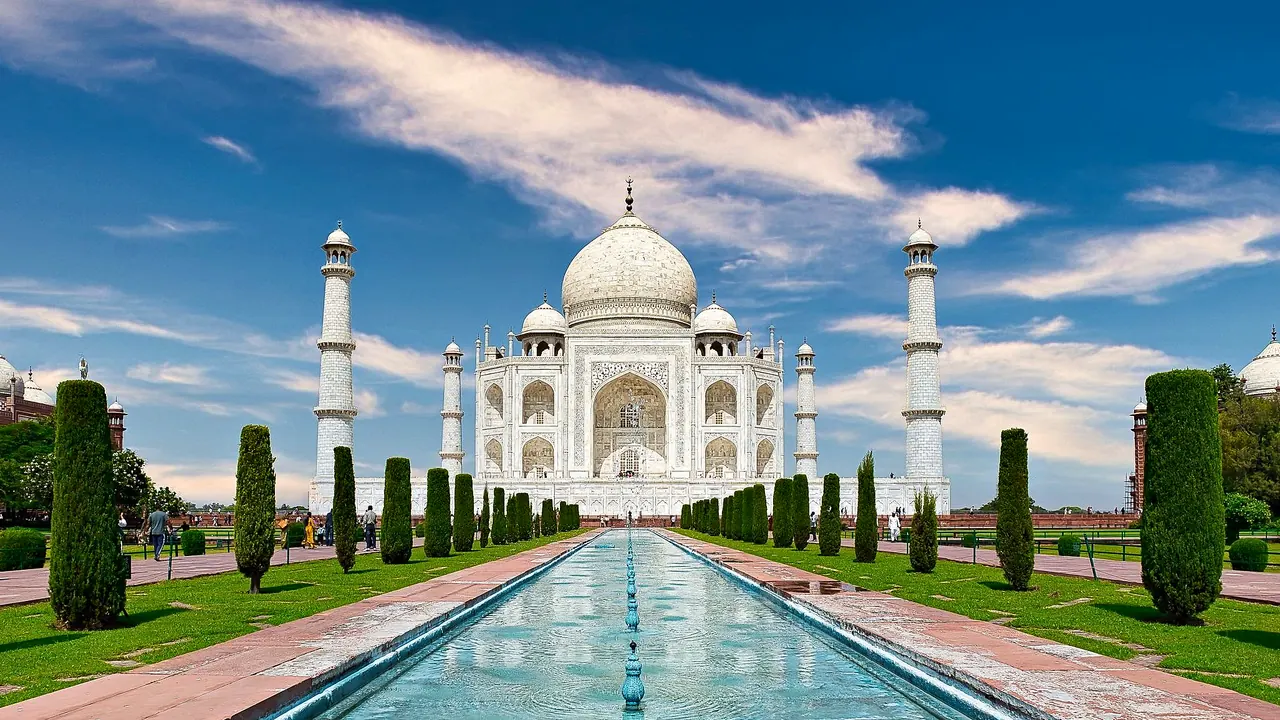
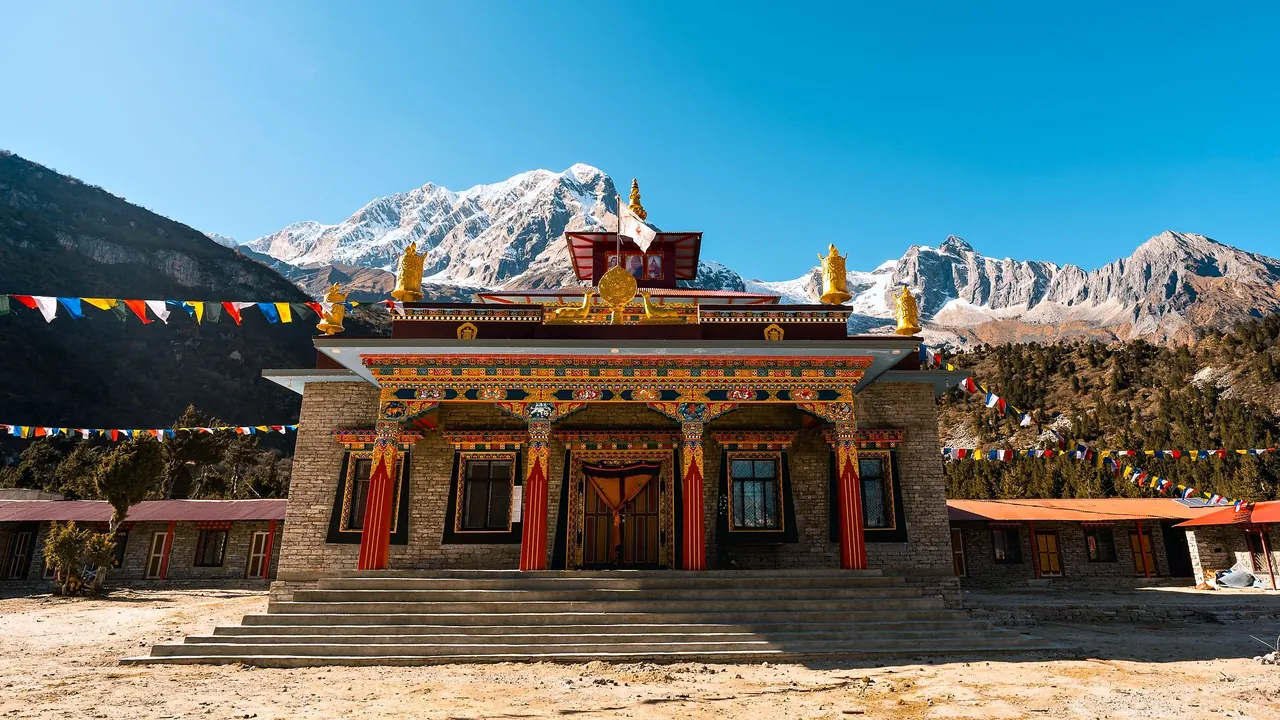
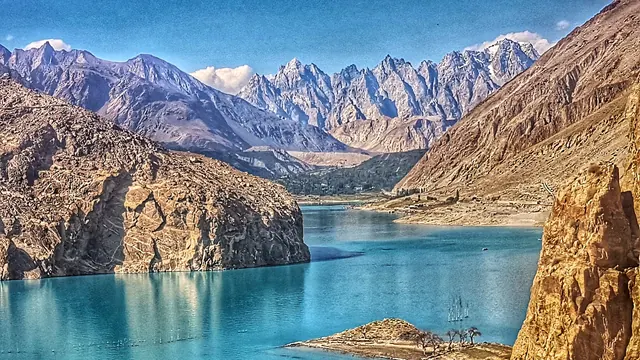
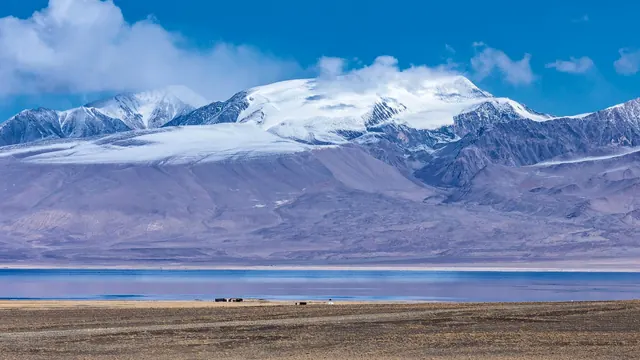
Photos: India by Kowshi L, Pexels License; Nepal by Arjay Neyra, Pexels License.
India or Nepal?
Our verdict in twelve categories, each scored against the same fixed benchmark cities, and the climate month by month, so you can choose for your trip.
Choose India for
- beaches
- live music and the arts
- food and drink
India suits the traveller who wants a long vacation with real range: Mughal monuments and Rajasthan forts, regional cooking that changes from one state to the next, Goa or Kerala beaches to finish on, and Ayurveda or yoga if rest is the aim. It asks more of you in distances and planning. The reward is that a single trip can take in heritage, food, coast and a tiger reserve, with flights and trains doing the long hauls.
Choose Nepal for
- nature and the outdoors
- prices
Nepal is the choice when the mountains are the point. Trekking in the Annapurna and Everest regions sets the standard for walking in the high Himalaya, Chitwan adds rhinos in the lowlands, and the Kathmandu Valley packs its temples and palace squares into a small, walkable area. Food, nightlife and shopping are modest by comparison, there is no sea, and roads are slow. It is a narrower country that does one thing superbly.
Scoreboard
Twelve categories on one fixed scale from 0 to 100. The shaded stretch is the gap between the two.
Your match
Pick a travel style or drag the sliders, and both match scores follow your weighting.
Wins on beaches and live music and the arts with your weighting.
Wins on nature and the outdoors and prices with your weighting.
What matters to you?
Category by category
What the scores mean for a trip.
Beaches & swimming
India has a real beach country on its west coast: the long, quiet strands of south Goa, the livelier shack-lined north, Gokarna's coves and the red cliffs of Varkala, with the clear water of the Andaman Islands a flight further. The season is winter, and the monsoon closes the shore from June to September.
Nepal has no coast at all. Phewa Lake at Pokhara is for rowing and mountain reflections, and the glacial rivers are for rafting, so anyone wanting sand will have to add a separate leg elsewhere.
Where in India: Goa, Andaman Islands, Varkala, Gokarna
Food & drink
India is one of the world's great places to eat, with a different cuisine in each region: kebabs and parathas in Old Delhi's lanes, Awadhi biryani in Lucknow, vada pav in Mumbai, Bengali sweets in Kolkata, dosas in Chennai and fish curries in Kerala and Goa. Vegetarians do especially well.
Nepal eats more simply. Dal bhat and momos carry most days, especially on trek, and the interest lies in Newari cooking in Patan and Bhaktapur, the town's thick sweet yoghurt and Thakali sets around Pokhara. Beyond Thamel and Lakeside menus, there is little variety.
Culture & sights
India's heritage stretches across a subcontinent: the Taj Mahal and Agra Fort, Delhi's Mughal tombs, the forts of Jodhpur and Jaisalmer, the ghats of Varanasi and the temple towers of Madurai and Thanjavur. It is richer and more varied, but seeing it means covering great distances.
Nepal's strength is concentration. The three Durbar Squares of Kathmandu, Patan and Bhaktapur, with Boudhanath, Swayambhunath and Pashupatinath, sit close together and remain in daily religious use, so a few days in the Valley see most of it. Beyond it, Lumbini is the main separate journey.
Where in India: Agra, Delhi, Rajasthan, Tamil Nadu
Where in Nepal: Kathmandu Valley, Patan, Bhaktapur, Lumbini
Nightlife
India has proper nights out, though only in a few places: Mumbai's rooftop and old-school bars, Bengaluru's craft beer pubs, Hauz Khas in Delhi and Goa's winter beach clubs, which run late. The heritage towns go quiet after a rooftop dinner.
In Nepal, evenings mean a drink with fellow trekkers in Thamel or by the water at Pokhara's Lakeside, with cover bands and an early close. Pleasant, but not something to plan around.
Nature & outdoors
Nepal comes out ahead on the strength of its Himalayan trekking, which sets the standard everywhere else is measured by. The Sherpa villages of the Everest region, the Annapurna circuit and sanctuary, quieter Langtang and Manaslu and the dry heights of Upper Mustang can all be walked for weeks from teahouse to teahouse. Chitwan and Bardia add rhinos, gharials and tigers, and there is rafting on the Trishuli and paragliding above Pokhara.
India's outdoors are superb in their own right and wider in kind: high trekking in Ladakh and Himachal Pradesh, tigers in Ranthambore and Kanha, rhinos at Kaziranga, tea walks around Munnar, houseboats on Kerala's backwaters and camel rides in the Thar dunes. Its mountain walking, though, lacks the teahouse network and the close views of Everest and Annapurna that make trekking in Nepal so complete.
Where in India: Ladakh, Himachal Pradesh, Ranthambore National Park, Kerala
Where in Nepal: Annapurna region, Everest region, Chitwan National Park, Langtang
Day trips
India gives more to see from well-chosen bases: Fatehpur Sikri from Agra, Amber Fort and Pushkar from Jaipur, the Elephanta caves by ferry from Mumbai, Mahabalipuram from Chennai and Ellora from Aurangabad. A hired car and driver makes them easy.
Nepal's outings centre on the Kathmandu Valley, where Kirtipur, Bungamati, Panauti and the old temple of Changu Narayan make fine half days. Further out, slow roads limit the choice to Bandipur from Pokhara and a lot of mountain scenery.
Where in India: Agra, Jaipur, Chennai, Aurangabad
Where in Nepal: Kathmandu Valley, Panauti and Dhulikhel, Bandipur
Good for families
Neither country is easy with children, and both welcome them warmly. The difference is in the kind of trip that works: India's best options are south Goa's beaches, a Kerala houseboat and Rajasthan forts with a pool hotel to rest in, all in the cool winter months.
Nepal centres on Pokhara's lake and gentle walks and Chitwan's canoes and jeep drives, which suit older children. The high treks bring altitude risks that rule them out for young families.
Where in India: Goa, Kerala, Rajasthan
Where in Nepal: Pokhara, Chitwan National Park
Getting around
India is demanding but well connected for its size. Domestic flights link the big cities, trains reach almost everywhere and Delhi, Mumbai and Bengaluru have good metros. Most visitors still hire a driver for Rajasthan or Kerala.
Nepal is harder. No railway serves the main sights, the drive from Kathmandu to Pokhara takes most of a day, monsoon landslides block mountain roads, and flights to Lukla wait on the cloud. The old cores of the Valley towns and Pokhara's Lakeside are easy on foot, but you should leave a spare day for every long journey.
Shopping & style
India is a serious shopping destination, with each region known for its own craft: gems, block prints and blue pottery in Jaipur, silk saris in Varanasi and Kanchipuram, pashmina from Kashmir, and Delhi's Chandni Chowk and Dilli Haat bringing much of it together. Mumbai adds Indian designer fashion.
Nepal's range is narrower and centres on Himalayan crafts. Patan's cast bronzes, Bhaktapur's pottery and Boudhanath's thangkas are the work worth seeking out, while Thamel is full of singing bowls and mass-produced trekking gear.
Where in India: Jaipur, Delhi, Varanasi, Mumbai
Where in Nepal: Patan, Bhaktapur, Thamel, Kathmandu, Boudhanath
Affordability
Both are among the cheapest places a visitor can go, with guesthouses, local food and transport costing very little. Where they differ is in what pushes the cost up. In India the expensive choices are heritage palace hotels, Goa at the peak of winter, alcohol in high-tax states and the higher fees foreigners pay at monuments.
In Nepal the cost lies in the activities: trekking permits, guides and porters, mountain flights, Chitwan safari lodges and teahouse meals that get dearer the higher you climb.
Live music & performing arts
India has living classical traditions worth planning around. Chennai's December music season fills the sabhas with Carnatic concerts and Bharatanatyam, Kochi stages Kathakali all year, and Mumbai, Kolkata and Delhi have concert halls and Hindustani recitals, while Rajasthan's palace towns offer folk music and puppetry.
Nepal has little formal stage. Its performance is mostly devotional singing at Swayambhunath and Pashupatinath, folk dance at dinner shows, Tharu stick dances near Chitwan, and the masked dances of festivals such as Indra Jatra if your dates happen to coincide.
Where in India: Chennai, Mumbai, Kochi, Kolkata
Where in Nepal: Kathmandu Valley, Chitwan National Park
Wellness & relaxation
For a restful trip, India is clearly the stronger of the two, because it has living traditions of treatment and practice to build a stay around. Kerala's Ayurvedic retreats near Kovalam and Varkala, the ashrams and yoga schools of Rishikesh, Mysore's yoga lineage and the winter yoga season on Goa's southern beaches are each worth travelling for.
Nepal offers retreat of a quieter kind. Monasteries around Boudhanath run meditation courses, Pokhara has yoga centres and a slow lakeside pace, and trekkers soak in rustic hot springs such as Tatopani. You can get a massage for tired legs almost anywhere, but Nepal has no treatment tradition to compare with Kerala's.
Where in India: Kerala, Rishikesh, Mysore, Goa
Where in Nepal: Pokhara, Boudhanath, Kathmandu Valley, Annapurna region
When should you go?
Pick your month, and for a country the place in it. The climate figures are measured averages, not a forecast.
Where in India
Where in Nepal
Delhi (India) in July
Kathmandu (Nepal) in July
Daytime high, °C
Rainfall in the month, mm
Temperature and rainfall are climate normals, averaged over the years shown. Delhi (India): 1991-2020 normals, New Delhi / Safdarjung (9.4 km from centre). Kathmandu (Nepal): 1991-2020 normals, Kathmandu Airport (4.7 km from centre).
The two share a monsoon, but India covers far more climates. Its winter, from November to March, is the best time for most of the country: the west coast is dry and sunny, the sea off Goa holds around 28°C, and the plains of Delhi and Rajasthan are pleasant for sightseeing. By April and May the north turns punishing, with Delhi reaching about 40°C, and from June to September the monsoon hits the coast hard, with Goa taking around 957mm in July. Summer is the time for Ladakh instead, where Leh is a mild 25°C in July and almost dry.
Nepal is at its best in October and November, when the monsoon has cleared, the skies are sunny and the peaks are sharp, with spring a second good season for trekking and rhododendrons. Winter in Kathmandu and Pokhara is cool by day and dry. From June to September the rain is heavy, around 384mm in Kathmandu in July and more in Pokhara, the mountains disappear behind cloud and roads suffer.
Which traveller are you?
On a beach and sun trip, only India will do. South Goa's sands, Gokarna's coves and Varkala's cliff beaches are warm and dry through the winter, while landlocked Nepal offers a lake for rowing and nothing to swim in.
For an outdoors trip, Nepal has the edge. The Annapurna and Everest teahouse treks set the standard for Himalayan walking, with weeks on foot and no tent to carry, and Chitwan adds rhinos and tigers in the lowland forest.
More comparisons
Each shares a side with India or Nepal.
Where else could you go?
Set India or Nepal against any other country.