Nepal
Pokhara
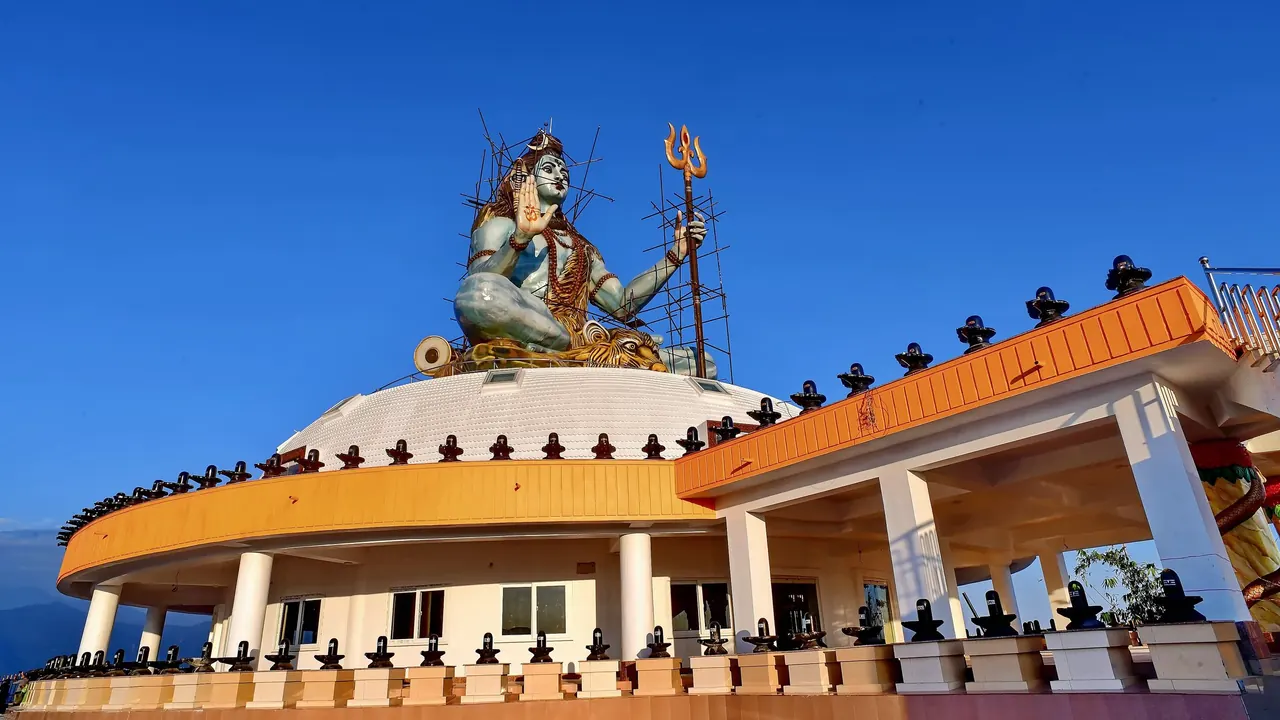
The Shiva statue at Pumdikot above the temple's orange roof
- Nature & outdoors95
- Affordable cities95
- Wellness & relaxation58
Photo: Rajesh Dhungana, CC BY-SA 4.0, cropped
Match
41
Every category weighted equally
- Beach & sun43
- Culture & arts36
- Food & nightlife36
- Family trip44
- Outdoors48
- Relax & unwind44
- Shopping & style37
- On a budget47
Pokhara in twelve categories
Our verdict on each, scored 0 to 100 against the same fixed benchmark cities, so a score means the same thing on every page.
Beaches & swimming. Scores 8 out of 100.
Food & drink. Scores 35 out of 100.
Culture & sights. Scores 27 out of 100.
Nightlife. Scores 30 out of 100.
Nature & outdoors. Scores 95 out of 100.
Day trips. Scores 22 out of 100.
Good for families. Scores 35 out of 100.
Getting around. Scores 38 out of 100.
Shopping & style. Scores 32 out of 100.
Affordability. Scores 95 out of 100.
Live music & performing arts. Scores 14 out of 100.
Wellness & relaxation. Scores 58 out of 100.
Pokhara category by category
Beaches & swimming
8Pokhara is far inland, and beach life plays no part in a stay. Phewa Lake sets the tone of the town, but people go out on it in painted wooden boats rather than swimming in it. The water near Lakeside is not inviting, and the few swimmers head for quieter shores or for Begnas Lake to the east. Lake swimming here is an occasional dip at most. If swimming matters, use a hotel pool.
Food & drink
35Most visitors eat along the Lakeside strip. Its long menus cover pizza, Israeli plates, Indian curries and apple pie, made for trekkers coming off the trail with big appetites. The meals worth looking for are Nepali. Thakali dal bhat comes with refills of rice, lentils and greens, momos are steamed or fried, and buffalo sekuwa is grilled over charcoal in simpler places away from the lake.
The bakeries and lakeside cafés are good for a slow breakfast with a mountain view, and the coffee is grown in Nepal's hills. Beyond that the range is narrow. There is no real fine-dining tier and no market culture a visitor would plan a day around.
Culture & sights
27Pokhara has a few things to see, though nothing makes the trip on its own. The small Tal Barahi temple stands on an island in Phewa Lake. The white World Peace Pagoda looks down from the ridge on the far shore. Bindhyabasini temple sits above the old bazaar, where some older Newar shopfronts survive among concrete buildings.
The International Mountain Museum tells the story of Himalayan climbing and of the mountain peoples. The Gurkha Museum covers the region's famous soldiers. Gupteshwor Cave and Davis Falls round out a half day. Most of the town is modern, and two days covers everything.
Nightlife
30Evenings centre on the Lakeside strip. Rooftop and lakefront bars fill with trekkers celebrating a finished circuit, cover bands play rock standards, and happy hours run long. There are a couple of small dance bars, and the mood is friendly and sociable rather than wild. Most places wind down around midnight, and the town is quiet well before dawn. It suits a few drinks after a long day on the trail, not a trip planned around going out.
Nature & outdoors
95Few towns sit under mountains like these. On a clear morning Machhapuchhre's fishtail summit and the Annapurna range stand above Phewa Lake. They are white peaks above 7,000m, close enough to fill the sky. Before dawn people drive or hike up to Sarangkot for the sunrise. The same ridge launches paragliders over the lake on thermals that pilots travel the world for. Kayaking on the lake, the forest trail up to the Peace Pagoda and mountain biking through the foothill villages fill the other days.
Pokhara is also the gateway to the Annapurna region. Poon Hill, Ghandruk, Mardi Himal and Annapurna Base Camp all start an hour or two away by road, and short one- and two-night treks such as Australian Camp work well for anyone with little time. October and November bring the clearest skies, and spring brings rhododendrons and some haze. From June to September the monsoon often hides the mountains for days at a time.
Day trips
22Mountain roads are slow, and few towns lie within an easy day. The best is Bandipur, a hilltop Newar trading town of old brick houses and a car-free main street, about two hours away by road. Gurung villages such as Ghandruk and Sikles have stone houses and local museums, but reaching them means a drive and a walk, and most people visit them on a trek. Gorkha's palace and Tansen's bazaars are better treated as overnight stops on the way to or from Kathmandu or Lumbini than as day trips.
Good for families
35Lakeside is a gentle place for a family. Traffic is light along the shore, rowing boats are easy to hire, and Nepali culture is warm towards children. Older children enjoy the Peace Pagoda walk, the caves and waterfall, the mountain museum and tandem paragliding when they meet the age and weight limits. There are no zoos, theme parks or play facilities to speak of. The roads out of town are bumpy and winding, and treks with young children need careful planning. Families with teenagers who like the outdoors get the most out of it.
Getting around
38Lakeside is small and flat, and most guesthouses, restaurants and boat jetties are a short walk apart. The shore road is pleasant on foot or by rented bicycle. Beyond that strip you will need help. Local buses are crowded and hard to work out, so visitors rely on taxis, rented scooters and hired drivers to reach Sarangkot, the caves, the old bazaar and the trailheads. Pavements are patchy, and the roads leading out of town are rough and slow.
Shopping & style
32Shopping in Pokhara is practical. Lakeside is lined with trekking shops selling and renting down jackets, boots and poles, many of them local copies of big brands, which are fine for a single trek. Pashmina and yak-wool shawls, singing bowls, thangka paintings and prayer flags fill the craft shops. Tibetan women from the refugee settlements on the edge of town sell jewellery and carpets, and the carpet workshops there can be visited. There are no boutiques or fashion streets.
Affordability
95Pokhara is among the cheapest places anywhere to spend a relaxed vacation. Simple lakeside guesthouses, often with a mountain view, cost a fraction of what a room costs in Europe, and comfortable hotels are still modest. A dal bhat lunch with refills is cheap. Even the Western-style Lakeside restaurants charge little by international standards. Taxis and boat hire are inexpensive. The bigger costs are activities: paragliding, guided treks and permits for the Annapurna region.
Live music & performing arts
14Formal performing arts barely exist in Pokhara. Live music means cover bands in the Lakeside bars and the occasional Nepali folk group. Some restaurants put on cultural dinner shows of Gurung and Magar dances, which are pleasant but staged for visitors. There is no theatre or concert season, and no opera.
Wellness & relaxation
58Pokhara's pace is its main restorative quality. After Kathmandu, Lakeside feels unhurried, with mornings over coffee watching the clouds lift off the Annapurnas and slow afternoons on the water. Yoga and meditation retreats line the quieter hillsides and the far shore, from drop-in classes to residential courses. Massage places offering Nepali and Ayurvedic treatments are everywhere, many of them catering to trekkers' sore legs.
There is no bathing tradition in the town itself. The best-known hot springs are at Jhinu Danda on the Annapurna trails, a long way from Pokhara. Spas are mostly simple, apart from a few resort hotels.
When should you go?
Pick a month to see what it is like. The climate figures are measured averages, not a forecast.
Pokhara in July
Daytime high, °C
Rainfall in the month, mm
The whole year
Shaded against this city’s own year: the deepest cell is its best month for that figure and the palest its weakest.
Where the figures come from
Pokhara has no weather station within reach, so its figures come from a gridded climate model rather than a measured record, and read a broad area rather than the city itself.
Temperature and rainfall are climate normals, averaged over the years shown. Pokhara: 1991-2020 normals, TerraClimate 4 km grid at the town, no weather station within 90 km.
Before you go
| Measure | Pokhara |
|---|---|
| Official language | Nepali |
| Currency | Nepalese Rupee (NPR) |
| Sockets | CM230 V, 50 Hz |
| Driving side | Left |
| Time zone | UTC+5:45 |
| Emergency number | Police 100, ambulance 102, fire 101 |
| Elevation | 900 m |
| Main airport | Pokhara International Airport (PHH)4 km from centre9 non-stop destinations |
By the numbers
| Measure | Pokhara |
|---|---|
| City population | 353,841 |
| People per km² | 762 |
| Museums within 10 km | 2 |
| UNESCO World Heritage sites within 50 km | 0 |
Compare Pokhara with
Every comparison with a written verdict behind it.