India
Mumbai
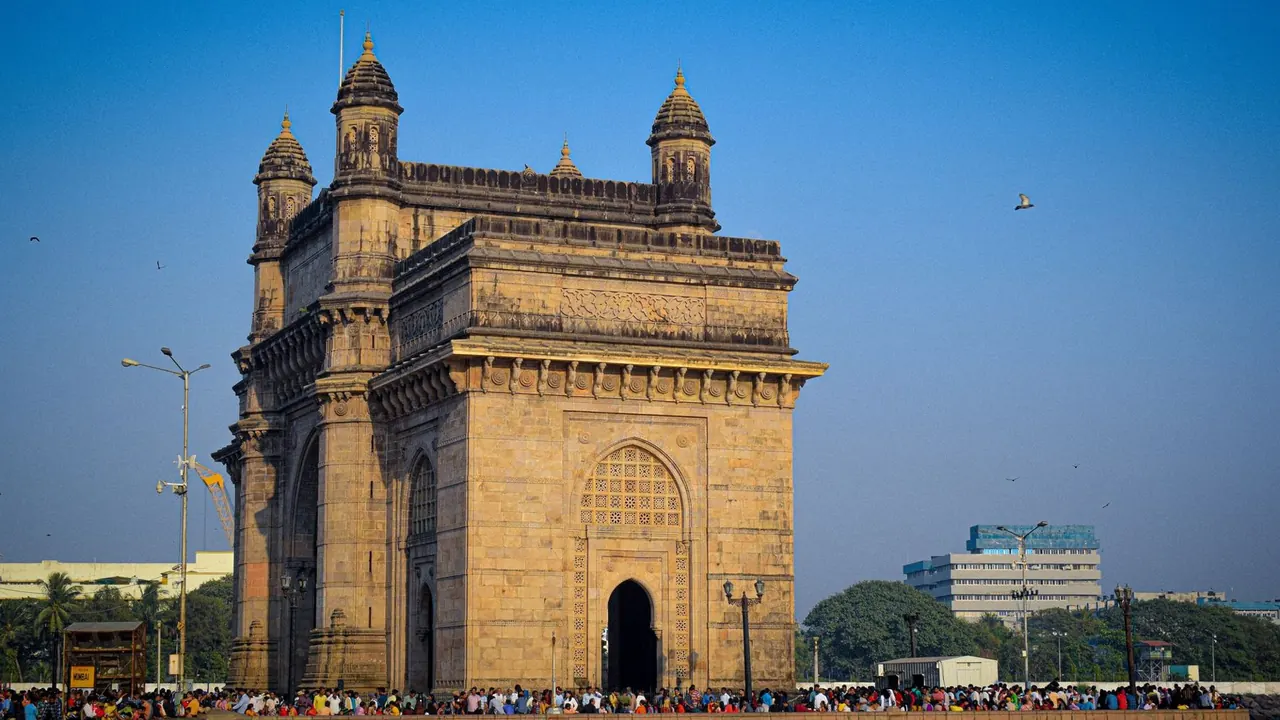
The Gateway of India under a blue sky
- Food & drink82
- Affordable cities72
- Culture & sights70
Photo: Shubam Bhasin, Pexels License
Match
51
Every category weighted equally
- Beach & sun47
- Culture & arts56
- Food & nightlife56
- Family trip49
- Outdoors50
- Relax & unwind47
- Shopping & style56
- On a budget54
Mumbai in twelve categories
Our verdict on each, scored 0 to 100 against the same fixed benchmark cities, so a score means the same thing on every page.
Beaches & swimming. Scores 18 out of 100.
Food & drink. Scores 82 out of 100.
Culture & sights. Scores 70 out of 100.
Nightlife. Scores 52 out of 100.
Nature & outdoors. Scores 55 out of 100.
Day trips. Scores 48 out of 100.
Good for families. Scores 35 out of 100.
Getting around. Scores 38 out of 100.
Shopping & style. Scores 66 out of 100.
Affordability. Scores 72 out of 100.
Live music & performing arts. Scores 55 out of 100.
Wellness & relaxation. Scores 24 out of 100.
Mumbai category by category
Beaches & swimming
18Mumbai has a long seafront but almost no beach life in the swimming sense. Juhu and Girgaum Chowpatty are wide stretches of sand where families walk at sunset, buy snacks and fly kites, but the water near the city is murky and few locals go in. In the monsoon the sea is rough and dangerous, and swimming is prohibited.
People who want to swim take the ferry across the harbour to the Alibaug coast, where the sand and water are cleaner. Allow the better part of a day for the trip. In the city itself, a hotel pool is the realistic answer.
Food & drink
82Mumbai eats on the street and at every price. Vada pav and pav bhaji are the city's own fast food, sold from carts near every station, and the beachfront stalls at Chowpatty serve bhel puri into the night. The old Irani cafés of the Fort and Colaba areas serve bun maska, berry pulao and sweet milky tea under bentwood chairs. Coastal cooking is the other pillar: Malvani and Konkani kitchens serve bombil, pomfret and crab in coconut and kokum curries.
The city also gathers food from all over India, from Gujarati thalis to Parsi dhansak. During Ramadan the lanes around Mohammed Ali Road fill with kebab grills after dark. Bandra and Lower Parel have a serious modern restaurant and cocktail tier. Visitors with sensitive stomachs should pick busy stalls.
Culture & sights
70Mumbai's sights are mostly the grand buildings of the British port city. The Chhatrapati Shivaji Maharaj Terminus is a Gothic Revival railway station of startling extravagance. The Victorian Gothic buildings around the Oval Maidan face the Art Deco apartment blocks of Marine Drive across the grass, and together they form one of the finest colonial streetscapes in Asia. The Gateway of India stands on the harbour at Apollo Bunder.
The Chhatrapati Shivaji Maharaj Vastu Sangrahalaya, the former Prince of Wales Museum, holds strong sculpture and miniature painting collections, and the Bhau Daji Lad Museum is a jewel box of a building. Beyond these there is the Haji Ali Dargah on its causeway, the Banganga Tank in Walkeshwar and the Kala Ghoda gallery quarter. The sights are spread out and getting between them is slow, so the list feels shorter than the city's size suggests.
Nightlife
52Going out in Mumbai is a scene of cocktail bars, gastropubs and a handful of clubs, centred on Bandra, Khar and the converted mill compounds of Lower Parel, with an older backpacker and expat bar strip in Colaba. Weekends are busy and dressy, and the crowd is young and well-off.
Bars and clubs close early for a city of this size, usually not long after midnight or around 1am. Drinks are heavily taxed and the areas are far apart. It is a good night out but not a reason to come, and much of the city's evening life happens over late dinners and on the seafront instead.
Nature & outdoors
55The surprise is Sanjay Gandhi National Park, a large forested reserve inside the northern suburbs with leopards, deer, trails and the rock-cut Kanheri caves. In winter and spring, flocks of flamingos feed on the mudflats of Thane Creek and Sewri. Marine Drive and Worli Sea Face are the city's great seaside walks.
The Western Ghats begin about two hours inland, depending on traffic. Lonavala, the car-free hill station of Matheran and the ruined hill forts draw hikers, especially in the monsoon, when the ridges turn green and waterfalls appear. From March to May the heat makes outdoor plans hard work.
Day trips
48The essential trip is the boat from the Gateway of India to Elephanta Island, about an hour across the harbour. Its cave temples hold monumental carvings of Shiva cut into the rock, including the great three-headed Maheshmurti. Further out, the Buddhist cave halls at Karla and Bhaja near Lonavala are older still. The Alibaug coast across the bay has sea forts, fishing villages and weekend houses.
Beyond those, the list thins. Leaving the city by road can take a long time, and the region's great sites, Ajanta and Ellora and the old Maratha capital of Pune, are too far for a comfortable day. Most visitors manage one or two outings at most.
Good for families
35Children are welcomed warmly everywhere in Mumbai, but the city itself is hard work with them. The Nehru Science Centre in Worli is the best indoor outing, and the Byculla zoo, the Gateway ferries, the seafront promenades and ice cream at Chowpatty fill an afternoon. Theme and water parks lie on the edge of the city or out towards Khopoli, a long drive away.
The obstacles are the everyday ones: crowded, broken pavements, heavy traffic, heat and humidity for much of the year, and the monsoon rains. Families do best with a car and driver and a hotel with a pool to come back to.
Getting around
38Mumbai is a long, thin city with sights spread from Colaba in the south to the northern suburbs, and moving along it is slow. The Fort, Kala Ghoda and Colaba area is pleasant to walk. Elsewhere, pavements are broken or blocked and crossing roads takes nerve.
The suburban railway is the city's backbone and the fastest way north, but at rush hour the carriages are crushingly full. Visitors usually travel outside peak times or use the first-class and women's carriages. The metro lines are cleaner and calmer but cover only part of the city. Most visitors use ride-hailing apps, black-and-yellow taxis and, in the suburbs, auto-rickshaws, and plan around road traffic that can turn a short distance into an hour.
Shopping & style
66Mumbai is India's commercial capital, and its shopping runs from old bazaars to air-conditioned luxury. Crawford Market sells fruit, spices and household goods under a Victorian hall. Zaveri Bazaar is the city's dense gold and jewellery quarter, and Chor Bazaar is a warren of antiques, brass and old film posters. Colaba Causeway and Linking Road in Bandra are long street-stall strips for clothes, sandals and trinkets.
For something better, Kala Ghoda and Bandra have Indian designer boutiques, handloom textile shops and craft stores selling block prints and silks. The luxury brands sit in a few large malls. Haggling is normal in the markets, and the heat makes long shopping days tiring.
Affordability
72Mumbai is India's most expensive city, but much of it is still cheap for a visitor. Street food, Irani café meals, suburban trains, taxis and rickshaws cost very little, and museum and monument entry is modest.
The exception is accommodation. Comfortable rooms in the south of the city and the better suburbs cost far more than elsewhere in India, and decent budget options are scarce. Cocktails and restaurant drinks are also heavily taxed. A visitor who eats locally spends little. One who stays in a good hotel and drinks in the smart bars will find prices closer to a Western city.
Live music & performing arts
55Mumbai's formal arts centre is the National Centre for the Performing Arts at Nariman Point. It is home to the Symphony Orchestra of India and has a steady programme of Hindustani classical music, dance, jazz and theatre. In Juhu, the small Prithvi Theatre is the heart of the city's Hindi and English stage, and Marathi theatre fills auditoriums in Dadar and Shivaji Park.
The scene is real and local, though much of it is aimed at residents rather than visitors. The Kala Ghoda Arts Festival brings street performances to the Fort area each winter. Bollywood dominates the city's identity, but it is something you watch on screen, not on stage.
Wellness & relaxation
24Mumbai is a hard city to slow down in. It is loud, humid and crowded from early morning, and it has no public bathing tradition. Relaxation mostly happens behind hotel doors, in the large spas of the luxury hotels, in Ayurvedic massage centres and in yoga studios in Bandra and the western suburbs.
The calmest moments are free: an early walk along Marine Drive or Bandra's Bandstand promenade, or sitting by the Banganga Tank. Anyone wanting a real retreat leaves for the hills of Lonavala or the Konkan coast.
When should you go?
Pick a month to see what it is like. The climate figures are measured averages, not a forecast.
Mumbai in July
Daytime high, °C
Rainfall in the month, mm
The whole year
Shaded against this city’s own year: the deepest cell is its best month for that figure and the palest its weakest.
Temperature and rainfall are climate normals, averaged over the years shown. Mumbai: 1991-2020 normals, Bombay / Santacruz (5.4 km from centre).
Before you go
| Measure | Mumbai |
|---|---|
| Official language | Hindi, English |
| Currency | Indian Rupee (INR) |
| Sockets | CM230 V, 50 Hz |
| Driving side | Left |
| Time zone | UTC+5:30 |
| Emergency number | 108 or 112 |
| Elevation | 14 m |
| Main airport | Chhatrapati Shivaji Maharaj International Airport (BOM)2 km from centre122 non-stop destinations |
By the numbers
| Measure | Mumbai |
|---|---|
| City population | 15,414,288 |
| People per km² | 25,563 |
| Museums within 10 km | 1 |
| UNESCO World Heritage sites within 50 km | 3 |
| Swim season, months above 21 °C | 12 months |
Compare Mumbai with
Every comparison with a written verdict behind it.