India
Delhi
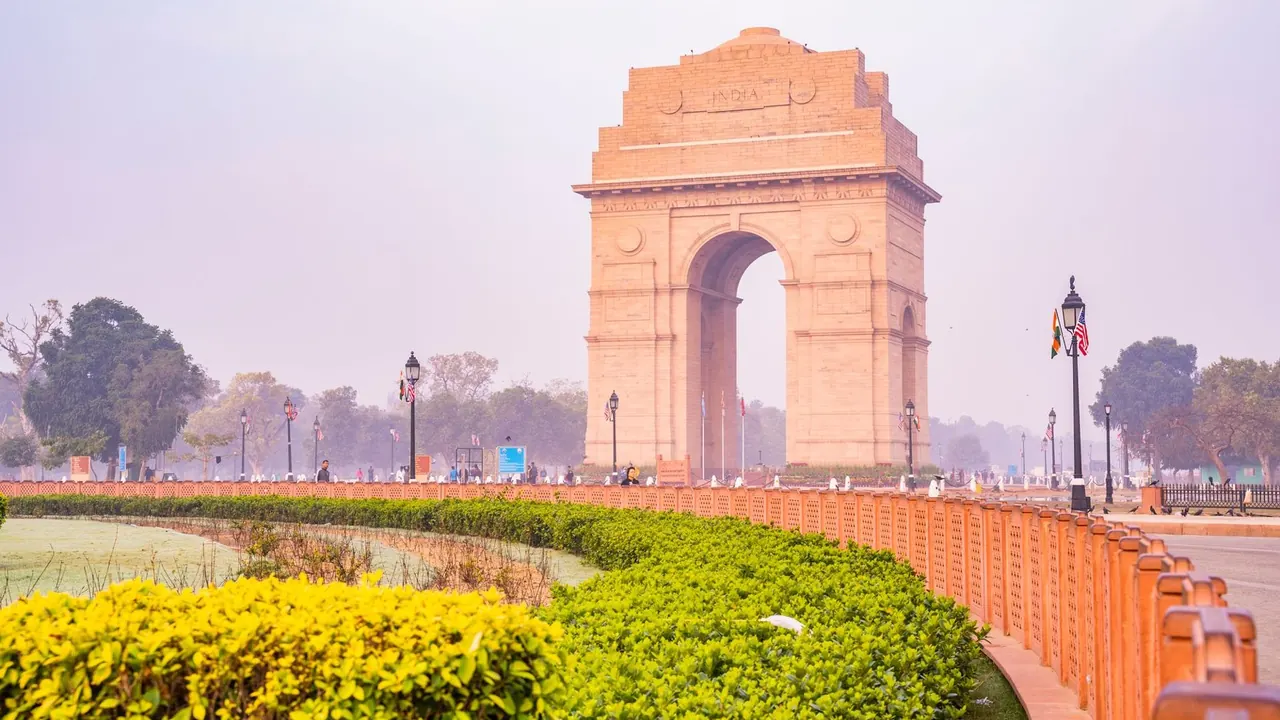
India Gate behind its flower beds
- Affordable cities90
- Culture & sights85
- Food & drink84
Photo: shalender kumar, Pexels License
Match
53
Every category weighted equally
- Beach & sun47
- Culture & arts63
- Food & nightlife61
- Family trip50
- Outdoors50
- Relax & unwind47
- Shopping & style61
- On a budget57
Delhi in twelve categories
Our verdict on each, scored 0 to 100 against the same fixed benchmark cities, so a score means the same thing on every page.
Beaches & swimming. Scores 4 out of 100.
Food & drink. Scores 84 out of 100.
Culture & sights. Scores 85 out of 100.
Nightlife. Scores 44 out of 100.
Nature & outdoors. Scores 20 out of 100.
Day trips. Scores 68 out of 100.
Good for families. Scores 32 out of 100.
Getting around. Scores 55 out of 100.
Shopping & style. Scores 78 out of 100.
Affordability. Scores 90 out of 100.
Live music & performing arts. Scores 55 out of 100.
Wellness & relaxation. Scores 25 out of 100.
Delhi category by category
Beaches & swimming
4Delhi has no beaches. It sits on the northern plains, far from any coast, and the Yamuna river that runs past the city is not a place to swim. Swimming means a hotel pool, which matters in the hot months before the monsoon. Travellers who want sand and sea usually fly on to Goa or Kerala after their time in the city.
Food & drink
84Delhi is one of the great places to eat in India. Old Delhi is the heart of it: the lanes around Chandni Chowk and Jama Masjid are lined with stalls frying stuffed parathas, simmering nihari and turning kebabs over coals, with jalebi and kulfi to finish. Mughlai and Punjabi cooking shape the city's food, and butter chicken and dal makhani are Delhi creations. Chaat, sharp, sweet and crunchy, is eaten standing at street carts all over town.
Above the street level there is a serious restaurant scene, from regional Indian kitchens covering Kerala to Kashmir to refined modern Indian tasting menus in South Delhi and the luxury hotels. Masala chai is everywhere, and filter coffee shows up at South Indian canteens. Stick to busy stalls where food is cooked hot in front of you, and drink bottled water.
Culture & sights
85Delhi is a city of many cities, and each has left monuments behind. Three UNESCO sites anchor a visit: the red sandstone Red Fort, the garden tomb of Humayun, which set the pattern for the Taj Mahal, and the Qutb Minar complex, with its soaring early Islamic tower. Jama Masjid, one of India's largest mosques, rises over Old Delhi, and the Lodi tombs sit among lawns in Lodhi Gardens. Smaller treasures such as Safdarjung's Tomb and the stepwell of Agrasen ki Baoli reward extra days.
New Delhi adds the grand imperial axis of Kartavya Path, known as Rajpath until 2022, which runs from India Gate to Rashtrapati Bhavan, the presidential palace, along with the national collections of Indian art and antiquities. Gurudwara Bangla Sahib, the Lotus Temple and the vast Akshardham show the city's living faiths. Sights are far apart, so seeing them takes planning rather than strolling.
Nightlife
44Going out in Delhi is a matter of picking a pocket of the city rather than wandering a nightlife district. Hauz Khas Village packs rooftop bars above the old reservoir, Connaught Place has its colonnades of bars and pubs, and the malls and towers of Gurugram hold the bigger clubs and brewpubs. Much of it is polished and aimed at young professionals, and weekends are when it comes alive.
The night ends earlier than in many big cities, and the scenes are spread out, so most people go by taxi from door to door. Women in particular tend to avoid walking alone late. A good evening is very possible, but few travellers come to Delhi for its nights.
Nature & outdoors
20Delhi sits on a flat, dry plain, and the mountains are many hours north. Green space comes in the form of gardens and remnants of forest: Lodhi Gardens and Sunder Nursery for morning walks, the scrubby Ridge forest on the edge of the Aravalli hills, and Sanjay Van with its trails among ruins. Birdwatchers do well, with Okhla on the Yamuna and Sultanpur, about an hour away, filling with migrant waterbirds in winter.
The climate works against outdoor plans. Summer heat is fierce, the monsoon is heavy, and from late autumn into winter smog often makes exercise outdoors unwise. For hiking, people head to the Himalayan hill stations on a longer trip.
Day trips
68The great day trip from Delhi is Agra, a little under two hours away by express train. The Taj Mahal, Agra Fort and the tomb known as the Baby Taj make a full and unforgettable day, and an early start beats the crowds and the heat. Fatehpur Sikri, the abandoned Mughal capital, can be added with a long day and a driver.
Closer to home are Mathura and Vrindavan, the holy towns of Krishna, full of temples and pilgrims, and the hilltop fort at Neemrana on the road to Rajasthan. Jaipur is reachable but makes a much better overnight trip. Road journeys out of Delhi are slow, so trains are usually the wiser choice.
Good for families
32Indian families love children, and travellers with little ones will be fussed over everywhere. The city has some places made for them: the National Rail Museum with its open-air steam locomotives, the National Zoological Park beside Purana Qila, the science centre at Pragati Maidan and the large amusement and water parks out in Noida and Gurugram. The Akshardham evening water show goes down well too.
The practical side is tough. Summer heat and winter smog both weigh heavily on small lungs, traffic is chaotic, pavements are broken or missing, and stomach bugs are a real risk. The cooler, clearer weeks of late winter and early spring suit a family trip best.
Getting around
55The Delhi Metro is the visitor's best friend: a large, clean, air-conditioned network with clear signs in English, an express line to the airport and stations near most of the major monuments. Women-only carriages are a reassuring touch. Between stations, auto-rickshaws and app taxis fill the gaps, and cycle-rickshaws are the only sensible way through the narrowest lanes of Old Delhi.
What makes the city hard is its size. Sights are spread across an enormous area, roads are clogged for much of the day, and walking is limited by heat, noise and uneven or absent pavements. Agree the fare before taking an auto, or use an app.
Shopping & style
78Delhi is where crafts from all over India come to be sold. Dilli Haat gathers stalls from different states selling textiles, embroidery and woodwork, and the state-run emporiums along Baba Kharak Singh Marg offer fixed prices and guaranteed quality. Old Delhi is a maze of specialist bazaars, with Chandni Chowk's fabric shops, Kinari Bazaar for wedding trimmings and Khari Baoli, the great spice market.
For style, Khan Market and the courtyards of Shahpur Jat and Hauz Khas hold Indian designers, block-print homeware and boutique fashion, while Janpath and Sarojini Nagar are crowded bargain streets for cheap clothes and trinkets. Global luxury brands cluster in the big South Delhi malls. Haggling is normal in the markets.
Affordability
90Delhi is very easy on the wallet. Street food and simple restaurant meals cost little, metro rides and auto-rickshaws are cheap, and decent guesthouses and mid-range hotels are plentiful. Foreigners pay a higher entry fee at the major monuments, but it is modest by international standards.
The city can also be lavish: its grand hotels and stylish South Delhi restaurants charge closer to Western prices, and imported alcohol is costly. A traveller who mixes local food and the metro with a comfortable mid-range room will spend far less than in most capitals.
Live music & performing arts
55Delhi's stage life is rooted in Indian classical traditions. Through the cooler months, auditoriums around Mandi House, such as Kamani and the Shri Ram Centre, along with the cultural centres of Lodhi Road, host Hindustani music recitals and Kathak and Bharatanatyam dance, and the season is dense with music and dance festivals. The National School of Drama makes Delhi India's theatre capital, though most plays are in Hindi.
The most memorable performance for many visitors is free: Sufi qawwali sung in the courtyard of the Nizamuddin shrine, traditionally on Thursday evenings. Small venues around the city keep a modest jazz and indie scene going. There is no tradition of nightly shows aimed at visitors, so it pays to check listings.
Wellness & relaxation
25Delhi is not a restful city. Noise, traffic and crowds are constant, and winter smog makes the air heavy. Relief comes from the large hotels, whose spas offer Ayurvedic treatments and Indian massage, and from smaller Ayurveda and yoga centres across South Delhi. The quietest moments are early mornings in Lodhi Gardens or Sunder Nursery, and the hush inside a gurudwara or Sufi shrine. For a proper retreat, travellers usually head on to Rishikesh or Kerala.
When should you go?
Pick a month to see what it is like. The climate figures are measured averages, not a forecast.
Delhi in July
Daytime high, °C
Rainfall in the month, mm
The whole year
Shaded against this city’s own year: the deepest cell is its best month for that figure and the palest its weakest.
Temperature and rainfall are climate normals, averaged over the years shown. Delhi: 1991-2020 normals, New Delhi / Safdarjung (9.4 km from centre).
Before you go
| Measure | Delhi |
|---|---|
| Official language | Hindi, English |
| Currency | Indian Rupee (INR) |
| Sockets | CM230 V, 50 Hz |
| Driving side | Left |
| Time zone | UTC+5:30 |
| Emergency number | 108 or 112 |
| Elevation | 221 m |
| Main airport | Indira Gandhi International Airport (DEL)17 km from centre144 non-stop destinations |
By the numbers
| Measure | Delhi |
|---|---|
| City population | 26,495,000 |
| People per km² | 18,962 |
| Museums within 10 km | 23 |
| UNESCO World Heritage sites within 50 km | 4 |
Compare Delhi with
Every comparison with a written verdict behind it.