India
Agra
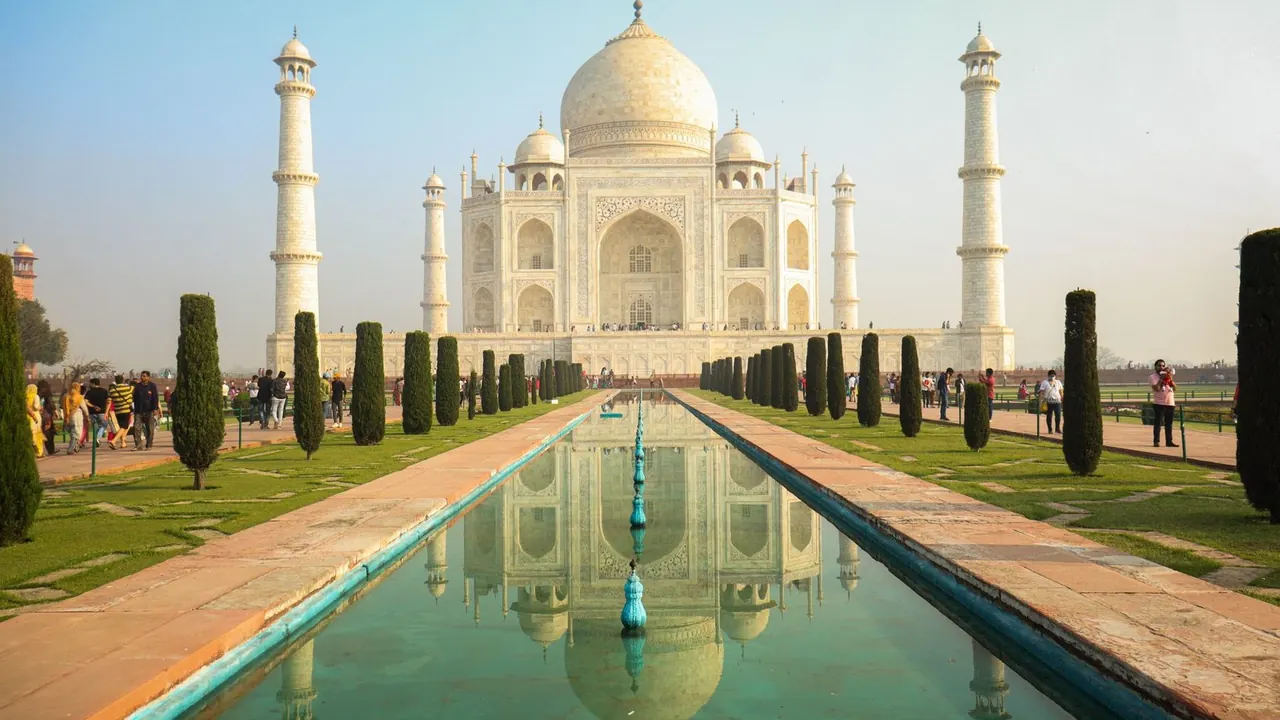
The Taj Mahal reflected in its pool
- Affordable cities90
- Culture & sights80
- Day trips70
Photo: Sanket Sawale, Pexels License
Match
36
Every category weighted equally
- Beach & sun33
- Culture & arts42
- Food & nightlife34
- Family trip39
- Outdoors41
- Relax & unwind34
- Shopping & style36
- On a budget42
Agra in twelve categories
Our verdict on each, scored 0 to 100 against the same fixed benchmark cities, so a score means the same thing on every page.
Beaches & swimming. Scores 3 out of 100.
Food & drink. Scores 42 out of 100.
Culture & sights. Scores 80 out of 100.
Nightlife. Scores 7 out of 100.
Nature & outdoors. Scores 30 out of 100.
Day trips. Scores 70 out of 100.
Good for families. Scores 20 out of 100.
Getting around. Scores 28 out of 100.
Shopping & style. Scores 38 out of 100.
Affordability. Scores 90 out of 100.
Live music & performing arts. Scores 10 out of 100.
Wellness & relaxation. Scores 15 out of 100.
Agra category by category
Beaches & swimming
3Agra has no beaches and no bathing water. The city sits on the flat northern plains, far from any coast, and the Yamuna that curves past the Taj Mahal is a river to look at, not to swim in. Swimming means a hotel pool, which many of the better hotels have and which are welcome in the hot months.
Food & drink
42Agra eats in the Mughlai tradition of the north: rich kormas, biryani, kebabs and breads from the tandoor. The real local food is found in the old bazaars around Kinari Bazaar and the Jama Masjid, where the morning starts with bedai, a puffed fried bread served with spiced potato, followed by hot jalebi. Sadar Bazaar is the place for chaat and sweets in the evening, and the city's own sweet, petha, a translucent candied ash gourd, is sold everywhere in dozens of flavours.
Beyond that the choice narrows quickly. Most visitors eat in hotel dining rooms or restaurants near the Taj built for tour groups, which can be good but rarely surprising, and alcohol is less easy to find than in larger cities. Agra rewards a curious eater for a day or two rather than a whole trip.
Culture & sights
80The Taj Mahal is the reason Agra is on the map, and it lives up to it: the white marble tomb, its gardens and the inlaid stonework reward an early start, when the light is soft and the crowds thinner. Across the river, the Mehtab Bagh gardens give the classic view at sunset. A short ride upstream, Agra Fort is a red sandstone citadel of palaces, audience halls and marble pavilions from which the Mughal emperors ruled.
The smaller monuments are what make the city more than a single sight. The tomb of Itimad-ud-Daulah, often called the Baby Taj, has some of the finest inlay work in India, Akbar's tomb at Sikandra sits in a park roamed by deer and monkeys, and the old Jama Masjid anchors the bazaar quarter. There are few museums and little else to see, so most visitors cover Agra well in two days.
Nightlife
7Agra goes to bed early. Visitors rise before dawn for the Taj, and evenings end with dinner, perhaps a drink in a hotel bar or on a rooftop with a view of the dome. There are no clubs or bar districts worth seeking out, and the old city streets are for shopping and eating rather than going out.
Nature & outdoors
30Agra lies on the flat, dusty plain of the Yamuna, and the city offers little green beyond its Mughal gardens and the riverside at Mehtab Bagh. The heat from April to June and the winter haze limit time outdoors.
Wildlife is the exception. Keoladeo National Park at Bharatpur, about an hour away, is one of the finest bird wetlands in Asia, best from November to February when migrants arrive and visitors explore by bicycle or rickshaw. The Chambal river sanctuary, further south, has gharials, river dolphins and quiet boat trips, and the Sur Sarovar bird sanctuary sits on the city's edge. There are no hills or trails for hiking.
Day trips
70The best day out is Fatehpur Sikri, about 40km west, the abandoned red sandstone capital of the emperor Akbar, with its palaces, courtyards and the vast mosque gateway of Buland Darwaza. It pairs easily with the Keoladeo wetlands at Bharatpur or the water palaces and gardens of Deeg further on.
To the north, Mathura and Vrindavan, about an hour away, are the towns of Krishna's birth and childhood, full of temples, ghats and pilgrims, and at their most intense during Holi. Gwalior, with its great hilltop fort and palaces, is around two hours by train to the south. The fast trains also put Delhi within reach for a long day, though most visitors are better served staying there.
Good for families
20Agra is hard work with children. Beyond the monuments there is little aimed at them, the heat from spring to autumn is fierce, traffic is chaotic and pavements are scarce, and touts and crowds at the main gates test anyone's patience. Older children often enjoy the scale of the Taj and the ramparts of Agra Fort, and the bear rescue centre on the road towards Mathura is a real highlight for animal lovers. Most families keep the visit short, sightsee early, and retreat to a hotel pool in the afternoon.
Getting around
28Agra is not a city to walk. The Taj Mahal, Agra Fort, Itimad-ud-Daulah and Sikandra are spread out along and away from the river, roads are congested and pavements are broken or absent. Visitors get around by auto-rickshaw, app-based taxi or a car and driver hired for the day, which is the easiest way to combine the city with Fatehpur Sikri. Around the Taj itself, polluting vehicles are kept out and the last stretch is covered on foot, by electric cart or by cycle rickshaw. Agra Cantt is the main railway station for arrivals from Delhi and beyond.
Shopping & style
38Agra's craft is pietra dura, the marble inlay of semi-precious stone used on the Taj, still made by families of artisans and sold as tabletops, boxes and plates. The city is also known for leather goods, shoes and carpets, and for its sweets. The old bazaars, Kinari Bazaar for wedding finery, fabric and trinkets and Sadar Bazaar for a more relaxed browse, are lively and inexpensive.
The catch is the commission trade: drivers and guides steer visitors to large showrooms where prices are inflated, and quality varies widely. Shop where you choose rather than where you are taken. There is little in the way of fashion or design shopping.
Affordability
90Agra is very cheap for a visitor. Guesthouses and mid-range hotels cost little, street food and local restaurants even less, and rickshaws and taxis are inexpensive for the short hops between sights. The main costs are the entry fees foreigners pay at the Taj Mahal and the other Mughal monuments, which are far higher than local prices, and the handful of luxury hotels with views of the Taj, which charge international rates. Hiring a car and driver for a day is a modest expense and saves much haggling.
Live music & performing arts
10Agra has little live performance of its own. The regular offer is staged for visitors: musical productions retelling the story of Shah Jahan and Mumtaz Mahal, and classical dance or music evenings in the larger hotels. The Taj Mahotsav, a long-running festival of crafts, folk dance and music held each spring at Shilpgram near the Taj, is the main event in the calendar. Otherwise, evenings are quiet.
Wellness & relaxation
15Rest in Agra happens behind hotel walls. The better hotels have spas offering Ayurvedic massage and oil treatments, along with lawns and pools that make a welcome retreat after a pre-dawn start at the Taj and a hot morning of sightseeing. Outside them, traffic, horns, winter haze and touts at the monument gates set the tone, and there is no bathing tradition to speak of.
The calmest places in the city itself are the walled Mughal gardens, above all around Itimad-ud-Daulah and Akbar's tomb at Sikandra, where the noise drops away and a shaded bench is easy to find late in the afternoon. Visitors who want a slower pace usually plan for it inside their hotel rather than out in the city.
When should you go?
Pick a month to see what it is like. The climate figures are measured averages, not a forecast.
Agra in July
Daytime high, °C
Rainfall in the month, mm
The whole year
Shaded against this city’s own year: the deepest cell is its best month for that figure and the palest its weakest.
Where the figures come from
Agra has no rain gauge within 25 km of the centre, so its rainfall comes from a gridded climate dataset read at the city rather than from a gauge further away.
Temperature and rainfall are climate normals, averaged over the years shown. Agra: 1942-2025 (rainfall 1991-2020) normals, Agra (6.2 km from centre).
Before you go
| Measure | Agra |
|---|---|
| Official language | Hindi, English |
| Currency | Indian Rupee (INR) |
| Sockets | CM230 V, 50 Hz |
| Driving side | Left |
| Time zone | UTC+5:30 |
| Emergency number | 108 or 112 |
| Elevation | 171 m |
| Main airport | Agra Airport / Agra Air Force Station (AGR)6 km from centre2 non-stop destinations |
By the numbers
| Measure | Agra |
|---|---|
| City population | 1,585,705 |
| People per km² | 8,417 |
| Museums within 10 km | 0 |
| UNESCO World Heritage sites within 50 km | 4 |
Compare Agra with
Every comparison with a written verdict behind it.