Islamabad
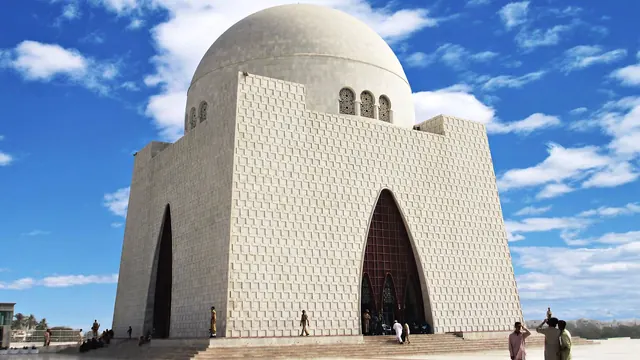
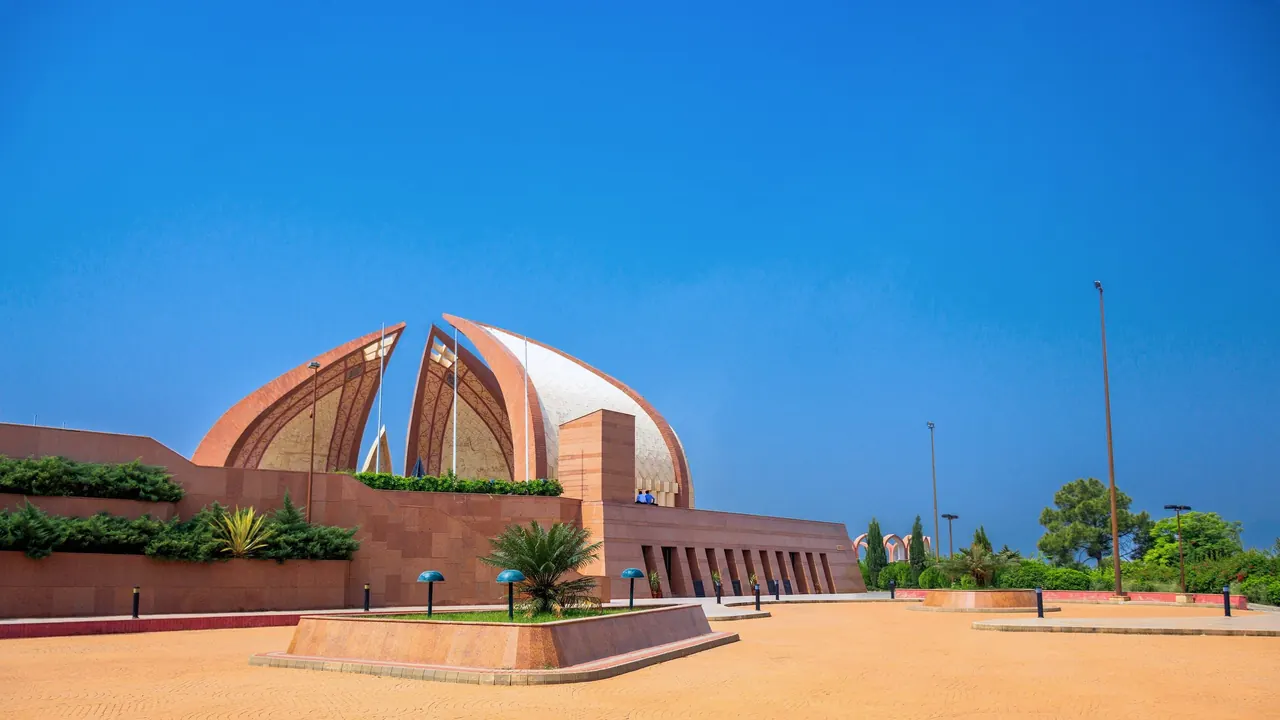
The Pakistan Monument in Islamabad under a deep blue sky
- Affordability87
- Nature & outdoors72
- Day trips58
Photo: Fawad4real, CC BY-SA 4.0, cropped
Match
40
Every category weighted equally
- Beach & sun39
- Culture & arts39
- Food & nightlife35
- Family trip45
- Outdoors48
- Relax & unwind40
- Shopping & style38
- On a budget45
Islamabad in twelve categories
Our verdict on each, scored 0 to 100 against the same fixed benchmark cities, so a score means the same thing on every page.
Beaches & swimming. Scores 3 out of 100.
Food & drink. Scores 55 out of 100.
Culture & sights. Scores 35 out of 100.
Nightlife. Scores 6 out of 100.
Nature & outdoors. Scores 72 out of 100.
Day trips. Scores 58 out of 100.
Good for families. Scores 40 out of 100.
Getting around. Scores 30 out of 100.
Shopping & style. Scores 42 out of 100.
Affordability. Scores 87 out of 100.
Live music & performing arts. Scores 18 out of 100.
Wellness & relaxation. Scores 28 out of 100.
Islamabad category by category
Beaches & swimming
3Islamabad is far inland, and the coast at Karachi is a flight away. There is no beach life here. Rawal Lake and the reservoirs around the city are for walking and boating, not bathing, so swimming means a hotel pool.
Food & drink
55Eating here means Punjabi and Pashtun cooking at its heartiest: mutton and chicken karahi made to order in iron pans, seekh kebabs and tikka straight off charcoal, Peshawari chapli kebabs, nihari and paya for breakfast, and naan from tandoors on every market corner. The sector markets each have their own grill houses and sweet shops, Saidpur Village and the Margalla foothills have restaurants with views over the city, and evenings bring families out to eat late in the cooler air.
For the busier, older street-food scene, cross into neighbouring Rawalpindi, where the bazaars around Saddar and Raja Bazaar have chickpea stalls, halwa puri and doodh patti tea brewed thick with milk. What the city lacks is drink: alcohol is effectively absent from public life, so tea, fresh juices and lassi stand in for a café or bar culture.
Culture & sights
35Islamabad was built from scratch in the 1960s, so its sights are modern ones. The Faisal Mosque, a vast tent-like prayer hall with four pencil minarets set against the Margalla Hills, is the reason most visitors come, and it is genuinely striking. The Pakistan Monument, shaped like opening petals on Shakarparian hill, sits near the Lok Virsa Heritage Museum, the best place in the country to understand the crafts, dress and music of its regions.
Beyond that the list is short: Saidpur Village with its restored old houses and small temple, the Pakistan Museum of Natural History, and the modernist government quarter. Two days covers it comfortably, and the deep history lies outside the city.
Nightlife
6There is essentially no nightlife in the usual sense. Alcohol is not part of public life and there are no bars or clubs to speak of. Evenings revolve around late dinners, ice cream and tea in the sector markets, which stay busy with families well into the night, especially in summer and during Ramadan.
Nature & outdoors
72Few capitals sit this close to wild hills. The Margalla Hills rise straight from the city's northern sectors, and a network of numbered trails climbs through scrub and pine forest to Daman-e-Koh and Pir Sohawa, with monkeys, birds of prey and long views back over the grid of the city. Early mornings on the trails are a local ritual, and Rawal Lake adds lakeside walks and boating.
About an hour and a half to two hours up the road, the Galyat ridge around Nathia Gali and Murree offers cool pine forest, the Mushkpuri and Miranjani hikes and snow in winter. Spring and autumn are the best seasons; the lowland summer is very hot, and the high peaks of the north are a journey of their own rather than a day out.
Day trips
58The best outing is Taxila, under an hour away, where the excavated cities and Buddhist monasteries of ancient Gandhara spread across the valley, with a museum full of stone sculpture. Rawalpindi, joined to Islamabad, is the opposite of the capital: an old, crowded bazaar city worth an afternoon.
Further out, at around two hours by road, the massive sixteenth-century walls of Rohtas Fort, the Hindu temple complex of Katas Raj around its sacred pool, and the colonial hill station of Murree each make a full day. The Khewra salt mine is a little further. Travel is almost always by car or hired driver, and the list thins after these.
Good for families
40Pakistani culture is very fond of children, and Islamabad is the calmest and greenest city in the country to bring them to. Big parks such as Fatima Jinnah Park and Lake View Park by Rawal Lake have space and rides, the Pakistan Museum of Natural History has dinosaurs and dioramas, and gentle lower trails in the Margalla Hills suit older children.
That is about the extent of it. There are no theme parks or aquariums, the summer heat is punishing, pavements are patchy and getting anywhere means a car or taxi.
Getting around
30Islamabad is laid out in large lettered and numbered sectors separated by wide avenues, which makes it easy to navigate on a map but tiring on foot. The main sights are scattered, pavements come and go, and crossing the big roads is unpleasant. The Metro Bus runs a useful line to Rawalpindi, but most visitors use ride-hailing apps or taxis, which are plentiful and inexpensive. For day trips, a car with a driver is the norm.
Shopping & style
42The appeal is in crafts and cloth rather than brands. Carpets, Kashmiri shawls, embroidered textiles, onyx, truck-art souvenirs and tailored shalwar kameez are easy to find in Jinnah Super and the Kohsar and Super markets, and the shops around Lok Virsa carry regional handicrafts. Large malls cover international chains.
For the atmosphere of a real bazaar, Rawalpindi's Raja Bazaar and Saddar are crowded lanes of fabric, spices, bangles and wedding finery. Bargaining is expected in markets but not in fixed-price shops.
Affordability
87Islamabad is a very cheap destination for most visitors. Grills and street food cost little, ride-hailing across the city is inexpensive, and most sights charge small fees or nothing. It is the priciest city in Pakistan, and its handful of international business hotels charge accordingly, but guesthouses and mid-range hotels in the sectors keep a stay modest.
Live music & performing arts
18There is little to attend on a regular basis. The Pakistan National Council of the Arts hosts exhibitions, occasional plays and concerts, and Lok Virsa holds folk music and dance festivals at intervals through the year. Qawwali, the devotional music of the Sufi shrines, is the most memorable live tradition, heard at shrines such as Bari Imam on the city's edge, but most visitors will leave without seeing a formal performance.
Wellness & relaxation
28Islamabad has no bathing tradition to speak of, and spa treatments are largely confined to the bigger hotels and a few salons. What it offers instead is calm: wide tree-lined streets, quiet residential sectors and early-morning walks in the Margalla foothills make it the most restful city in the country, though it is a place to slow down rather than to be pampered.
When should you go?
Pick a month to see what it is like. The climate figures are measured averages, not a forecast.
Islamabad in July
Daytime high, °C
Rainfall in the month, mm
The whole year
Shaded against this destination’s own year: the deepest cell is its best month for that figure and the palest its weakest.
Temperature and rainfall are climate normals, averaged over the years shown. Islamabad: 1991-2020 (sunshine 1961-1990) normals, Islamabad Airport (10.8 km from centre).
Before you go
| Measure | Islamabad |
|---|---|
| Official language | Urdu, English |
| Currency | Pakistan Rupee (PKR) |
| Sockets | CGM230 V, 50 Hz |
| Driving side | Left |
| Time zone | UTC+5 |
| Emergency number | Police 15, ambulance 1122, fire 16 |
| Elevation | 490 m |
| Main airport | Islamabad International Airport (ISB)26 km from centre43 non-stop destinations |
By the numbers
| Measure | Islamabad |
|---|---|
| Population | 1,014,825 |
| People per km² | 1,120 |
| Museums within 10 km | 5 |
| UNESCO World Heritage sites within 50 km | 1 |
Compare Islamabad with
Every comparison with a written verdict behind it.