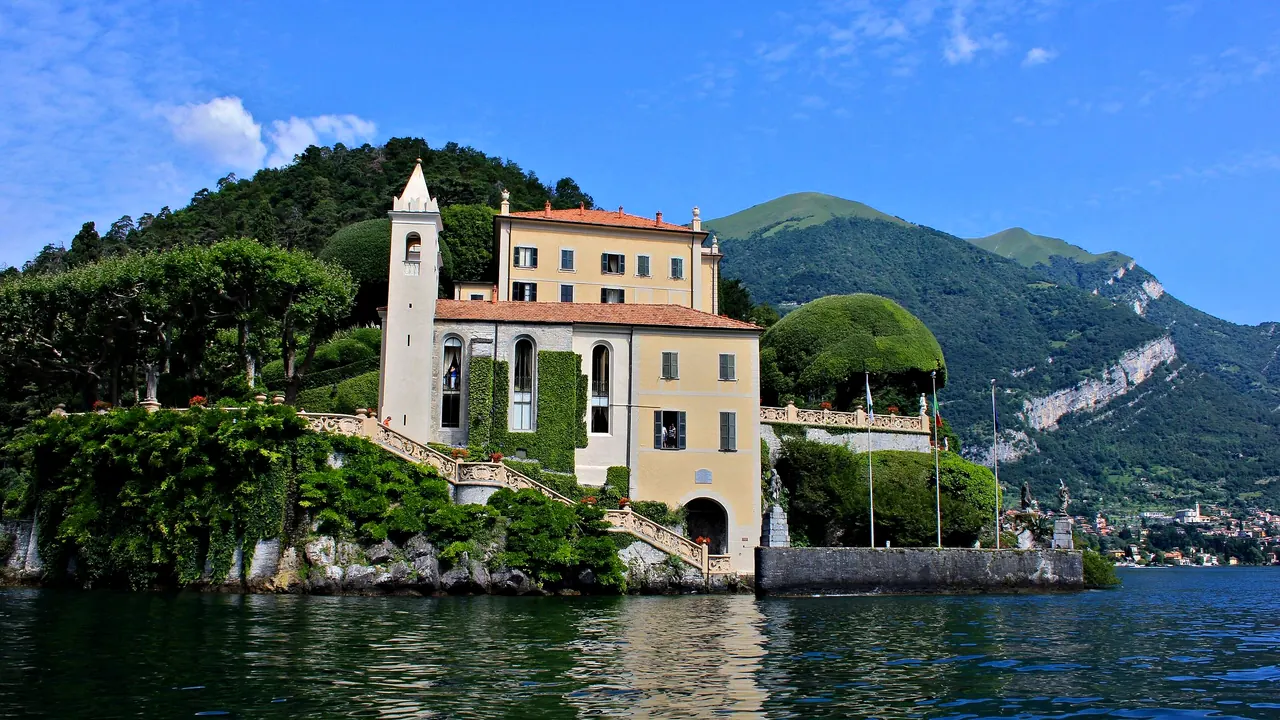
Photos: Lake Como by Navin75, CC BY-SA 2.0, cropped.
Lake Como or Umbria?
Our verdict in twelve categories, each scored against the same fixed benchmark cities, and the climate month by month, so you can choose for your trip.
Choose Lake Como for
- beaches
- nature and the outdoors
- shopping
Lake Como is the choice when the scenery is the point of the trip. Mountains drop straight into deep water, villas and gardens line the shore, and ferries do the work of linking villages. It suits couples and walkers who want to swim off a jetty, hike above the lake and spend the evening on a terrace by the water, and who accept that this comfort comes at a high price in summer.
Choose Umbria for
- prices
- culture and sights
- food and drink
Umbria rewards travellers who come for art, food and wine and are happy to drive. A chain of hill towns from Assisi to Orvieto holds frescoes of the first rank, the cooking and the Sagrantino are better than anything around the lake, and a farmhouse base costs noticeably less. You give up swimming worth the name and the drama of a mountain lake, and in return you get a different town every day.
Scoreboard
Twelve categories on one fixed scale from 0 to 100. The shaded stretch is the gap between the two.
Your match
Pick a travel style or drag the sliders, and both match scores follow your weighting.
Wins on beaches and nature and the outdoors with your weighting.
Wins on prices and culture and sights with your weighting.
What matters to you?
Category by category
What the scores mean for a trip.
Beaches & swimming
Neither has sand, but Lake Como gives a far better swim. Clear, deep water off the lidos at Bellagio, Lenno and Menaggio, or along the open upper shore at Domaso, makes a dip between ferry rides a real part of a summer day.
Umbria has no coast at all. Lake Trasimeno is warm and shallow, good for small children, but often cloudy, with reeds and a muddy bottom in places. Most visitors end up swimming in their farmhouse pool.
Food & drink
Umbria eats noticeably better. Black truffle on strangozzi, Norcia's pork, Castelluccio lentils and Trevi olive oil give its trattorie a depth of local produce that the lake lacks. Sagrantino tastings around Montefalco and the whites of Orvieto make wine a reason to come in its own right.
Lake Como has one classic plate in perch with risotto, and its best meals are found in crotti and hill-village trattorias rather than on the lakefront, where terraces tend to be pricey and generic. Both kitchens are firmly regional and short on anything beyond Italian cooking.
Culture & sights
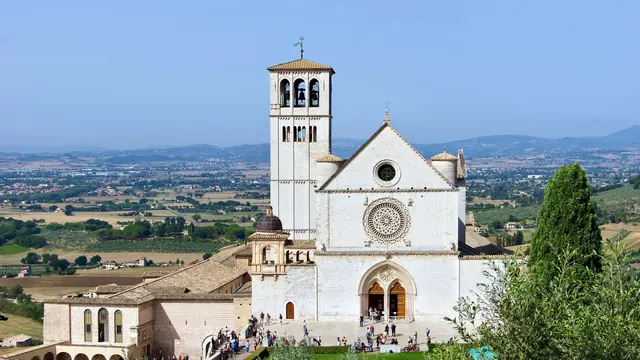
Umbria is in a different league for art. Assisi's basilica, Signorelli's Last Judgement at Orvieto and the Galleria Nazionale in Perugia are major works, and Gubbio, Spello, Todi and Montefalco each add frescoes or a fine square.
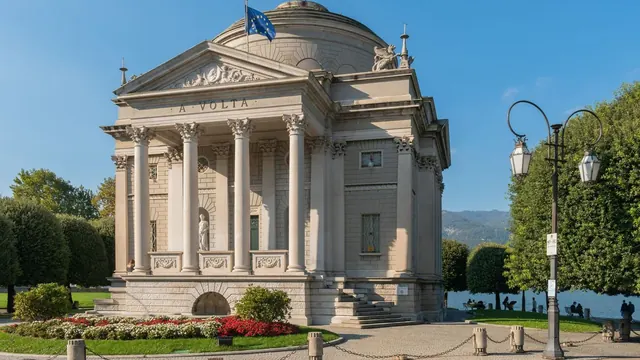
Lake Como's heritage is more about setting than masterpieces. Villa Carlotta, Balbianello and Melzi are best enjoyed for their gardens, reached by boat, while Como town adds its cathedral and Terragni's rationalist buildings. Neither destination relies on big museums.
Nightlife
Both are quiet after dinner, and neither has clubs. Umbria has a slight edge thanks to Perugia, where students fill the cathedral steps and the wine bars of the old centre on warm evenings. On Lake Como the night out is a cocktail in Como town or a terrace drink in Bellagio or Varenna before the last ferry, and anyone after more takes the train to Milan.
Nature & outdoors
Lake Como has the more dramatic landscape. Mountains rise more than 2,000m straight out of a deep glacial lake, and walkers on the Greenway or the old mule track above Varenna have the water below them all the way. The breva wind on the upper lake adds windsurfing and kitesurfing.
Umbria is softer: olive groves, oak woods and river valleys. Its drama lies in the far east, where the Castelluccio plain flowers under the Sibillini, the Valnerina offers rafting and canyoning, and the Marmore Falls drop about 165m.
Day trips
Umbria is built for day trips. From a base near Perugia or Spoleto, a different hill town fills each day, Tuscany's Cortona, Montepulciano and Siena are close, and Rome is a little over an hour by train from Orvieto.
Lake Como is a strong base too, with Milan, Bergamo and Lugano all within about an hour, and ferry hops around the central villages that need no planning. Beyond those, the choice is thinner, and the Bernina line and Lake Maggiore make for long days.
Good for families
These two are about even for children, and in both the best family days are simple ones. Lake Como offers boat rides, the Brunate funicular and lido swims, but steep stepped villages and narrow roads without pavements make it tiring with a pushchair. The flatter upper lake near Domaso is the easiest base.
Umbria works best around a farmhouse with a pool and space to run, with Trasimeno's shallow water and the Marmore Falls as outings. Its cobbled hill towns are no kinder to pushchairs than Bellagio's stairs.
Getting around
Getting around is about as easy in either, but in different ways. On Lake Como the boat is king: ferries cross the central basin in minutes and trains run up the eastern shore, so staying car-free in Bellagio, Varenna or Menaggio works well, while driving the narrow shore roads is a trial.
Umbria is the reverse. Roads are good and quiet, so a car is the practical choice, with escalators and lifts carrying you up from the car parks below Perugia, Orvieto and Spoleto. Rail links the main towns, but the countryside is hard to reach without a car.
Shopping & style
Neither is a shopping destination, and in both the best buys are local crafts. On Lake Como that means silk, scarves and ties from Como's mills and outlets, with Milan an hour away for real fashion. In Umbria you buy painted majolica from Deruta's workshops, hand-loomed linen from Montefalco, cashmere near Perugia, and truffles and hams in Norcia.
Affordability
Umbria is the far cheaper trip. Farmhouse stays and small town hotels cost less than in nearby Tuscany, village set lunches and local wine are good value, and most sights cost little to enter. The main extra cost is the hire car.
Lake Como in summer is one of the dearer corners of Italy. The central lake is lined with grand hotels, and the lakefront restaurants charge for the view. You can save by staying in Como town or Lecco, camping on the upper lake, or coming in spring or autumn.
Live music & performing arts
Umbria has more to offer here, at least in early summer. Umbria Jazz fills Perugia's squares in July, and the Festival dei Due Mondi brings opera, dance and theatre to Spoleto, while small towns keep their old jewel-box theatres for occasional performances.
Lake Como has Como's Teatro Sociale with a real season, and summer concerts in villas and churches, but for anything bigger it relies on La Scala in Milan.
Wellness & relaxation
Both offer rest through their slow pace rather than through bathing. On Lake Como it comes with luxury: the villa hotels near Cernobbio and Tremezzo have serious spas with pools over the water, and the small villages grow very quiet in the evening.
Umbria's calm is more rustic and spiritual, with farmhouse pools, yoga and massage, and the hermitages on Monte Subasio for silence. Its few spa towns are modest, and neither destination has a real thermal tradition.
When should you go?
Pick your month. The climate figures are measured averages, not a forecast.
Lake Como in July
Umbria in July
Daytime high, °C
Rainfall in the month, mm
Where the figures come from
Umbria's temperatures are measured 53 km from the centre, at Frontone.
Umbria has no rain gauge within 25 km of the centre, so its rainfall comes from a gridded climate dataset read at the destination rather than from a gauge further away.
Temperature and rainfall are climate normals, averaged over the years shown. Lake Como: 1991-2020 normals, Lugano (22.8 km from centre). Umbria: 1991-2020 normals, Frontone (52.9 km from centre).
Both are cold in winter and pleasant from late spring, but they get wet at different times. On Lake Como the rain is heavy from April right through to November, often arriving as summer storms, yet July and August are also the sunniest months, with highs of about 27°C that are good for walking and for swimming between late June and early September. May, June and September are the best balance for hiking and villa gardens, if you allow for showers.
Umbria is drier and hotter in midsummer. July reaches around 30°C with very little rain, which makes the valleys and hill-town climbs tiring in the middle of the day. Spring and early autumn are the best times for walking around the towns, while from October the rain picks up, peaking at about 97mm in November. For a summer trip Como stays a little cooler, while Umbria has the more settled weather.
Which traveller are you?
For an outdoors trip, Lake Como makes the better base. You can start a walk high above the shore, come down to a village and take the boat home, then spend the afternoon on the water. In Umbria the wildest country lies far to the east, a long drive from most bases.
On a culture and arts trip, Umbria gives you more to fill the days. Take a different hill town each morning, go into the cool churches and galleries when the midday heat sets in, and aim for early summer to catch the festivals. On Lake Como the days are mostly spent in gardens.
On a trip with a tight budget, Umbria lets the money last longer. Hire a car, stay in the countryside and make lunch the main meal. On Lake Como, saving money means staying away from the villa villages that are the reason most people go.
Before you go
| Measure | Lake Como | Umbria |
|---|---|---|
| Official language | Italian | Italian |
| Currency | Euro (EUR) | Euro (EUR) |
| Sockets | CFL230 V, 50 Hz | CFL230 V, 50 Hz |
| Driving side | Right | Right |
| Time zone | UTC+1, UTC+2 in summer | UTC+1, UTC+2 in summer |
| Emergency number | 112 | 112 |
| Main airport | Milan Malpensa International Airport (MXP)208 non-stop destinations | Perugia San Francesco d'Assisi – Umbria International Airport (PEG)17 non-stop destinations |
| Public holidays this year | 13 days | 13 days |
By the numbers
| Measure | Lake Como | Umbria |
|---|---|---|
| Population | - | 852,085 |
| People per km² | - | 101 |
Where else could you go?
Every comparison below shares a destination with this one, so you can follow Lake Como or Umbria somewhere new.
- Lake Gardavs Lake Como
- Tuscanyvs Umbria
- Swiss Alpsvs Lake Como
- French Alpsvs Lake Como
- Cinque Terrevs Lake Como
- Austrian Alpsvs Lake Como