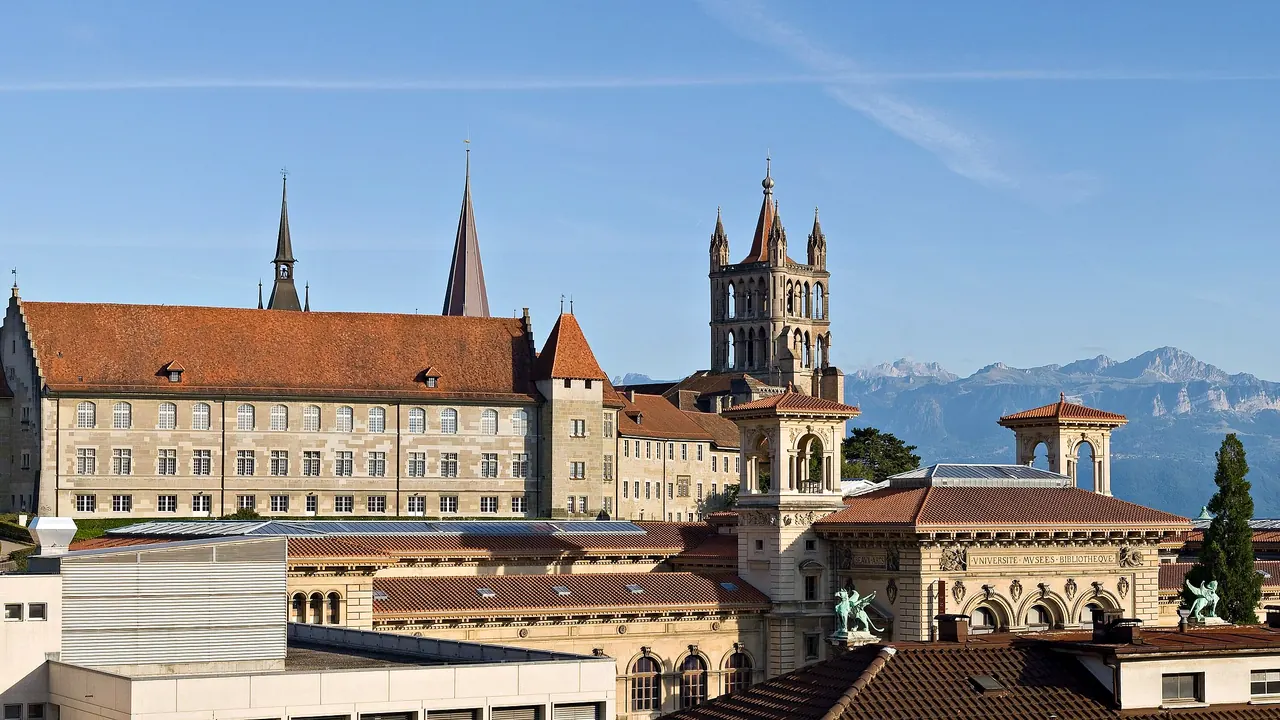
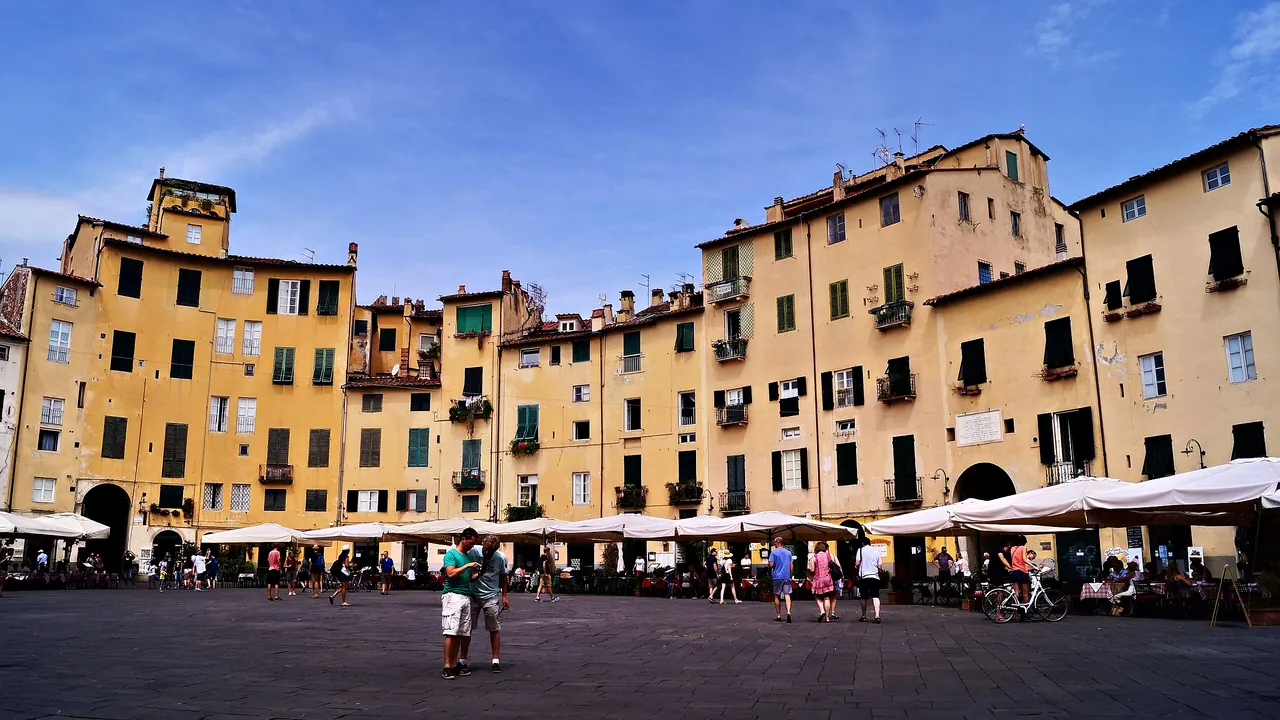
Photos: Lausanne by Christian Mehlführer, CC BY-SA 3.0, cropped; Lucca by Stefano Sansavini, CC BY-SA 4.0, cropped.
Lausanne or Lucca?
Our verdict in twelve categories, each scored against the same fixed benchmark cities, and the climate month by month, so you can choose for your trip.
Choose Lausanne for
- nightlife
- nature and the outdoors
- families
Lausanne is for travellers who want mountains and water close to a comfortable city. The Lavaux vineyard paths start just east of town, Alpine hiking and skiing are about an hour away, and the lake is there for swimming and sailing. The Flon also gives you a livelier night out than Lucca, and children get more to do. The catch is Swiss prices, which shape every meal and every hotel night.
Choose Lucca for
- prices
- beaches
- culture and sights
Choose Lucca for an Italian walled town where the streets themselves are the sight, with Romanesque façades on almost every corner, at a much gentler cost. It is the stronger base for Pisa, Florence and the Tuscan villas by train, and the sandy Versilia beaches make summer afternoons easy. Evenings are quiet, so it suits long dinners better than late nights.
Scoreboard
Twelve categories on one fixed scale from 0 to 100. The shaded stretch is the gap between the two.
Your match
Pick a travel style or drag the sliders, and both match scores follow your weighting.
Too close to call, 1 point apart
Wins on nightlife and nature and the outdoors with your weighting.
Wins on prices and beaches with your weighting.
What matters to you?
Category by category
What the scores mean for a trip.
Beaches & swimming
Lausanne sits right on Lake Geneva, and in summer locals swim from the lawns, piers and pebble shores at Vidy, Bellerive and towards Lutry. It is a pleasant way to spend an afternoon, but the shores are narrow and grassy, and the water is warm enough for only a few months.
Lucca is inland, yet a short train ride to Viareggio brings you to proper sandy beaches that run north to Forte dei Marmi. Choose between rows of beach-club umbrellas or the wilder, pine-backed dunes of the Lecciona. For a real day at the beach, Lucca is clearly better. For a quick dip without leaving town, Lausanne's lakefront is closer.
Food & drink
The two are fairly level, but they suit different meals. Lausanne gives you lake perch, papet vaudois and winter fondue, and above all Chasselas tasted with the growers in the Lavaux caveaux. Some of Switzerland's most celebrated tables are in and around the city, although the everyday middle is ordinary.
Lucca is better for daily eating. It has rustic farro soup, tordelli in ragù, cecina from bakery counters and buccellato, served in family trattorias at fair prices. It has little ambitious modern cooking, though, and after a few days the menus begin to repeat.
Culture & sights
Lucca has the stronger historic setting. Its complete Renaissance walls enclose a medieval town full of towers and churches, from the carved arcades of San Michele in Foro to the oval Piazza dell'Anfiteatro. Simply walking around is the main event.
Lausanne's old town around the Gothic cathedral is compact and steep. Its strength is its museums: the Olympic Museum at Ouchy, the cluster at Plateforme 10 and the Collection de l'Art Brut. If you love museums you will find more indoors in Lausanne, where Lucca's own museums are modest.
Nightlife
Lausanne goes out much more. Thanks to its large student population, the Flon fills its old warehouses with clubs and late bars at weekends, and the lakeside at Ouchy is busy on summer evenings.
Evenings in Lucca mean aperitivo in a piazza, a long dinner and a stroll on the walls, and the centre is calm by midnight. If you want to dance, you have to go to the Versilia beach clubs and get a late taxi back.
Nature & outdoors
Lausanne has the bigger landscape. The French Alps rise straight out of the lake opposite the city, and the UNESCO-listed Lavaux terraces make a great walk just east of town. The Vaud Alps, with skiing, summer trails and Glacier 3000, are about an hour away, and the Jura is just as close.
Lucca's countryside is gentler, with olive groves and villa gardens, plus cycling on the walls and along the Serchio. Its drama is the Apuan Alps, with their marble quarries and limestone peaks. There is also good birdwatching at Lake Massaciuccoli, but the summer heat on the plain limits outdoor days.
Day trips
Both are excellent rail bases, but Lucca's day trips include more famous names. Pisa is half an hour away and Florence just over an hour, and there are the Marlia and Torrigiani villas, Pietrasanta's sculptors' studios, and the Cinque Terre or San Gimignano for an early start.
From Lausanne, the trips are smaller but very smooth. You can take a short train to Montreux and the Château de Chillon, go to Gruyères, Bern or Geneva, or cross the lake by boat to Évian, all without a car. Several of Lucca's villas and hill villages are much easier with one.
Good for families
Lausanne has more made for children. They get the hands-on Olympic Museum, the aquarium-vivarium, the animal park, pedal boats and lookout tower in the Sauvabelin woods, and paddle-steamer trips on the lake. The downsides are the steep streets with a pushchair and the cost of feeding a family.
Lucca's flat, traffic-free centre is relaxing with young children, and cycling the walls on a family quadricycle is the classic outing. With the Pinocchio Park at Collodi and the beaches close by, the days fill well. In the town itself, though, most sights are churches.
Getting around
There is little between them, but the two centres feel very different on foot. Lausanne climbs steeply in layers, and the m2 metro carries you more than 300m up from the lake to the old town. In Lucca, everything inside the walls is flat, and walking or cycling is the natural way to move.
Beyond town, Lausanne's Swiss trains and lake boats reach almost everything. Lucca's trains serve the main towns well, but buses into the countryside are sparse.
Shopping & style
Neither is a shopping destination, and what you take home differs. In Lausanne it is a Swiss watch from Rue de Bourg, chocolate from an old confiserie or a bottle of Lavaux wine.
In Lucca, Via Fillungo has fashion behind Liberty-style shopfronts, and the delicatessens sell olive oil, farro and buccellato. One weekend a month, one of Italy's oldest antiques markets fills the streets around the cathedral, which gives Lucca the more distinctive browse.
Affordability
This is where the two differ most. Lausanne is very expensive in every respect: hotels, meals, wine and taxis. Budget travellers here picnic on the lake promenades and keep restaurant dinners for special occasions.
Lucca costs what central Italy costs, which is less than Florence and far less than Switzerland. Trattoria meals and trains are fairly priced, and the walls and many churches are free. Accommodation is the main expense, and staying just outside the walls often saves money.
Live music & performing arts
Lausanne has the wider stage life, led by dance. The Béjart Ballet and the Prix de Lausanne are based here, the Théâtre de Vidy presents contemporary theatre with an international reputation, and the city also has an opera house and a respected chamber orchestra. The Montreux Jazz Festival is a short train ride away.
Lucca focuses on Puccini. Short recitals of his arias are held in a church in the centre for most of the year, and the Teatro del Giglio has an opera season. In summer there is open-air Puccini by the lake at Torre del Lago, and big concerts fill Piazza Napoleone.
Wellness & relaxation
Neither city has a bathing tradition of its own, and both send you out of town for warm water. From Lausanne you can go to Yverdon-les-Bains or Lavey-les-Bains. From Lucca you can go to Montecatini's belle époque spa buildings, the cave pools at Monsummano or the steam grottoes of Bagni di Lucca.
What differs is where the calm is. In Lausanne you find it in grand hotel spas and on the lakeside edges, away from the steep centre. In Lucca it is in the traffic-free town itself, with long lunches and evening walks on the shaded walls.
When should you go?
Pick your month. The climate figures are measured averages, not a forecast.
Lausanne in July
Lucca in July
Daytime high, °C
Rainfall in the month, mm
Where the figures come from
Lausanne's temperatures are measured 40 km from the centre, at Payerne.
Lausanne has no rain gauge within 25 km of the centre, so its rainfall comes from a gridded climate dataset read at the city rather than from a gauge further away.
Temperature and rainfall are climate normals, averaged over the years shown. Lausanne: 1991-2020 (sunshine 1961-1990) normals, Payerne (39.7 km from centre). Lucca: 1991-2020 normals, Pisa / S. Giusto (21.4 km from centre).
Lausanne has a short warm season. From June to early September highs reach about 26°C, sunshine is at its longest and the lake is warm enough for a swim. Rain falls steadily all year, and the summer months are among the wettest, so expect some showers. From November to February the city is grey and cold, with highs near 4°C and little sun, though this is when the Vaud Alps come into their own for skiing.
Lucca is warmer in every month and much drier in summer. July and August reach about 30°C, which is hot for walking the streets at midday but ideal for the beach, with the sea at 25°C. Late May, June and early September are the most comfortable months for sightseeing. Rain arrives from September, and November is the wettest month at 132mm. Winters are mild, though, and a sunny winter walk on the walls is more realistic in Lucca than in Lausanne.
Which traveller are you?
On a beach and sun trip, Lucca is the clear choice. Lausanne has lake swimming from lawns and shingle for a short summer. From Lucca, half an hour by train takes you to the wide, gently shelving sands of Versilia, and the summers there are dry and hot.
For an outdoors trip, Lausanne is better and works all year, with sailing on the lake in summer and ski days in winter, all reached by train. Lucca suits walkers in spring and autumn, ideally with a car for the hill trails, since summer on the plain is hot.
On a trip on a tight budget, Lucca goes further. In Lausanne, expect a shorter stay spent on free walks through the Lavaux vines, with a glass of Chasselas in a village caveau as the treat. In Lucca, a trattoria lunch can be a daily habit, and Pisa is a cheap train ride away.
Before you go
| Measure | Lausanne | Lucca |
|---|---|---|
| Official language | French, German, Italian, Romansh | Italian |
| Currency | Swiss Franc (CHF) | Euro (EUR) |
| Sockets | CJ230 V, 50 Hz | CFL230 V, 50 Hz |
| Driving side | Right | Right |
| Time zone | UTC+1, UTC+2 in summer | UTC+1, UTC+2 in summer |
| Emergency number | 112 | 112 |
| Elevation | 495 m | 19 m |
| Main airport | Geneva International Airport (GVA)52 km from centre150 non-stop destinations | Pisa International Airport (PSA)21 km from centre82 non-stop destinations |
| Public holidays this year | 9 days | 13 days |
By the numbers
| Measure | Lausanne | Lucca |
|---|---|---|
| City population | 144,873 | 88,798 |
| People per km² | 3,499 | 478 |
| Museums within 10 km | 31 | 20 |
| UNESCO World Heritage sites within 50 km | 3 | 4 |
| Swim season, months above 21 °C | - | 4 months |
Where else could you go?
Every comparison below shares a destination with this one, so you can follow Lausanne or Lucca somewhere new.