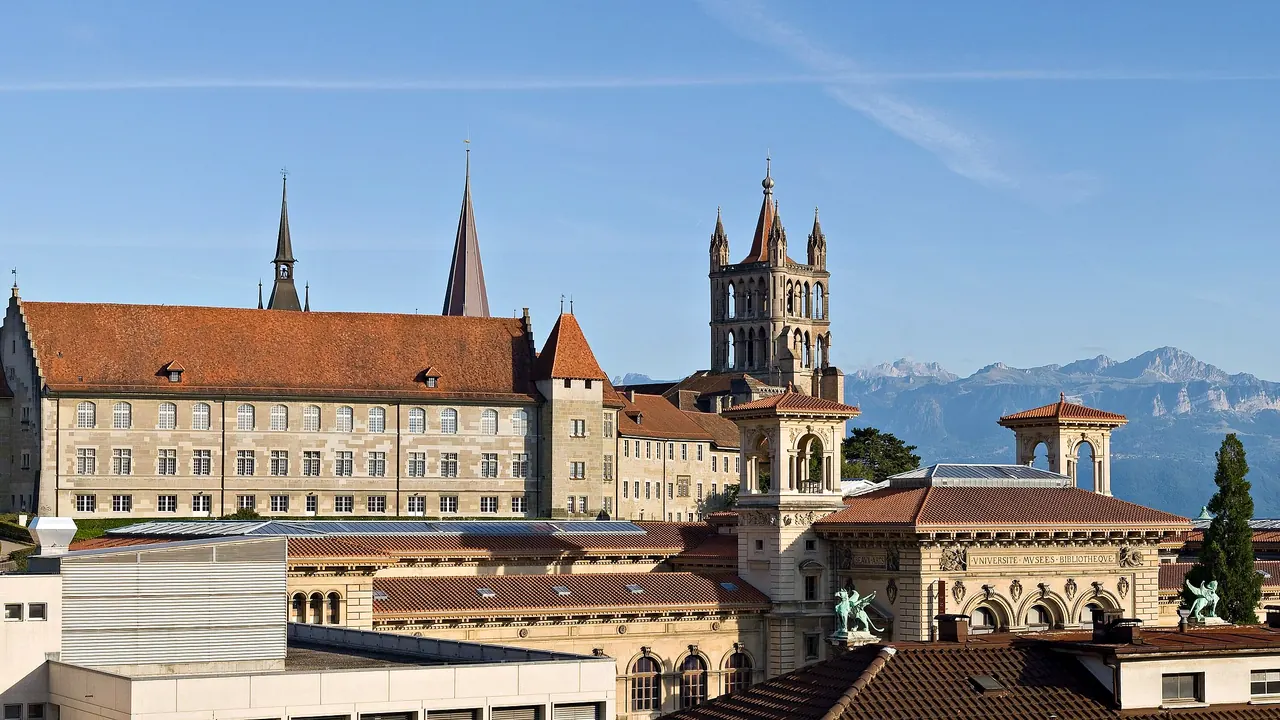
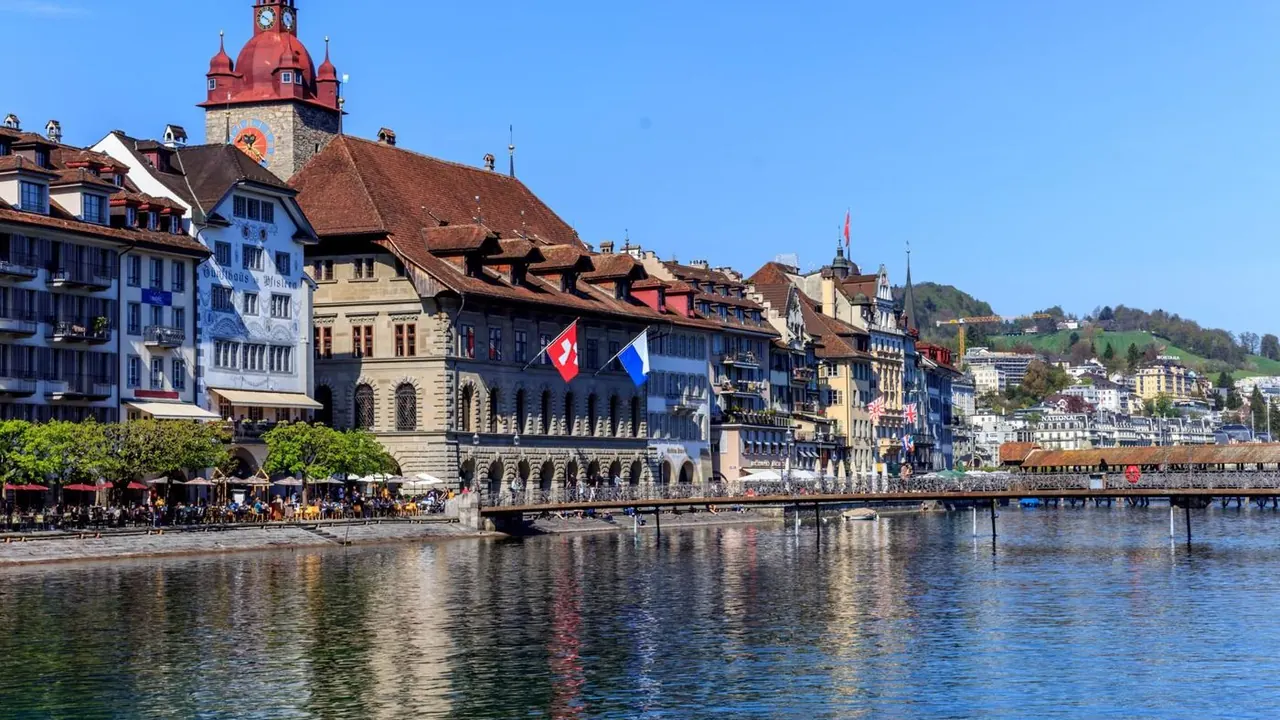
Photos: Lausanne by Christian Mehlführer, CC BY-SA 3.0, cropped; Lucerne by ILOVESwitzerland, Pexels License.
Lausanne or Lucerne?
Our verdict in twelve categories, each scored against the same fixed benchmark cities, and the climate month by month, so you can choose for your trip.
Choose Lausanne for
- food and drink
- nightlife
- day trips
Lausanne suits travellers who want a lived-in city with good wine, a student crowd and trains in every direction. The Lavaux terraces and their village caveaux are on the doorstep, the Flon gives weekend nights some life, and Montreux, Geneva, Gruyères and the French shore all make easy outings. It works best as a base for a week of varied days, as long as you don't mind steep streets.
Choose Lucerne for
- nature and the outdoors
- getting around
- live music and the arts
Pick Lucerne if the mountains are the point. Pilatus, Rigi and the Stanserhorn rise straight from the lake, the steamers leave from in front of the station, and the flat riverside Old Town is easy on the feet. It suits people who want scenery, quiet evenings and, in late summer, world-class orchestras, rather than food or nightlife.
Scoreboard
Twelve categories on one fixed scale from 0 to 100. The shaded stretch is the gap between the two.
Your match
Pick a travel style or drag the sliders, and both match scores follow your weighting.
Too close to call, 2 points apart
Wins on food and drink and nightlife with your weighting.
Wins on nature and the outdoors and getting around with your weighting.
What matters to you?
Category by category
What the scores mean for a trip.
Beaches & swimming
Neither city is a beach destination. In both, summer swimming means stepping into a cold, clean lake from a lawn or a jetty. Lausanne's lake gets a touch warmer and the season runs a little longer, from late June into September, with the Bellerive lido and pebble shores at Vidy, Pully and Lutry.
Lucerne's swimming has more old-fashioned charm. You can swim from the wooden lake baths near the centre or the grassy shore at Ufschötti, with mountains straight ahead, and the steamers take you to small bathing spots in the lakeside villages.
Food & drink
Lausanne eats noticeably better. Lavaux Chasselas is poured everywhere, the growers' caveaux are a short ride east, and the Saturday market at the Riponne brings in cheese and charcuterie from across Vaud. The region's top restaurants are among the most celebrated in Switzerland.
Lucerne's cooking is hearty and reliable. Chügelipastete, rösti and lake perch are served in wood-panelled guild houses, but the range is narrow and many tables near the Chapel Bridge cater to tour groups. Neither city makes cheap eating easy.
Culture & sights
The two are well matched, but they reward different kinds of sightseeing. Lausanne's strength is its museums: the Olympic Museum at Ouchy, the three museums gathered at Plateforme 10 and the strange, memorable Collection de l'Art Brut, all under the Gothic cathedral where a night watchman still calls the hours.
Lucerne is the place to look at the townscape. The Chapel Bridge and Water Tower, the frescoed squares, the towers of the Musegg Wall and the Lion Monument make a more photogenic Old Town, and the Rosengart Collection's Picasso and Klee are a serious draw.
Nightlife
Lausanne goes out properly at weekends. Tens of thousands of students from the university and the EPFL fill the clubs and late bars of the Flon, and the old town's wine bars and the Ouchy waterfront add slower options.
Lucerne is a city for a drink by the river and an early night. It has a few cocktail bars and a small club scene near the station, but the lakefront empties by midnight. The exception is Fasnacht, when the whole town stays out in costume until dawn.
Nature & outdoors
Both have superb surroundings, but Lucerne has the mountains right next to the city. Pilatus by the steepest cogwheel railway in the world, Rigi by Europe's oldest mountain railway and Titlis with its glacier about an hour away mean you can be on a summit by mid-morning without planning ahead.
Lausanne's landscape is broader and gentler. You look across the lake to the French Alps, walk the UNESCO-listed Lavaux terraces between Lutry and Saint-Saphorin, and reach the Vaud Alps or the Jura in about an hour by train. Its nearest winter peaks are a trip away rather than on your doorstep.
Day trips
Lausanne has more variety on its doorstep. Montreux, Vevey and the Château de Chillon are minutes along the shore, Geneva and Bern are each about an hour away, and Gruyères, Murten and Neuchâtel make classic outings. Boats cross to Évian, and Annecy is within reach by car, so you get France as well as Switzerland.
Lucerne reaches Zurich, Bern and Basel in under an hour each. Its most distinctive outing is the lake itself: a steamer down to the Rütli meadow and Altdorf, where the William Tell story is set.
Good for families
Children are equally well looked after in both, though in different ways. Lausanne has more to visit: the hands-on Olympic Museum, the aquarium-vivarium, and the animal park, pedal boats and wooden tower at Sauvabelin. Its steep streets, however, are tiring with a pushchair.
Lucerne has one star attraction, the Swiss Museum of Transport, plus a flat, compact centre. Much of the fun lies in cogwheel trains and the Pilatus toboggan run, which depend on clear weather.
Getting around
Lucerne is easier on the legs. The station, the steamer piers and the Old Town all meet on the lakefront, most sights lie along a flat riverside walk, and the boats, trains and cable cars to the mountains run on the same integrated tickets.
Lausanne works well, but it is built in layers up a steep slope. The m2 metro carries you more than 300m from Ouchy to the upper town, and without it you face stairs, bridges and lifts.
Shopping & style
Lausanne shops like an ordinary city, Lucerne like a tourist town. On Rue de Bourg you find Swiss watches, jewellery and fashion brands, international chains fill the streets around Saint-François, and the Flon adds a few small design shops. Chocolate and a bottle of Lavaux wine are the natural things to take home.
In Lucerne the watch trade sets the tone. The big jewellery and watch houses on Schwanenplatz serve the tour groups, alongside army knives, cuckoo clocks and embroidered souvenirs, while the Old Town lanes hold a few independent boutiques. In both cities the range is modest, so shopping is something to fit around the rest of the trip.
Affordability
Both are among the most expensive places in Europe, and neither can be done cheaply. The difference lies in where the money goes. In Lucerne, the mountain railways and cable cars that make the stay worthwhile take a large share of the budget, and hotels are dearest in summer and festival weeks.
Lausanne's biggest costs are eating and drinking out. On the other hand, a glass in a Lavaux caveau and the free lakeside promenades are pleasures that cost little.
Live music & performing arts
Lucerne has the stronger draw for music lovers, thanks to the Lucerne Festival. In late summer it brings the world's leading orchestras to Jean Nouvel's lakefront concert hall, which is famous for its acoustics. Outside those weeks, the programme is that of a small, cultured city.
Lausanne's strengths are dance and theatre. It is home to the Béjart Ballet and the Prix de Lausanne, and the Théâtre de Vidy stages contemporary productions that tour Europe. In July, the Montreux Jazz Festival is a short train ride away.
Wellness & relaxation
Both offer calm rather than a bathing culture, and the ways to relax are similar. Lausanne has the easier access to thermal water: Yverdon-les-Bains is under half an hour away and Lavey-les-Bains, with the hottest springs in Switzerland, under an hour. The grand lakeside hotels add their own spas.
Lucerne's best soak is the Mario Botta mineral bath high on the Rigi, with a mountain view. Otherwise, the city's restful side is its quiet evenings and slow steamer afternoons, as long as you avoid the Old Town at midday.
When should you go?
Pick your month. The climate figures are measured averages, not a forecast.
Lausanne in July
Lucerne in July
Daytime high, °C
Rainfall in the month, mm
Where the figures come from
Lausanne's temperatures are measured 40 km from the centre, at Payerne.
Lausanne has no rain gauge within 25 km of the centre, so its rainfall comes from a gridded climate dataset read at the city rather than from a gauge further away.
Lucerne has no rain gauge within 25 km of the centre, so its rainfall comes from a gridded climate dataset read at the city rather than from a gauge further away.
Lucerne's sunshine is measured 42 km from the centre, at Zurich Town / Ville..
Temperature and rainfall are climate normals, averaged over the years shown. Lausanne: 1991-2020 (sunshine 1961-1990) normals, Payerne (39.7 km from centre). Lucerne: 2005-2025 (sunshine 1991-2020, rainfall 1991-2020) normals, Emmen (4.2 km from centre).
Both cities follow the same Swiss pattern. Winters are grey and cold, with highs around 4°C from December to January, and from about May to September the days are warm enough for long walks and lake trips. The lakes are only warm enough for swimming in July and August, with Lausanne's season stretching a little either side. Spring and early autumn are mild and good for hiking and vineyard walks, though October and November are short on sunshine in both places.
In summer, Lausanne has the edge. It reaches about 26°C in July, against 24°C in Lucerne, and gets noticeably more sunshine. Lucerne's summer is also the wetter one, with around 141mm of rain in July and August compared with about 115mm in Lausanne, so mountain days there sometimes have to wait for a clear morning.
Which traveller are you?
On a food and nightlife trip, Lausanne is the clear choice. You can taste Chasselas straight from the growers in Lavaux, eat at some of Switzerland's finest tables and spend the weekend in the Flon's clubs. Lucerne's taverns and early nights can't compete with that.
For an outdoors trip, choose Lucerne. Cogwheel railways and cable cars climb Pilatus, Rigi and Titlis from the lakeshore, and the steamers let you combine boat, rail and hike in one day. Lausanne's best mountains are a train ride away.
For a short city break, Lucerne is easier. The station, the piers and the Old Town sit together on the waterfront, the main sights are a flat walk apart, and the Chapel Bridge and the Lion Monument fit into a day. Lausanne's steep layers take more effort.
Before you go
| Measure | Lausanne | Lucerne |
|---|---|---|
| Official language | French, German, Italian, Romansh | French, German, Italian, Romansh |
| Currency | Swiss Franc (CHF) | Swiss Franc (CHF) |
| Sockets | CJ230 V, 50 Hz | CJ230 V, 50 Hz |
| Driving side | Right | Right |
| Time zone | UTC+1, UTC+2 in summer | UTC+1, UTC+2 in summer |
| Emergency number | 112 | 112 |
| Elevation | 495 m | 436 m |
| Main airport | Geneva International Airport (GVA)52 km from centre150 non-stop destinations | Zürich Airport (ZRH)49 km from centre226 non-stop destinations |
| Public holidays this year | 9 days | 12 days |
By the numbers
| Measure | Lausanne | Lucerne |
|---|---|---|
| City population | 144,873 | 86,234 |
| People per km² | 3,499 | 2,963 |
| Museums within 10 km | 31 | 14 |
| UNESCO World Heritage sites within 50 km | 3 | 1 |
Where else could you go?
Every comparison below shares a destination with this one, so you can follow Lausanne or Lucerne somewhere new.
- Zurichvs Lucerne
- Genevavs Lausanne
- Interlakenvs Lucerne
- Bernvs Lucerne
- Chamonixvs Lausanne
- Bernvs Lausanne