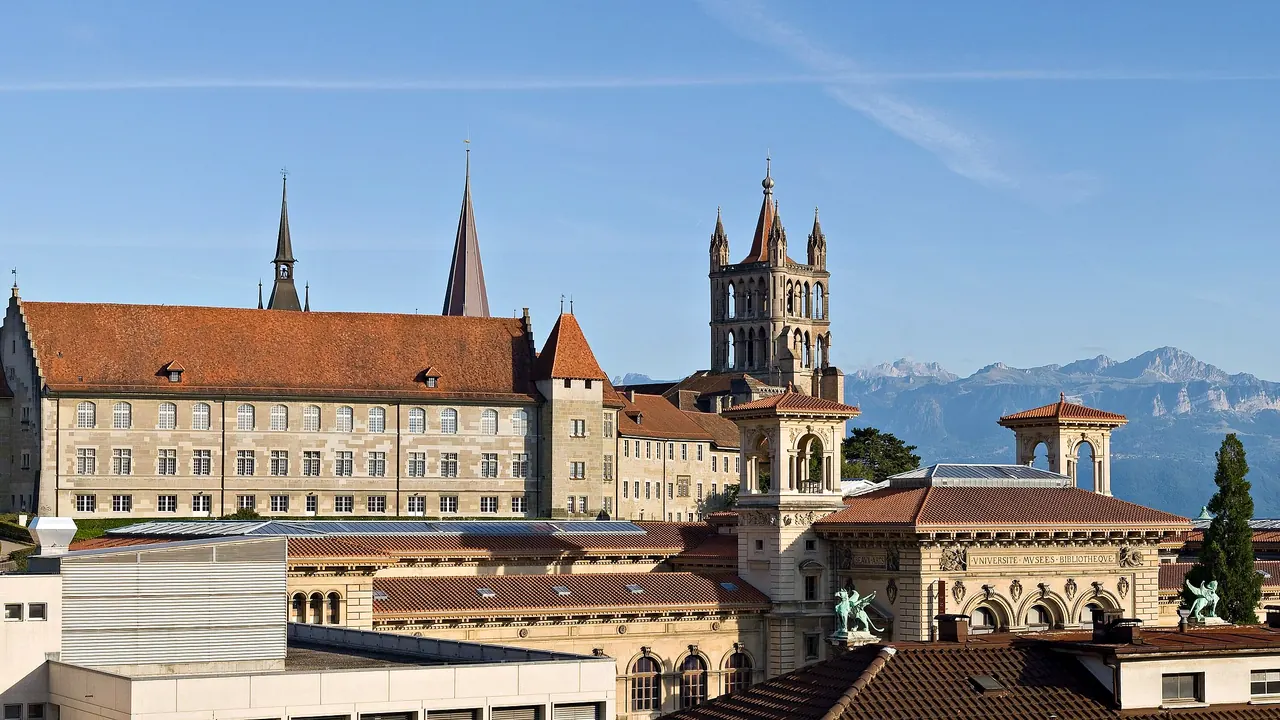
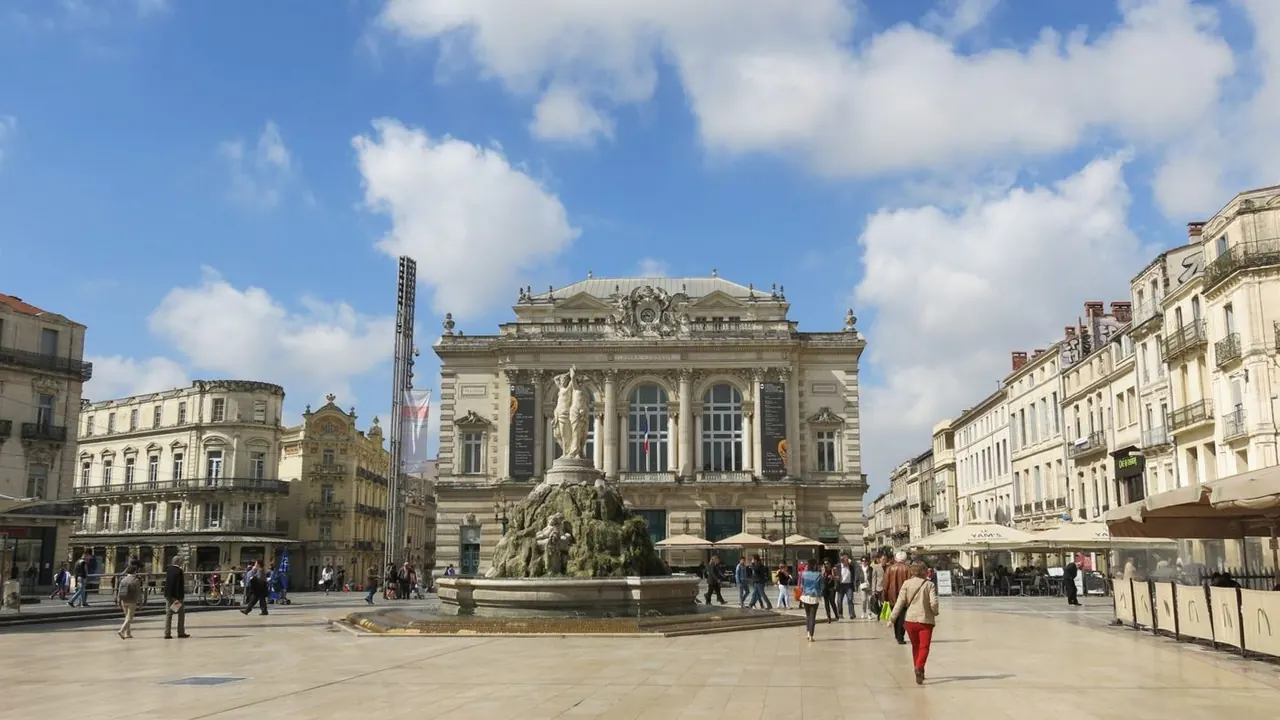
Photos: Lausanne by Christian Mehlführer, CC BY-SA 3.0, cropped; Montpellier by Peter, CC BY 2.0, cropped.
Lausanne or Montpellier?
Our verdict in twelve categories, each scored against the same fixed benchmark cities, and the climate month by month, so you can choose for your trip.
Choose Lausanne for
- nature and the outdoors
- wellness
- families
Lausanne suits travellers who come for the setting. The French Alps rise across the lake, the Lavaux vineyard terraces begin at the edge of town and the Vaud Alps and the Jura are each about an hour away. Fast Swiss trains reach castles, cheese villages and old towns without a car. It is polished and calm, and it rewards people who walk, hike or ski and can live with Swiss prices.
Choose Montpellier for
- prices
- beaches
- nightlife
Anyone after warmth, sea days and a looser, younger city will be happier in Montpellier. Sandy beaches lie a short trip south, the student crowd keeps the terraces full on weeknights as well as weekends, and Nîmes, Arles and Avignon are within easy reach for Roman and medieval southern France. It costs far less day to day, so a longer stay or a tighter budget fits here much better.
Scoreboard
Twelve categories on one fixed scale from 0 to 100. The shaded stretch is the gap between the two.
Your match
Pick a travel style or drag the sliders, and both match scores follow your weighting.
Wins on nature and the outdoors and wellness with your weighting.
Wins on prices and beaches with your weighting.
What matters to you?
Category by category
What the scores mean for a trip.
Beaches & swimming
Lausanne's swimming is in Lake Geneva. People swim from the grass and piers at Vidy and Pully or spend the afternoon at the old Bellerive lido. It is pleasant from late June to early September, but there is no sand and the season is short.
Montpellier has a real coastline. It is not on your doorstep, since it takes a tram and a bus to reach Palavas or Carnon, but from there flat, gently shelving sand runs east to the dunes of l'Espiguette. This is open sea with long beaches, though the nearer stretches fill up in high summer.
Food & drink
Montpellier is the better place to eat day to day. The Languedoc vineyards start at the city's edge, oysters and mussels come in from the Thau lagoon, and students keep plenty of cheap, casual places busy. The Saturday market under the Arceaux aqueduct and the counters at the Halles Laissac make eating well easy at any budget.
Lausanne's best qualities are at the ends of the range. At the top it has some of Switzerland's most celebrated tables, and village caveaux pour Lavaux Chasselas straight from the growers. Perch fillets, papet vaudois and winter fondue are worth seeking out. The middle is ordinary, though, and cheap meals are hard to find.
Culture & sights
The two are close here, but their strengths differ. Lausanne's sightseeing is led by its museums: the Olympic Museum at Ouchy, the art, photography and design collections at Plateforme 10, and the odd and memorable Collection de l'Art Brut. The Gothic cathedral, where a night watchman still calls the hours, crowns a small, steep old town.
In Montpellier the streets themselves are the sight. The car-free Écusson is full of stone mansions with hidden courtyards, and the Peyrou terrace looks out along its aqueduct. Bofill's Antigone adds a twentieth-century contrast. The Musée Fabre gives it one major painting collection to match Lausanne's museums.
Nightlife
Montpellier goes out more often and more easily. The terraces around Place Jean-Jaurès and the squares of the Écusson fill on weeknights too, with a young, loud, casual crowd. The catch is that the clubs are out towards Lattes and the coast, so a late night usually ends with a taxi.
Lausanne's evenings centre on the Flon, a valley of old warehouses with clubs and late bars that comes alive on Fridays and Saturdays. Away from the weekend it is quiet, and drinks cost a good deal more.
Nature & outdoors
Lausanne has the more dramatic landscape and the wider choice of things to do outdoors. Mountains rise straight from the far shore of the lake, the Lavaux vineyard path between Lutry and Saint-Saphorin starts just east of town, and within an hour you can be skiing, hiking or standing on the glacier at Glacier 3000. The Jura adds a second range for cycling and cross-country skiing.
Montpellier's outdoors is gentler and warmer. You get flamingos on the coastal lagoons, the Camargue marshes, the climb up Pic Saint-Loup and canoeing in the Hérault gorges, and the windy coast suits kitesurfing. Summer is too hot in the garrigue for long walks, and most of these places need a car.
Day trips
Both are excellent bases, but for different trips. From Lausanne the outings are Swiss: lakeside Montreux and the Château de Chillon, Gruyères and its cheese dairies, and the old towns of Bern, Fribourg and Geneva. Nearly all of them are a short, reliable train ride away.
From Montpellier you reach Roman and medieval southern France: the arena at Nîmes, the Pont du Gard, Arles, Avignon's papal palace and the walls of Carcassonne. The big names are easy by train, but smaller places like Saint-Guilhem-le-Désert and Uzès are much easier with a car.
Good for families
Lausanne has more for children within the city itself, while Montpellier relies more on the sea. In Lausanne the Olympic Museum is hands-on, the aquarium-vivarium on the northern edge shows river and lake life, and the Sauvabelin woods have an animal park, pedal boats and a wooden lookout tower. A paddle steamer across the lake is an outing in itself. The steep streets are hard work with a pushchair, though, and family meals out are expensive.
Montpellier is easier on foot, with a largely pedestrian centre and trams that take a pushchair without fuss. The Lunaret zoo is set in wooded parkland, and Odysseum has an aquarium and a planetarium side by side for hot afternoons. Beyond those the list is short, so a longer stay turns to the coast towns, with their promenades and small summer fairgrounds.
Getting around
Both centres are small enough to see on foot. What differs is how much effort that takes. Lausanne's sights are stacked up a steep hillside joined by stairs, bridges and lifts, and the m2 metro makes the climb manageable, carrying you from the lake at Ouchy to the cathedral quarter in a few stops. Buses fill the gaps, and lake boats link the shore towns.
Montpellier is flatter and spreads wider. The car-free Écusson sits on only a low hill, trams run out to Antigone, Port Marianne and Odysseum, and bike-share helps on the level streets. The weak spots are the slow tram-and-bus trip to the beach in summer and the need for a car to reach the gorges and the Camargue.
Shopping & style
Neither is a shopping destination, and you buy different things in each. In Lausanne it is Swiss watches, jewellery and chocolate along Rue de Bourg, and a bottle of Lavaux wine.
In Montpellier the small boutiques, bookshops and delicatessens are in the stone lanes of the Écusson, and the large Polygone mall sits next to the Comédie. The best buys are edible: local wine, olive oil and honey from the covered markets.
Affordability
The gap is very wide. Lausanne is expensive in the Swiss way: hotels, restaurant meals, wine and taxis all cost far more than in most of Europe. Budget visitors live on supermarket picnics and the free lakeside promenades.
Montpellier is a mid-range city that a budget can manage. Cheap student places, lunch menus and the market halls keep daily spending moderate, and the costs mainly build up at sit-down dinners and in hotel rooms in July and August.
Live music & performing arts
The two stages carry similar weight, and both lean towards dance, but their calendars run differently. Lausanne is home to the Béjart Ballet and the Prix de Lausanne for young dancers. The lakeside Théâtre de Vidy stages contemporary work that tours Europe, and the opera and chamber orchestra fill the season. In July the Montreux Jazz Festival is a short train ride along the lake.
Montpellier saves its biggest moments for summer, with the Montpellier Danse festival, Radio France concerts, many of them free, and open-air theatre at the Domaine d'O. For the rest of the year, the horseshoe-shaped Opéra Comédie on the main square and the Opéra Berlioz in the Corum share opera, ballet and concerts by the national orchestra.
Wellness & relaxation
Lausanne is the better choice for a restful stay. The grand lakeside hotels have extensive spas, and the region is known for private clinics and retreats. The thermal water at Yverdon-les-Bains is under half an hour by train, and Lavey-les-Bains, which has Switzerland's hottest springs, is under an hour. Slow walks through the Lavaux vines complete it.
Montpellier offers day spas and the established spa town of Balaruc-les-Bains on the Thau lagoon. Its calm comes more from long lunches and shaded squares than from any facilities, and the centre is rarely quiet.
When should you go?
Pick your month. The climate figures are measured averages, not a forecast.
Lausanne in July
Montpellier in July
Daytime high, °C
Rainfall in the month, mm
Where the figures come from
Lausanne's temperatures are measured 40 km from the centre, at Payerne.
Lausanne has no rain gauge within 25 km of the centre, so its rainfall comes from a gridded climate dataset read at the city rather than from a gauge further away.
Temperature and rainfall are climate normals, averaged over the years shown. Lausanne: 1991-2020 (sunshine 1961-1990) normals, Payerne (39.7 km from centre). Montpellier: 1991-2020 normals, Montpellier (7.8 km from centre).
Lausanne is a summer and early autumn city. June to August reach the mid-20s, with highs around 26°C in July, and from late June to early September the lake is warm enough to swim. Rain is spread through the year and is actually heaviest in summer, so expect showers. Winters are cold and grey in town, with highs near 4°C and very little sun in December, though the nearby mountains are often clear above the fog.
Montpellier is warmer and sunnier in every month. Spring and early summer are the best time for walking the streets, and July is the driest month and also the hottest, around 30°C. The sea is at its warmest in August, about 22°C, and stays swimmable into September. The rain then arrives in September and October in heavy autumn bursts. Winters are mild and fairly bright, comfortable for sightseeing, while in Lausanne winter means skiing rather than city strolls.
Which traveller are you?
For an outdoors trip, Lausanne is the stronger base. You can walk the Lavaux terraces from town, and summer hiking or winter skiing in the Vaud Alps is about an hour away. The Jura adds long ridges for hiking and cross-country skiing.
On a trip on a tight budget, Montpellier is far easier. The large student population keeps cheap counters and modest bars open, and lunch menus and the market halls stretch your money. In Lausanne, even a simple lunch out is expensive.
For a beach and sun trip, Montpellier wins clearly. It has long sandy beaches, shallow warm water and much more sunshine through the year. Lausanne offers only lake bathing from lawns and shingle in a short summer season.
Before you go
| Measure | Lausanne | Montpellier |
|---|---|---|
| Official language | French, German, Italian, Romansh | French |
| Currency | Swiss Franc (CHF) | Euro (EUR) |
| Sockets | CJ230 V, 50 Hz | CE230 V, 50 Hz |
| Driving side | Right | Right |
| Time zone | UTC+1, UTC+2 in summer | UTC+1, UTC+2 in summer |
| Emergency number | 112 | 112 |
| Elevation | 495 m | 7 m |
| Main airport | Geneva International Airport (GVA)52 km from centre150 non-stop destinations | Montpellier-Méditerranée Airport (MPL)8 km from centre41 non-stop destinations |
| Public holidays this year | 9 days | 11 days |
By the numbers
| Measure | Lausanne | Montpellier |
|---|---|---|
| City population | 144,873 | 310,240 |
| People per km² | 3,499 | 5,452 |
| Museums within 10 km | 31 | 14 |
| UNESCO World Heritage sites within 50 km | 3 | 2 |
| Swim season, months above 21 °C | - | 2 months |
Where else could you go?
Every comparison below shares a destination with this one, so you can follow Lausanne or Montpellier somewhere new.
- Genevavs Lausanne
- Chamonixvs Lausanne
- Bernvs Lausanne
- Annecyvs Lausanne
- Avignonvs Montpellier
- Interlakenvs Lausanne