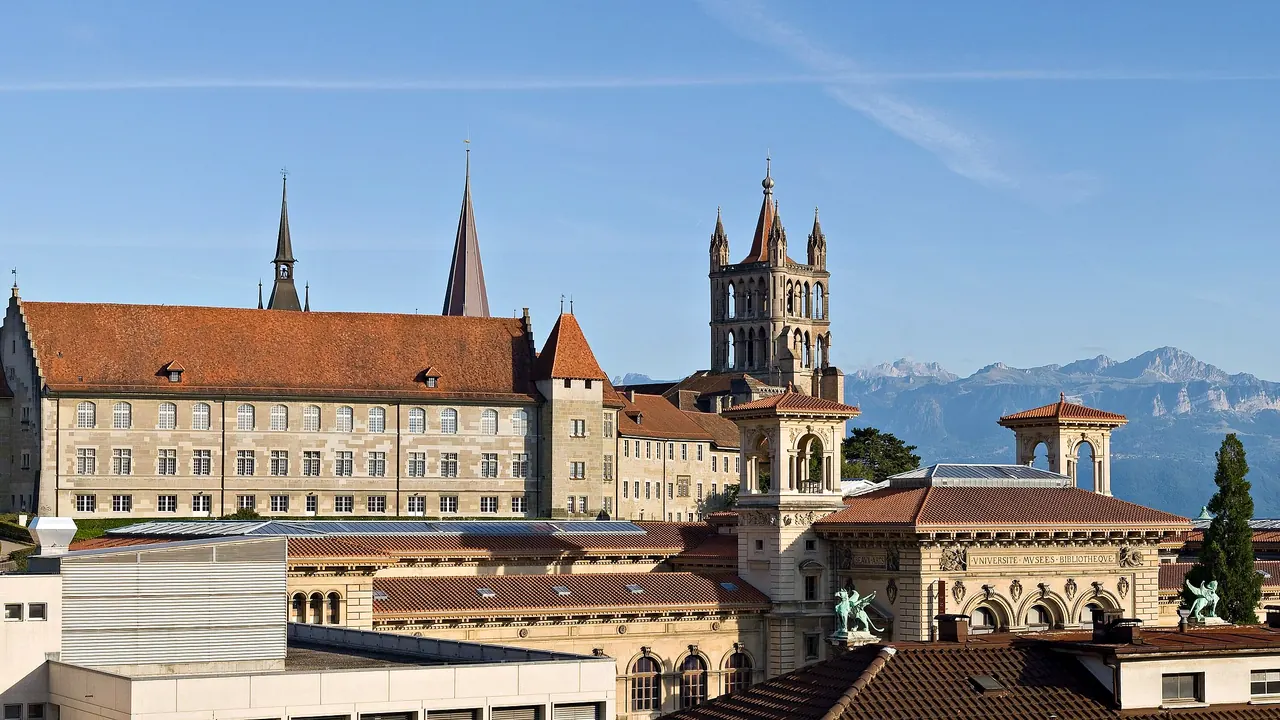
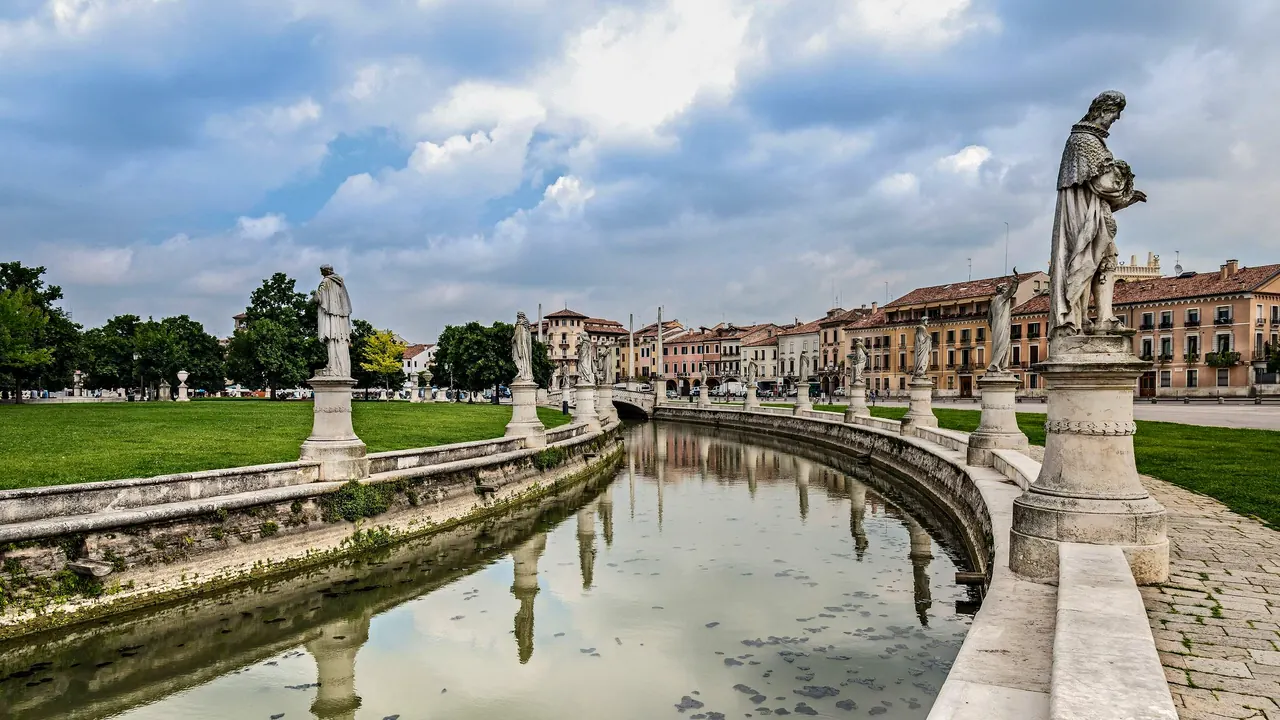
Photos: Lausanne by Christian Mehlführer, CC BY-SA 3.0, cropped; Padua by Didier Descouens, CC BY-SA 4.0, cropped.
Lausanne or Padua?
Our verdict in twelve categories, each scored against the same fixed benchmark cities, and the climate month by month, so you can choose for your trip.
Choose Lausanne for
- nature and the outdoors
- families
- live music and the arts
Lausanne suits travellers who want the landscape to be the point of the trip. The Alps rise across the lake, the Lavaux vineyard terraces start at the edge of town, and the Vaud Alps and the Jura are close enough for a day's hiking or skiing. It also has more for children and a far stronger stage, led by dance. The cost of all this is high, so it fits a trip where the budget has some room.
Choose Padua for
- prices
- culture and sights
- wellness
Padua is the better choice for anyone travelling for art and for the places nearby. Giotto's frescoes in the Scrovegni Chapel are the main reason people come, and the hotels are a fairly priced base for Venice, Vicenza, Verona and Bologna, all within easy train reach. Add the thermal pools of Abano a short ride away, and it rewards a slower, cheaper stay built around sightseeing and long evenings in the squares.
Scoreboard
Twelve categories on one fixed scale from 0 to 100. The shaded stretch is the gap between the two.
Your match
Pick a travel style or drag the sliders, and both match scores follow your weighting.
Too close to call, 1 point apart
Wins on nature and the outdoors and families with your weighting.
Wins on prices and culture and sights with your weighting.
What matters to you?
Category by category
What the scores mean for a trip.
Beaches & swimming
Lausanne has its swimming on the doorstep. In summer the lake at Bellerive, Vidy and towards Lutry becomes the city's pool, with lawns, piers and pebble shores a short walk or metro ride from the centre, though the season is brief.
Padua has no water of its own to swim in, so a swim means an hour's journey to the sand at Sottomarina or the Lido of Venice. The Adriatic there is warmer, shallow and calm, which suits small children, but it is a day out rather than part of the stay.
Food & drink
Padua eats better day to day. Its twin markets in Piazza delle Erbe and Piazza della Frutta trade every morning, the Venetian home cooking of bigoli, baccalà and risotto is fairly priced, and the early-evening spritz with small bites is a ritual in itself.
Lausanne's strengths sit at the two ends. The Chasselas from Lavaux, tasted in village caveaux, is a real pleasure, and the region's top restaurants are among Switzerland's most celebrated. The everyday middle is plainer and costly, with perch fillets and fondue as the local signatures.
Culture & sights
Padua carries far more weight. Giotto's Scrovegni frescoes changed European painting, and around them are the UNESCO-listed fresco cycles, the domed Basilica of Saint Anthony with Donatello's bronzes, the world's oldest permanent anatomical theatre and the oldest university botanical garden still on its original site.
Lausanne offers a fine Gothic cathedral and a steep old town, but its interest lies more in the museums than in the streets: the Olympic Museum at Ouchy, the cluster of museums at Plateforme 10 and the memorable Collection de l'Art Brut.
Nightlife
Neither city is a party destination, but they go out in different ways. Lausanne's evenings gather in the Flon, a former warehouse valley with clubs and late bars that fill on Friday and Saturday nights. Padua lives in its squares, where students and locals stand over spritz glasses around the Palazzo della Ragione, and during term the old centre stays lively on weeknights too, though clubs are few.
Nature & outdoors
Lausanne is in another league. The French Alps rise straight out of the lake opposite, the Lavaux terraces make one of Switzerland's loveliest walks, and sailing and paddleboarding start at the waterfront. Within about an hour you can be skiing at Villars or Les Diablerets, on the glacier at Glacier 3000, or hiking the Jura.
Padua's outdoors is gentler and further off. The volcanic Euganean Hills, about 15km away, offer trails, vineyards and cycling roads, the Brenta towpaths make level bike rides, and real mountain walking on Monte Grappa or the Asiago plateau needs a car.
Day trips
Both are excellent bases. Lausanne's trips are mainly scenic: Montreux and the Château de Chillon along the lake, cheese-making Gruyères, Bern's arcades and Geneva, all easy without a car.
Padua has the stronger list because of what lies on it. Venice is under half an hour by train, so you can go back several times, and Vicenza's Palladian palaces, Verona, Bologna and Ferrara are all within an hour or so. The Brenta villas and the walled towns of Este and Montagnana add quieter days.
Good for families
Lausanne is the better choice with children. The Olympic Museum is hands-on, the aquarium-vivarium and the animal park, pedal boats and lookout tower at Sauvabelin fill whole afternoons, and a paddle steamer ride is an outing in itself. The steep streets and the cost of eating out are the drawbacks.
Padua is flat, safe and full of trattorias that welcome children, and Prato della Valle gives them room to run. But the sights are mainly frescoes, so families usually turn to Gardaland or the Adriatic beaches about an hour away.
Getting around
Both are small enough to manage without a car, but they feel very different underfoot. Lausanne climbs in steep layers from the lake at Ouchy to the cathedral, and the m2 metro does the hard work, rising more than 300m through the station and the Flon, with stairs, bridges and lifts linking the levels in between.
Padua is flat, and much of its core is closed to general traffic, so the walk under the arcades from the Scrovegni Chapel to the Basilica of Saint Anthony takes about twenty minutes and keeps you out of the sun and rain. A tram runs from the station through the centre to Prato della Valle, and bicycles are an ordinary way to get about.
Shopping & style
Neither is a shopping destination, and what is worth buying differs. Lausanne is the place for a Swiss watch on Rue de Bourg, chocolate or a bottle of Lavaux wine. Padua offers Italian shoes and fashion under its arcades, university bookshops, food from the delicatessens beneath the Palazzo della Ragione and a large antiques market in Prato della Valle one Sunday a month.
Affordability
This is the widest gap between them. Lausanne is very expensive in every respect, from hotels and wine to a simple lunch, and visitors on a budget get by on supermarket picnics, free lakeside promenades and the occasional glass in a village caveau.
Padua is moderately priced by Western European standards. That is why many people stay there while visiting Venice, and its cheap spritzes, fair trattorias and walkable centre keep daily costs low.
Live music & performing arts
Lausanne has much the richer stage for a city of its size. Dance leads, through the Béjart Ballet Lausanne and the Prix de Lausanne, and alongside it are the Théâtre de Vidy's contemporary work, a full opera season, a respected chamber orchestra and the Montreux Jazz Festival a short train ride away in July.
Padua's programme is modest: prose and some opera at the horseshoe Teatro Verdi, and chamber concerts in the Sala dei Giganti and the Basilica. For major opera, visitors go to the Fenice or the Arena in Verona.
Wellness & relaxation
Padua has the stronger wellness offer. Abano Terme and Montegrotto Terme, about 12km away, form one of Europe's largest thermal districts, with hot springs and mud treatments used since Roman times, and many spa hotels take day visitors after a morning's sightseeing.
Lausanne's calm comes from its lakeside promenades and the lanes through the vines, along with the spas of its grand hotels. Thermal water means a train ride to Yverdon-les-Bains or up the Rhône valley to Lavey-les-Bains.
When should you go?
Pick your month. The climate figures are measured averages, not a forecast.
Lausanne in July
Padua in July
Daytime high, °C
Rainfall in the month, mm
Where the figures come from
Lausanne's temperatures are measured 40 km from the centre, at Payerne.
Lausanne has no rain gauge within 25 km of the centre, so its rainfall comes from a gridded climate dataset read at the city rather than from a gauge further away.
Padua's temperatures are measured 35 km from the centre, at Treviso / Istrana.
Padua has no rain gauge within 25 km of the centre, so its rainfall comes from a gridded climate dataset read at the city rather than from a gauge further away.
Padua's sunshine is measured 36 km from the centre, at Treviso / S. Angelo.
Temperature and rainfall are climate normals, averaged over the years shown. Lausanne: 1991-2020 (sunshine 1961-1990) normals, Payerne (39.7 km from centre). Padua: 1991-2020 normals, Treviso / Istrana (35.4 km from centre).
Lausanne is a summer city. From June to August highs of 23-26°C make the lake swimmable and the mountain trails open, although these are also its wettest months, with regular showers. Spring and September suit walking well. From November to February it is cold and grey, with very little sunshine in the city, though the mountains above the fog are often bright.
Padua is warmer and sunnier all year. July and August reach 31°C and feel humid, which is hard going in the streets, though the Adriatic is at its warmest then, around 25°C. April, May, late September and October are the best months for sightseeing. November is the wettest month, and winters are cool and foggy but milder and brighter than Lausanne's.
Which traveller are you?
On a trip on a tight budget, Padua is far easier. Rooms, trattoria meals and a standing spritz cost a fraction of Swiss prices, and cheap trains to Venice and Verona stretch the money further. In Lausanne even simple meals add up quickly.
For an outdoors trip, Lausanne is clearly the stronger choice. You can walk the Lavaux terraces, sail on the lake, hike or ski in the Vaud Alps and ride the Jura ridges, all within about an hour by train. Padua's flat plain offers gentler hills and towpaths.
On a family trip with children, Lausanne has more aimed at them: the hands-on Olympic Museum, the aquarium-vivarium, Sauvabelin's animal park and pedal boats, lake steamers and summer lidos. Padua welcomes children, but its sights are mostly frescoes and churches.
Before you go
| Measure | Lausanne | Padua |
|---|---|---|
| Official language | French, German, Italian, Romansh | Italian |
| Currency | Swiss Franc (CHF) | Euro (EUR) |
| Sockets | CJ230 V, 50 Hz | CFL230 V, 50 Hz |
| Driving side | Right | Right |
| Time zone | UTC+1, UTC+2 in summer | UTC+1, UTC+2 in summer |
| Emergency number | 112 | 112 |
| Elevation | 495 m | 12 m |
| Main airport | Geneva International Airport (GVA)52 km from centre150 non-stop destinations | Venice Marco Polo Airport (VCE)39 km from centre103 non-stop destinations |
| Public holidays this year | 9 days | 13 days |
By the numbers
| Measure | Lausanne | Padua |
|---|---|---|
| City population | 144,873 | 206,496 |
| People per km² | 3,499 | 2,220 |
| Museums within 10 km | 31 | 29 |
| UNESCO World Heritage sites within 50 km | 3 | 5 |
| Swim season, months above 21 °C | - | 4 months |
Where else could you go?
Every comparison below shares a destination with this one, so you can follow Lausanne or Padua somewhere new.