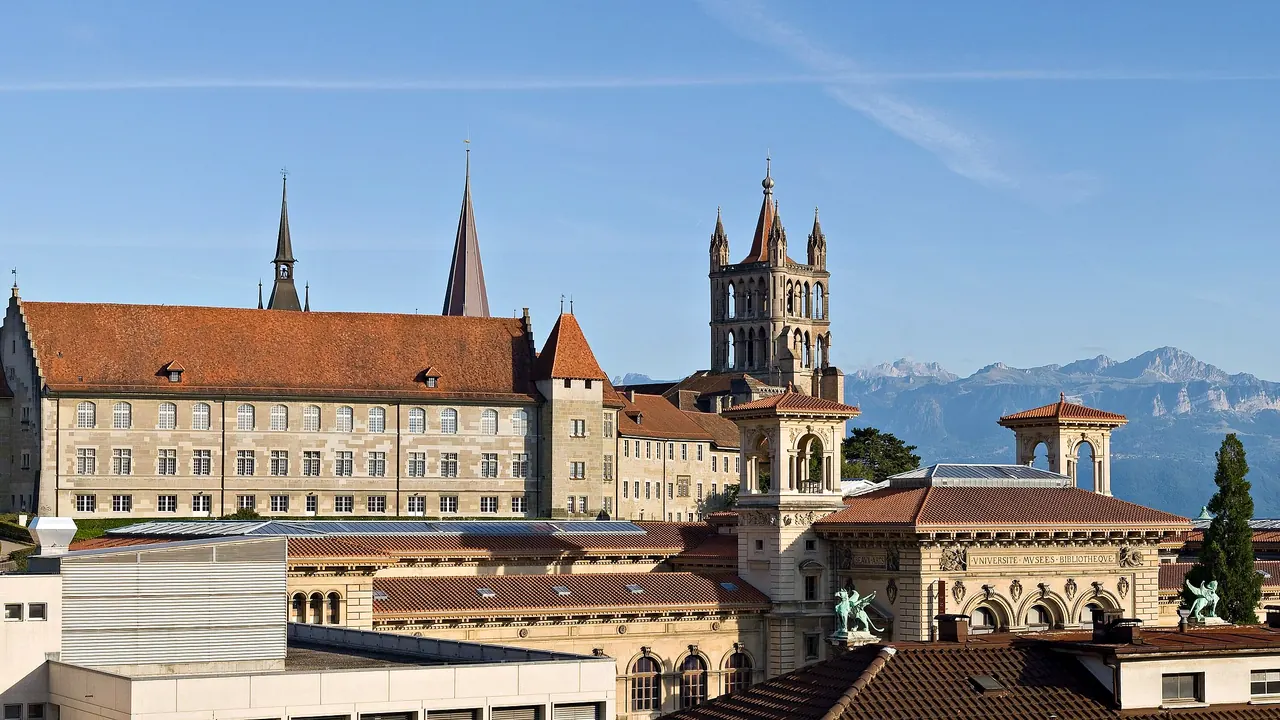
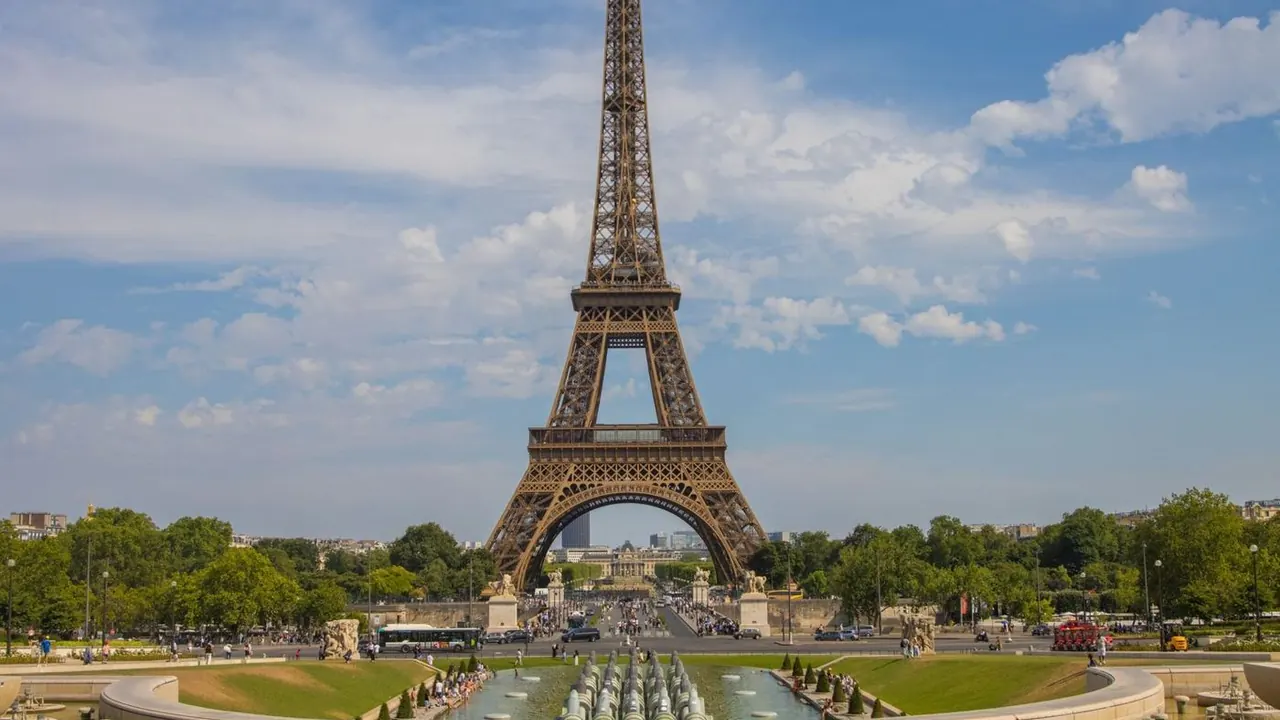
Photos: Lausanne by Christian Mehlführer, CC BY-SA 3.0, cropped; Paris by Efrem Efre, Pexels License.
Lausanne or Paris?
Our verdict in twelve categories, each scored against the same fixed benchmark cities, and the climate month by month, so you can choose for your trip.
Choose Lausanne for
- nature and the outdoors
- beaches
- wellness
Lausanne suits travellers who want lake and mountains close at hand. You can walk the Lavaux vineyard terraces, swim in Lake Geneva in high summer and take a train to the Vaud Alps or the Jura before lunch. It is a small, slower city that works well as a base for lake towns and hiking, as long as the budget can cope with Swiss prices.
Choose Paris for
- shopping
- food and drink
- culture and sights
Paris is the choice when the city itself is the reason for going. Its museums, food, shops and stages are on another scale, nights run later, and the centre is flat and rewarding to walk. It is expensive too, but less so than Lausanne, and there are more ways to keep costs down.
Scoreboard
Twelve categories on one fixed scale from 0 to 100. The shaded stretch is the gap between the two.
Your match
Pick a travel style or drag the sliders, and both match scores follow your weighting.
Wins on nature and the outdoors and beaches with your weighting.
Wins on shopping and food and drink with your weighting.
What matters to you?
Category by category
What the scores mean for a trip.
Beaches & swimming
Neither city has a coast, but Lausanne has Lake Geneva. From late June to early September people swim from the lawns and pebble shores at Vidy, Bellerive and towards Lutry, and an afternoon at the old Bellerive lido is the local summer ritual. The season is short and the shores are narrow, so it adds to a stay rather than being the reason for one.
Paris offers less. It has sand-covered riverbanks in summer, swimming spots on the Bassin de la Villette and the Seine, and some fine Art Deco pools. The nearest real sea is the cool Channel in Normandy, about two hours away by train.
Food & drink
Lausanne eats well within a narrow regional range: lake perch, papet vaudois, fondue in winter and Chasselas poured straight from the growers in the Lavaux caveaux. There are celebrated top-end tables nearby, but the middle ground is ordinary and cheap meals take some finding.
Paris is in another league, and good eating there is everyday rather than special. Every neighbourhood has its boulangerie and cheese shop, and the city has the Marché d'Aligre, zinc-counter bistros and the small, inventive neo-bistros of the eastern arrondissements. On top of that come North African couscous in Belleville, Vietnamese pho and West African cooking, and a pastry tradition that is a reason to go in itself.
Culture & sights
Lausanne's sights fit into two or three days. The highlights are the Gothic cathedral with its night watchman, the steep lanes and covered stairways of the old town, the Olympic Museum at Ouchy, the art museums at Plateforme 10 and the strange, memorable Collection de l'Art Brut.
In Paris the Louvre alone could take up that time. Add the Orsay's Impressionists, the Sainte-Chapelle, Notre-Dame, the Pompidou and the Cluny, all set in a city whose Haussmann boulevards and Marais townhouses make walking between museums part of the experience.
Nightlife
Lausanne's nights out centre on the Flon, the old warehouse valley where students from the university and the EPFL fill the clubs and terraces at weekends. Weeknights are quiet, and the scene is small.
Paris goes out every night and over a much wider area. The crowded bars of Oberkampf and the Canal Saint-Martin, the cocktail bars of South Pigalle and the Marais gay scene all feed into clubs that play house and techno until dawn. In summer there are moored barges on the river too.
Nature & outdoors
Here Lausanne is far ahead. The French Alps rise straight out of the lake across the water, the vineyard path from Lutry to Saint-Saphorin is one of Switzerland's loveliest walks, and Villars, Les Diablerets and Glacier 3000 are about an hour away for skiing or summer hiking.
Paris offers parks and woods rather than landscape: the Buttes-Chaumont, the Bois de Vincennes and, further out, the boulders and oak forests of Fontainebleau. It suits gentle walks and cycling, not mountains.
Day trips
Both make excellent bases, and Paris has the longer list. Versailles, Chartres, Giverny and Fontainebleau are all within an hour or so. Fast trains reach the Champagne houses of Reims, the old town of Rouen and the Loire châteaux beyond Tours, enough for weeks of outings.
Lausanne's trips are smaller in scale but just as easy without a car. You can reach Château de Chillon on its rock, the arcades of Bern, hilltop Gruyères and walled Murten, or take a lake boat to Évian on the French shore.
Good for families
Paris has more for children. Disneyland Paris and Parc Astérix are close by, and in town there are the Cité des Sciences, the menagerie and skeletons at the Jardin des Plantes, and the carousels and toy sailboats of the Luxembourg. The downsides are metro stairs, small hotel rooms and long museum queues.
Lausanne is calmer and easier on the nerves, with the Olympic Museum, the aquarium-vivarium, pedal boats at Sauvabelin and paddle-steamer trips. Its steep streets are hard work with a pushchair, though.
Getting around
Paris is easier to get around. Its centre is flat and one of the great cities to walk, and the metro is so dense that a station is always close. The main drawbacks are long corridors, rush-hour crowds and pickpockets.
Lausanne is small but built on a steep slope, so walking uphill is real exercise. The m2 metro climbs more than 300m from the lake to the upper town and does most of the work, and Swiss trains make onward travel simple.
Shopping & style
Paris is one of the world's great shopping cities. The luxury flagships are on Avenue Montaigne, Galeries Lafayette and Le Bon Marché are worth a visit in themselves, the Marais has young designers, and the bouquinistes sell old books and prints along the Seine.
In Lausanne, shopping fits around the rest of the trip. Rue de Bourg has watches, jewellery and chocolatiers, the Flon has chains, and Lavaux wine makes the best thing to take home.
Affordability
Both are expensive, but Lausanne is harder on the wallet. Hotels, meals, wine and taxis cost more than in Paris, and the main ways to save are supermarket picnics and free walks along the lake.
Paris gives a budget more room. There are lunchtime set menus, bakeries and markets, the city's own museums have free permanent collections, and rooms in the outer arrondissements cost less.
Live music & performing arts
Lausanne's stage life is strong for its size, and dance leads it. It is home to the Béjart Ballet and the Prix de Lausanne competition, and the lakeside Théâtre de Vidy is known for contemporary work. In July the Montreux Jazz Festival is a short train ride away.
Paris has more of everything. The Opera Ballet dances at the Palais Garnier, the Opéra Bastille stages most of the opera, and the Philharmonie is a world-class concert hall. There are also jazz cellars around the rue des Lombards and cabaret in Pigalle. Much of the theatre is in French only.
Wellness & relaxation
Lausanne is the more restful choice, mainly because of what is around it. There are slow walks along the promenade at Ouchy and through the Lavaux vines, and real thermal water at Yverdon-les-Bains and Lavey-les-Bains, both less than an hour by train.
Paris has no springs. Its counterpart is the steam rooms and mint tea of the Grande Mosquée hammam, and otherwise rest comes in short breaks on a terrace or a chair in the Luxembourg gardens.
When should you go?
Pick your month. The climate figures are measured averages, not a forecast.
Lausanne in July
Paris in July
Daytime high, °C
Rainfall in the month, mm
Where the figures come from
Lausanne's temperatures are measured 40 km from the centre, at Payerne.
Lausanne has no rain gauge within 25 km of the centre, so its rainfall comes from a gridded climate dataset read at the city rather than from a gauge further away.
Temperature and rainfall are climate normals, averaged over the years shown. Lausanne: 1991-2020 (sunshine 1961-1990) normals, Payerne (39.7 km from centre). Paris: 1991-2020 (sunshine 1961-1990) normals, Paris-Montsouris (4.6 km from centre).
The two cities warm up at much the same pace and peak together, both around 26°C in July. The difference is at the edges of the year and in the rain. Lausanne is colder in winter, with grey days and highs of about 4°C in December and January, and it is noticeably wetter all year, with more than 100mm in most months from May to December. Paris has milder winters and much lighter rain, so walking the streets in spring and autumn is more comfortable there.
The best weeks in Lausanne are June to early September, when the lake is warm enough for bathing and July has long, sunny days. September is still good for walking in the vineyards. In Paris, May, June and September give the best walking weather. July and August are warm, but neither city gets oppressively hot.
Which traveller are you?
On an outdoors trip, choose Lausanne. The Lavaux terraces start at the edge of town, you can sail and paddleboard on the lake, and the Vaud Alps and the Jura are about an hour away for hiking and skiing. Around Paris the countryside is gentle forest.
For a food and nightlife trip, Paris is the clear pick. Neighbourhood markets, bistros, neo-bistros and immigrant kitchens fill the day, and the bars of Oberkampf, the Canal Saint-Martin and Belleville lead on to clubs that stay open until dawn.
On a shopping trip, go to Paris. It has the fashion houses on Avenue Montaigne, the great department stores, Marais designers, the covered passages and the Saint-Ouen flea market. Lausanne is good for chocolate, a watch or a bottle of Chasselas, and not much more.
Before you go
| Measure | Lausanne | Paris |
|---|---|---|
| Official language | French, German, Italian, Romansh | French |
| Currency | Swiss Franc (CHF) | Euro (EUR) |
| Sockets | CJ230 V, 50 Hz | CE230 V, 50 Hz |
| Driving side | Right | Right |
| Time zone | UTC+1, UTC+2 in summer | UTC+1, UTC+2 in summer |
| Emergency number | 112 | 112 |
| Elevation | 495 m | 27 m |
| Main airport | Geneva International Airport (GVA)52 km from centre150 non-stop destinations | Charles de Gaulle International Airport (CDG)22 km from centre277 non-stop destinations |
| Public holidays this year | 9 days | 11 days |
By the numbers
| Measure | Lausanne | Paris |
|---|---|---|
| City population | 144,873 | 2,103,778 |
| People per km² | 3,499 | 19,960 |
| Museums within 10 km | 31 | 251 |
| UNESCO World Heritage sites within 50 km | 3 | 5 |
Where else could you go?
Every comparison below shares a destination with this one, so you can follow Lausanne or Paris somewhere new.
- Genevavs Lausanne
- Chamonixvs Lausanne
- Bernvs Lausanne
- Annecyvs Lausanne
- Interlakenvs Lausanne
- Baselvs Lausanne