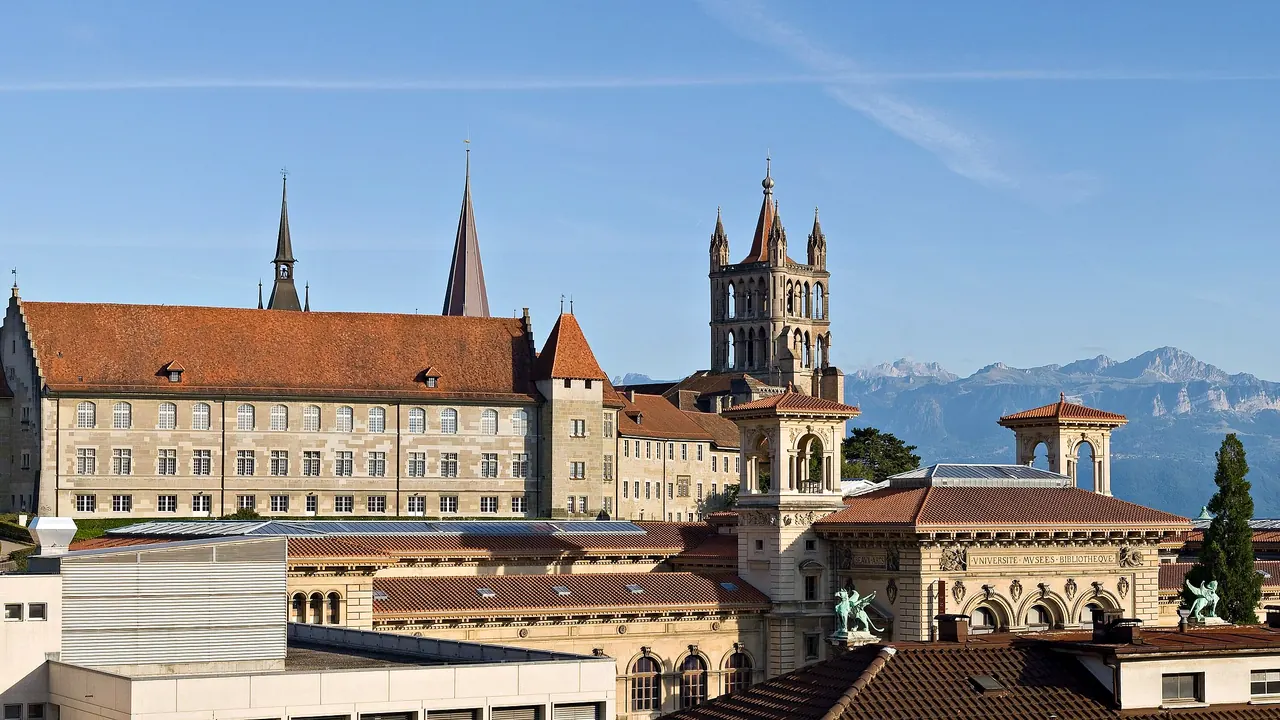
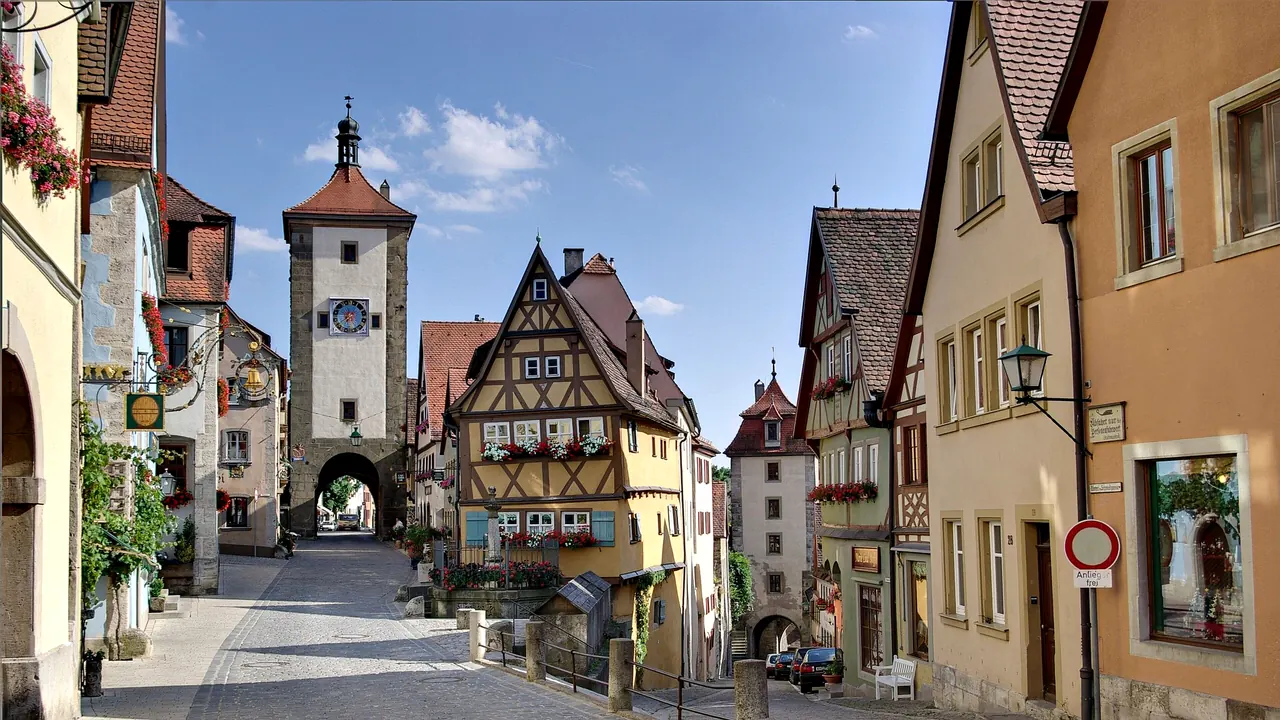
Photos: Lausanne by Christian Mehlführer, CC BY-SA 3.0, cropped; Rothenburg ob der Tauber by Berthold Werner, Public domain.
Lausanne or Rothenburg ob der Tauber?
Our verdict in twelve categories, each scored against the same fixed benchmark cities, and the climate month by month, so you can choose for your trip.
Choose Lausanne for
- nature and the outdoors
- live music and the arts
- nightlife
Lausanne suits travellers who want a base rather than a single sight. The lake and the Alps are right there, and trains run to Montreux, Geneva and Bern without a car. Lavaux wine is poured everywhere, the ballet, opera and Théâtre de Vidy give the evenings a real stage, and the Flon offers a decent night out at the weekend. It is the better choice for active trips and for families, as long as your budget can cope with Swiss prices.
Choose Rothenburg ob der Tauber for
- prices
- culture and sights
If what you want is to sleep inside a complete medieval walled town and walk its lanes after the day visitors have gone, Rothenburg ob der Tauber is the place. It costs a good deal less, and it is hard to beat as a stop on a Romantic Road drive with Dinkelsbühl, Würzburg and Nuremberg within reach. The evenings are quiet and the cooking is plain, so two nights is usually right.
Scoreboard
Twelve categories on one fixed scale from 0 to 100. The shaded stretch is the gap between the two.
Your match
Pick a travel style or drag the sliders, and both match scores follow your weighting.
Wins on nature and the outdoors and live music and the arts with your weighting.
Wins on prices and culture and sights with your weighting.
What matters to you?
Category by category
What the scores mean for a trip.
Beaches & swimming
In summer Lausanne has proper lake bathing. From late June to early September people swim from the lawns and piers at Vidy, from the old lido at Bellerive and from the shingle shores towards Pully and Lutry. It is something to add to a stay rather than a beach vacation, but it is there on your doorstep.
Rothenburg has nothing like it. The choices are the town's outdoor pool or a drive of about an hour to the grassy bathing areas of the Franconian lakes, such as the Altmühlsee.
Food & drink
Lausanne eats better. Perch fillets, papet vaudois and winter fondue come with Chasselas from the Lavaux terraces, which you can taste with the growers in village caveaux. The Saturday market around Place de la Riponne and a high-end tier among the best in Switzerland add depth, although cheap meals are hard to find.
Rothenburg's cooking is hearty and narrow: Schäufele, bratwurst and dumplings with Silvaner or regional beer, and the sugary Schneeball on every corner. Many places around the Marktplatz cook for coach parties, so the better meals are in family guesthouses and Tauber valley wine taverns.
Culture & sights
Rothenburg has a slight edge, and the attraction is different in kind. The whole walled town is the sight. You walk the covered rampart, look along the Plönlein between its gate towers, and see Riemenschneider's carved Holy Blood Altar in St Jakob's. It is rewarding but quickly seen.
Lausanne's old town is smaller as a set piece. Its Gothic cathedral has its own night watchman, so oddly the two share that tradition. Lausanne's strength is museums: the Olympic Museum at Ouchy, the fine arts, photography and design museums at Plateforme 10, and the strange, memorable Collection de l'Art Brut.
Nightlife
Lausanne is the only one of the two with a night out. Its large student population fills the clubs, late bars and terraces in the old warehouses of the Flon at weekends, and in summer people gather by the water at Ouchy. Weeknights are quiet, though.
In Rothenburg the evening means a wine tavern, dinner at the inn and the night watchman's tour. For anything livelier you would have to go to Würzburg or Nuremberg.
Nature & outdoors
The scenery in Lausanne is on a different scale. The French Alps rise straight out of Lake Geneva, the UNESCO-listed Lavaux terraces run down to the shore, and within an hour you can ski or hike in the Vaud Alps or walk the long ridges of the Jura.
Rothenburg's countryside is gentle. Paths drop from the walls into the Tauber valley past mills and the little Topplerschlösschen, and the valley cycle path follows the river through villages. It is pleasant in spring blossom and autumn colour, but there are no mountains or big lakes nearby.
Day trips
Both make good bases, but Lausanne's trips are easier and more varied. Fast trains reach Montreux and the Château de Chillon, Geneva, Bern, Fribourg and Gruyères, and boats cross the lake to Évian. Almost none of this needs a car.
Rothenburg's strength is its neighbours on the Romantic Road: walled Dinkelsbühl, Nördlingen in its meteorite crater, Weikersheim's palace gardens, and Würzburg and Nuremberg each about an hour away. The rail connections are poor, though, so you really need a car.
Good for families
Lausanne gives children more to do over a longer stay. There are the hands-on Olympic Museum, the aquarium-vivarium, and the animal park, pedal boats and lookout tower in the Sauvabelin woods, with paddle steamers and lakeside pools in summer.
Rothenburg works like a storybook for a day or two. Children can walk the ramparts, climb the Rathaus tower and follow the night watchman, and older ones are often gripped by the Crime Museum. After that, families usually head off on excursions. In both towns the slopes and cobbles are hard work with a pushchair.
Getting around
Lausanne is steep, but the m2 metro climbs from the lakeshore to the upper town and the main station is on the Swiss rail network, so you can do without a car. Rothenburg is easier inside the walls, which you can cross on foot in fifteen minutes. Getting anywhere else is the problem: the branch line needs a change at Steinach and the buses are sparse, so a car is the practical choice.
Shopping & style
Neither town is a shopping destination, but Lausanne has the wider range. Rue de Bourg has Swiss watches, jewellery and chocolatiers, the streets around Saint-François have the familiar brands, and Lavaux wine makes a good thing to take home.
Rothenburg sells one thing well, which is Christmas. Year-round shops are full of glass baubles, nutcrackers and Erzgebirge carvings, and the Christmas market on the Marktplatz is very atmospheric. Beyond that, most of what is on sale is souvenirs.
Affordability
Rothenburg is far cheaper. It carries a tourist premium over other Franconian towns, but beer, wine and inn meals are reasonably priced, and staying just outside the walls brings costs down further.
Lausanne is among the most expensive places in Europe for rooms, meals and taxis. Visitors keeping costs down live on supermarket picnics and the free lakeside promenades, and keep restaurant meals for a special occasion.
Live music & performing arts
Lausanne has a serious stage life, and Rothenburg barely has one. Lausanne is home to the Béjart Ballet and the Prix de Lausanne, the Théâtre de Vidy stages contemporary work that tours Europe, and there are a full opera season and a respected chamber orchestra. The Montreux Jazz Festival is a short ride along the lake.
In Rothenburg, performance means the costumed Meistertrunk play, summer open-air theatre and organ concerts in St Jakob's. Most evenings there is no show to go to.
Wellness & relaxation
Lausanne makes it easier to unwind properly. The grand lakeside hotels have large spas, and the thermal springs at Yverdon-les-Bains and Lavey-les-Bains are a short train ride away. Calm is easy to find along the Ouchy promenade and in the Lavaux vines.
Rothenburg's calm comes at particular hours: early morning and evening, when the coach groups have gone and the walls are deeply quiet. For thermal water you need a car to reach the salt-water pool at Bad Windsheim or the spa town of Bad Mergentheim.
When should you go?
Pick your month. The climate figures are measured averages, not a forecast.
Lausanne in July
Rothenburg ob der Tauber in July
Daytime high, °C
Rainfall in the month, mm
Where the figures come from
Lausanne's temperatures are measured 40 km from the centre, at Payerne.
Lausanne has no rain gauge within 25 km of the centre, so its rainfall comes from a gridded climate dataset read at the city rather than from a gauge further away.
Rothenburg ob der Tauber's sunshine is measured 27 km from the centre, at Feuchtwangen-heilbronn.
Temperature and rainfall are climate normals, averaged over the years shown. Lausanne: 1991-2020 (sunshine 1961-1990) normals, Payerne (39.7 km from centre). Rothenburg ob der Tauber: 1991-2020 normals, Rothenburg ob der Tauber (0.9 km from centre).
Through the year the two have almost the same temperatures. Winters are cold, with highs of about 4°C, spring warms through April and May, and July and August reach the mid-twenties. Rain is where they part. Lausanne is wet in every month and wettest from May to September, at over 100mm a month, so a summer trip there will see showers and storms. Rothenburg is clearly drier all year and gets a little more sunshine in spring.
Lausanne is at its best from late June to early September, when Lake Geneva is warm enough to swim and the mountain trails are open. May and September are better for climbing the steep streets and walking the Lavaux terraces. In Rothenburg, May to September is the time for the walls and the Tauber valley, and April and October still work for sightseeing if you dress warmly. From November to February both towns are grey and chilly, though above Lausanne the mountains often sit in sun over the fog.
Which traveller are you?
For an outdoors trip, Lausanne is far ahead. You can walk the Lavaux vineyard paths, sail or paddleboard on the lake, and reach Alpine hiking or skiing at Villars and Les Diablerets within an hour. Rothenburg has gentle Tauber valley walks and cycling.
On a trip on a tight budget, Rothenburg is much easier. Inn meals, beer and Franconian wine are reasonably priced, entry fees are modest, and rooms just outside the walls save more. In Lausanne even a simple lunch adds up, so picnics become the plan.
On a food and nightlife trip, Lausanne gives you much more. There is perch from the lake, Chasselas in village caveaux and some celebrated tables, then the clubs and late bars of the Flon. In Rothenburg the lanes are silent by eleven.
Before you go
| Measure | Lausanne | Rothenburg ob der Tauber |
|---|---|---|
| Official language | French, German, Italian, Romansh | German |
| Currency | Swiss Franc (CHF) | Euro (EUR) |
| Sockets | CJ230 V, 50 Hz | CF230 V, 50 Hz |
| Driving side | Right | Right |
| Time zone | UTC+1, UTC+2 in summer | UTC+1, UTC+2 in summer |
| Emergency number | 112 | 112 |
| Elevation | 495 m | 430 m |
| Main airport | Geneva International Airport (GVA)52 km from centre150 non-stop destinations | Nuremberg Airport (NUE)66 km from centre56 non-stop destinations |
| Public holidays this year | 9 days | 12 days |
By the numbers
| Measure | Lausanne | Rothenburg ob der Tauber |
|---|---|---|
| City population | 144,873 | 11,331 |
| People per km² | 3,499 | 272 |
| Museums within 10 km | 31 | 6 |
| UNESCO World Heritage sites within 50 km | 3 | 2 |
Where else could you go?
Every comparison below shares a destination with this one, so you can follow Lausanne or Rothenburg ob der Tauber somewhere new.
- Genevavs Lausanne
- Nurembergvs Rothenburg ob der Tauber
- Chamonixvs Lausanne
- Bambergvs Rothenburg ob der Tauber
- Bernvs Lausanne
- Annecyvs Lausanne