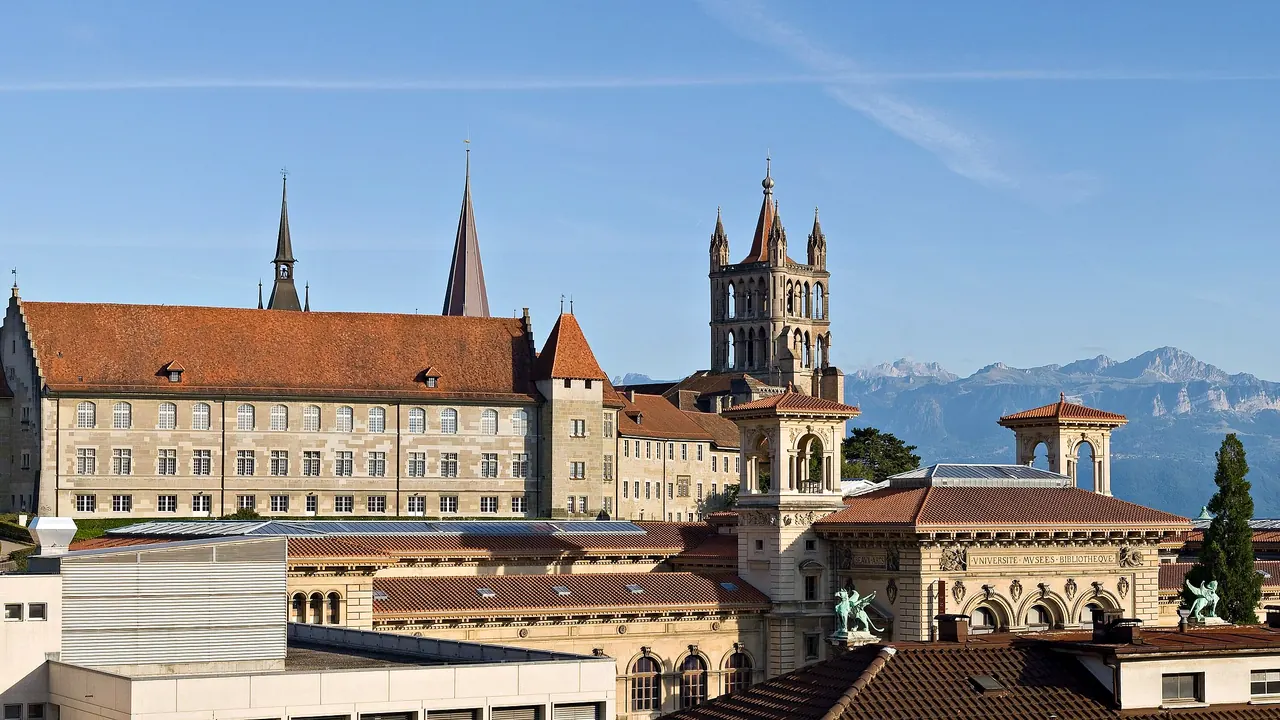
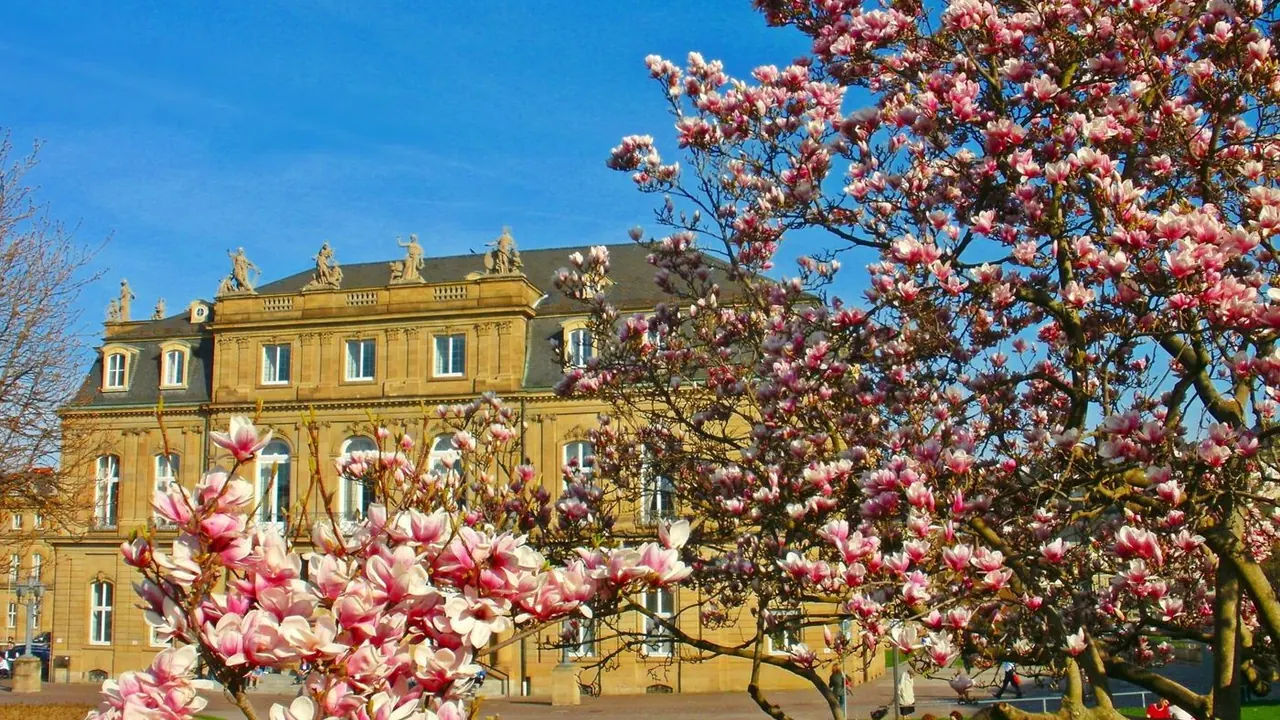
Photos: Lausanne by Christian Mehlführer, CC BY-SA 3.0, cropped; Stuttgart by Baden de, CC BY 3.0, cropped.
Lausanne or Stuttgart?
Our verdict in twelve categories, each scored against the same fixed benchmark cities, and the climate month by month, so you can choose for your trip.
Choose Lausanne for
- beaches
- nature and the outdoors
- getting around
Lausanne is the better choice when the landscape matters most. The French Alps rise across Lake Geneva, the Lavaux terraces run down to the water, the Vaud Alps are close enough for a day of skiing or hiking, and on summer afternoons people swim in the lake. It suits walkers, skiers and anyone who wants Swiss lake towns and castles within easy reach by train, as long as they can live with some of the highest prices in Europe.
Choose Stuttgart for
- prices
- shopping
- live music and the arts
Stuttgart makes more sense for a city trip built around the evenings and the bill. It has one of Europe's leading ballet companies, an opera house known for bold productions, world-class car museums and mineral baths where locals go to soak. Costs are well below Swiss levels, and the shopping is broader. It has no lake to swim in and no high mountains nearby, but culture lovers, people watching their budget and travellers who want a well-run German base have more reasons to pick it.
Scoreboard
Twelve categories on one fixed scale from 0 to 100. The shaded stretch is the gap between the two.
Your match
Pick a travel style or drag the sliders, and both match scores follow your weighting.
Too close to call, 1 point apart
Wins on beaches and nature and the outdoors with your weighting.
Wins on prices and shopping with your weighting.
What matters to you?
Category by category
What the scores mean for a trip.
Beaches & swimming
Neither city has a beach, but Lausanne at least has Lake Geneva. In high summer the water is warm enough to swim from the lawns, piers and pebble shores at Vidy and Bellerive, and the old Bellerive lido makes an easy afternoon.
Stuttgart has nothing like it. The Neckar is a working river and nobody swims there, so swimming means the outdoor pools. Lake Constance, the nearest big lake, is more than two hours away.
Food & drink
The two are evenly matched, and both cities rely on local wine. In Lausanne the cooking is Vaudois: lake perch, papet vaudois and fondue, with Chasselas from the Lavaux terraces and tastings in village caveaux. In Stuttgart it is Swabian: Maultaschen, Käsespätzle and onion-topped roast beef, with Trollinger from vineyards inside the city limits and seasonal Besen taverns in growers' homes.
Both cities have excellent fine dining and not much street food. Stuttgart's taverns and the Markthalle make an ordinary meal easier to find, while Lausanne's Saturday market is the place for cheese and charcuterie from the countryside.
Culture & sights
Stuttgart has more to see, much of it modern. The Mercedes-Benz and Porsche museums, the Staatsgalerie and the Weissenhof Estate with its Le Corbusier houses are the highlights. The bombed centre leaves only pockets of old buildings around Schlossplatz and the Stiftskirche.
Lausanne has fewer major collections but a more complete old town. Its Gothic cathedral, where a night watchman still calls the hours, sits above steep lanes and covered stairways. The Olympic Museum, the museums at Plateforme 10 and the Collection de l'Art Brut fill two or three days.
Nightlife
Nightlife is about level, and in neither city is it a reason to go. In Lausanne it centres on the Flon, a valley of former warehouses where students from the university and the EPFL fill the clubs and late bars at weekends, and in summer evenings people gather by the lake at Ouchy.
Stuttgart's night out runs along the bar strip of Theodor-Heuss-Strasse and in basement clubs. Its big moments are seasonal: the beer tents of the Cannstatter Volksfest in autumn and the wine village in the old centre in late summer.
Nature & outdoors
Here Lausanne is far ahead. The Alps rise straight from the lake opposite the city, and the UNESCO-listed Lavaux terraces are a walk you will remember. Within about an hour you can ski, hike or visit the glacier in the Vaud Alps, and the Jura offers long ridge walks.
Stuttgart's countryside is green and easy to get into, with wine trails above the Neckar, deer in the Rotwildpark, and the escarpments of the Swabian Jura and the firs of the northern Black Forest an hour out. It is good walking and cycling country, but the land stays low and rolling.
Day trips
Both cities are excellent bases, and most outings need no car. From Lausanne the trips are about lake and mountain scenery and other Swiss towns: Montreux and the Château de Chillon on its rock in the lake, Geneva, Bern, the hilltop village of Gruyères, and boats across to Évian.
From Stuttgart they lean towards palaces and old towns. Ludwigsburg's baroque palace, Tübingen's punts, Heidelberg's castle, Hohenzollern on its hill and the monastery at Maulbronn are all within reach, and Strasbourg is close enough for a long day.
Good for families
Both cities are safe and easy with children, and both have hills that make pushchairs hard work. In Lausanne the outings use the lake: paddle steamers, lakeside pools, the Olympic Museum, and pedal boats and a lookout tower in the Sauvabelin woods. Eating out as a family costs a great deal.
Stuttgart has Wilhelma, a zoo and botanical garden that fills a whole day, as well as the little railway on the Killesberg and the fairy-tale garden at Ludwigsburg. Its beer gardens and lower prices make the days cheaper and easier.
Getting around
Lausanne is the slightly easier city to get around because it is so small. Nearly everything lies on one line between the lake and the cathedral, and the m2 metro climbs more than 300m between them, so the steep layers of the city stop being a problem.
Stuttgart's centre is flatter and easy to walk. The car museums, Wilhelma and the hillside districts are further out, though, so you rely more on the Stadtbahn and S-Bahn, or climb the public stairways known as Stäffele.
Shopping & style
Stuttgart is the better place to shop. Königstrasse, one of Germany's longest pedestrian streets, has the high-street chains, Breuninger covers designer fashion, and the outlet village at Metzingen is about half an hour away.
Lausanne's shopping is a sideline. The best of it is a Swiss watch or chocolate from Rue de Bourg, or a bottle of Lavaux wine, and there are few independent boutiques.
Affordability
The gap in cost is wide. In Lausanne there is no part of the trip where the bill eases off: the room, the dinner, the bottle on the table and the taxi home all come at Swiss rates, and even a plain lunch is a noticeable expense. What softens it is free: the lake promenades at Ouchy and Vidy, the parks and the view of the Alps. A glass of Chasselas poured by the grower in a Lavaux caveau is one of the few treats that feels fairly priced.
Stuttgart is a prosperous city and not cheap for Western Europe, but it sits well below Swiss levels. Its costs gather in a few places, mainly central hotels during the big trade fairs and the smarter restaurants. Away from those, a beer garden supper or a glass of local Trollinger costs much less than its Lausanne equivalent, which leaves more room in the budget for ballet tickets or an afternoon in the mineral baths.
Live music & performing arts
Both cities are known for dance, but Stuttgart has the bigger stage life. The Stuttgart Ballet, famous since John Cranko's time, shares the state theatre with an adventurous opera company, and there is serious drama, Bach concerts at the Liederhalle, long-running musicals and a well-known jazz club.
Lausanne is impressive for a city of its size, with the Béjart Ballet, the Prix de Lausanne, contemporary theatre at Vidy and a respected chamber orchestra. In July the Montreux Jazz Festival is a short train ride along the lake.
Wellness & relaxation
Stuttgart has a bathing tradition of its own. The mineral springs at Bad Cannstatt and Berg feed public baths where you soak in naturally carbonated warm water indoors and out, all within the city.
In Lausanne, relaxing means slow walks along the promenades at Ouchy or through the Lavaux vines, and the spas of the grand lakeside hotels. For thermal water you take the train to Yverdon-les-Bains or Lavey-les-Bains.
When should you go?
Pick your month. The climate figures are measured averages, not a forecast.
Lausanne in July
Stuttgart in July
Daytime high, °C
Rainfall in the month, mm
Where the figures come from
Lausanne's temperatures are measured 40 km from the centre, at Payerne.
Lausanne has no rain gauge within 25 km of the centre, so its rainfall comes from a gridded climate dataset read at the city rather than from a gauge further away.
Temperature and rainfall are climate normals, averaged over the years shown. Lausanne: 1991-2020 (sunshine 1961-1990) normals, Payerne (39.7 km from centre). Stuttgart: 1991-2020 normals, Stuttgart / Neckartal (2.8 km from centre).
The two cities have much the same summer, with daytime highs of about 26°C in July in both, but it is wetter in Lausanne. Lausanne has rain all year and is wettest in summer, with around 115mm in July against about 79mm in Stuttgart. It is also sunnier, though, with around 266 hours of sunshine in July. July and August are the months for swimming in the lake. Late May, June and September are better for walking the Lavaux vineyards, when the heat is gentler and the days are still long.
Winter is grey in both cities and a little colder in Lausanne, where January highs are about 4°C. For walking around Stuttgart, the best time runs from May to September, and its drier spring and early autumn make April and October good months too. In Lausanne, the cold months are worth a visit mainly for the mountains, which are often in sunshine above the fog.
Which traveller are you?
On an outdoors trip, Lausanne is the clear choice. You can walk the Lavaux vineyard paths, sail or paddleboard on the lake, and reach Alpine hiking, skiing and a glacier in about an hour. Around Stuttgart there are wooded hills and the Swabian Jura, which are pleasant but much gentler.
On a tight budget, Stuttgart goes much further. Traditional Swabian taverns serve big portions at fair prices, a day ticket covers the transport, and hotels get cheaper at weekends. In Lausanne, even careful travellers end up living on picnics.
On a culture and arts trip, Stuttgart has more to offer. The Stuttgart Ballet and the Staatsoper share one of Europe's great theatre buildings, and the Mercedes-Benz and Porsche museums and the Staatsgalerie are major collections. Lausanne's cathedral and its Béjart company are lovely, but there is less of it all.
Before you go
| Measure | Lausanne | Stuttgart |
|---|---|---|
| Official language | French, German, Italian, Romansh | German |
| Currency | Swiss Franc (CHF) | Euro (EUR) |
| Sockets | CJ230 V, 50 Hz | CF230 V, 50 Hz |
| Driving side | Right | Right |
| Time zone | UTC+1, UTC+2 in summer | UTC+1, UTC+2 in summer |
| Emergency number | 112 | 112 |
| Elevation | 495 m | 245 m |
| Main airport | Geneva International Airport (GVA)52 km from centre150 non-stop destinations | Stuttgart Airport (STR)10 km from centre124 non-stop destinations |
| Public holidays this year | 9 days | 12 days |
By the numbers
| Measure | Lausanne | Stuttgart |
|---|---|---|
| City population | 144,873 | 609,365 |
| People per km² | 3,499 | 2,938 |
| Museums within 10 km | 31 | 42 |
| UNESCO World Heritage sites within 50 km | 3 | 3 |
Where else could you go?
Every comparison below shares a destination with this one, so you can follow Lausanne or Stuttgart somewhere new.
- Genevavs Lausanne
- Baden-Badenvs Stuttgart
- Chamonixvs Lausanne
- Bernvs Lausanne
- Heidelbergvs Stuttgart
- Annecyvs Lausanne