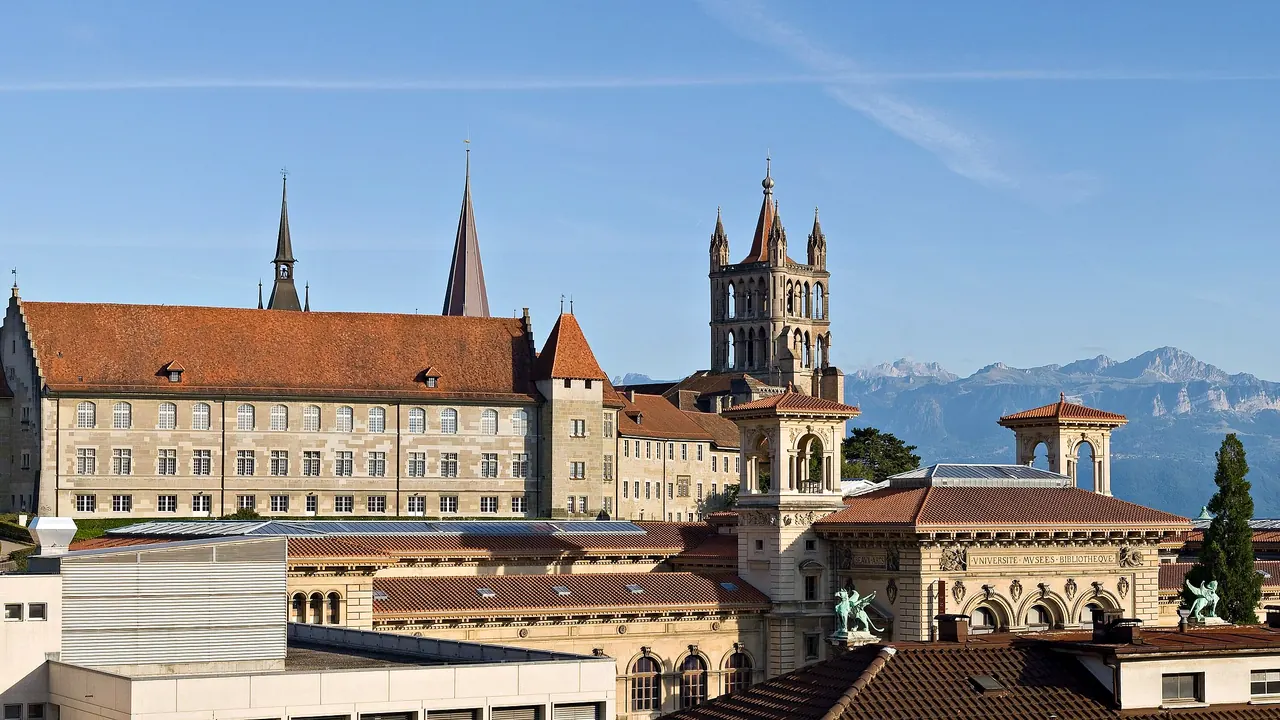
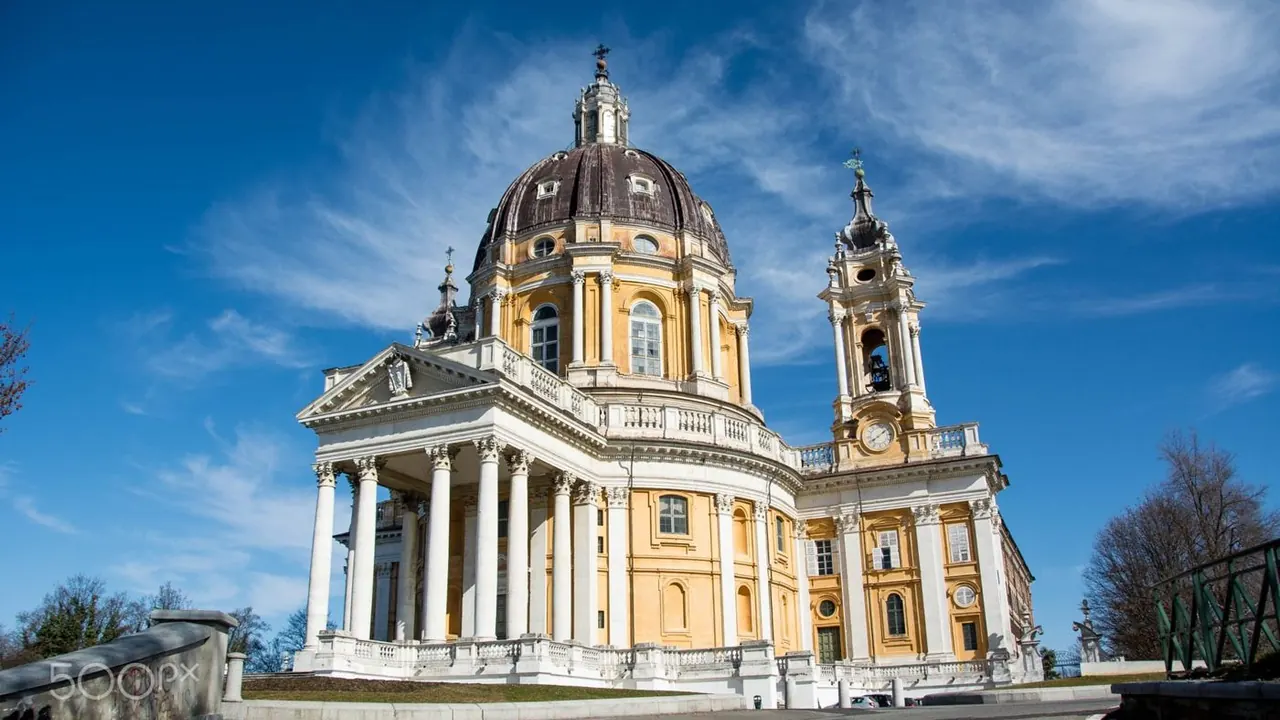
Photos: Lausanne by Christian Mehlführer, CC BY-SA 3.0, cropped; Turin by Konstantin Dacosta, CC BY 3.0, cropped.
Lausanne or Turin?
Our verdict in twelve categories, each scored against the same fixed benchmark cities, and the climate month by month, so you can choose for your trip.
Choose Lausanne for
- beaches
- getting around
- wellness
Lausanne suits travellers who want the outdoors close at hand: a summer swim off the lawns at Bellerive, a walk down through the Lavaux vineyard terraces, and the Alps across the water. It is also the easier city with children, and its trains reach half of French-speaking Switzerland without a car. The catch is cost, so it works best for a trip where the budget is not the first concern.
Choose Turin for
- prices
- food and drink
- culture and sights
Choose Turin if eating, drinking and museums are the point of the trip. Piedmontese cooking, the aperitivo ritual and the Langhe wine hills sit alongside the Museo Egizio and a royal Savoy capital, and the whole stay costs a fraction of what Lausanne asks. Turin has no swimming to speak of, but for a long weekend of looking and eating it gives more.
Scoreboard
Twelve categories on one fixed scale from 0 to 100. The shaded stretch is the gap between the two.
Your match
Pick a travel style or drag the sliders, and both match scores follow your weighting.
Wins on beaches and getting around with your weighting.
Wins on prices and food and drink with your weighting.
What matters to you?
Category by category
What the scores mean for a trip.
Beaches & swimming
Lausanne at least has swimming on its doorstep. From late June to early September Lake Geneva is warm enough to swim in, from grassy shores and shingle at Vidy and the old lido at Bellerive, though it remains lake bathing on narrow banks rather than a beach.
Turin has nothing comparable. The Ligurian Riviera is nearly two hours away, and in summer locals settle for small lakes such as Avigliana. Neither city is a beach destination, but only in Lausanne does a swim fit into an ordinary afternoon.
Food & drink
Turin is the stronger table by some way. Piedmontese cooking brings vitello tonnato, agnolotti del plin and autumn white truffles from the Langhe, with Barolo and Barbaresco on every list, and the city invented both vermouth and the aperitivo. Add gianduja, bicerin in the arcade cafés and the vast Porta Palazzo market, and food can easily be the whole reason to go.
Lausanne eats well at the top and in the wine cellars: lake perch, papet vaudois, and Chasselas tasted straight from the growers in Lavaux caveaux. Between its celebrated restaurants and the Saturday market, though, the everyday choice is ordinary.
Culture & sights
Turin offers far more to see. The Museo Egizio alone justifies a trip, and around it stand the Royal Palace, Palazzo Madama, the Shroud cathedral and the ring of UNESCO-listed Savoy residences, with the Mole's cinema museum and the Lingotto adding the city's industrial story. It fills a week without strain.
Lausanne is a smaller, steeper affair: the Gothic cathedral, where a night watchman still calls the hours, a compact old town of covered stairways, the Olympic Museum at Ouchy, the Plateforme 10 museums and the singular Collection de l'Art Brut. Two or three days are enough.
Nightlife
Turin has the livelier evenings. The aperitivo sets things off around seven, then the crowd spreads through the wine bars of the Quadrilatero Romano, the pavements of San Salvario and, in summer, the Murazzi by the Po. It is sociable rather than wild.
Lausanne goes out more than its size suggests, thanks to its students, but the scene is squeezed into the Flon's clubs on Friday and Saturday, plus summer evenings at Ouchy. Weeknights are quiet and every round is expensive.
Nature & outdoors
Both are excellent for the outdoors, but the landscape sits differently. In Lausanne it starts at the waterfront: sailing and paddleboarding on the lake, the Lavaux terrace path from Lutry to Saint-Saphorin, and the Vaud Alps and the Jura each about an hour away by train.
Turin lies on a flat plain, so its wilder ground needs a trip out, but that ground is big: the ibex and high trails of Gran Paradiso, the Via Lattea ski area and Monviso. Closer in, there are the Superga hills and the deer forest of the Mandria park.
Day trips
Both make first-rate bases, and the difference is in the kind of day out. From Lausanne, trains take you to Swiss towns and lakes: Montreux and the Château de Chillon, Gruyères and its cheese dairies, Bern's arcaded old town, Geneva, or a boat across to Évian, and almost none of it needs a car.
From Turin the pull is wine country and Italian cities: the Langhe hills, Alba, Barolo and Bra, the Monferrato, then Milan by fast train, Genoa's port, and the Sacra di San Michele abbey on its rock above the Susa valley.
Good for families
Lausanne has more aimed at children. The Olympic Museum is hands-on, the aquarium-vivarium shows freshwater life, and Sauvabelin has an animal park, pedal boats and a wooden lookout tower, with lake swimming and paddle steamers in summer. The steep streets and the cost of family meals are the price.
Turin is easier with a pushchair, being flat and arcaded, and older children enjoy the glass lift in the Mole and the Egyptian mummies. But there is no zoo or aquarium in the city, the main animal park needs a car, and summers are hot.
Getting around
Lausanne is the easier city to get about, though not on foot alone. Its problem is height: the m2 metro climbs over 300m from Ouchy to the upper town and does most of the work, and the Swiss trains are fast and punctual for everything beyond.
Turin's centre is flat, gridded and arcaded, so most sightseeing is a simple walk from Porta Nuova to the river. Outside that core it gets harder, with a single metro line and trams and buses that are slow and take some working out.
Shopping & style
Turin gives a shopper more to do. Via Roma's arcades hold the big fashion labels, Via Garibaldi the mainstream shops, and the Quadrilatero smaller boutiques, while antique dealers on Via Maria Vittoria and the Saturday Balon flea market add character. Its delicatessens, selling truffles, cheese and wine, are the best reason to bring an empty bag.
Lausanne is narrower: watches, jewellery and chocolate on Rue de Bourg, chains in the Flon, and a bottle of Lavaux wine to take home.
Affordability
Nowhere do these two differ more than on cost. In Lausanne the hotel room is the heaviest item, and restaurant meals, wine and taxis all push the bill well beyond most of Europe. The efficient metro barely helps, because the centre is small enough that transport was never the big expense. The free lakeside promenades and parks soften it, and so does a glass of Chasselas poured by the grower in a Lavaux village caveau.
Turin costs noticeably less at almost every turn. Central hotels are fairly priced for most of the year. The exception is the big trade fairs and events, when rooms fill up and prices rise, so the dates of a trip matter more here than in Lausanne. Trams and buses are cheap. The real spending goes on museum tickets, fine dining and anything with white truffle on it in autumn. In Turin the expense is in the treats you choose, while in Lausanne simply eating and sleeping costs a lot.
Live music & performing arts
The two are closely matched, with different strengths. Lausanne is defined by dance, as home of the Béjart Ballet and the Prix de Lausanne, and the lakeside Théâtre de Vidy produces contemporary work that tours Europe. Montreux Jazz is a short train ride away in July.
Turin has the broader year-round programme: opera and ballet at the Teatro Regio, the RAI National Symphony Orchestra, concerts in the Lingotto auditorium, and jazz clubs in the centre. Its theatre is almost entirely in Italian, though.
Wellness & relaxation
Lausanne is the better place to unwind. The grand lakeside hotels have extensive spas, the Lavaux vineyard lanes are made for slow walks, and real thermal water is close, at Yverdon-les-Bains in under half an hour and at Lavey-les-Bains in under an hour.
Turin's calm comes from its pace rather than its facilities: long sessions in historic cafés, evening walks under the arcades and along the Po. Its nearest thermal baths, at Acqui Terme or in the Aosta valley, are close to two hours away.
When should you go?
Pick your month. The climate figures are measured averages, not a forecast.
Lausanne in July
Turin in July
Daytime high, °C
Rainfall in the month, mm
Where the figures come from
Lausanne's temperatures are measured 40 km from the centre, at Payerne.
Lausanne has no rain gauge within 25 km of the centre, so its rainfall comes from a gridded climate dataset read at the city rather than from a gauge further away.
Turin has no rain gauge within 25 km of the centre, so its rainfall comes from a gridded climate dataset read at the city rather than from a gauge further away.
Temperature and rainfall are climate normals, averaged over the years shown. Lausanne: 1991-2020 (sunshine 1961-1990) normals, Payerne (39.7 km from centre). Turin: 1991-2020 normals, Torino / Caselle (15.4 km from centre).
Lausanne is at its best from June to September, when days reach about 26°C, the sun shines longest and the lake is warm enough for swimming. Rain falls all through the year and is actually heaviest in summer, at around 115mm in July, but it comes in showers between long sunny spells. Winters are cold and very grey in town, with little sun from November to January, though that suits a trip up to the ski slopes.
Turin is warmer throughout. July is hot and sticky at around 29°C, which makes sightseeing under the arcades tiring, so late spring and September to October are the most comfortable months for walking. May is the wettest month, while winter is cool but much drier, with only about 34mm in January, so a cold, clear winter city break works better here than in Lausanne.
Which traveller are you?
For a beach and sun trip, Lausanne is the only real option of the two. In summer you can swim in Lake Geneva from the lawns and piers at Vidy and Bellerive. Turin's nearest sea is the Ligurian coast, nearly two hours away.
On a food and nightlife trip, Turin wins clearly. Agnolotti, truffles and Barolo set the menu, and evenings run from a generous aperitivo to the bar streets of San Salvario and the Quadrilatero. Lausanne's going out is mostly limited to the Flon at weekends.
On a tight budget, Turin is far kinder. An aperitivo can replace dinner, trattorie and Porta Palazzo market are good value and transport is cheap. In Lausanne even a simple lunch adds up, and budget visitors end up living on supermarket picnics.
Before you go
| Measure | Lausanne | Turin |
|---|---|---|
| Official language | French, German, Italian, Romansh | Italian |
| Currency | Swiss Franc (CHF) | Euro (EUR) |
| Sockets | CJ230 V, 50 Hz | CFL230 V, 50 Hz |
| Driving side | Right | Right |
| Time zone | UTC+1, UTC+2 in summer | UTC+1, UTC+2 in summer |
| Emergency number | 112 | 112 |
| Elevation | 495 m | 239 m |
| Main airport | Geneva International Airport (GVA)52 km from centre150 non-stop destinations | Turin Airport (TRN)14 km from centre65 non-stop destinations |
| Public holidays this year | 9 days | 13 days |
By the numbers
| Measure | Lausanne | Turin |
|---|---|---|
| City population | 144,873 | 841,600 |
| People per km² | 3,499 | 6,474 |
| Museums within 10 km | 31 | 72 |
| UNESCO World Heritage sites within 50 km | 3 | 4 |
Where else could you go?
Every comparison below shares a destination with this one, so you can follow Lausanne or Turin somewhere new.
- Genevavs Lausanne
- Chamonixvs Lausanne
- Bernvs Lausanne
- Annecyvs Lausanne
- Interlakenvs Lausanne
- Chamonixvs Turin