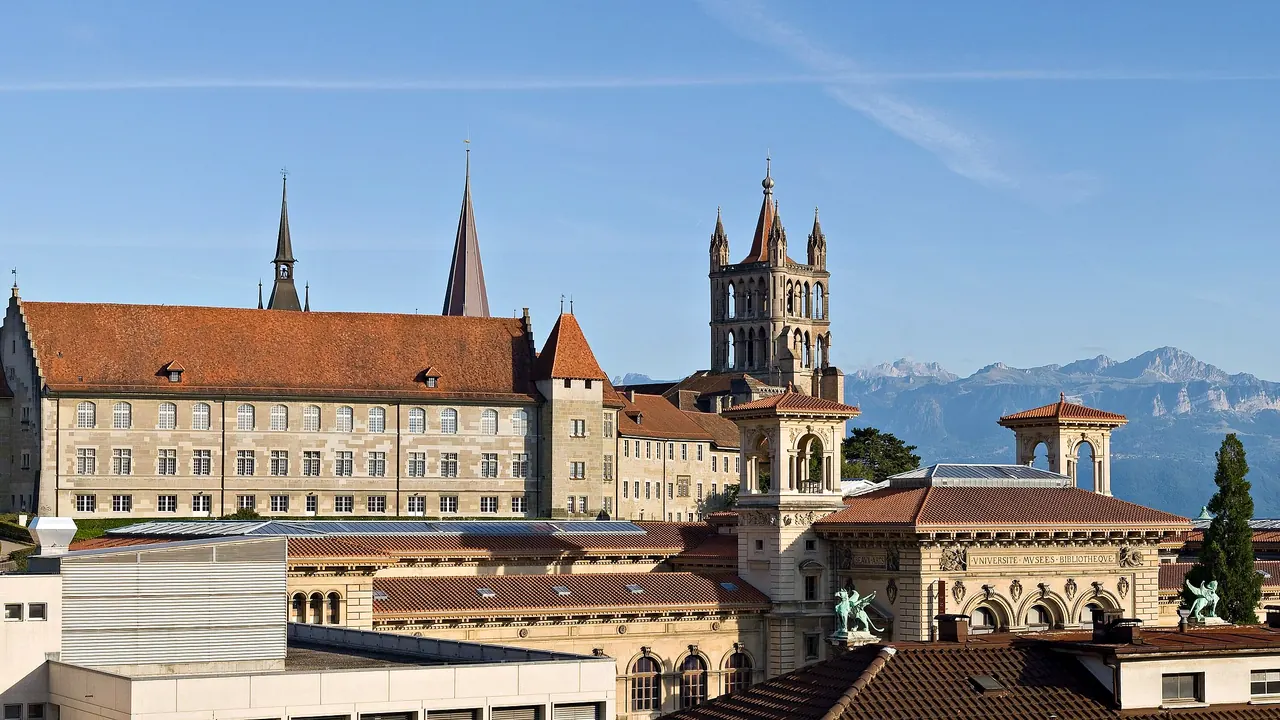
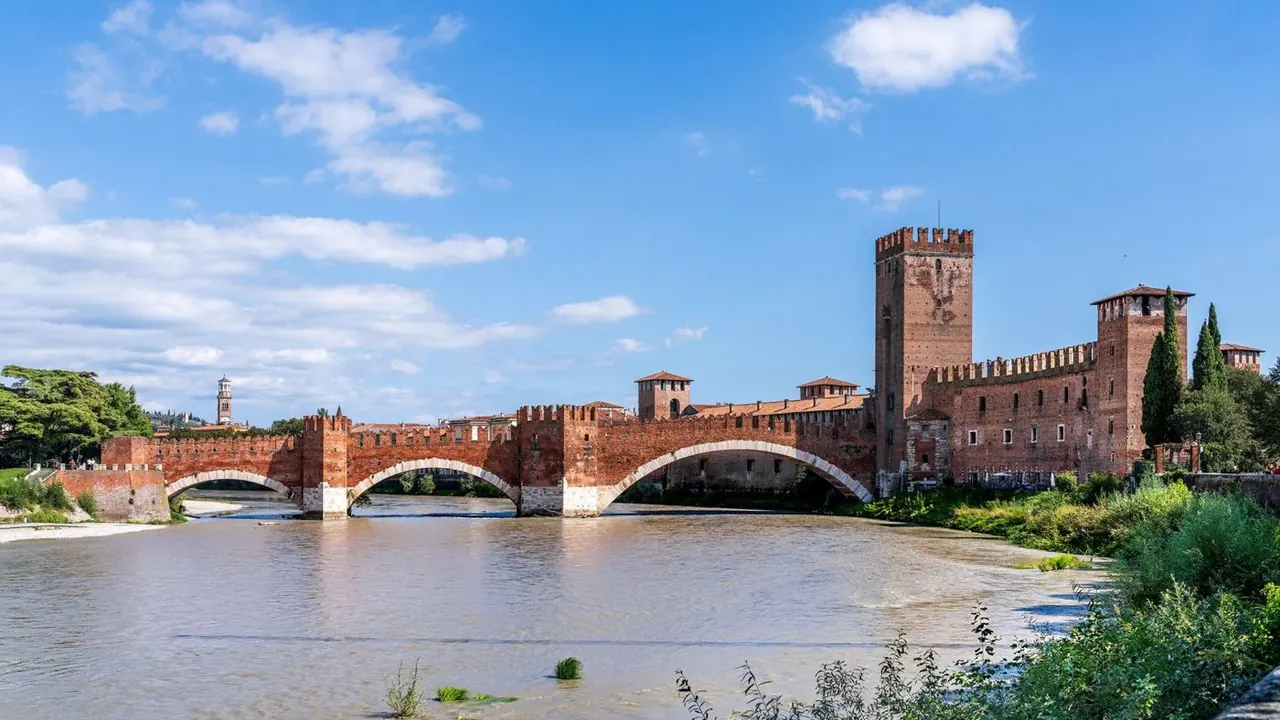
Photos: Lausanne by Christian Mehlführer, CC BY-SA 3.0, cropped; Verona by NorbertNagel, CC BY-SA 4.0, cropped.
Lausanne or Verona?
Our verdict in twelve categories, each scored against the same fixed benchmark cities, and the climate month by month, so you can choose for your trip.
Choose Lausanne for
- nature and the outdoors
- getting around
- nightlife
Lausanne suits travellers who measure a trip in views and walks. The Lavaux vineyard terraces start at the edge of town, the lake is there for sailing and swimming, and the Vaud Alps and the Jura are about an hour away by train. The metro and Swiss rail make all of it easy without a car. It asks for a generous budget, so it best suits travellers who will gladly pay for mountain scenery and a well-run city.
Choose Verona for
- prices
- culture and sights
- food and drink
Verona is the stronger choice for history and good eating. The Roman Arena, the Romanesque Basilica of San Zeno and the squares of the della Scala lords all sit inside a flat, walkable bend of the Adige. Osterie serve Veneto cooking with wines from just up the road, and Venice, Padua, Vicenza and Lake Garda are easy day trips. It also costs far less, and on summer evenings there is opera in the Arena.
Scoreboard
Twelve categories on one fixed scale from 0 to 100. The shaded stretch is the gap between the two.
Your match
Pick a travel style or drag the sliders, and both match scores follow your weighting.
Wins on nature and the outdoors and getting around with your weighting.
Wins on prices and culture and sights with your weighting.
What matters to you?
Category by category
What the scores mean for a trip.
Beaches & swimming
Neither city has a coast, and both rely on a lake in summer, but in different ways. In Lausanne you swim in the city itself, from lawns, piers and pebble shores at Vidy and Bellerive, and the old Bellerive lido makes an easy afternoon.
From Verona you have to travel about half an hour to the southern shore of Lake Garda, where the water is a little warmer. There are lidos with sunbeds, and the flat limestone shelves at Sirmione are a favourite. Lausanne is better for a quick swim, while Garda is better for a whole day by the water.
Food & drink
Verona eats better from day to day. Its osterie around Piazza delle Erbe and in Veronetta serve risotto made with Amarone, bigoli with duck and bollito misto with peppery pearà, and Valpolicella, Soave and Bardolino are poured at counters all over town.
Lausanne's cooking is hearty Vaudois food: lake perch, papet vaudois and fondue in winter. Its strengths lie at the two ends. You can taste Chasselas in the Lavaux caveaux, and there are celebrated top-end tables, but the ordinary middle ground offers less than Verona's osterie.
Culture & sights
Verona is a far richer place for sightseeing, because the whole centre inside the river loop is a monument in itself. You get the Arena on Piazza Bra, the Roman theatre on the hillside, San Zeno with its bronze doors and the Scaliger tombs, all in one walkable whole.
Lausanne has the Gothic cathedral, where a night watchman still calls the hours, and a small, steep old town, but its museums matter more than its streets. The Olympic Museum at Ouchy, the cluster of museums at Plateforme 10 and the Collection de l'Art Brut are the reasons to go.
Nightlife
Both cities are quiet at night, and they go out in different ways. Lausanne has actual clubs, stacked in the old warehouses of the Flon and full of university and EPFL students at weekends. Verona's evenings revolve around spritz and Valpolicella at tables in the piazzas, with livelier, cheaper wine bars in Veronetta and almost no dance floors in the centre. If you want to dance, Lausanne is better; if you prefer a long aperitivo outdoors, choose Verona.
Nature & outdoors
Lausanne is in a different league outdoors. The French Alps rise straight out of the lake opposite the city, and the walk through the Lavaux terraces from Lutry to Saint-Saphorin is right on your doorstep. Within about an hour you can ski or hike at Villars and Les Diablerets, stand on the glacier at Glacier 3000 or walk the ridges of the Jura.
Verona's countryside is gentler. You can walk and cycle in the Valpolicella hills, follow the Adige valley north, and hike in the Lessinia beech woods. The real drama is an hour away at Monte Baldo and Garda's windsurfing coast, and the Dolomites are too far for a comfortable day.
Day trips
Both are excellent bases with a train line doing the work, but Verona's choice of destinations is wider and more famous. Venice is just over an hour away, and Vicenza, Padua with Giotto's chapel and Mantua are closer still, with Garda's harbour towns and the walled town of Soave for a change of pace.
From Lausanne the trips are lakes, castles and Swiss old towns: Montreux and the Château de Chillon, Geneva, Bern and cheese-making Gruyères, plus a boat across to Évian. They make very pleasant days out, but they cannot match the major art cities within Verona's reach.
Good for families
Both cities work well for children, but where the fun is differs. Lausanne keeps it in town: the hands-on Olympic Museum, the aquarium-vivarium, the animal park and pedal boats at Sauvabelin, and paddle steamers on the lake. The steep streets are the trade-off.
Verona's centre is flat and easy with a pushchair, and the Arena tends to fire children's imaginations. The bigger draws, Gardaland and the safari park at Parco Natura Viva, lie half an hour out and usually mean hiring a car.
Getting around
Lausanne is easier to get around, even though it is built on a slope. The m2 metro climbs more than 300m from the lake at Ouchy up to the old town, buses and lake boats cover the rest, and fast Swiss trains leave from the centre.
Verona's strength is that you can walk it. The centre is flat and largely free of traffic, so everything sits within a short stroll, but there is no metro, and the station is about twenty minutes' walk away. Trains to Venice and Milan are good, but buses to the Valpolicella and the Lessinia are thin, so a car helps for those.
Shopping & style
Verona is the better place for a browse. The marble-paved Via Mazzini is lined with Italian fashion labels, and Corso Porta Borsari adds smaller boutiques and shoe shops. Amarone, Garda olive oil and pandoro make good things to take home.
Lausanne's Rue de Bourg is the place for Swiss watches and chocolate, but beyond that the range is mostly familiar international chains. Neither is a shopping destination: serious shoppers in Verona head to Milan.
Affordability
There is a wide gap in cost. Lausanne is expensive in every part of a trip, from hotel rooms and taxis to a simple lunch. Visitors on a budget rely on supermarket picnics and the free lakeside promenades.
Verona is middling. Students eat cheaply in the osterie of Veronetta, a glass at a wine counter comes with a snack, and walking costs nothing. The main expense is a room in the historic centre, especially on summer opera nights and during trade fairs, and staying across the river helps.
Live music & performing arts
Verona has the bigger occasion. Grand productions of Verdi and Puccini play to thousands on the stone tiers of the Arena on summer nights, and in summer the Roman theatre adds Shakespeare and jazz under the stars. Out of season the programme in Verona is modest.
Lausanne is steadier through the year and stronger in dance, as home to the Béjart Ballet and the Prix de Lausanne. The Théâtre de Vidy stages contemporary work that tours Europe, and in July the Montreux Jazz Festival is a short train ride away.
Wellness & relaxation
Neither city has its own bathing tradition, and both have warm springs a short trip away: Yverdon-les-Bains and Lavey-les-Bains from Lausanne, Sirmione's lakeside thermal centre and the spring-fed thermal park near Lazise from Verona.
They differ in where you find the calm. In Lausanne it lies on the edges, in the grand hotel spas and on lakeside promenades, away from a steep and busy centre. In Verona it comes from the pace of the place: long lunches, an evening passeggiata by the river and the terraces of the Giardino Giusti.
When should you go?
Pick your month. The climate figures are measured averages, not a forecast.
Lausanne in July
Verona in July
Daytime high, °C
Rainfall in the month, mm
Where the figures come from
Lausanne's temperatures are measured 40 km from the centre, at Payerne.
Lausanne has no rain gauge within 25 km of the centre, so its rainfall comes from a gridded climate dataset read at the city rather than from a gauge further away.
Temperature and rainfall are climate normals, averaged over the years shown. Lausanne: 1991-2020 (sunshine 1961-1990) normals, Payerne (39.7 km from centre). Verona: 1991-2020 normals, Verona / Villafranca (11.6 km from centre).
Verona warms up earlier and gets hotter. By May it is already pleasant for walking, and July and August reach about 30°C, which makes afternoon sightseeing hard work but suits days by Lake Garda. Lausanne peaks at about 26°C in July, warm enough for lake swimming from late June into early September without the heat that slows you down in Verona. Spring and late September to October are the best months for walking Verona's streets.
The rain also falls differently. Lausanne gets rain all year and the most in summer, around 115mm in July, but the long summer days still bring plenty of sunshine. Verona is drier, and its wettest stretch is autumn. In winter Lausanne drops to about 4°C under grey skies and gets very little sun, while Verona stays a few degrees milder and sunnier, so it is the better choice for a winter city break. Lausanne's winter appeal is the snow in the nearby mountains.
Which traveller are you?
On a culture and arts trip, Verona is the clear pick. A whole UNESCO-listed centre of Roman, medieval and Renaissance buildings, Scarpa's Castelvecchio and summer opera in the Arena give you far more to see than Lausanne's cathedral and museums.
For an outdoors trip, choose Lausanne. You can walk the Lavaux terraces straight from town, sail or paddleboard on Lake Geneva, and reach Alpine ski slopes, summer hiking and the Jura ridges within about an hour without a car.
On a trip with a tight budget, Verona makes far more sense. Student osterie in Veronetta, wine counters that serve a snack with your glass and a centre you can cover on foot keep costs down. In Lausanne even a simple lunch out quickly gets expensive.
Before you go
| Measure | Lausanne | Verona |
|---|---|---|
| Official language | French, German, Italian, Romansh | Italian |
| Currency | Swiss Franc (CHF) | Euro (EUR) |
| Sockets | CJ230 V, 50 Hz | CFL230 V, 50 Hz |
| Driving side | Right | Right |
| Time zone | UTC+1, UTC+2 in summer | UTC+1, UTC+2 in summer |
| Emergency number | 112 | 112 |
| Elevation | 495 m | 59 m |
| Main airport | Geneva International Airport (GVA)52 km from centre150 non-stop destinations | Verona Villafranca Valerio Catullo Airport (VRN)10 km from centre96 non-stop destinations |
| Public holidays this year | 9 days | 13 days |
By the numbers
| Measure | Lausanne | Verona |
|---|---|---|
| City population | 144,873 | 255,588 |
| People per km² | 3,499 | 1,285 |
| Museums within 10 km | 31 | 18 |
| UNESCO World Heritage sites within 50 km | 3 | 5 |
Where else could you go?
Every comparison below shares a destination with this one, so you can follow Lausanne or Verona somewhere new.
- Genevavs Lausanne
- Chamonixvs Lausanne
- Bernvs Lausanne
- Annecyvs Lausanne
- Interlakenvs Lausanne
- Venicevs Verona