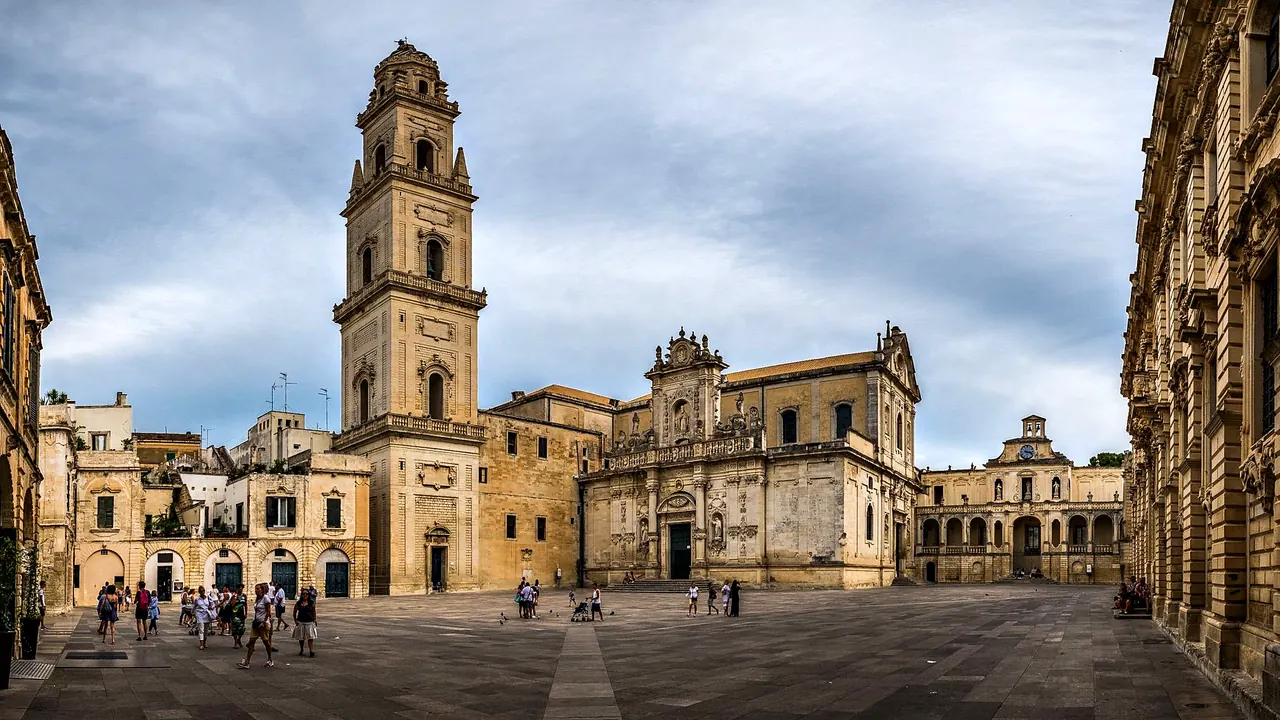
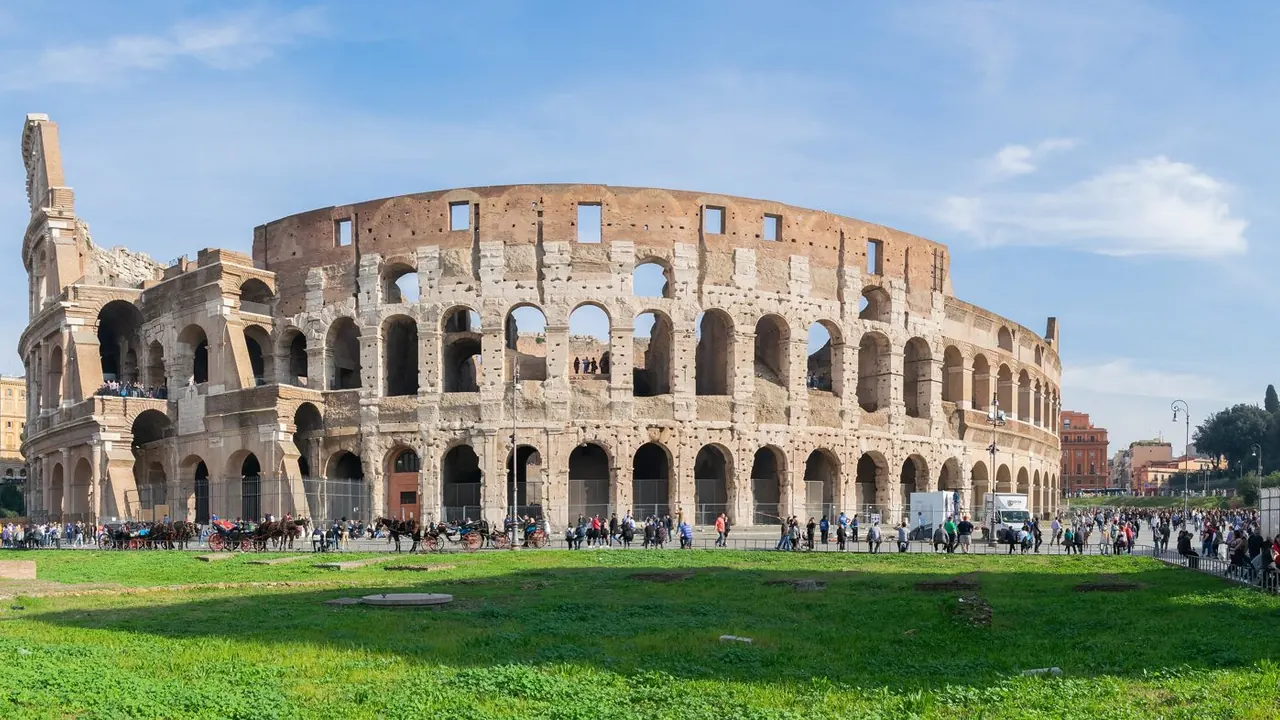
Photos: Lecce by Giuseppe Milo, CC BY 3.0, cropped; Rome by Tournasol7, CC BY-SA 4.0, cropped.
Lecce or Rome?
Our verdict in twelve categories, each scored against the same fixed benchmark cities, and the climate month by month, so you can choose for your trip.
Choose Lecce for
- beaches
- prices
- wellness
Lecce suits a slower southern trip where the sea matters as much as the sights. Its old town of honey-coloured Baroque stone is small enough to learn in a couple of days, and from there the sandy coves of the Adriatic and the clear, shallow Ionian beaches are an easy drive away. Rooms and meals cost less, and evenings on the piazzas are unhurried. It works best for travellers who will hire a car and are happy to split each day between town and coast.
Choose Rome for
- shopping
- live music and the arts
- culture and sights
Rome is the choice when the trip is about seeing and eating as much as possible. Ancient ruins, the Vatican, great galleries and Baroque churches fill the centre, the trattorias of Trastevere and Testaccio are worth a trip in themselves, and fast trains reach Florence, Naples and the Etruscan towns without a car. Expect to pay more for a smaller room and to swap beach time for long days on foot.
Scoreboard
Twelve categories on one fixed scale from 0 to 100. The shaded stretch is the gap between the two.
Your match
Pick a travel style or drag the sliders, and both match scores follow your weighting.
Wins on beaches and prices with your weighting.
Wins on shopping and live music and the arts with your weighting.
What matters to you?
Category by category
What the scores mean for a trip.
Beaches & swimming
Lecce has the better sea by some distance, though not on its doorstep. The beaches nearest the city are plain local sand, and the real draw is half an hour or so further: the pale coves and sea stacks of Torre dell'Orso on the Adriatic, or the long, clear, shallow beaches of Porto Cesareo and Punta Prosciutto on the Ionian. In summer the coast can become the main reason for the stay.
Rome's sea at Ostia and Fregene is quick to reach by suburban train, but the sand is dark, the lidos are packed in rows and the water is rarely clear. Pretty water means a long trip south to Sperlonga, so in Rome the beach is an escape from the heat rather than part of the plan.
Food & drink
Rome is the stronger food city, mainly for its depth and range. The four classic pastas, Jewish-style artichokes in the Ghetto, Testaccio's offal dishes and serious street food such as supplì and pizza al taglio give you a different meal every day, provided you eat in Trastevere, Monti or Testaccio rather than beside the big sights.
Lecce's cooking is more particular and very cheap: a warm pasticciotto with iced almond coffee for breakfast, ciceri e tria and fava purée with chicory at dinner. Its Negroamaro and Primitivo reds outclass Rome's modest Frascati, but beyond Apulian dishes there is little choice, and few restaurants aim high.
Culture & sights
Rome stands in a different league, with three thousand years of history set out across one centre. The Forum, the Pantheon and the Baths of Caracalla sit alongside early Christian mosaics, Bernini's piazzas and some of the world's great museums, from the Sistine Chapel to Palazzo Massimo. Choosing what to leave out is the real task.
Lecce offers one thing done superbly: a complete Baroque townscape carved from soft local limestone, best seen at Santa Croce and in the enclosed Piazza del Duomo at dusk. Its half-buried amphitheatre and modest museums are minor next to Rome's, but the whole old town can be enjoyed slowly on foot in a day or two.
Nightlife
Neither city is built for dancing until dawn, but Rome gives you far more choice of evening. Trastevere's lanes stay full of wine bars and young crowds until late, Monti has small cocktail bars, San Lorenzo is cheap and student-led, and Pigneto draws an arty crowd. Testaccio and Ostiense hold what clubs there are.
Lecce's nights are smaller and more sociable: aperitivo on the piazzas, then wine bars in the old town's lanes, kept lively at weekends by students. In summer the late scene moves out to beach clubs around Gallipoli, which means someone has to drive.
Nature & outdoors
The two are about level for the outdoors, but the settings are opposite. Lecce sits on a flat plain of olive groves, so its nature is the sea: the cliffs and sea caves from Roca Vecchia towards Santa Maria di Leuca, snorkelling and kayaking, and birdwatching in the Le Cesine and Alimini wetlands.
Rome offers green in the city and hills behind it. The Appian Way makes a superb bike ride among tombs and aqueducts, the Alban Hills hold crater lakes among chestnut woods, and the Apennines bring proper hiking and even winter skiing at Terminillo.
Day trips
Rome is the better base, both for the quality of what lies around it and for how easily you get there. Ostia Antica and Tivoli's Villa d'Este and Hadrian's Villa are close in, the Etruscan tombs of Tarquinia, Orvieto and Civita di Bagnoregio lie to the north, and fast trains make Florence or Naples a day out.
Lecce has a rich circle of its own: Otranto's cathedral mosaic, Gallipoli on its island, the frescoes of Galatina, and further north white Ostuni and the trulli of Alberobello. Apart from the trains to Brindisi and Bari, though, almost all of it needs a car.
Good for families
Both cities welcome children warmly without offering much that is built for them. The difference is in the shape of the days. In Lecce, the traffic-free old town, gelato on the piazzas and the shallow sandy beaches of Porto Cesareo make for a relaxed beach vacation, with no zoo or theme park to fall back on.
Rome has more to point at, from gladiators and catacombs to the Bioparco and rowing boats in Villa Borghese, but long queues, cobbles that defeat pushchairs and busy roads make sightseeing tiring for small legs.
Getting around
Rome is the easier place to manage without a car. Its centre is walkable from the Colosseum to Trastevere, and although the metro barely enters the core and buses crawl in traffic, trains reach Ostia, the hill towns and the rest of Italy without any need to drive.
Lecce's flat, partly pedestrian old town is even simpler on foot, but that stops at the walls. Local railways across the Salento are slow and sparse and the beach buses run only in summer, so most visitors hire a car and park outside the old town.
Shopping & style
Rome is a real shopping city. The big Italian fashion houses line Via Condotti and the streets around the Spanish Steps, Monti has independent designers and vintage, Via Margutta keeps artisan workshops, and the Sunday market at Porta Portese is vast. Leather and handmade shoes are the buys to aim for.
Lecce is for a few distinctive souvenirs: cartapesta saints and nativity figures from old-town workshops, small limestone carvings, Grottaglie ceramics, and olive oil and taralli to take home.
Affordability
Lecce is clearly the cheaper stay. A bed and breakfast in an old palazzo is fairly priced for most of the year, and pastries, osterie and local wine cost little. August is the exception, when the Salento fills up and rooms, beach loungers and the hire car all add up.
Rome's main expense is the bed: central rooms are small, costly and scarce in spring and autumn, and the Vatican, Colosseum and Borghese charge substantial fees. Free water from the fountains, free churches full of art and standing espresso soften the daily spend.
Live music & performing arts
Rome has a proper year-round classical scene. The Teatro dell'Opera runs through the winter and moves outdoors in summer to the Baths of Caracalla, Santa Cecilia plays at Renzo Piano's Auditorium, and church concerts and jazz clubs fill the gaps.
Lecce's two theatres carry only a modest season, but it has something Rome cannot offer: pizzica, the Salento's hypnotic tambourine dance, played at village festivals all summer and climaxing in August at the Notte della Taranta in Melpignano. Outside summer it is quiet.
Wellness & relaxation
Neither city has a living bathing culture, so the difference lies in the kind of calm. Lecce's slow afternoon close-down and piazza evenings are restful in themselves, the sulphur grottoes of Santa Cesarea Terme sit on the cliffs above the sea, and old masserie in the countryside have become quiet spa retreats.
Rome relies on hotel spas, the large Acque Albule pools at Bagni di Tivoli and the free hot springs around Viterbo. Its centre is loud with scooters and crowds, so the villa gardens and the Aventine are where you go to slow down.
When should you go?
Pick your month. The climate figures are measured averages, not a forecast.
Lecce in July
Rome in July
Daytime high, °C
Rainfall in the month, mm
Where the figures come from
Lecce's temperatures are measured 38 km from the centre, at Brindisi.
Lecce has no rain gauge within 25 km of the centre, so its rainfall comes from a gridded climate dataset read at the city rather than from a gauge further away.
Rome's sunshine is measured 31 km from the centre, at Vigna Di Valle.
Temperature and rainfall are climate normals, averaged over the years shown. Lecce: 1991-2020 (sunshine 1981-2010) normals, Brindisi (38 km from centre). Rome: 1991-2020 normals, Roma / Ciampino (15.1 km from centre).
The two cities follow almost the same temperature curve, with July and August reaching about 30°C in both. That is good beach heat but hard work for sightseeing at midday, especially on Rome's long walking routes. The sea is warm enough to swim from June to early October in both, peaking near 26°C off the Salento in August. Lecce has the more reliable sun all year and is clearly drier in spring, so April and May are fine months for walking its old town and the coast paths.
Rome is wetter for longer. Its spring brings more showers, and from October the rain builds to around 114mm in November, so late autumn and winter there mean museums and an umbrella. Lecce's rain also arrives in autumn, with November the wettest month, but winters are a touch milder and sunnier. For both, May, June and September give warm days without the worst of the summer heat.
Which traveller are you?
For a beach and sun trip, Lecce wins easily. The pale coves of Torre dell'Orso and the fine-sand shallows of Porto Cesareo are close by, the water is far clearer than at Ostia, and summer days fall naturally into mornings at the sea and evenings back in town.
On a culture and arts trip, Rome has no real rival here. The Colosseum, the Vatican Museums, the Borghese Gallery and Caravaggios in side chapels fill days on end, and evenings can bring opera at the Baths of Caracalla or the Santa Cecilia orchestra.
On a trip with a tight budget, Lecce stretches the money further. Bed and breakfasts in old palazzi are fairly priced outside August, and pastries, simple osterie and local wine cost little. In Rome the central rooms and the big entry fees push costs up quickly.
Before you go
| Measure | Lecce | Rome |
|---|---|---|
| Official language | Italian | Italian |
| Currency | Euro (EUR) | Euro (EUR) |
| Sockets | CFL230 V, 50 Hz | CFL230 V, 50 Hz |
| Driving side | Right | Right |
| Time zone | UTC+1, UTC+2 in summer | UTC+1, UTC+2 in summer |
| Emergency number | 112 | 112 |
| Elevation | 49 m | 21 m |
| Main airport | Brindisi Airport (BDS)39 km from centre49 non-stop destinations | Rome–Fiumicino Leonardo da Vinci International Airport (FCO)23 km from centre242 non-stop destinations |
| Public holidays this year | 13 days | 13 days |
By the numbers
| Measure | Lecce | Rome |
|---|---|---|
| City population | 94,783 | 2,748,109 |
| People per km² | 393 | 2,135 |
| Museums within 10 km | 11 | 178 |
| UNESCO World Heritage sites within 50 km | 0 | 8 |
| Swim season, months above 21 °C | 4 months | 5 months |
Where else could you go?
Every comparison below shares a destination with this one, so you can follow Lecce or Rome somewhere new.